
Lång: Daily spending guide
Know what’s safe to spend today
For years, I kept tweaking my budget, convinced I just hadn’t found the right setup yet.
More categories. Fewer categories. Adjusting monthly targets. It never quite worked.
I looked up average spending figures – what you typically spend on food, transport, everything. Set targets. Tried to stick to them.
The fixed part was straightforward. Bills and subscriptions, mostly the same each month.
But everyday spending felt unpredictable. One month groceries would spike. Another it was eating out and takeaway. Sometimes both.
And I had no good way to track spending as it happened – just occasional check-ins, sometimes only at month’s end.
Setting targets was hard. Tracking was harder. Staying on track felt impossible.
When budgeting apps appeared, it felt like exactly what I needed. Automatic categorisation. Monthly budgets based on actual spending.
But they didn’t help me stay on track.
Everything was based on monthly averages – and spending is rarely average. I’d see money left in categories, but couldn’t tell if spending it today made sense. Some months I’d spend nothing on clothes, others a lot. The average never matched the decision in front of me.
So I started checking more often. Weekly reviews. Eventually burndown charts to see if I was on pace.
But I was still looking backward. Even with weekly checks, one expensive meal or unexpected purchase would throw everything off.
What I actually needed was clarity about today.
So I made a spreadsheet. Remaining money divided by days left. One number, recalculated each day – a guide for what makes sense to spend, not a limit to enforce.
And it worked differently than I expected.
I’d see the number and think: I’ve got room today, but there’s that dinner on Friday. I’ll hold back a bit.
The short horizon – just the next few days – enabled me to pace myself proactively, not just react after spending.
I didn’t need to predict the whole month. I just needed to see what was directly ahead.
Monthly plans tried to control the unpredictable. Daily tracking let me pace through it.
That’s what Lång does. It turns ’Am I on track?’ into ’I can see that I am’.

Groceries. Entertainment. Transport. Eating out. Clothes.
I tried organising them different ways, convinced I just hadn’t found the right approach.
But something always felt off.
Took me a long time to untangle what was actually going on.
I was treating two completely different things the same way.
Bills and subscriptions: you decide once, then they run automatically.
Food, shopping, plans: you decide many times, every day.
Traditional budgets put them both in monthly boxes.
But everyday spending doesn’t work like that. It’s irregular. You can’t plan it a month ahead. Some days nothing, other days everything at once.
Fixed costs are boundaries you set once.
Everyday spending needs daily pacing, not monthly limits.
That’s the gap Lång is built for – guiding the everyday part as it actually happens.
In the App Store since a few weeks.
What if most people who need Lång most have given up on finding something that works? What if they’ve accepted that managing money is just – hard?
Here’s what led us to this hypothesis.
A month or so ago, we suspected TestFlight was a barrier. The whole process – sign up, get invited, install – perhaps felt like committing to test an app rather than just trying it.
Over the past months, we’ve been able to get people interested enough to visit the landing page. But there was drop-off at each stage – signing up, getting invited, and so on. Too few made it all the way through to see clear patterns about who Lång works for.
Talking with regular Lång users suggested a deeper challenge: People who would benefit from Lång might not be actively looking for something like this. They might have accepted that managing money just comes with uncertainty and lack of control.
And if they’ve accepted that this is just hard – being intentional and pacing spending – they probably aren’t seeking advice, discussing it with friends, or searching for solutions online.
But if they are looking, Lång doesn’t quite fit the existing categories. When people search for personal finance apps, they find budgeting tools with categories and spending limits. There’s no category for ’daily spending guide’.
And even when Lång works well for someone, they might not recommend it to others. Personal finance tends to be sensitive – people rarely discuss money struggles or share advice.
Still, these conversations have made us more confident that something like Lång should exist.
But these are the challenges we need to figure out: How to reach people who aren’t looking for solutions. How to explain something that doesn’t fit existing categories. How to grow when sharing doesn’t happen naturally.
So we paused that work – the outreach and messaging tests – to focus on getting Lång App Store-ready.
We’ve just released it on the App Store. Time to test whether removing that friction helps us reach the people who need this most – and continue learning about who Lång helps and how to reach them.
You’re about to buy something – and you pause for a second.
Not because you can’t afford it, but because you’re not sure if it’ll throw things off.
You check your balance. You try to work it out: How many days left? Anything coming up?
What if something unexpected happens?
You’re not always sure. But you’re trying to keep things steady – pacing yourself, adjusting. Some days less, some days more. Just trying to stay on track.
Most people manage their money this way. Quietly. Trying to feel okay about how they’re spending.
It might look like guesswork. But there’s a shape to it – a way of adjusting, trying not to drift.
Still, no one really talks about it. Not in financial advice. Not in everyday conversation.
So even though it’s common, it can still feel like you’re just guessing – or hoping it works out.
But this way of managing money is valid – even if it doesn’t always feel that way.
Some days you spend very little. Others, more. It shifts with your plans, your life.
You adjust – and that’s not a workaround. That’s what makes sense.
That’s where Lång fits in – not to change how you manage money, but as a way to make your existing approach feel a little steadier, a little clearer.
In private beta for iPhone: https://lang.money
One of Lång’s earliest users had been searching for the right budgeting app.
He wanted categories, bank sync, envelope budgets – something advanced, like YNAB or Bilance.
Lång has none of that. It just shows a daily amount that’s safe to spend, based on what you said you had until payday.
But something about it clicked for him:
’It’s the first time I’ve felt in balance.’
That’s the moment I keep coming back to.
Not because it proves Lång works – but because it shows how hard it is to explain.
He thought he needed something more powerful. What helped was something simpler – something that fit how spending actually happens: irregular, day by day.
But if you’d asked him a month earlier, he wouldn’t have said he was looking for that.
That’s been the biggest challenge in sharing Lång:
Not persuading people they have a problem – but helping them recognise themselves in a different approach.
If you’ve built something where the switch only happens after trying, how did you get people to take that first step?
-
1
Hello Peter! I love the idea of Lang! I think the best way to get people to change their thinking is to start off as a free app, and use questionnaires to motivate people to try! I'll be happy to chat some more and use my skills to help!

I’ve been working on a personal finance app called Lång.
It helps people pace their daily spending – not by categorising or tracking everything, but by giving them a daily ’safe to spend’ number based on what’s left and how long it needs to last.
I’ve talked to regular users who say it’s changed how they feel about spending – from anxious or ad-hoc to more steady. Some say it’s the first time they’ve felt ’in balance’.
But the challenge is: people like that don’t always realise there’s a problem to solve.
They’re improvising – checking their balance, adjusting day by day. It kind of works. They don’t see it as broken.
So I’m testing different ways of speaking to that – not persuasion, more recognition.
This is a short vignette I’m trying:
Some days, you don’t spend much.
Other days, it just adds up.You check your balance.
Try to work it out.What’s safe to spend – for today?
That’s what Lång shows you.
https://lang.money
Has anyone else faced something like this – where the behaviour is there, but people don’t think of it as a problem? What helped you bridge that?
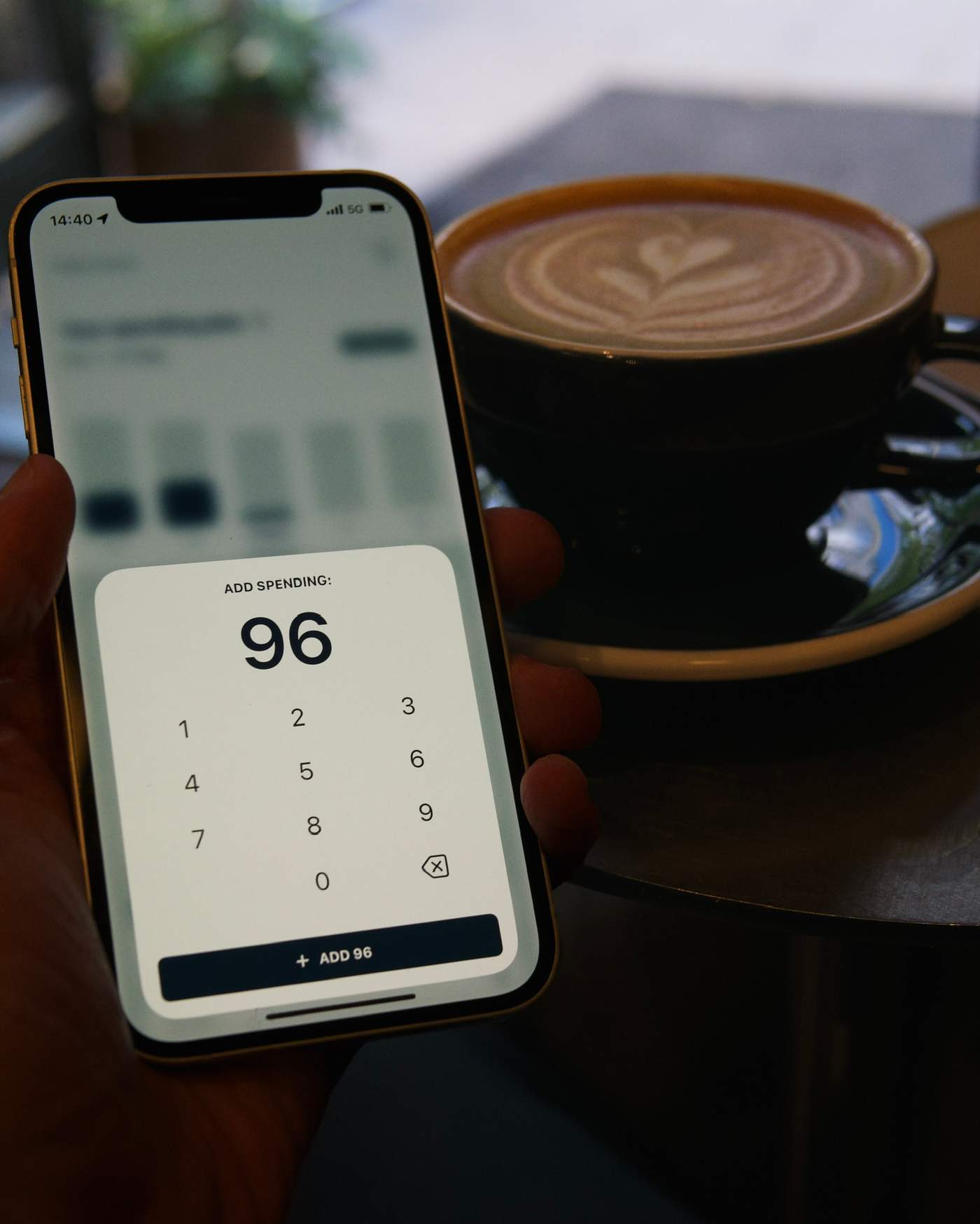

I’ve been meeting with a few of the people who use Lång regularly, to learn how they’ve come to use it, how it’s changed things for them, and how it fits into their lives.
A common theme was the recurring moments of uncertainty – wondering if things are on track, wanting a bit more control over day-to-day spending.
I wrote this to try to capture that kind of moment:
Checking your balance at the grocery store – will it last till payday?
You meant to spend less this month, but little things added up – and now you’re unsure.
It would be simpler if you just knew you were still on track.
That’s what Lång is for – a calmer way to feel confident about your spending.
I’m hoping these stories help more people see if Lång is for them.
In private beta for iPhone: https://lang.money
You already make daily spending decisions – groceries, meals out, shopping. Lång helps with those choices, not your fixed bills or subscriptions.
You start by making a spending plan: how much you have until you next get paid.
Each day, Lång shows you a safe amount to stay within.
You log what you spend and see where you stand. Some days you'll spend more, some less – that's normal. Lång adjusts the guidance as you go.
Your spending plan is just a starting point. You can adjust it if things change. Lång will nudge you now and then to check your balance. When the plan ends, you'll make a new one.
It might seem like focusing only on daily spending isn’t enough, but this is usually where things go off track. Bills and subscriptions are predictable – everyday spending is harder to pace.
In private beta for iPhone: https://lang.money
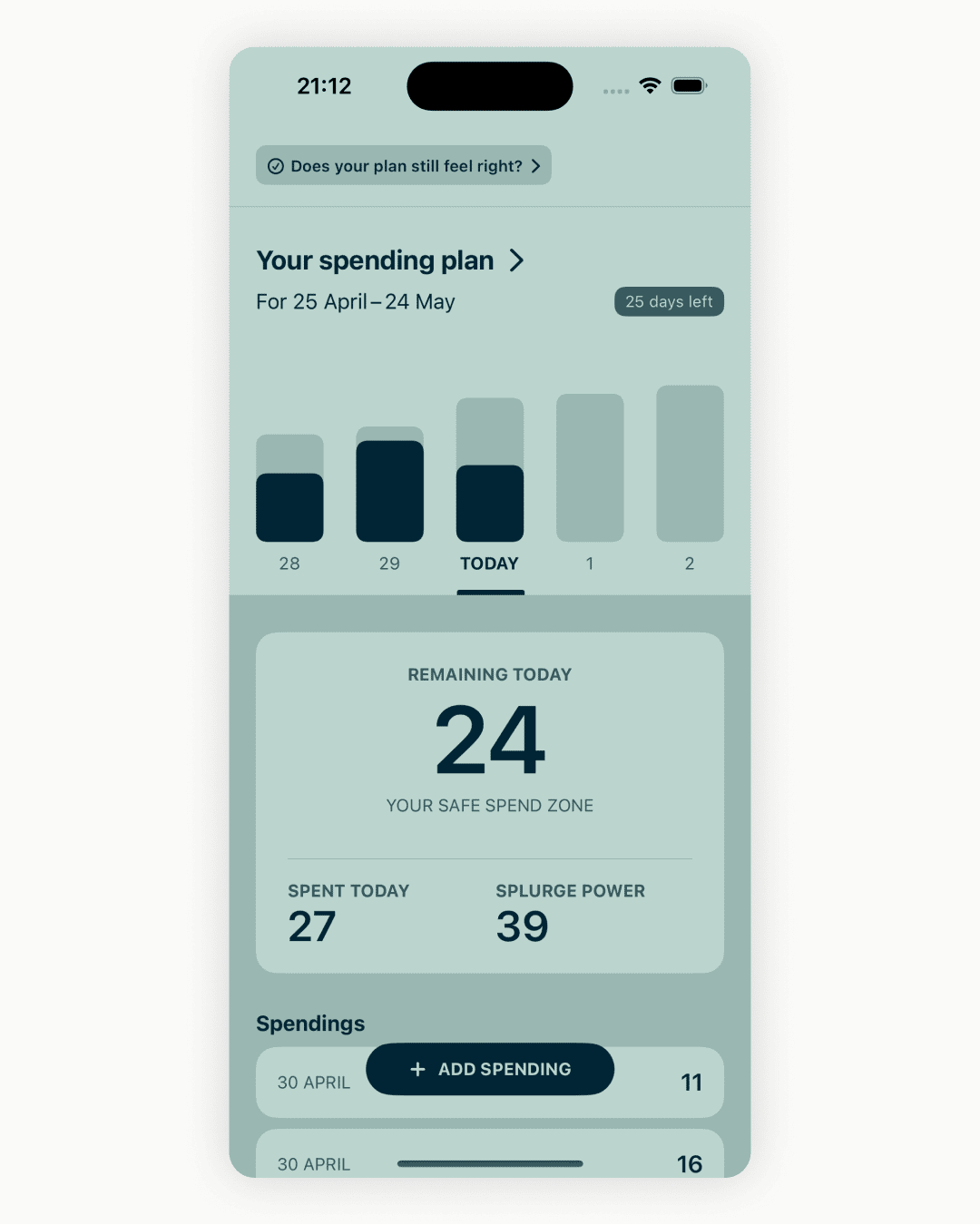
This personal finance app I’m working on is different. It’s based on a hunch I couldn’t shake. Going all in has only strengthened it.
A friend noted I’m trying to sell both a mindset shift and a product – harder than selling just one.
Most advice says: review your transactions, see where your money goes, then set spending limits. Most apps follow that idea.
I’m not trying to convert those happy with this approach, but those for whom it doesn’t fit.
And I believe there are many.
Retention data shows 21% of those who opened the app at least once are now active users (defined as opening it daily or every few days over the past 14 days).
Some came from my extended network, knowing only that I was working on a personal finance app. Others had seen a screenshot or brief description.
It also requires openness to a different approach – one that can initially seem simplistic. (The mindset shift I mentioned above.)
I’m trying to figure out how to reach more of those – and whether this retention holds.
In private beta for iPhone: https://lang.money
Here’s what I hope is the final draft:
Show HN: Lång – a personal finance app for pacing, not planning
I built Lång, an iOS app that helps you pace your daily spending.
Most personal finance tools are designed for planning: define categories, set monthly targets, track everything. That works well for fixed costs (bills, subscriptions). But daily spending doesn't work like that. It's irregular, decided in the moment, hard to predict.
Lång focuses just on that part. You enter how much you can spend until your next income, and it shows you what's safe to spend today – based on what’s left and how much time remains.
As you log spending, it adjusts. Spend less, and you build up room to spend more later. Spend more, and it scales things back.
The key insight: fixed costs are predictable and largely settled. Day-to-day spending (groceries, meals out, shopping) is where things go off track. That’s where planning falls short and pacing works better.
You might already do this instinctively – check your balance, think how long it needs to last, and pace yourself day by day.
Lång is designed to support that instinct – and the belief that pacing is the better approach here.
It's in private beta for iPhone: https://lang.money
What do you think? I'm especially curious to hear from anyone who's tried budgeting and found it didn’t quite fit.
2 Comments
Good job!
Thank you!