
PlayTex AI
PBR Map Generator, AI Texture Generator
In game development, the visual fidelity of your assets hinges on high-quality materials. Physically Based Rendering (PBR) maps are fundamental to achieving realistic and consistent visuals across diverse lighting conditions. However, generating these maps to a 'production-ready' standard—meaning they are consistent, optimized, and legally clear for commercial use—can be a complex and time-consuming process.
This guide will walk you through what defines production-ready PBR maps and how modern tools, specifically the PLAYTEX PBR Map Generator, can streamline your workflow. We'll explore how deterministic processing, AI-powered workflows, and clear ownership policies empower game developers to create stunning, engine-ready assets efficiently.
The Core Challenge: Why Production-Ready PBR Maps Matter
Game development demands efficiency without compromising quality. PBR maps, including Albedo, Normal, Roughness, Metallic, Ambient Occlusion, and Height maps, are crucial for defining how light interacts with a surface. Poorly generated maps can lead to visual inconsistencies, performance issues, and a disjointed aesthetic within your game.
Artists often face challenges in maintaining consistency across large asset libraries, ensuring maps are correctly calibrated for various game engines, and managing the iterative process of texture creation. Traditional methods can be labor-intensive, making it difficult to scale production or adapt quickly to changes in art direction.
What Defines a Production-Ready PBR Map?
A PBR map isn't just a texture; it's a critical component of a material that must perform reliably in a real-time environment. For game development, 'production-ready' implies several key characteristics:
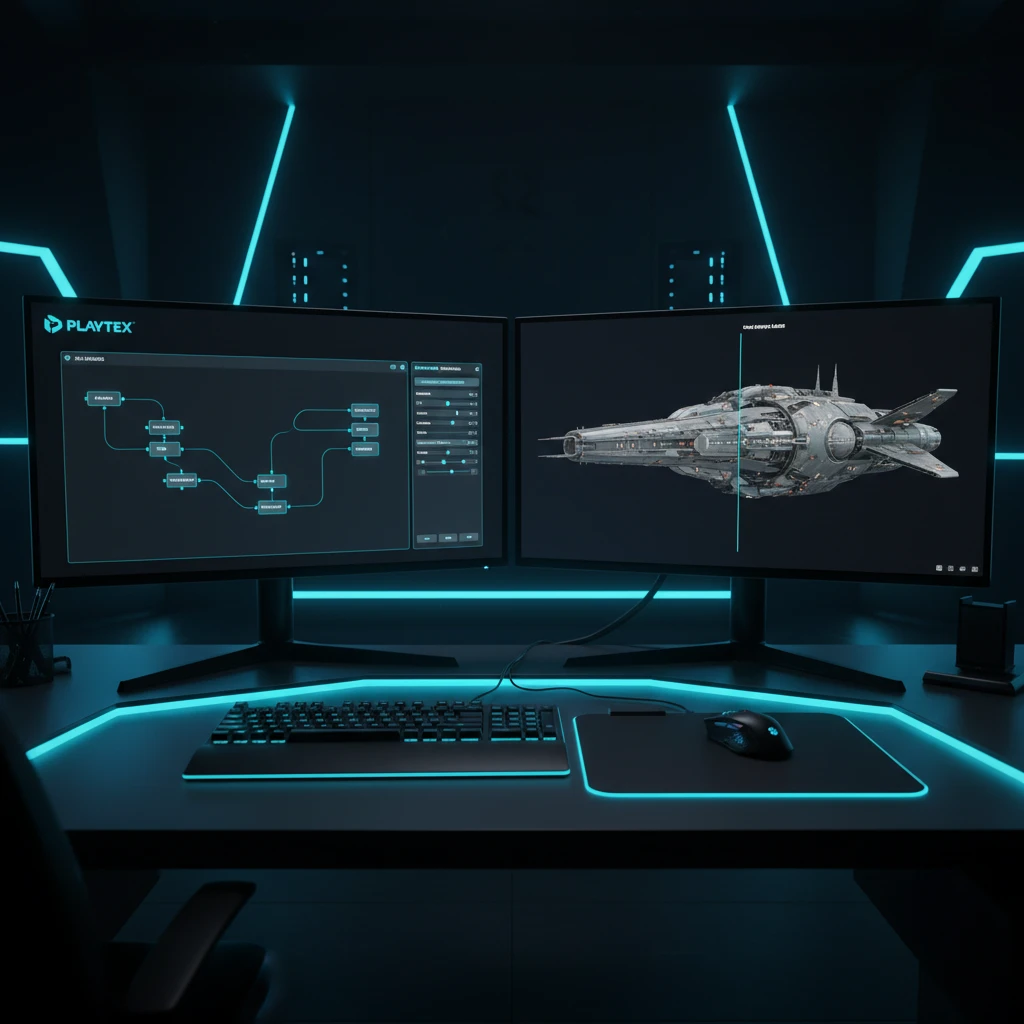
PLAYTEX offers a streamlined interface for generating and previewing PBR maps, ensuring your assets are production-ready.
Deterministic and Consistent: Outputs must be predictable and repeatable. If you generate a material today, you should be able to regenerate the exact same material with the same inputs tomorrow, ensuring consistency across your project and team.
Engine-Ready: Maps need to be correctly formatted, calibrated, and optimized for direct import and use in popular game engines like Unreal Engine or Unity, minimizing post-processing work.
High Quality and Detail: They must accurately represent the intended surface properties, with sufficient resolution and detail to hold up under close inspection without introducing artifacts.
Optimized for Performance: While high quality is essential, maps should also be efficient, using appropriate resolutions and compression to avoid unnecessary performance overhead in-game.
Clear Commercial Viability: For studios and indie developers, the legal right to use generated assets in commercial products is non-negotiable.
How PLAYTEX Delivers Production-Ready PBR Maps
PLAYTEX is engineered specifically for game developers, providing a robust material pipeline that addresses the complexities of PBR map generation. It integrates AI-powered workflows with deterministic processing to ensure quality, consistency, and efficiency.
Deterministic Processing for Consistent Outputs
One of the core strengths of PLAYTEX is its deterministic processing approach for building material maps. This means that given the same input, PLAYTEX will always produce the exact same output. This is vital for team collaboration and iterative development, as it eliminates guesswork and ensures that every artist on a project is working with consistent material foundations.
The PBR Map Generator within PLAYTEX focuses on precise calibration, ensuring that your Albedo, Normal, Roughness, Metallic, Ambient Occlusion, and Height maps are generated with the accuracy required for physically based rendering. This consistency is a cornerstone of a truly production-ready pipeline.
AI-Powered Workflows for Efficiency and Creativity
PLAYTEX leverages AI-powered workflows to accelerate texture, material, and map generation across modern game pipelines. This doesn't just mean faster creation; it means intelligent assistance that helps artists achieve complex results with less manual effort. Whether you're starting from a simple concept or need to enhance an existing texture, AI tools can quickly generate variations or refine details that would otherwise take hours.
These AI capabilities are integrated into a single material pipeline, allowing you to move seamlessly from initial idea to a complete, export-ready material set.
From Concept to Material: Image-to-Texture and Prompt-to-Material Capabilities
PLAYTEX supports diverse starting points for your material creation. You can transform a simple concept, photo, or text prompt into a governed material set. The Image-to-Texture Generator allows you to upload a reference image and automatically generate a full suite of PBR maps. Alternatively, the AI Texture Generator can interpret text prompts to create entirely new textures and materials from scratch.
This flexibility empowers artists to rapidly prototype ideas, convert real-world references into game assets, or explore creative directions without being limited by their initial source material.
Ensuring Commercial Use and Ownership for Game Assets
For any game development project, the commercial viability of your assets is paramount. PLAYTEX provides clear commercial use and ownership rights for all generated outputs. This means you can confidently use the textures and materials created with PLAYTEX in your commercial games, knowing that you retain full ownership of your creations.
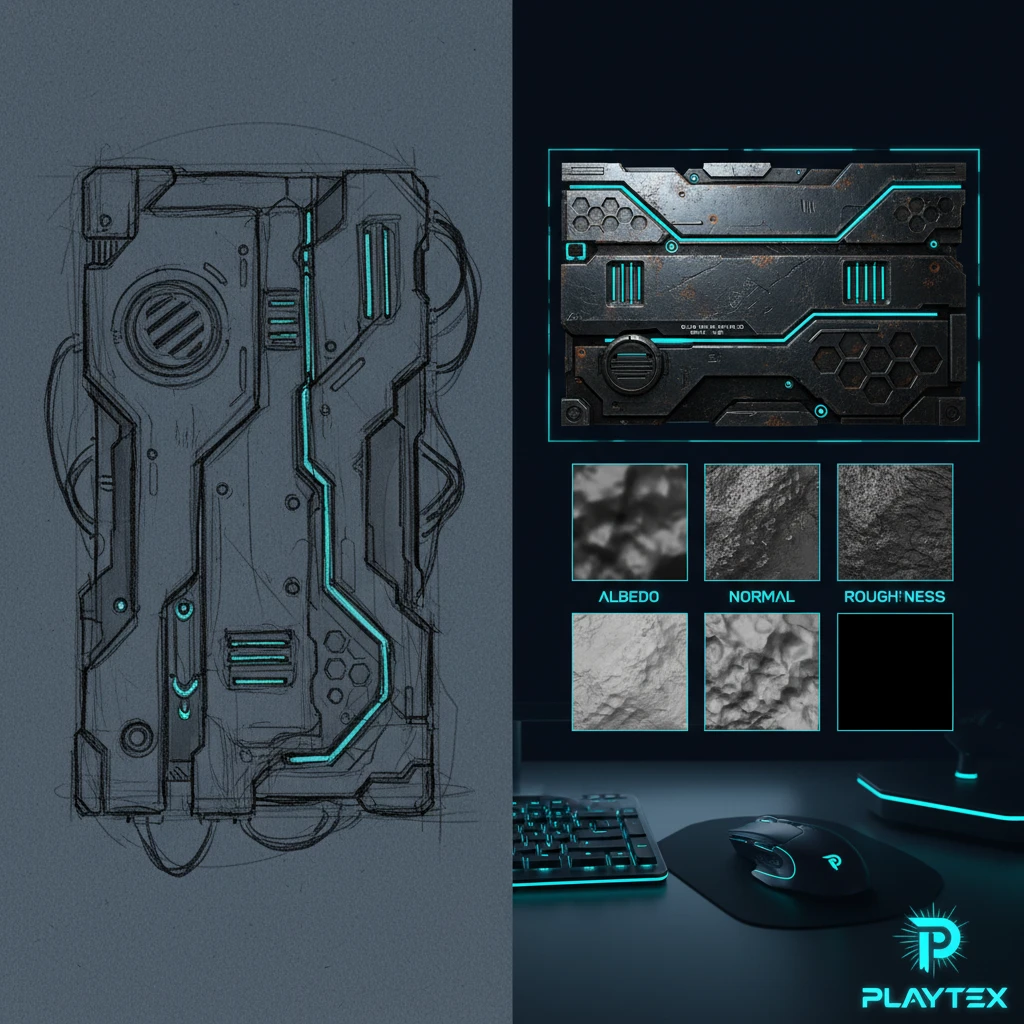
Transform concepts and photos into full PBR material sets with PLAYTEX's versatile generation tools.
This transparency is crucial for studios and indie developers alike, removing legal ambiguities and allowing you to focus on shipping your game.
Integrating PLAYTEX into Your Game Development Pipeline
Integrating PLAYTEX into your existing game development workflow is designed to be straightforward. The platform acts as a central hub for your material creation, offering export-ready handoff for various engines and applications.
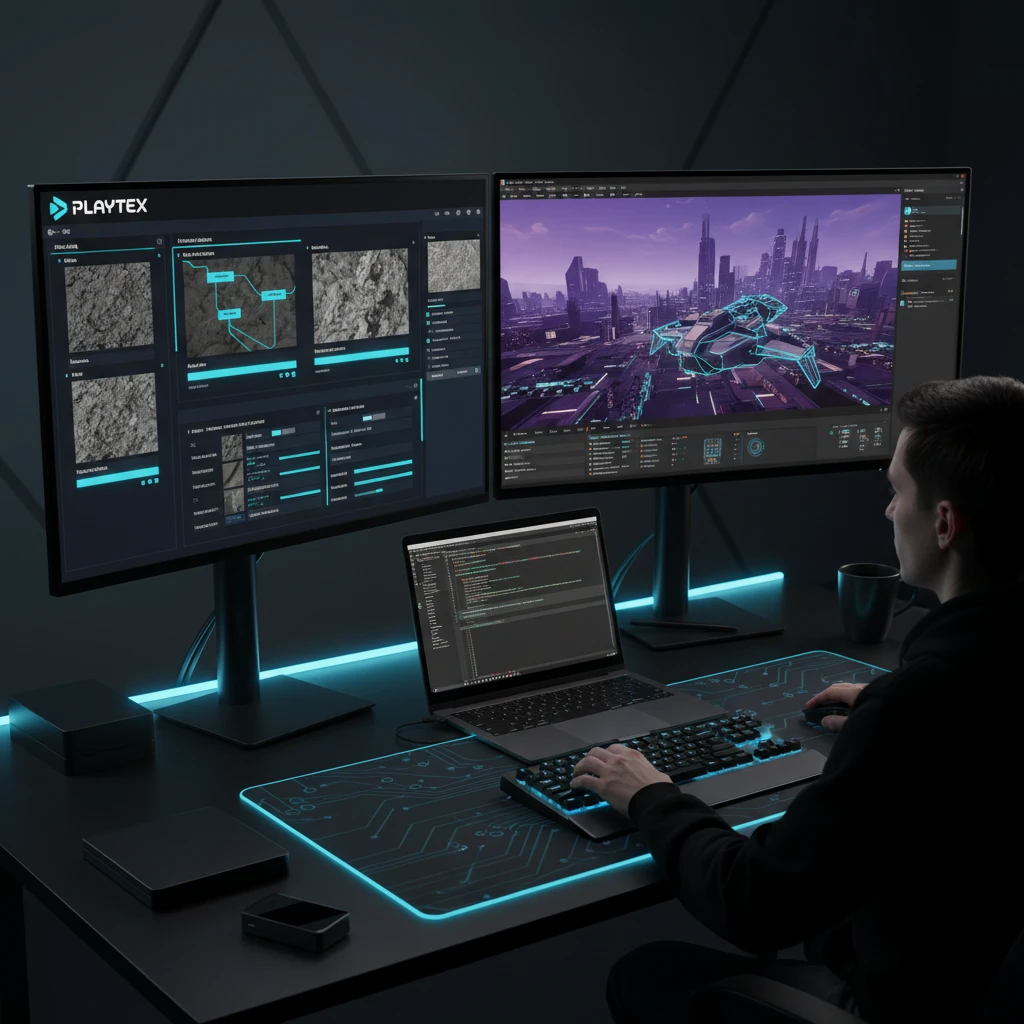
Seamlessly integrate PLAYTEX-generated PBR maps into your game engine for efficient asset creation.
A typical workflow might look like this:
Input: Start with a concept, a photo, or a text prompt for your desired material.
Generate PBR Maps: Use the PLAYTEX PBR Map Generator or AI Texture Generator to create your Albedo, Normal, Roughness, Metallic, AO, and Height maps.
Refine and Iterate: Utilize PLAYTEX's built-in tools to make adjustments, preview your material in real-time, and ensure it meets your artistic and technical specifications.
Export: Download your complete PBR material set, optimized and ready for direct import into your game engine.
Asset Binding & Collaboration: Leverage PLAYTEX's features for asset binding and team collaboration to maintain consistency across your project.
PLAYTEX offers various pricing plans to accommodate solo creators, production artists, and larger teams, ensuring that the tool scales with your project's needs.
Conclusion: Streamline Your PBR Workflow with PLAYTEX
Generating production-ready PBR maps is a critical, yet often challenging, aspect of modern game development. PLAYTEX provides a comprehensive solution, combining deterministic processing with advanced AI to deliver high-quality, consistent, and engine-ready materials.
By offering a unified pipeline from concept to export, clear commercial rights, and tools built specifically for game creators, PLAYTEX empowers artists and studios to accelerate their material workflows without sacrificing the visual fidelity that makes games truly immersive. Elevate your game's visuals and streamline your production pipeline with PLAYTEX.

The demand for high-quality, performant game assets continues to grow, pushing game developers and 3D artists to seek more efficient workflows. Artificial intelligence is rapidly transforming this landscape, particularly in the realm of texture and PBR material generation. AI-powered tools can significantly accelerate the creation of detailed, seamless, and game-ready textures, freeing artists to focus on creative iteration rather than repetitive tasks.
This article explores the top 5 AI texture generators designed to produce game-ready PBR materials. We'll examine their core features, evaluate their strengths, and discuss how each tool integrates into a modern game development pipeline. Our goal is to provide a clear overview to help you choose the best solution for your project's specific needs.
Why AI Texture Generators Are Essential for Game Development
AI texture generators offer several compelling advantages for game development. They dramatically reduce the time spent on creating base textures and PBR maps, enabling faster prototyping and iteration cycles. Artists can generate variations, experiment with different styles, and refine materials with unprecedented speed.
Beyond speed, AI tools can help maintain consistency across a project's art style and ensure PBR accuracy. By automating complex map generation, they minimize human error and provide a solid foundation for further artistic refinement. This efficiency is crucial for both indie developers managing limited resources and large studios aiming to scale content creation.
Understanding Game-Ready PBR Materials
Before diving into the tools, it's important to define what constitutes a 'game-ready' PBR (Physically Based Rendering) material. PBR materials are designed to react realistically to light, mimicking real-world surface properties. A game-ready PBR material typically includes a set of texture maps (Albedo/Base Color, Normal, Roughness, Metallic, Ambient Occlusion, Height/Displacement) that are optimized for real-time rendering engines.
Key criteria for game-ready PBR materials include:
Correct Map Generation: Accurate Albedo, Normal, Roughness, and Metallic maps are fundamental.
Seamless Tiling: Textures must tile perfectly without visible seams for efficient use on large surfaces.
Resolution and Optimization: Outputs should support various resolutions and be optimized for game engine performance.
Export Compatibility: Materials must be easily exportable to common game engines (Unity, Unreal Engine, Godot, etc.).
3D Preview: The ability to preview materials in a 3D environment is crucial for verifying their appearance under different lighting conditions.
Workflow Integration: Tools that fit seamlessly into existing art pipelines enhance productivity.
The Top 5 AI Texture Generators for Game-Ready PBR Materials
1. PLAYTEX: The Unified Material Pipeline for Production
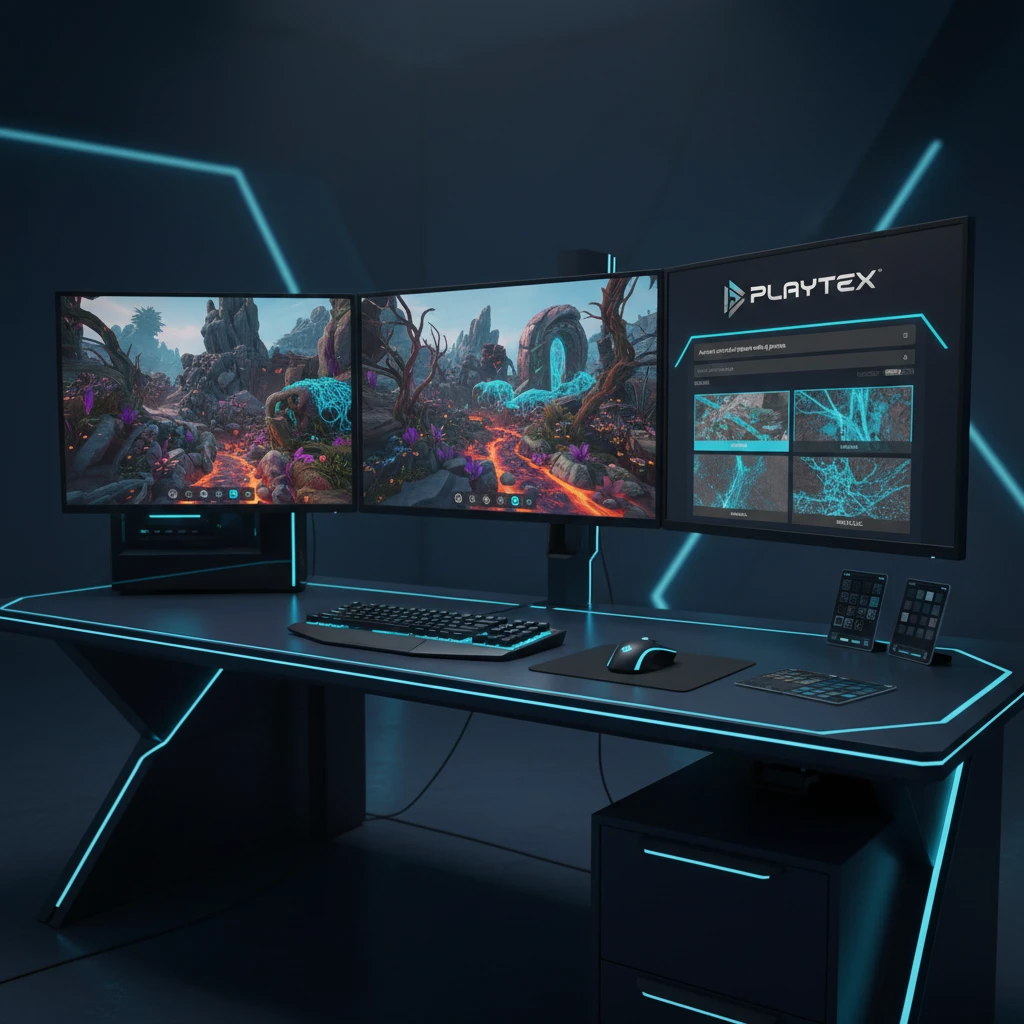
PLAYTEX offers a unified pipeline for AI texture generation, deterministic PBR map creation, and 3D material preview.
PLAYTEX stands out as a comprehensive solution specifically built for game developers, 3D artists, and creators. It offers a unified material pipeline that combines AI texture generation with deterministic PBR map creation and export-ready handoff. This unique approach ensures that while you leverage AI for speed, you also maintain control and precision over your final material outputs.
PLAYTEX provides AI-powered workflows that can generate textures from concepts, photos, or text prompts. These tools allow artists to quickly create seamless, tileable textures and explore numerous stylistic variations, accelerating the initial design phase. Whether starting from a simple idea, an existing image, or a descriptive text prompt, PLAYTEX's AI helps generate high-quality source materials efficiently. What sets it apart is its PBR Map Generator, which builds deterministic material maps. This means you get consistent, predictable results, crucial for production environments where repeatability is key. Users can inspect texture and material outputs in a 3D preview before export, allowing for early detection of tiling, normal response, roughness, and lighting issues. PLAYTEX supports moving from a simple input to a governed material set, ready for any modern game engine.
PLAYTEX is engineered to deliver production-ready assets, offering both creative flexibility through AI and the technical precision required for high-fidelity game environments. Its integrated 3D preview and deterministic map generation workflow minimize surprises and maximize efficiency.
2. Adobe Substance 3D Sampler & Designer: Industry Standard for Proceduralism
Adobe Substance 3D Sampler and Designer are cornerstones of many professional game development pipelines. While not exclusively AI-driven, Sampler uses AI-like capabilities for image-to-material conversion, allowing artists to quickly generate PBR materials from photographs. Designer, on the other hand, is a powerful node-based tool for procedural material creation.
Substance tools excel in their depth of control, ecosystem integration (with Substance Painter, Modeler, and Stager), and robust procedural capabilities. They offer unparalleled flexibility for creating complex, highly customizable materials. However, the learning curve can be steep, and the subscription model might be a barrier for some indie developers. For studios requiring intricate material control and a comprehensive ecosystem, Substance remains a top choice.
3. Polycam AI Texture Generator: Quick & Accessible Prompt-Based Materials
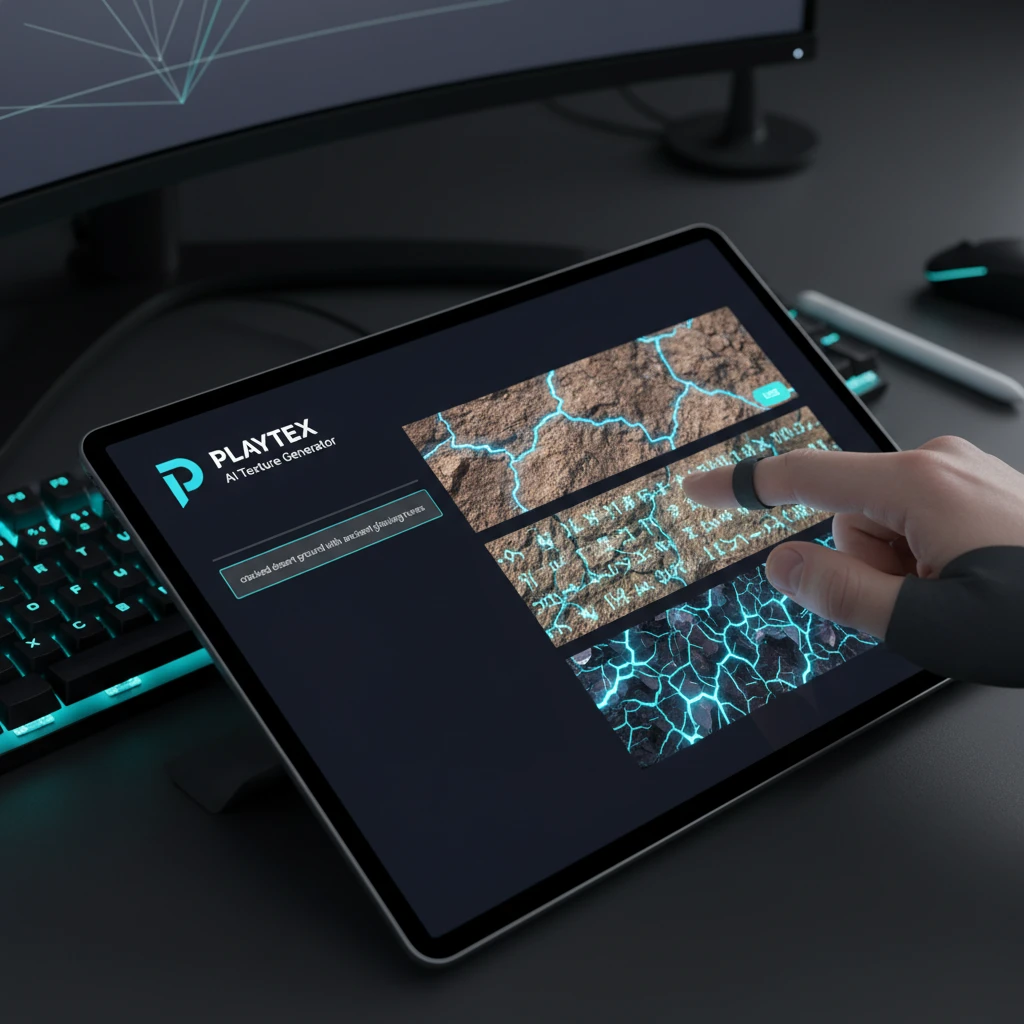
Polycam's AI Texture Generator allows users to quickly create materials from text prompts, ideal for rapid prototyping.
Polycam's AI Texture Generator offers a user-friendly, prompt-based approach to material creation. It allows users to generate textures from text descriptions or uploaded images, making it highly accessible for artists looking for quick iteration. Polycam emphasizes engine-ready imports, streamlining the process of getting materials into your game engine.
This tool is particularly strong for rapid prototyping and generating a wide variety of material concepts quickly. Its simplicity is a major advantage for artists who need to quickly populate scenes with diverse textures without deep technical knowledge. While it may not offer the same level of deterministic control or advanced procedural features as some other tools, its ease of use and speed make it a valuable asset for many workflows.
4. Meshy AI Texture Generator: Integrated 3D Asset Texturing
Meshy's AI Texture Generator focuses on generating textures specifically for 3D assets. It allows users to input text prompts or image references to create materials that are directly applied to their 3D models. This integration streamlines the texturing process, especially when working with existing 3D geometry.
Meshy is designed to fit into a broader 3D asset creation workflow, providing a quick way to texture models without leaving the platform. Its strength lies in its direct application to 3D assets, which can save time compared to generating textures separately and then importing them. For artists primarily focused on texturing individual models, Meshy provides a cohesive and efficient solution.
5. Hyper3D AI Texture Generator: Iterative Prompting for 3D Workflows
Hyper3D's AI Texture Generator provides another strong option for AI-driven material creation, emphasizing iterative prompting and integration into 3D workflows. It allows artists to refine their texture generation through multiple prompts and reference images, guiding the AI towards desired visual outcomes.
This tool is beneficial for artists who want to explore different stylistic directions quickly and iterate on their material designs. Its focus on prompt iteration helps achieve more precise results, making it suitable for projects that require a specific aesthetic. Hyper3D aims to offer a balance between creative freedom and practical application within a 3D production environment.
Choosing the Right AI Texture Generator for Your Workflow
Selecting the best AI texture generator depends on your specific needs, team size, and existing pipeline. Consider the following factors:
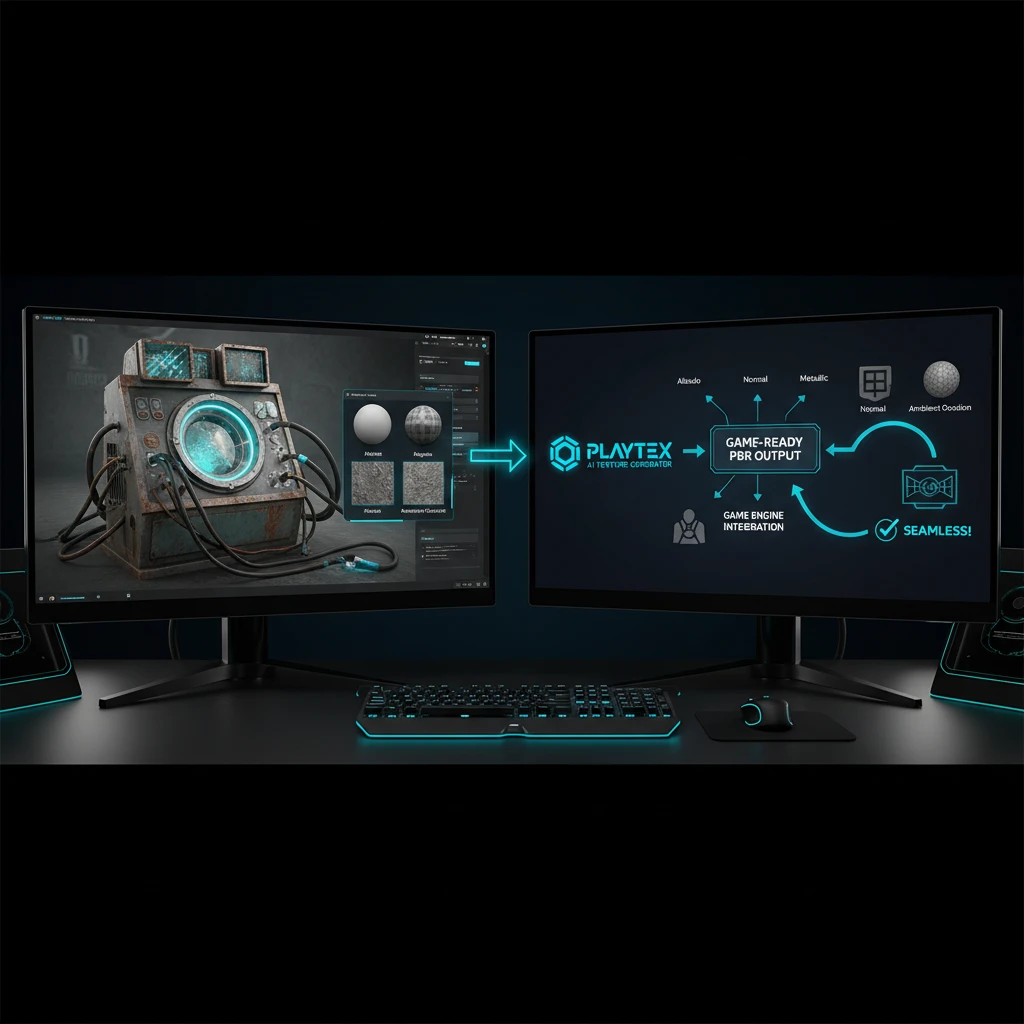
AI texture generators streamline the process of creating high-quality, game-ready PBR materials for modern game engines.
Workflow Integration: How well does the tool fit into your current game engine and 3D software setup?
Control vs. Speed: Do you prioritize granular control over every map, or is rapid generation and iteration more critical?
Deterministic Outputs: For production environments, consistent and repeatable results are often paramount.
3D Preview Capabilities: The ability to see your materials in context before export can save significant time.
Budget and Licensing: Evaluate the cost-effectiveness for your project or studio.
For game developers seeking a robust, production-ready solution that combines the speed of AI with the precision of deterministic PBR map generation, PLAYTEX offers a compelling, unified pipeline. It's designed to ensure your materials are not just visually impressive, but also technically sound and optimized for game engines.
Conclusion
AI texture generators are no longer a novelty; they are becoming an indispensable part of modern game development. From rapid prototyping to final asset creation, these tools empower artists to achieve higher quality results in less time. Whether you prioritize deep procedural control, quick prompt-based generation, or a unified production pipeline, there's an AI texture generator suited for your needs.
By leveraging tools like PLAYTEX, game developers can streamline their material creation process, ensuring their PBR assets are game-ready, consistent, and visually stunning. Explore the possibilities and elevate your game's visual fidelity today.
Comment