Sixty5o2
A mini operating System for Ben Eater's 6502 computer
The project received quite some love. A number of people contributed to the codebase and helped me improve. Unfortunately I did not find the time to extend the project, due to contract work paying the bills. Nearly 1 1/2 years later I came back to Sixty5o2. This time I decided to upgrade it a bit and create a tutorial video for it. Plan. Execution. Done. I really enjoyed the process and the video was released on 17th of June also:
Until today the project received 271 stars on github and was forked 23 times. I do receive emails regarding the project on a regular basis and therefore decided to continue to work on 8bit related projects.

I put the code on github, added the docs and launched the project on HN. I did not expect any success or responses at all. But within an hour the projects popularity exploded. Sixty5o2 ended up on page 1, was on #2 and #3 for quite some hours, received a good amounts of comments and criticism, and the github stars and forks started to go up.
First baby steps. The serial connection worked using minicom, but was very unstable. Therefore I decided to build my own node.js based tool, to be able to tackle the timing problems on my own. A fews days later the sender software was done, and I was able to transfer assembled bytecode into the BE6502.
Success.

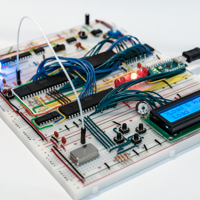
After building Ben Eaters 6502 breadboard computer programming it became painful. A few experiments with the Arduino Mega later I realized, that I could actually use it, to setup a very basic serial connection between the two machines. The idea of an operating system was born.
Comment