
Skinive AI - Skin health scanner
Instant symptom checker for moles, acne, rash, eczema, etc.
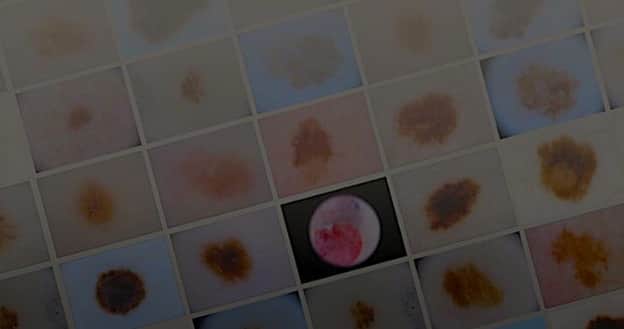
Fueling AI in Skincare: The Power of open source Skin Datasets
Artificial Intelligence is transforming dermatology, making skin condition detection more precise and accessible than ever. From assisting dermatologists in early disease diagnosis to enabling consumers to monitor their skin health, AI-driven tools are rapidly evolving. However, at the core of every high-performing AI model lies a fundamental element—high-quality, well-annotated datasets.
Top 10 Free Dermatology Datasets for Machine Learning
Just as an engine needs fuel to run, AI models rely on diverse and accurately labeled data to function effectively. The success of a skin disease detection system depends entirely on the quality, quantity, and variety of its training images. Without a robust dataset of skin conditions, even the most sophisticated neural networks will fail to provide accurate, reliable, and clinically meaningful results.
👉🏻 See the full list of Top 10 Skin Datasets
(including skin cancer, eczema, acne and other derm conditions)

In the ever-evolving landscape of digital health and dermatology, innovative solutions that leverage advanced technologies are paramount to staying ahead of the competition. Skinive.Cloud, an industry-leading B2B SaaS tool, offers third-party developers access to its powerful Skinive AI API. This solution revolutionizes skin health screening on smartphones, opening up new possibilities for accurate and personalized skin analysis.
Read more: https://skinive.com/ai-dermatology/
📢 Exciting News in the World of #HealthTech! 🌟
🤔 Wondering about the distinctions between #Skinive and Google's #DermAssist technology? Our latest blog post dives deep into the comparison! 🧐 Discover the unique features that set Skinive apart in the field of skin health assessment. 💁♀️💻
🚀 Stay ahead with cutting-edge #AI solutions for #Dermatology and #SkinCare. 🔬
Don't miss out on this insightful read! ➡️ https://skinive.com/skinive-derm-assist-difference/
#TechComparison #ArtificialIntelligence #SkinHealth #Innovation #Healthcare #MedTech #AIinHealthcare
#DigitalHealth #Healthcare #Google 📝
At https://Skinive.com , we make mobile apps for skin health analysis using AI and computer vision. Today I will tell you the story of our app’s creation and lift the veil on how long it can actually take from a prototype of a medical solution to when it goes to market. Spoiler — years ))
Evolution of the Skinive AI algorithm
The neural network is currently used in the Skinive App (for home use) and Skinive MD App (for medical professionals). There is also a Whitelabel solution Skinive.Cloud (Dermatology AI API) for integration into third-party medical apps/solutions.
Skinive V1.0 and a chatbot in Telegram
The first prototype saw the light of day in 2018 — almost 5 years ago (!!!). Back then, the prototype was a neural network that was trained on a small dataset of neoplasms to detect cancer risks. Neural network could be used through a chat-bot in Telegram, which of course had many limitations both in terms of photo quality (because chat-bots have no opportunity to control smartphone camera settings) and reduced UX capabilities. Despite all the shortcomings, the project received a positive response and we continued to develop the project.
The very first version of the prototype we were able to train and “assemble” in just a few days at an AI hackathon. But that was only the beginning of the journey to getting our app on the shelves of app shops.
Skinive V2.0 and the release of the Skinive MD app.
In 2020, the focus was on dermatological skin conditions that the neural network has difficulty recognising. In 2021 the arsenal of recognition of the Skinive neural network was expanded to include three large groups of dermatological diseases: herpes and fungal skin infections, papulosquamous diseases (psoriasis, seborrheic dermatitis, various types of lichen), and improved recognition of acne and HPV skin infections. The training dataset of the Skinive neural network included 115,000 photos in 2021, and the analysis accuracy has exceeded 90% due to continuous improvement of the algorithm.
At the same time, we launched our first mobile app, Skinive MD, which is aimed at medical professionals (GPs, dermatologists and cosmetologists).
Skinive V3.0 and release of the Skinive app
Training of the neural network for version 3 in 2022 was conducted on more than 160,000 images and showed a significant increase in sensitivity and specificity compared to 2021. The error rate (‘Miss Rate’) fell from 7.0% in 2021 to 1.8% in 2022. This indicates a reduction in the number of missed skin abnormalities and erroneous findings, as reflected in our accuracy report.
In August 2022, we were scheduled to launch the Skinive app for home use, so we had to spend a lot of time adapting the algorithm to a wide range of smartphones, as well as training the neural network to correctly analyse photos that are not taken exactly according to the instructions. While doctors read the instructions for use responsibly and for the most part take photos strictly according to the instructions, ordinary users tend to skip going through all the instructions and try the app right away, risking unreliable results.
At the beginning of 2023 our dataset reached +200,000 marked images and the number of analysed cases reached 1,000,000! We launched the Skinive App in August 2022 and by now the number of users has reached +150,000.
What’s taking so long?
Medical certification
Medicine is one of the most regulated fields of human activity, with a corresponding level of bureaucracy. Behind a medtech project is more than just the development of software or physical medical products. When the prototype is ready, you have to go through a lot of extra steps to pass all the tests, prove the effectiveness of the solution in research and scientific publications, and finally get the necessary certification. Without the proper paperwork, you will simply not be allowed in the AppStore in the Medical section.
We had to implement ISO 13485 in the company in order to release our products, which took us about 8 months, and we also had to take on the responsibility of an annual external audit.
The next step was to certify our solutions themselves, which took almost another year. In 2021, we received the CE-Mark (Software as medical device), which gave us access to the EU market and many other countries that recognise this certification.
Business
Of course I admit that under ideal conditions it would be possible to shorten the project time by 1.5–2 years. To do this you would need to have:
- A dataset of around 1 million images of skin pathologies
- Relevant experience in implementing similar projects
- A well-staffed team
- Sufficient funding
- A favourable business environment and growing markets.
In the beginning we had perhaps some enthusiasm, some experience, and the belief that we could implement a project like this. Realising that we had several years to devote to product development and packaging before the first revenue, we raised the first angel investment. In 2019 we were lucky enough to get into the famous Dutch accelerator Rockstart for the 6-month AI & Emerging tech track.
🍭 Goodies for dessert 🎁
To conclude this post, I want to thank you for your attention and support of us. As a thank you — accept from me and our entire team 1 week free use of our app with all premium features and unlimited checks. Just download the app using this referral link 👉🏻 https://skinive.page.link/UXx4
I look forward to your feedback and answering your questions in the comments at 👇🏻
Amazing article written by Alyssa Hui from Verywellhealth sharing about “Should You Use a Skin Check App to Screen for Skin Cancer? Here's What Dermatologists Say” the use of #ai to augment #public #health and the exciting health #startups including 🇱🇺 https://Skinive.com spearheading these efforts globally!
👉🏻Read article - https://www.yahoo.com/lifestyle/skin-check-app-screen-skin-150356956.html
Exciting news! Skinive’s algorithm has just analyzed one million photos of skin pathology as of April 24, 2023. This incredible milestone means that Artificial Intelligence has helped our users learn about their skin health a million times over! It’s a noteworthy achievement that demonstrates the importance of what we do:
- First and foremost, the number itself is substantial and represents a significant milestone.
Second, it’s a testament to our users’ trust in Skinive. - And third, it means that we’ve helped preserve health and beauty, and in some cases, even saved lives.
Out of the millions of photos analyzed, Skinive identified over 20,000 high cancer risks. While we don’t know how many people sought treatment, we know that helping even one person detect skin malignancy was worth our efforts!
However, Skinive isn’t just limited to checking moles. We’re actively developing the dermatological area to meet the high demand among our users. Our goal is to maintain the quality of life of our users and detect other problems such as viral and fungal pathologies, acne, eczema, psoriasis, and other diseases in time.
Our figures demonstrate the urgency of dermatological issues, with over 100,000 diagnosed diseases that required direct intervention from a dermatologist in the treatment process. This means that in more than 10% of cases, Skinive has helped our users identify a health threat and make the right decision.
But we’re not stopping there. Let’s keep pushing forward! ▶️
P.S. you can always see the current statistics on the homepage 👉🏻 https://Skinive.com on how many images have been analysed and what risks have been identified 😉
Comment