
The Gaming Nest
Gaming Community & Creator Platform
Over the past months, I've been rebuilding and improving the platform based on everything I learned from building, testing, and listening to developers.
This update includes one of the biggest changes so far: WebGL support
Developers will be able to publish games that players can run directly in the browser, making discovering and playing games much easier.
There are also many improvements behind the scenes better performance, smoother experience, and a more polished platform overall.
It's not just another feature update. It feels like a new chapter for The Gaming Nest.
Still building, still learning, and excited to share what's coming.
Would love to hear your thoughts: what features would make a game publishing platform more useful for you?

Hey Indie Hackers
I'm Noureddin, founder of The Gaming Nest (TGN) — starts with games, ends at the edge of imagination.
I want to share this the way I actually think about it, not the polished founder-story version.
Where this started
Before building startups, I spent over five years selling video games, consoles, and computer hardware.
Gaming was always around me. Not just as entertainment, but as a community and a culture.
I talked to players every day, learned what they cared about, what frustrated them, and what made gaming more than just playing a game.
At the same time, I was studying Computer Science.
I didn't own a laptop until my final year, and the one I finally got made every project harder than it needed to be. It would freeze, shut down, and sometimes turn simple tasks into long problems.
But I graduated.
After university, I worked as a software developer, but I always wanted to build something of my own.
Still searching, still building
The Gaming Nest was not my first idea.
Over the years, I started many projects and explored many different ideas.
Some came from problems I personally experienced. Others came from things I was curious about or passionate about.
Some ideas were later built successfully by others. Some never became products. Some I stopped because I realized they weren't the right thing to spend years building.
The reasons were different every time:
The timing wasn't right.
I didn't understand the problem enough.
I didn't have the resources needed.
Or I simply lost conviction in the idea.
I still work on experiments today, including AI projects and other ideas around problems I care about.
For me, this is part of the process of finding problems worth committing to.
And gaming has always been one of those areas.
Two failures before The Gaming Nest
Before TGN, I tried building startups.
The first one was a crowdfunding platform.
In 2023, I had an idea:
Why can't regular people support and invest in ideas they believe in?
At the time, I didn't even know the term "crowdfunding". It wasn't something I commonly saw discussed in Jordan or the region, so I approached it from the problem itself.
I joined a startup program, built the first version, and started exploring the idea.
Eventually, it failed.
The main reason was that I underestimated the complexity behind building a platform involving trust, financial transactions, legal requirements, and operations.
The idea itself was interesting, but building a company requires much more than an idea.
That experience changed how I evaluate problems and opportunities.
After that, I went back through years of notes and ideas and asked myself:
"What is something I've spent thousands of hours doing without anyone asking me to?"
The answer was gaming.
Why The Gaming Nest?
The more I thought about it, the clearer it became that gaming was not just an interest.
It was an area I understood from years of experience.
Gaming is not only about playing.
It's the creators, developers, artists, communities, stories, and experiences built around it.
The Gaming Nest started from a simple idea:
Create a place where gaming culture can exist beyond the games themselves.
A place where people can discover, share, create, and connect.
I didn't start by trying to recreate another platform.
I started with something I personally wanted to exist.
Building TGN
To focus on this idea, I left my job in Saudi Arabia and moved back to Jordan.
Since then, I have been building TGN independently and funding it myself.
No team.
No office.
Just continuous building, testing, and learning.
Every version, conversation, and experiment has helped shape what TGN is today.
Where TGN is today
The Gaming Nest is still evolving.
What started as an idea around game developers and creators has expanded into a broader gaming ecosystem.
Today we're exploring:
🎮 Gaming communities bringing people together around the games they love
🏆 Competitive gaming experiences
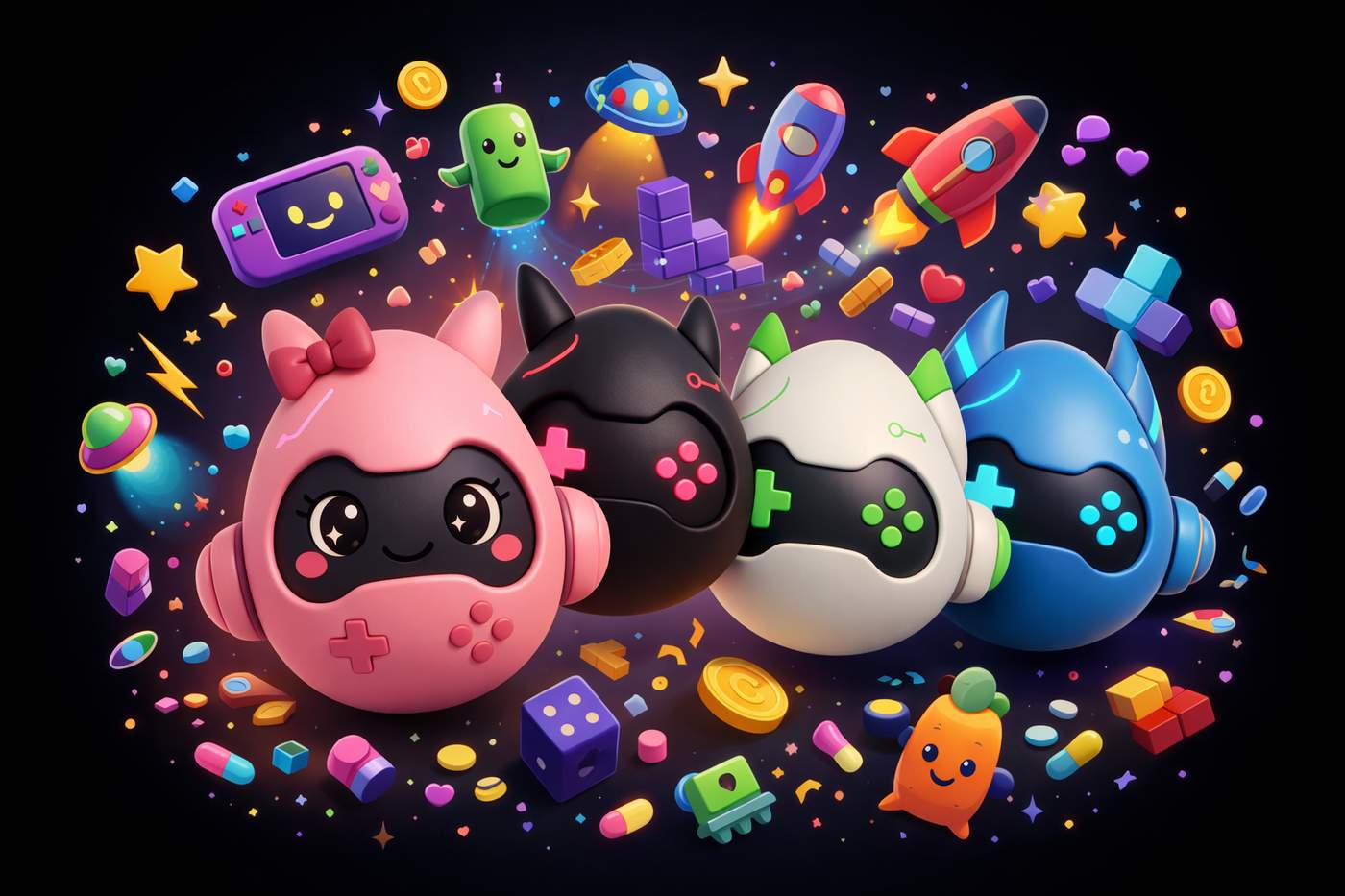
🌌 The Nestoverse an original universe built around Nesto and the stories connected to gaming culture
Alongside TGN, I'm also experimenting with AI-powered projects. Some already have working prototypes and users testing them.
Not everything will work.
That's part of building.
Why I'm still building
I still make mistakes.
I still have a lot to learn.
But I know that building is something I want to keep doing.
The Gaming Nest combines years of experience, curiosity, and a space I've been connected to for a long time.
Games are where it starts.
Where it goes from there is what I'm exploring.
I would love to hear from other Indie Hackers, especially founders who are still exploring, building, and figuring things out.
What are you building?
And what have you learned along the way?
🔗 https://thegamingnest.com/en
-
1
One thing that stood out is how your failures changed the criteria you use to choose ideas.
A lot of founders ask, "Is this a good opportunity?" Your story gradually shifts toward, "Is this a problem I'm uniquely equipped to understand for the next decade?" Those questions often lead to very different companies, even when the market looks similar.
-
1
I completely agree.
Every failure has changed how I think. Instead of just looking for opportunities, I find myself noticing problems I experience firsthand while building. Those problems often become the foundation for my next ideas. Over time, failure has given me a much deeper understanding of what is actually worth building. My choices keep improving, even though it's never easy to build a startup from MENA. In many ways, that's where the most valuable lessons come from.
-
1
One thing I'd keep watching is whether you're choosing problems because you understand them today or because you'll keep understanding them as the market changes.
Those can look similar at first, but they're very different sources of long-term conviction.
-
1
I think ideas rarely begin in isolation. Most start with a problem, whether it's personal or something you've observed. From there, forecast becomes just as important as understanding the problem itself: asking what the future might look like, how the market could evolve, and what happens if everything changes.
Whether the problem is deeply personal or not, every founder eventually goes through the same cycle of learning, adapting, and refining their understanding. Markets, technology, and user behavior are constantly evolving. AI is a perfect example of how quickly entire industries can shift.
I believe long-term success comes less from choosing the perfect problem and more from combining deep analysis with the ability to anticipate change and adapt continuously. Becoming too attached to a product or refusing to evolve is often what causes great companies to fall Nokia is a classic example.
I could be completely wrong, of course. But that's also part of building. I'm sure my perspective will continue to evolve as I learn from future successes and failures.
-
1
I appreciate the thoughtful reply.
Reading it gave me one thought about the relationship between adapting to change and maintaining conviction. I don't think I could explain the reasoning properly in a thread without oversimplifying it.
If you're interested, what's the best email to reach you on?
-
-
-
-

Comment