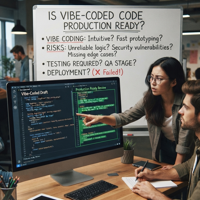
Vibe Coding Cleanup
refactoring, testing, security, and code quality


Security has become an important consideration for businesses, property owners, event organizers, and communities across Southern California. From commercial buildings and construction sites to residential communities and special events, every property can face different security challenges. Theft, unauthorized access, vandalism, disturbances, and other incidents can create financial losses and disrupt normal operations. A well-planned security strategy can help reduce these risks while creating a safer environment for employees, visitors, residents, and customers.
Professional security personnel provide more than a visible presence. Trained guards can monitor properties, control access, observe unusual activity, respond to incidents, and communicate with emergency services when necessary. Choosing the right security approach depends on the location, operating hours, property size, potential risks, and specific business requirements. For organizations looking for dependable protection, professional Security Guard Services in Southern California can become an important part of a broader security plan.
Why Southern California Properties Need Professional Security
Southern California includes a wide range of commercial, residential, industrial, and public properties. Each environment has different security requirements. A busy retail location may need visible guards to discourage theft and assist with customer safety, while a construction site may require overnight monitoring to protect expensive equipment and materials.
Businesses also need to consider the impact of unauthorized access. Employees, contractors, vendors, and visitors may enter a property throughout the day. Without appropriate access procedures, it can become difficult to determine who should be on-site.
Professional security guards can provide a physical layer of protection that complements cameras, alarms, access-control systems, and other technology. Their ability to observe situations in real time allows them to respond to circumstances that automated systems may not fully understand.
Security Guards as a Visible Deterrent
One of the simplest benefits of having trained security personnel on-site is visibility. A uniformed guard can make it clear that a property actively monitors its surroundings.
This visible presence may discourage individuals who are considering theft, vandalism, trespassing, or other unauthorized activity. Guards can patrol designated areas, monitor entrances, and remain alert to changes in the environment.
The goal is not to create an intimidating atmosphere. Professional guards should maintain a calm and approachable presence while remaining prepared to respond appropriately when an issue occurs.
Protecting Commercial Properties
Commercial buildings often contain valuable equipment, confidential information, inventory, and technology. They may also experience frequent movement of employees, customers, delivery drivers, and contractors.
Security personnel can help monitor entrances and exits, observe activity around the property, and identify situations that require attention. Depending on the site, guards may also perform regular patrols or assist with visitor management.
Businesses can develop specific post orders that explain what guards should monitor and how they should respond to common situations. Clear procedures help create consistency across shifts.
Construction Site Security
Construction sites can become attractive targets for theft and vandalism because they often contain valuable tools, machinery, building materials, and equipment. Many sites also remain unattended outside normal working hours.
Security guards can patrol the property during evenings, overnight periods, weekends, or other times when workers are not present. They can monitor access points and report suspicious activity.
Protecting a construction site can also help prevent unauthorized individuals from entering potentially dangerous areas. This adds another layer of safety beyond protecting physical assets.
Residential Community Security
Apartment complexes, gated communities, condominiums, and residential developments may benefit from professional security services as well.
Residents want to feel safe in shared spaces such as parking areas, entrances, lobbies, walkways, and recreational facilities. Security personnel can monitor these areas and help enforce property rules when appropriate.
A guard can also provide a point of contact when residents notice suspicious behavior or require assistance with a security-related concern.
The exact approach depends on the community. Some properties may need continuous patrols, while others may benefit from security during specific hours when incidents occur more frequently.
Event Security
Large gatherings require careful planning because crowds create unique security challenges. Concerts, conferences, festivals, private functions, sporting events, and corporate events may all require trained personnel.
Event guards can monitor entrances, assist with crowd movement, observe restricted areas, and respond to disturbances. Their presence can also help guests identify where to go when they need assistance.
Event security should begin before guests arrive. Organizers should consider entry points, emergency exits, parking areas, staff-only locations, and potential crowd-control concerns.
Access Control and Visitor Management
Knowing who enters a property is an important part of security. Unauthorized visitors can create risks for employees, customers, residents, and valuable assets.
Security guards can monitor entrances and verify visitors according to the property's established procedures. They may check identification, maintain visitor logs, issue access credentials, or contact employees to confirm appointments.
A consistent access-control process can reduce confusion while making it easier to identify unusual activity.
Security Patrols
Patrols allow guards to monitor areas that may not receive constant attention from a fixed security post. Depending on the property, patrols may take place inside buildings, around parking areas, along perimeter fencing, or across other designated locations.
Regular patrols can help identify issues such as open doors, damaged fences, suspicious activity, equipment problems, or unauthorized individuals.
The patrol schedule should reflect the property's risk profile. Some locations may require frequent checks, while others may need more focused monitoring during particular hours.
Combining Security Personnel With Technology
Modern security strategies often combine people and technology. Cameras, alarms, access-control systems, lighting, and other tools can improve visibility, but they do not always replace human judgment.
A camera can record activity, but a trained guard can assess what is happening and determine whether further action is necessary. Similarly, an alarm can indicate that something has occurred, while security personnel can investigate the situation and follow the property's response procedures.
Using both technology and trained personnel can create a more comprehensive security system.
Emergency Response and Incident Reporting
Security guards can play an important role during unexpected incidents. Depending on their training and assignment, they may respond to disturbances, medical emergencies, suspicious activity, property damage, or other situations.
Professional guards should understand when they need to contact law enforcement, emergency medical services, property management, or other responsible parties.
Detailed incident reporting is also valuable. Written reports can document what happened, when it happened, who was involved, and what actions personnel took. Property managers can use these reports to identify recurring issues and improve future security planning.
Choosing the Right Security Service
Not every property needs the same type of security. Before hiring a security provider, businesses should identify their specific concerns.
Important questions include:
What areas require monitoring?
What hours present the greatest risk?
Does the property need mobile patrols or a fixed guard post?
Will guards manage visitor access?
Are there valuable assets that require additional protection?
Does the site require overnight security?
What procedures should guards follow during emergencies?
Answering these questions can help organizations choose services that match their actual needs instead of paying for an unsuitable security model.
The Importance of Trained Security Personnel
A security guard's effectiveness depends heavily on training, communication, judgment, and professionalism. Guards need to understand their responsibilities and the expectations of the property they protect.
Training can cover areas such as observation, access control, incident reporting, emergency procedures, communication, conflict management, and appropriate response techniques.
Professionalism also matters. Guards often interact with employees, residents, customers, and visitors, so they should remain respectful and composed while maintaining awareness of their surroundings.
Security for Businesses of Different Sizes
Security is not limited to large corporations. Small businesses can also experience theft, vandalism, unauthorized access, and other risks.
A small retail store may require security during busy hours, while an office building may need protection during evenings. A warehouse may require overnight patrols because of valuable inventory.
The right service should reflect the business's actual risk rather than its size. Even a relatively small property may need specialized protection if it contains valuable equipment or operates in a high-risk environment.
Creating a Proactive Security Strategy
The strongest security plans focus on prevention rather than waiting for an incident to occur. Businesses should regularly review their properties and identify vulnerable areas.
Poor lighting, unsecured entrances, damaged fencing, limited visibility, and inconsistent visitor procedures can all create opportunities for unwanted activity.
Security personnel can help identify these concerns during routine operations. Management can then make adjustments to improve the property's overall security posture.
Building a Safer Environment
Security guards do more than respond to problems. Their regular presence can contribute to a stronger sense of order and safety.
Employees may feel more comfortable when they know someone is monitoring the property. Customers and visitors may also feel more confident entering a location where professional security is visible.
For property managers, this can support both safety and the overall experience of people using the facility.
Conclusion
Southern California businesses and properties face a wide variety of security challenges, and there is no single solution that works for every location. Commercial buildings, construction sites, residential communities, retail properties, and events all require different approaches based on their specific risks and operating environments.
Professional security personnel can provide valuable support through visible deterrence, access control, patrols, incident monitoring, emergency response, and detailed reporting. When combined with appropriate technology and clear procedures, trained guards can become an important part of a comprehensive security strategy.
The most effective approach starts with understanding the property, identifying potential vulnerabilities, and selecting services that address those specific needs. With thoughtful planning and professional support, organizations across Southern California can create safer environments for their people, visitors, and valuable assets.


A memorable villain can transform an ordinary story into an engaging one. Whether you are writing a novel, developing a game, creating a comic, planning a role-playing campaign, or simply building a fictional world, the right antagonist needs a name that matches their personality and role. A powerful name can make a character feel mysterious, dangerous, intelligent, or even strangely humorous before the audience learns anything else about them.
Coming up with original names is not always easy. Writers often spend a surprising amount of time combining words, testing different sounds, and trying to avoid names that feel too familiar. A villain name generator can provide quick inspiration by producing creative name ideas that can be used as starting points for fictional characters. The generated result can then be adapted to fit the character's personality, setting, and story.
Why a Villain's Name Matters
Names influence how audiences perceive fictional characters. A soft or elegant name may suggest intelligence, mystery, or sophistication, while a harsher name can create an immediate impression of danger or aggression.
A villain's name does not necessarily need to describe their personality directly. Sometimes an ordinary-sounding name can make a character more interesting because the contrast creates uncertainty.
The best names usually fit naturally into the world where the story takes place. A futuristic villain may need a different naming style from a medieval warlord or a supernatural antagonist. Considering the setting before selecting a name can make the character feel more believable.
What Makes a Good Villain Name?
There is no single formula for creating a great villain name, but several qualities can make a name more memorable.
First, it should be reasonably easy to pronounce and remember. Extremely complicated names can work in certain fantasy settings, but readers should still be able to recognize them when they appear again.
Second, the name should match the character's identity. A mysterious villain might benefit from a subtle name, while a powerful fictional ruler could have a more imposing title.
Finally, the name should feel distinct from the names of other characters. If several characters have similar-sounding names, readers may struggle to remember who is who.
Using a Villain Name Generator for Inspiration
Generating a name can be a useful first step when developing a character. Instead of trying to create the perfect name immediately, writers can generate several possibilities and look for patterns they like.
One name might have an interesting sound, while another might contain a word that fits the character's backstory. Combining useful elements from several generated ideas can produce something more original.
The generator does not have to provide the final answer. Think of it as a brainstorming tool that helps overcome the blank-page problem.
Names for Different Types of Villains
Villains come in many forms, and their names should reflect their roles.
A powerful emperor might need a formal and commanding name. A secretive assassin could have a shorter, sharper identity. A supernatural creature might use an unusual or ancient-sounding name.
A technological villain could have a modern or artificial identity, while a fantasy antagonist might use names influenced by mythology, old languages, or fictional cultures.
Identifying the villain's archetype before generating names can make the selection process much easier.
Creating Names for Fantasy Villains
Fantasy stories provide enormous freedom when it comes to character names. Writers can create fictional languages, unusual combinations, and titles that do not exist in the real world.
A fantasy villain might be a dark sorcerer, cursed monarch, ancient creature, warlord, or fallen hero. Each role can influence the naming style.
For example, a dark wizard might have a mysterious name accompanied by a title, while a tyrannical king could use a formal name followed by a threatening epithet.
The key is consistency. If the fictional world has a particular naming structure, villain names should generally follow the same rules.
Creating Names for Supervillains
Superhero stories often use memorable villain identities. A supervillain's name may reflect their powers, personality, appearance, philosophy, or origin.
Some names are direct and dramatic, while others use irony or humor.
For example, a villain with control over electricity might have a name associated with energy or storms. A character who manipulates shadows could use a name that suggests darkness or secrecy.
However, subtle names can also work. A villain's public identity may sound completely ordinary while their secret identity has a much darker title.
Creating Names for Video Game Villains
Video game antagonists need names that work well in dialogue, menus, character lists, and promotional material.
A memorable name can help players quickly recognize an important enemy. Major villains may also receive titles that communicate their status within the game world.
For example, a final boss might have a personal name combined with a title such as "The Conqueror," "The Eternal," or "The Fallen." This gives the character additional identity without requiring a long explanation.
Game developers can use generated names as brainstorming material before creating the final character.
Villain Names for Role-Playing Games
Tabletop role-playing games often require players and game masters to create characters quickly. A campaign may introduce dozens of enemies, political leaders, mysterious strangers, and recurring antagonists.
Generating names can save preparation time.
A game master can create several names before a session and assign them to characters as needed. The names can then be developed further as the story progresses.
This approach is particularly useful for improvised campaigns where players may interact with unexpected characters.
Using Titles With Villain Names
A strong title can make an ordinary name feel much more dramatic.
Titles can communicate authority, reputation, history, or fear. Examples include:
The Shadow King
The Iron Warden
The Crimson Lord
The Silent Judge
The Fallen Prince
The Night Herald
A title should support the character rather than replace personality. The villain should still have motivations and traits that make them interesting.
Matching Names to Personality
The villain's personality should influence the name-selection process.
An intelligent strategist might have a sophisticated name. A violent warlord may need something harsher. A manipulative villain could have an elegant public identity that hides their true nature.
Consider how the villain behaves when selecting a name. A character who rarely speaks might benefit from a short, memorable identity. A theatrical antagonist might deliberately choose a dramatic name because they enjoy creating fear.
The name can become part of the character's storytelling.
Names Based on Villain Motivation
Motivation can provide another source of naming inspiration.
A villain seeking revenge might have a name associated with darkness, justice, or destruction. A character obsessed with power might use a royal or authoritative title.
A villain who believes they are saving the world may have a surprisingly noble-sounding identity. This contrast can create additional depth.
The name does not have to reveal the motivation immediately. Sometimes keeping the connection subtle makes the character more intriguing.
Avoiding Overused Villain Names
Certain words appear frequently in fictional villain names. Words associated with darkness, death, shadows, blood, demons, and destruction can work, but using them too often may make a character feel generic.
Writers can create more originality by experimenting with unexpected combinations.
Instead of directly using a word such as "dark," consider a metaphor, historical reference, symbolic object, or personal detail connected to the villain.
A generator can provide a starting point, but editing the result can make the final name feel more distinctive.
Making a Villain Name Easy to Remember
A complicated fictional name may look impressive on paper but become difficult for readers to remember.
Short names often have strong impact because they are easy to recognize. Longer names can work when they serve a specific purpose, particularly in fantasy or historical-inspired settings.
Writers should also read the name aloud. A name that looks interesting may sound awkward when spoken during dialogue.
Testing the name in several sentences can reveal whether it feels natural.
Using Random Names for Creative Writing
Random generation can also be useful when the character is still undeveloped.
Sometimes a name can inspire the character rather than the other way around. A writer might generate an unusual name and then begin asking questions about the person behind it.
Who are they? What do they want? Why are they feared? What happened in their past? What relationship do they have with the protagonist?
A random name can therefore become the foundation for an entire character concept.
Building a Complete Villain Identity
A name is only one part of a successful antagonist. Writers should also consider the character's appearance, personality, motivation, abilities, weaknesses, relationships, and history.
A powerful villain becomes more interesting when audiences understand why they behave the way they do.
Even an intimidating name will not compensate for a poorly developed character. The name should support the story rather than carry the entire character concept.
Final Thoughts
Creating a memorable fictional villain starts with a strong concept, but the right name can give that character an additional layer of identity. Whether you are developing a fantasy antagonist, superhero, video game boss, comic-book villain, or role-playing character, naming is an important part of the creative process.
A villain name generator can make brainstorming faster by providing unexpected combinations and ideas. Instead of treating generated results as final names, writers can modify, combine, and refine them until they match the character and fictional world.
The best villain names are memorable, appropriate, and distinctive. When combined with a compelling personality, believable motivation, and strong character development, the right name can help turn a fictional antagonist into a character readers remember long after the story ends.


Table of Contents
Why Does Vibe Coding Cleanup Matter?
Refactoring AI-Generated Code
Testing a Vibe-Coded Application
Security Checks During Vibe Coding Cleanup
Improving Code Quality After Vibe Coding
How to Know What Needs to Be Cleaned Up First
Should You Refactor, Rebuild, or Keep Developing?
A Practical Vibe Coding Cleanup Workflow
Conclusion
Frequently Asked Questions
Vibe coding has changed how quickly an application can move from an idea to a working prototype. Instead of manually writing every component, developers can use AI coding tools to generate interfaces, backend logic, database operations, API integrations, and other parts of an application through natural-language instructions.
That speed can be extremely useful during experimentation. A team can test an idea, build an MVP, or validate a feature without spending weeks on the first version. But once the application grows, the weaknesses of rapid AI-assisted development can become more visible.
Code generated during different stages may follow different patterns. Temporary fixes can remain in the project, duplicate functionality can appear in multiple places, and important areas may have little or no testing. Security problems can also remain hidden because an application that works correctly is not necessarily an application that is safe or production-ready.
This is where vibe coding cleanup becomes important. The goal is not to remove AI-generated code simply because AI created it. Instead, cleanup involves reviewing the application, identifying genuine engineering problems, and improving the areas that could affect reliability, security, maintainability, or future development.
Four areas deserve particular attention: refactoring, testing, security, and code quality. Together, they provide a practical framework for evaluating whether a vibe-coded application is ready for its next stage.
1. Why Does Vibe Coding Cleanup Matter?
The biggest advantage of vibe coding is also one of its potential weaknesses: speed. When developers can generate functionality quickly, it becomes easy to move from one feature to another without stopping to review the overall structure of the application.
A developer might ask an AI tool to create authentication, then request another feature, then modify an existing component, and later ask the tool to fix a problem introduced by an earlier change. Each instruction may produce a working result, but the application can gradually become a collection of individually generated solutions rather than one consistently designed system.
This doesn't mean AI-generated code is inherently poor. AI can produce useful and well-structured code, particularly when the developer provides clear requirements and reviews the output carefully. The problem usually appears when rapid generation happens faster than engineering review.
For businesses working with an AI Development Company in Dubai, for example, this is an important distinction to understand when moving an AI-assisted prototype toward a real product. The development process should include not only rapid implementation but also code review, testing, security checks, and architectural decisions that support long-term maintenance. Burj Code can approach this stage as an engineering review rather than treating cleanup as simply fixing a collection of individual bugs.
Cleanup is more than fixing bugs
A common misconception is that cleanup is necessary only when something is visibly broken. In reality, some of the most expensive software problems don't immediately produce an error.
An application might work correctly while containing duplicated business logic. It might process requests successfully while using an unnecessary number of dependencies. Its user interface might look polished while the backend contains tightly connected components that make future changes risky.
These problems create technical debt. The application works today, but future development becomes slower and more expensive because developers have to work around weaknesses in the existing structure.
Cleanup provides an opportunity to address these problems before they become larger.
For example, imagine an AI-generated application where customer authentication logic appears in five different places. Nothing may be broken today, but changing the authentication process later could require updating all five implementations. If one is missed, the application could behave inconsistently.
A cleanup process might consolidate that logic into a reusable component or service. The immediate result may not be visible to users, but the improvement can make future development considerably easier.
AI-generated projects can accumulate inconsistencies
Another reason cleanup matters is consistency. When an application is developed through many AI interactions, different sections may be generated using different approaches.
One component may handle errors carefully while another silently ignores them. One API may use a consistent response format while another returns completely different structures. Similar functions may have different names or implementations.
Individually, these choices may appear minor. Together, they make the codebase harder for developers to understand.
A cleanup process should therefore look at the application as a whole. The objective is to identify patterns that should be standardized, remove unnecessary duplication, and make the structure easier for future developers to work with.
Cleanup should not mean rewriting everything
It is also important to avoid the opposite mistake: assuming that all AI-generated code needs to be replaced.
A working application may already contain many useful components. Rewriting them unnecessarily can introduce new bugs, consume development resources, and delay the product.
Good cleanup starts with assessment rather than destruction. Developers should determine which parts are healthy, which require minor improvements, and which areas represent significant technical or security risks.
This makes cleanup more controlled and allows the team to focus its resources where they can have the greatest impact.
2. Refactoring AI-Generated Code
Refactoring is one of the most important parts of cleaning up a vibe-coded application. It involves improving the internal structure of the software without changing what the application is supposed to do.
The purpose is not simply to make the code look cleaner. Good refactoring makes software easier to understand, test, modify, and extend.
AI-generated applications can benefit from refactoring because rapid development often creates several implementations of similar functionality. For example, an AI tool may generate separate pieces of logic for handling user validation in different parts of an application instead of recognizing that the same functionality could be shared.
A developer reviewing the project can identify these repetitions and consolidate them.
Removing duplicated logic
Duplicate code is one of the first things worth examining. When the same business rule exists in several places, maintaining the application becomes more difficult.
Suppose an application calculates delivery fees in three different components. If the business changes its pricing rules, all three implementations need to be updated. A better structure would place the calculation in one appropriate location and allow the different components to use it.
Refactoring can therefore reduce unnecessary repetition while creating a clearer source of truth.
Simplifying complicated code
AI can sometimes produce solutions that are more complicated than necessary. A generated function might contain several nested conditions, unnecessary abstractions, or multiple steps that could be handled more simply.
During cleanup, developers can simplify these implementations while preserving their intended behavior.
This is especially valuable for code that will need to be maintained by people who were not involved in the original AI-assisted development.
Improving project structure
Refactoring can also involve the broader organization of the application. Files may be placed in confusing locations, components may have too many responsibilities, and business logic may be mixed with presentation or database code.
A cleanup process can separate these responsibilities and create a structure that makes the application easier to navigate.
The result should be a codebase where developers can more easily answer basic questions such as where a particular piece of functionality belongs, where a business rule is defined, and what could be affected by a change.
Reviewing dependencies
Dependencies deserve attention as well. During rapid AI-assisted development, developers may add packages simply because an AI tool suggested them. Some may no longer be necessary, while others may duplicate functionality already available through the existing technology stack.
A cleanup review can identify unused, redundant, outdated, or unnecessary dependencies and determine whether they should remain.
The goal is a leaner and more understandable project rather than removing packages indiscriminately.
Refactoring should be controlled
Refactoring a vibe-coded application should always be performed carefully. Changes to the internal structure can unintentionally affect existing functionality, particularly when the project has limited test coverage.
This is why refactoring and testing should work together. Before making significant structural changes, developers should understand what the existing application is expected to do. After changes are made, tests can help verify that the behavior remains intact.
That connection between cleaner code and reliable verification becomes especially important when preparing an AI-assisted application for production.
3. Testing a Vibe-Coded Application
Testing is one of the most important steps in vibe coding cleanup because AI-generated applications can contain problems that are not immediately visible. A feature may appear to work during a simple demonstration while failing when users provide unexpected input, several actions happen at the same time, or an external service returns an error.
This is why testing should go beyond checking whether the application works in the ideal scenario. The goal is to understand whether important functionality continues to behave correctly under different conditions.
A good cleanup process starts by identifying the application's most important workflows. These might include user registration, authentication, payments, search, data submission, API communication, or any other functionality that directly affects the product. These areas should receive stronger testing because a failure in a core workflow can have a much greater impact than a minor interface issue.
Unit testing
Unit tests examine individual functions or components. They are useful for checking whether specific pieces of logic behave as expected.
For example, if an application contains a function that calculates prices, processes discounts, validates information, or transforms data, unit tests can verify different inputs and expected outputs.
This becomes particularly useful during refactoring. When developers restructure AI-generated code, unit tests provide confidence that the underlying behavior has not unintentionally changed.
Integration testing
Individual components may work correctly while failing when they interact with each other. Integration testing addresses this problem by checking how different parts of the application communicate.
An API might work correctly on its own, for example, while the frontend sends data in an unexpected format. Similarly, a database operation might work correctly until another service interacts with it.
Integration tests help identify these connection problems before they reach users.
Testing edge cases
AI-generated code may perform well when tested with normal inputs but behave differently when users do something unexpected.
Consider a registration form. Testing a valid email address is useful, but the application should also be tested with missing information, unusually long inputs, invalid formats, duplicate accounts, and other unexpected situations.
Edge-case testing helps reveal assumptions that may have been built into the generated code.
Regression testing
Regression testing becomes increasingly important as cleanup progresses.
When developers refactor one part of a vibe-coded application, another feature can sometimes be affected. Regression tests help verify that previously working functionality continues to operate after changes are introduced.
This is particularly important when the original application has been modified repeatedly through AI prompts. A change that appears unrelated may depend on shared code elsewhere in the project.
A reliable regression testing process creates greater confidence as the cleanup continues.
Testing should continue after cleanup
Testing should not be treated as a single activity performed at the end of the project. It should continue as the application evolves.
Once the codebase has been cleaned up, future AI-assisted development can introduce new problems again. Developers should therefore maintain appropriate tests and run them whenever important changes are made.
The long-term goal is to create a development process where AI can continue to accelerate implementation without allowing speed to replace verification.
4. Security Checks During Vibe Coding Cleanup
Security deserves separate attention because an application can function exactly as intended while still exposing users or business data to unnecessary risks.
AI coding tools can generate authentication systems, database queries, API endpoints, file uploads, payment integrations, and other security-sensitive functionality. These implementations should never be considered secure simply because they were generated successfully or passed a basic functional test.
A security review should examine how the application handles information and how different users or systems are allowed to access it.
Authentication and authorization
Authentication determines who a user is, while authorization determines what that user is allowed to do. Both need to be reviewed carefully.
A vibe-coded application may correctly allow users to log in but still contain weaknesses in permissions. For example, a user might be able to access information belonging to another account by manipulating an identifier in a request.
Cleanup should therefore examine not only whether authentication works but also whether access controls are correctly enforced throughout the application.
Input validation
Applications regularly receive information from users, external APIs, and other systems. That information should be validated before being processed.
Forms, URL parameters, API requests, uploaded files, and database operations can all become potential security concerns when input is trusted without appropriate validation.
During cleanup, developers should examine where external input enters the system and how it is handled before reaching sensitive operations.
Secrets and credentials
AI-assisted development can also create situations where sensitive information is accidentally placed directly inside source code or configuration files.
API keys, database credentials, authentication secrets, and other sensitive values should be handled appropriately rather than hardcoded into publicly accessible code.
A cleanup review should check the project for exposed credentials and verify that environment variables and other appropriate configuration mechanisms are being used.
Dependencies and third-party packages
Dependencies should receive security attention as well. An application may rely on packages that contain known vulnerabilities or that are no longer necessary.
The cleanup process should identify what packages the application actually uses, determine whether they are appropriately maintained, and remove unnecessary dependencies where practical.
This is not simply about reducing the number of packages. Each dependency can become another part of the application's security and maintenance surface.
Database and API security
Database queries and APIs should also be reviewed carefully. Developers should examine whether users can access information they should not see, whether sensitive operations require appropriate authorization, and whether data is being exposed unnecessarily through API responses.
Security cleanup should focus on the actual risks of the application rather than relying on generic checklists alone.
Most importantly, security should be considered before production, not after an incident. Cleaning up security weaknesses while the codebase is still being actively reviewed is generally easier than discovering them after real users and sensitive data are involved.
5. Improving Code Quality After Vibe Coding
Refactoring addresses the structure of the application, while testing and security checks help verify its reliability. Code quality brings these improvements together by asking a broader question: Can developers understand, maintain, and safely change this code in the future?
This matters because vibe-coded applications are often created through rapid iterations. A feature may be generated, modified, replaced, and extended several times. The final result can work correctly but still contain confusing naming, inconsistent patterns, unnecessary files, weak documentation, or complicated logic.
Improving code quality means making the codebase easier to work with without changing functionality unnecessarily.
Make the code easier to understand
Readable code reduces the amount of time developers need to spend figuring out what an application is doing.
Functions should have clear responsibilities, names should describe what variables and components actually represent, and related functionality should be organized logically. If developers need to repeatedly rely on AI prompts just to understand the existing code, that can be a sign that the project needs better structure and documentation.
Improve error handling
Error handling is another area worth reviewing. AI-generated applications may handle successful operations well while providing weak responses when something goes wrong.
A production application should account for situations such as failed API requests, unavailable services, invalid input, database errors, and unexpected system behavior. Errors should be handled in a way that provides useful information to developers without exposing sensitive internal details to users.
Better error handling also makes future debugging easier.
Remove dead and unnecessary code
Rapid development can leave behind code that is no longer being used.
Old components, unused functions, abandoned experiments, commented-out blocks, and unnecessary configuration can make a project harder to understand. They can also create uncertainty about which parts of the application are actually active.
As part of cleanup, developers can identify and safely remove obsolete code rather than allowing it to accumulate indefinitely.
Strengthen documentation
Documentation becomes particularly important when the original application was created quickly or by people who are no longer actively working on it.
Developers should be able to understand important architectural decisions, setup requirements, environment variables, major services, API integrations, and deployment procedures without having to reconstruct the entire project from source code.
The objective isn't to document every line. It is to provide enough useful information for another developer to work confidently with the system.
6. How to Know What Needs to Be Cleaned Up First
Not every problem in a vibe-coded application deserves the same level of attention. One of the biggest mistakes during cleanup is spending too much time on minor improvements while serious security, reliability, or architectural problems remain unresolved.
A practical approach is to prioritize issues according to their potential impact.
High-priority problems
Start with problems that could seriously affect users, data, or the operation of the application.
These may include security vulnerabilities, exposed credentials, broken authentication, data-loss risks, critical bugs, unstable core functionality, or architectural problems that could prevent the application from operating reliably.
These issues should generally be addressed before cosmetic improvements.
Medium-priority problems
Once critical risks are under control, attention can move toward issues that make development and maintenance harder.
These may include duplicated business logic, weak test coverage, unnecessary dependencies, poor error handling, performance bottlenecks, inconsistent application patterns, and components that are becoming difficult to maintain.
These problems may not immediately break the application, but they can increase development costs over time.
Lower-priority improvements
Finally, teams can address smaller issues such as minor naming inconsistencies, formatting differences, documentation gaps, or other improvements that do not significantly affect functionality.
These changes still have value, particularly for long-term maintainability, but they should not take priority over security and reliability.
Use the application's future plans as a guide
Prioritization should also depend on what happens next.
If the application is about to launch publicly, security and production reliability may receive the highest priority. If the business plans to add several new features, architecture and maintainability may become more important. If the application is experiencing slow performance, optimization may move higher on the list.
The purpose of cleanup is therefore not to create a theoretically perfect codebase. It is to improve the areas that matter most for the application's current and future needs.
7. Should You Refactor, Rebuild, or Keep Developing?
Once the application has been reviewed, the next decision is what to do with the problems that have been identified. Not every vibe-coded application needs a complete rewrite. In fact, rebuilding a working application from scratch can sometimes create more problems than it solves.
The better approach is to evaluate the condition of the existing code and determine whether targeted improvements are enough or whether larger changes are justified.
When refactoring makes sense
Refactoring is usually appropriate when the application's fundamental architecture is sound but individual areas have become difficult to maintain.
For example, the application may have duplicated code, inconsistent components, weak error handling, or complicated functions while the database structure, core business logic, and overall architecture remain reasonable.
In this situation, replacing the entire application would waste useful work. Developers can improve the problematic areas while preserving functionality that already works.
Refactoring is also useful when the business wants to continue developing the application. Cleaning up the existing foundation can make future features easier to implement and reduce the risk of repeatedly building on technical debt.
When a partial rebuild makes sense
Sometimes only specific parts of a vibe-coded application are fundamentally problematic.
A particular authentication system, database layer, API integration, or frontend module may have been generated through a series of quick fixes and become difficult to maintain. Rebuilding that component while keeping the rest of the application can be more practical than rewriting everything.
This approach allows the team to preserve valuable parts of the existing product while replacing areas that have become significant liabilities.
The decision should be based on technical evidence rather than frustration with the existing code.
When a larger rebuild may be necessary
A larger rebuild becomes worth considering when fundamental problems exist across the application.
For example, the architecture may be difficult to understand, core components may be tightly coupled, security problems may be deeply embedded, or the existing structure may make essential future requirements extremely difficult to implement.
Even then, a rebuild should not be the automatic response. The team should first determine what can be retained, what must be replaced, and what lessons from the existing application should influence the new architecture.
A rebuild that simply recreates the same problems with cleaner-looking code does not solve the underlying issue.
Don't confuse "messy" with "unusable"
This distinction is particularly important with AI-generated applications.
A codebase can look messy and still contain a perfectly usable product. Developers may be able to improve its structure gradually without interrupting the business.
On the other hand, a project can look relatively organized while having serious security, scalability, or architectural weaknesses.
The decision should therefore be based on functionality, risk, maintainability, and future requirements, not appearance alone.
8. A Practical Vibe Coding Cleanup Workflow
A structured workflow can make cleanup more manageable. Instead of immediately changing code, the team should first understand the application and establish priorities.
Step 1: Audit the existing codebase
Start by examining the application's architecture, major components, dependencies, database, APIs, authentication, and deployment setup.
The purpose is to understand what exists before making significant changes.
Step 2: Identify risks and technical debt
Document duplicated logic, architectural weaknesses, missing tests, unnecessary dependencies, security concerns, performance problems, and other technical debt.
Not every issue needs to be fixed immediately. The goal is to create a clear picture of the application's current condition.
Step 3: Prioritize security issues
Security problems should receive appropriate attention before less important cleanup work. Exposed credentials, authorization weaknesses, vulnerable dependencies, and insecure data handling can create serious consequences if left unresolved.
Step 4: Refactor problematic areas
Once priorities are established, developers can begin restructuring the code. This may involve consolidating duplicated logic, simplifying functions, improving component organization, and removing unnecessary dependencies.
Changes should be incremental where possible.
Step 5: Add and improve tests
Tests should be added around critical functionality and existing tests should be strengthened where necessary. This provides confidence that cleanup and refactoring have not introduced unexpected behavior.
Step 6: Improve code quality and documentation
After major structural issues are addressed, improve naming, error handling, documentation, project organization, and other maintainability concerns.
Step 7: Run regression testing
The application should then be tested across important workflows to confirm that existing functionality still behaves correctly.
Step 8: Perform a production-readiness review
Finally, assess whether the application is ready for its intended environment. This should consider security, reliability, performance, testing, deployment, monitoring, and maintainability.
The workflow does not need to be identical for every project. A small MVP may require a relatively limited cleanup, while a larger application may require several rounds of auditing and refactoring.
The important thing is to approach cleanup systematically rather than making random changes until the code "looks better." A structured process provides a clearer path from AI-generated prototype to maintainable software.
Conclusion
Vibe coding can significantly shorten the distance between an idea and a working application. But once the initial prototype becomes a serious product, the development priorities need to change. Speed alone is no longer enough. The application also needs to be maintainable, tested, secure, and structured well enough for continued development.
That is why vibe coding cleanup should focus on four important areas: refactoring, testing, security, and code quality. Refactoring can remove unnecessary complexity and duplication. Testing provides confidence that the application continues to work as changes are made. Security reviews help identify weaknesses that may not be visible during normal use. Code quality improvements make the software easier for developers to understand and maintain.
The cleanup process also does not mean that every AI-generated application needs to be rewritten. Some projects may only require targeted refactoring, while others may benefit from replacing specific components. In more serious cases, a larger rebuild may be justified. The right decision depends on the actual condition of the codebase and the future requirements of the product.
The most effective approach is to assess the application first, prioritize the highest-risk problems, and then improve the code systematically. This allows businesses to retain the speed advantages of AI-assisted development without allowing rapid experimentation to create unnecessary long-term technical debt.
For teams that need experienced support with reviewing and improving AI-assisted applications, Burj Code can help approach the cleanup process from an engineering perspective, with attention to the application's structure, reliability, security, and future development needs.
Frequently Asked Questions
1. What is vibe coding cleanup?
Vibe coding cleanup is the process of reviewing and improving an application that has been developed significantly with AI coding tools. It can involve refactoring code, improving tests, addressing security weaknesses, removing unnecessary code, and making the application easier to maintain.
2. Why does AI-generated code need refactoring?
AI-generated code does not automatically need refactoring, but rapid AI-assisted development can result in duplicated logic, inconsistent patterns, unnecessary dependencies, or overly complicated implementations. Refactoring can address these issues and make the codebase easier to maintain.
3. How do you test a vibe-coded application?
Testing should cover important application workflows as well as individual components. Depending on the project, this can include unit tests, integration tests, API testing, UI testing, edge-case testing, and regression testing.
4. What security problems can occur with vibe coding?
Potential problems include weak authentication or authorization, inadequate input validation, exposed credentials, insecure API endpoints, vulnerable dependencies, and improper handling of sensitive information. A proper security review should evaluate the application's specific risks.
5. How can I improve the quality of AI-generated code?
Start by reviewing the architecture and identifying duplicated or unnecessary code. Then improve naming, organization, error handling, testing, documentation, dependency management, and consistency across the project.
Comment