
Will
Create personal LinkedIn posts via WhatsApp in under 5 min
We officially launched our product with a Product Hunt launch on April 11th.
Our target for April was to reach 340 trial users by the end of the month. We closed the month just below the goal, at around 320 users. Still not bad for a brand-new product.
It was hard work to get there, though. While there’s a huge market for Will, we still need to do a lot of manual work to bring new users on board. On the bright side, we have had at least one new user for 43 days in a row—that includes people from within our network in the weeks prior to our Product Hunt launch.
Most importantly, we’ve already reached over 10 paying users in the first month. In fact, it looks like it’s going to be easier to convert people from the free trial to a subscription than it is to convince them to start the trial.

How we made Will "launch-ready"
From the beginning, the vision for Will was crystal clear: a virtual social media assistant that lives inside WhatsApp and helps you build your personal brand on LinkedIn. That clarity helped guide all our early decisions.
We kicked off development in February, and in those first few weeks, speed was everything. We focused on getting a working product out quickly, without all the bells and whistles. (The more features you add early on, the more you slow yourself down. Not just in building, but also in maintaining.)
We also knew that a half-baked feature can do more harm than good. It might seem useful to include it, but unless you’re committed to improving it fast, it just becomes dead weight. Worse, it can confuse users or lead to negative experiences. That’s why we became very intentional about what to include. We chose to only ship features that were good enough to be genuinely useful and then iterate fast from there.
One thing we almost didn’t include in the first version was payment. Initially, we leaned towards making Will free for early users but adding payment upfront is essential to get honest feedback. People saying “this is great” is one thing, but people starting a subscription is something much more valuable.
Another feature—or skill as we like to call them—we doubted was publishing. Initially we’d allow users to draft posts in WhatsApp and copy-paste them to LinkedIn. But we quickly realised how limiting that would be. Seamless posting is central to the experience and a major reason why Will is more convenient than using something like ChatGPT. Looking back, it’s hard to see how we thought we could launch without it.
How have we distributed the product so far?
Prior to our Product Hunt launch, we talked to about 100 people at SuperNova to get them to test Will. From our Product Hunt launch itself, we had a few dozen users.
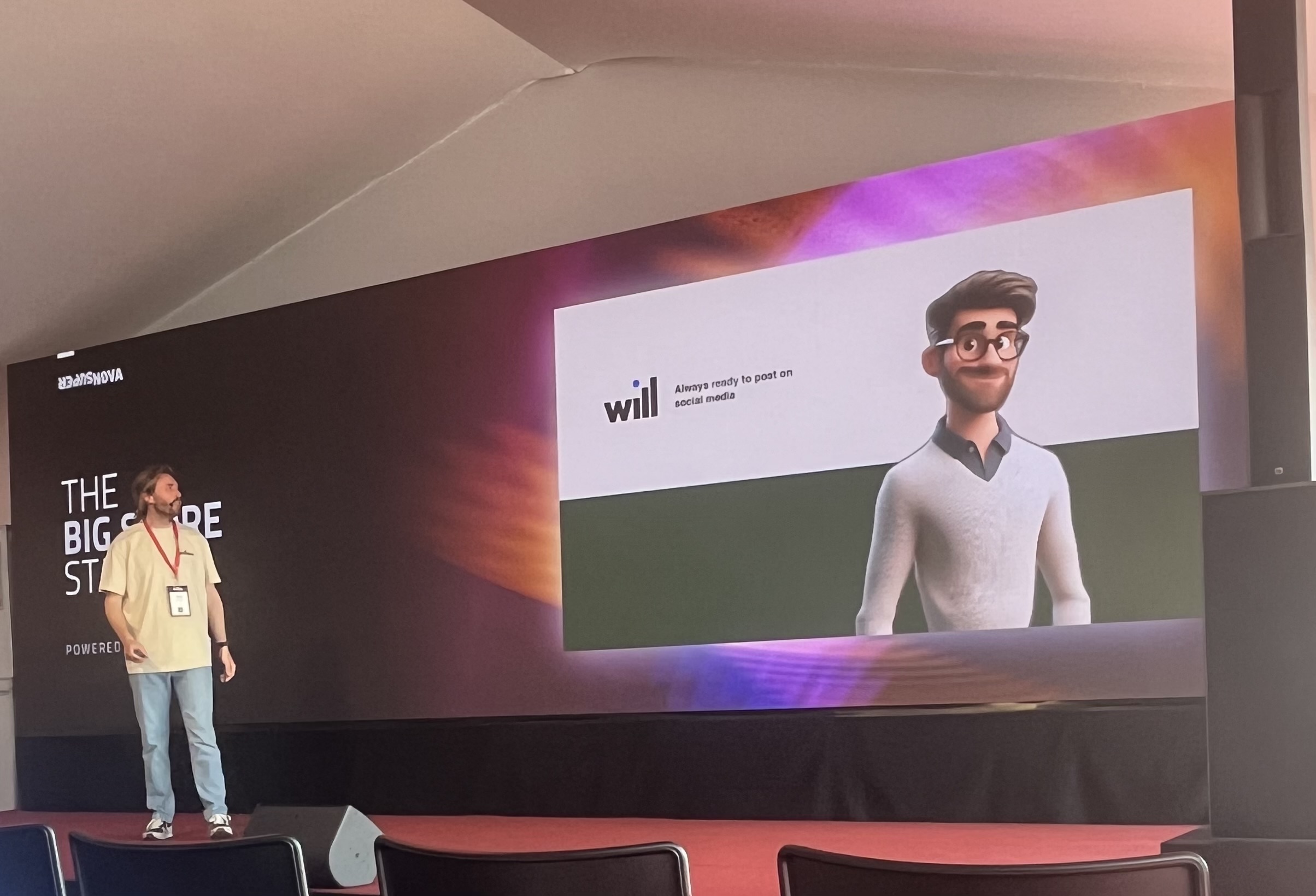
We have put the rest of our efforts into reaching out to our network, social media and brainstorming new ideas for wider reach.
The idea with one-on-one outreach is that it’s much easier to get those first users. As Seth Godin once said, “Share your product with ten people. If they share it naturally with their friends, you’ve built something great. If not, you need to get back to the drawing table.”
For Will, we’ve seen positive feedback from those first interactions, but we’re not the next Lovable yet ;)
Besides, Seth’s advice needs to be taken with a grain of salt. His original ideas are from 2009. 16 years later, hundreds of new products see the light of day every single day. It’s getting much harder to be the one product people talk about.
So while getting these early conversations with lots of feedback and learnings is super important, we also need to start focusing on viral growth.
Social media, of course, is our core acquisition channel. The funny thing is that we have lots of experience with B2B social media marketing, but now we need to play the B2C game with Will.
We’ve seen that the social media market for products like ours is dominated by LinkedIn influencers. That’s good and bad news. We’re not the type of people who love false promises, but neither is our audience. So while it’s going to get harder to get there with authentic content, it’s going to pay off in the long run.
Some other things we’ve tried is sharing our story on secondary channels. The videos for our website are hosted on YouTube, so we kind of get free exposure from there as well. We’ve also been sharing some updates about our experience on places like Medium, our LinkedIn newsletter and IndieHackers. These, of course, are more likely to pay off in the long term than right now.
What were the first reactions?
The first reactions to Will were encouraging.
At the launch, many features were still missing but early users gave us great reactions and useful feedback. Internally, we also love using Will—we might even have to add a feature to limit the amount of posts our CEO can post in a day ;)
We also gained some subscribers early on, which gives us the signal that we’re on the right track. That also helps us prioritise what to build next because the feedback from a paying user is much more valuable than that of a tester.


What’s next for Will?
In terms of product development, the early feedback has helped us prioritise new skills for Will. We probably have a hundred features we could add but only a small fraction of them are truly essential. Thanks to our user feedback we’ve been able to narrow that list down to just a few skills that we could easily develop according to priority. That clarity was both validating and energising.
In the next phase of growth, we need to reach more customers. The goal for May is 500+ customers. And it’s going to grow month by month. So we need to find a perfect balance between short and long term efforts. Right now, we’ve got two people running several experiments. At the same time, the product team is working on a “Will Skill” to enable referrals.
These are the experiments we’re running or going to start running soon:
Listicles with CEOs of different countries who are active on LinkedIn.
Individual outreach to CEOs and business leaders.
Creating informational website content about AI solutions for social media.
Getting backlinks/mentions from listicles and databases with social media tools.
Starting a video series about personal branding.
Partnering with events to get their visitors to post on social media.
Sharing feedback and testimonials from early users.
As you can see, there’s a healthy mix of short and long term efforts. We’re going to run each experiment for some time and reassess. Next month, we’ll continue with the ones that show some traction, and replace the others with new experiments.
In conclusion, it’s been an exciting first month with lots of positives but also room for improvement. We’re convinced that our product is useful, we just need to reach more people and make sure they’re just as convinced as we are.

On 11 April we launched on Product Hunt with high ambitions. While it wasn't a complete failure, we weren't exactly happy with the results. Some of it was in our hands, but we were also a bit suprised by the actual process and perhaps lack of tranparency.
We started preparing for our launch about a month in advance. We followed detailed checklists from Lenny's Newsletter and Social Growth Labs, and used a Notion template to coordinate all efforts. This included building a full asset library, social media posts for our channels, and content our team could easily share.
That said, not everything went as planned. The new website was only ready the night before launch, and while our Product Hunt page was finished a few days in advance, we missed a key growth lever: launching a "coming soon" page. Many of the top-performing products that day already had followers lined up weeks in advance. We didn’t.
We shared Will across Slack groups, LinkedIn, X, and startup communities. But one-to-many posts didn’t move the needle much. Where we saw real traction was through one-on-one DMs. Personal outreach on LinkedIn, built on years of growing our network, made all the difference.
In the end, Will received nearly 100 upvotes and over 50 thoughtful comments. We heard from people who were genuinely excited about the product and impressed by how personal, intuitive, and useful it felt.
Some of our favourite reactions:
“The output is way better than other AI tools in the market.”
“I’ve tried ghostwriters but hated how impersonal it felt. This sounds refreshingly simple.”
“No dashboards. No stress. Just results.”
Still, not being featured meant we got little organic exposure on the platform itself.
Lesson learned: Give yourself more runway. Build your audience early. Make sure you have a long list of people you can contact. And know that if you're not featured, the chances of breakout success are slim.
But would we do it again? Absolutely. Launching Will sparked valuable conversations, surfaced real user feedback, and reinforced the strength of our community.
For more detailed insights about the launch, have a look at our founder's video in which he explains what went right, what went wrong, and what we found a bit surprising.

-
1
The "Coming Soon" page miss is one of the most common and painful. I've seen it cost launches hundreds of upvotes in the first hour. The difference between a launch with 200 followers waiting on day one vs. zero is enormous because PH's algorithm weights velocity heavily in the first 30 minutes, and that early momentum is almost impossible to recover from if you start behind.
One thing that rarely gets mentioned: your first comment matters almost as much as your headline. I treat the maker's first comment as a second pitch; it's where you show the why, the personal story, and the problem you actually lived through. People upvote humans, not products.
One silver lining of a mixed launch is the data you now have. You know your audience, your conversion from PH traffic to signups, and what messaging resonated. Most first-time launchers don't think about relaunch, but PH allows it, and a second launch with everything dialed in often outperforms the first.

Comment