$300k in 60 days + #2 Product of the Day (twice). AMA
Hey everyone,
I wanted to share a milestone from a small product my co-founder and I have been building: Pretty Prompt.
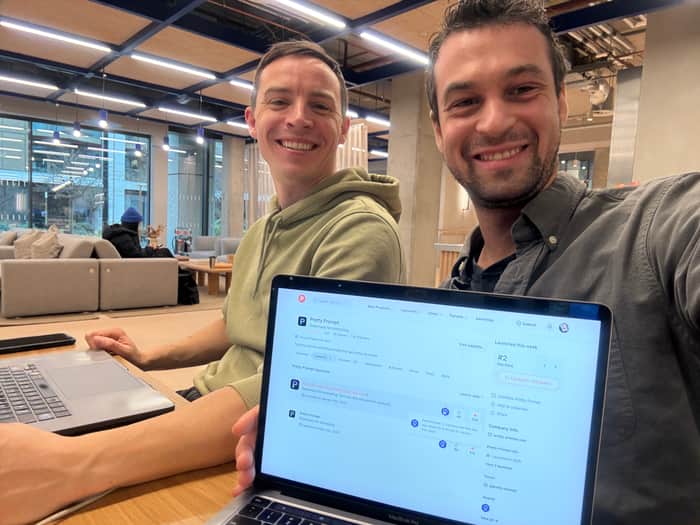
Over the last 60 days, our Chrome Extension sold over $300k, and on Saturday, we hit #2 Product of the Day on Product Hunt, again, eight months after our first launch. (https://www.producthunt.com/products/pretty-prompt)
What surprised me most wasn’t the numbers. It was how much of it came down to small, consistent work:
Validation 0: Solving our own problem first
We built Pretty Prompt because we kept running into the same problem every day: fighting with AI to get the output we wanted. Prompt engineering is hard. And it’s quickly turning into Context Engineering. Multiple AI tools, explaining what you need, who you are, the context behind it…
So over a weekend, we built a tiny MVP. No big plans, no fancy demo, just a Chrome Extension that solved our problem.
Validation 1: Launching, listening, iterating
We put it on Product Hunt (May 31st, my co-founder’s birthday 🎉) without much planning. It went crazy. 2,000 users after 1 day. TikToks of it from creators and newsletters.
And we got kicked out of Slack because our product analytics maxed, and we got rate-limited 😅. (We even got interviewed by Stripe about our story: https://youtu.be/2oi3OAM3Zuk?si=M7EucKHDU2FFSfFb)
Validation 2: Learning what matters
Adding a paywall came later. Only after people started asking to pay. Watching leave reviews and telling us why they love the tool so much helped the feedback flywheel. The engine = doing things manually and personally.
We didn't optimize anything that didn't have to be optimized yet.
80 versions later, we launched version 1.0 on Product Hunt, 8 months after the first launch, and got 2nd Product of the day, again! (People voted us over launches of Vercel and Google 💪).
Some lessons we’ve learned along the way:
- Consistency compounds – getting #1 is cool. Hitting #2 twice is a hard thing to do.
- Community is your marketing – your users become advocates, testers, and cheerleaders. It’s the cheapest and most valuable marketing strategy.
- Keep it simple – tiny, useful constant improvements beat fancy demos.
We’re still learning, iterating, shipping updates daily, and listening to users.
Pretty Prompt has now over 25,000 users, it has improved over 400,000 prompts, and it works on ChatGPT, Gemini, Claude, Perplexity, Lovable and more. You can try it without even logging in: https://pretty-prompt.com/
AMA about building a Chrome Extension, launching on Product Hunt/AppSumo, converting free users to paid, or doing all this as a two-person team.

Wow, that's a great, inspiring story! Thank you for sharing.
Thank you! Please go and try Pretty Prompt: https://pretty-prompt.com/
Great to see this update — I commented on your 7.94% weekly growth post a few weeks back, and the trajectory since then is wild. From AppSumo LTD campaign to $300k in 60 days is a serious compounding effect.
A few questions since you're doing an AMA:
What's the retention curve looking like post-AppSumo? Last time we talked, you mentioned organic growth picking up after the LTD push. With 25K users now, what percentage are daily active vs. installed-and-forgot? Chrome extensions have notoriously high install-to-churn ratios.
"Prompt engineering is turning into Context Engineering" — this is the real insight. The shift from "write a better prompt" to "give the AI better context about who you are and what you need" is where the market is heading. Are you seeing users build persistent context profiles, or is it mostly one-off prompt improvements?
80 versions in 8 months is impressive shipping velocity for a 2-person team. How do you decide what to ship vs. what to kill? With 400K prompts improved, you must have incredible data on what actually moves the needle for users. What feature surprised you most in terms of impact?
Second PH launch strategy — launching v1.0 eight months after the initial launch and getting #2 again is unusual. Most products get one shot. What did you do differently the second time that worked?
The "community is your marketing" lesson is one most founders intellectually agree with but rarely execute. Sounds like you actually did it.
What's the retention curve looking like post-AppSumo?
Hey! So not sure specifically the numbers, but we get every day messages from users that came from AppSumo and ask for features, share they love it or thank us for the tool. Yesterday we even got another 5-star review on AppSumo (even though the campaign finished a month ago 😅)
"Prompt engineering is turning into Context Engineering" — this is the real insight.
I think there are two types of users: the majority are just improving a prompt when they need it. Then a small sub section are probably more advanced and are building workflows, saving prompts, and going all in on the new Context feature we are building (memory across LLMs).
80 versions in 8 months is impressive shipping velocity for a 2-person team.
This one is hard. We are still debating what to build. I think the biggest learning is, focus on the core of the app - the one killer feature. All the rest is secondary.
Second PH launch strategy — launching v1.0 eight months after the initial launch and getting #2 again is unusual. Most products get one shot.
We made it into a much more organized launch than the first one. Wrote all about it here: https://prettypromptai.substack.com/p/2nd-product-of-the-day-again-8-months
Thanks for the detailed answers.
The "two types of users" split is key — majority doing one-off improvements vs. power users building workflows with persistent context. That's a natural segmentation for pricing tiers too.
"Focus on the core of the app — the one killer feature. All the rest is secondary" — this is the lesson most builders learn too late (or never). When you have 400K data points on what users actually do, the temptation to add everything must be real.
Reading your Substack post now. The second launch approach (8 months later, organized vs. chaotic) is a playbook I haven't seen documented before. Most products treat PH as a one-shot opportunity.
Appreciate you sharing the learnings in public. Following along.
Congrats on the $300k. The shift you mention from "prompt engineering" to "context engineering" is exactly what I keep seeing too. People don't just need better wording, they need to separate role, constraints, audience, output format, and context into distinct pieces the model can actually parse.
I'm building in the same space with a different approach. flompt (https://github.com/Nyrok/flompt) is open source and takes the visual route: it pre-interprets your prompt into typed semantic blocks so you can see how the AI reads your instructions before it answers. Fix the blocks, compile, send. Like a visual decomposer for prompts.
Question for the AMA: what percentage of your users are power users who write long complex prompts vs casual users who just want a quick fix? Curious how that split looks at 25k users.
Hey Ilai,
Pretty prompt is a really nice tool.
I built a platform called kick Product. It's for growing founders to grow more.
Launch your SaaS in Kick Product . It's a fair SaaS product launch platform and it wont take a minute to submit it. (just google kick product)