Automated Branding as a Growth Engine for Modern Businesses
Automated branding has emerged as a critical capability for businesses that need to move fast without compromising brand integrity. As digital channels multiply and teams become more distributed, maintaining a consistent brand manually becomes unsustainable. Automated branding addresses this challenge by combining AI, standardized templates, and governed workflows that ensure every asset reflects the brand accurately while improving efficiency and return on investment.
By removing repetitive production and review tasks, automation allows brand and marketing teams to focus on higher-level strategy. Platforms like Markleyo support this shift by embedding brand governance directly into everyday workflows, enabling scale without loss of control.
What Automated Branding Really Means
Automated branding refers to the systematic use of technology to manage recurring branding activities. Instead of relying on ad hoc design requests, organizations use approved templates, centralized guidelines, and digital asset libraries to guide creation. These systems protect essential elements such as logos, colors, typography, and messaging while allowing controlled flexibility for localized or campaign-specific content.
This approach transforms branding from a reactive function into an operational system. Teams can create on-brand materials quickly and confidently, without constant oversight from designers or brand managers.
How Branding Automation Works Across Channels
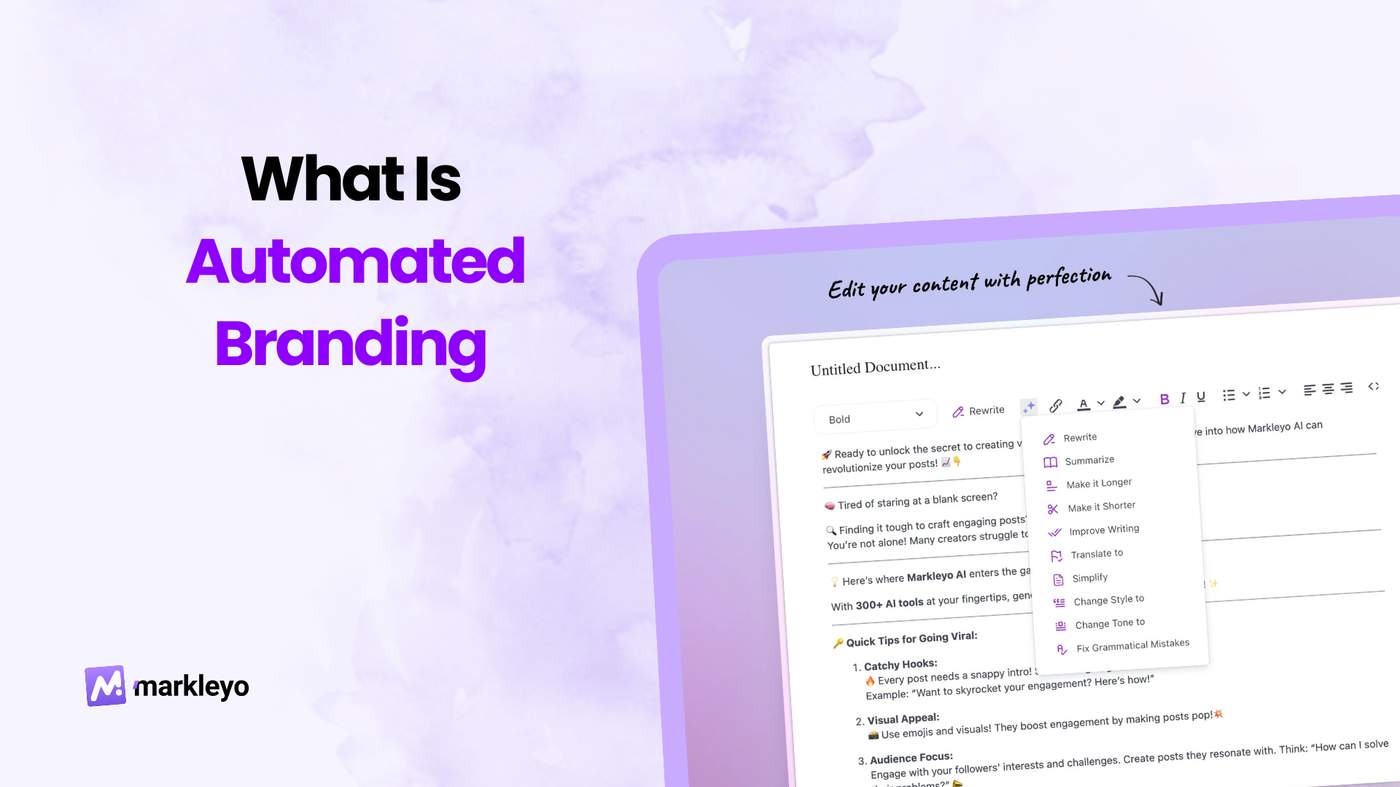
Branding automation operates through the integration of AI-assisted tools, locked templates, and approval workflows. AI supports layout and tone alignment, while templates standardize outputs across formats such as social media, email, advertising, and presentations. Workflow automation routes assets through the right approvals, records decisions, and maintains accountability.
Governance-first platforms like Markleyo are designed to balance speed and structure, ensuring that increased output does not lead to brand inconsistency.
Business Impact of Automated Branding
One of the most significant advantages of automated branding is consistency at scale. When customers encounter a unified identity across touchpoints, trust and recognition grow. Automation makes this level of consistency achievable even for large and complex organizations.
Speed is another key benefit. Automated workflows shorten time to market, reduce production costs, and eliminate unnecessary rework. These efficiencies translate into stronger performance and contribute to long-term brand strength in competitive markets.
Governance, Compliance, and Brand Protection
Strong governance is essential to successful automated branding. Cloud-based guidelines ensure teams always use current standards, while smart controls prevent misuse of key brand assets. Approval workflows define clear roles and generate audit trails that support compliance and reduce risk.
Automation also strengthens brand protection by monitoring asset usage, managing licenses, and helping organizations identify off-brand or unauthorized content before it impacts reputation.
Choosing the Right Automated Branding Approach
The effectiveness of automated branding depends on selecting the right platform. Smaller teams may benefit from simple tools, while growing organizations require deeper integration with CRM, CMS, DAM, and advertising systems. When automation fits naturally into daily workflows, adoption increases and value compounds over time.
Conclusion
Automated branding is no longer optional for businesses that operate at scale. It delivers the consistency audiences expect, the speed teams need, and the insight leaders require. By combining intelligent automation with human judgment, organizations can build resilient brands that remain recognizable, efficient, and competitive in an evolving digital landscape.

