Can We Trust the English Translations as K-Pop Fans?
With K-Pop’s increasing domination in the international market, K-pop fans can look beyond Korea and K-Pop idols due to Global platforms. There is always something to watch, from interviews to live streams. This leads to the problem of non-Korean speakers being reliant on translations, which are typically given through word of mouth by other fans. So while translation blogs, including Pannchoa and dedicated fan accounts on social media, are go-to sources, the biggest question is: how can I trust K-Pop fan translations?
The short answer is complex. Fan translations are an integral part of the K-Pop experience for non-Korean speakers, addressing a major language barrier. Without them, the Korean Wave might not have slammed into our shores at its current peak. But they should also be taken with a large grain of understanding about who is behind them and the obstacles they face. In this post, we will look into the realm of K-Pop fan translations and consider their merits as well as pitfalls.
The Rise of K-Pop Fan Translations
The globalization of K-pop owes a substantial amount to its devoted fan bases. Prior to the point where pretty much every entertainment company started doing official subs, we had fan translators who made things accessible. “Fan translations help close the space between official subtitles and nonofficial content that you can’t otherwise watch in official versions, and therefore they make K-pop more accessible to fans internationally,” said Rachel Kim, a fan translator who spoke with Billboard.
Accounts such as Bangtan Translations (@BTS_Trans), @balloon_wanted, and @OH_mes2 have increasingly become essential news sources for global fans, frequently breaking news quicker than official media do. They translate everything from news articles and social media posts to long video interviews, playing a key role in how non-Korean speaking fans of their favorite artists interpret and engage with them. The community project is driven by a love of K-Pop and a dream to spread it worldwide. Or as one translator said: “We do the job of spreading information and news/updates about K-pop stars to foreign fans.
Accuracy and Trustworthiness
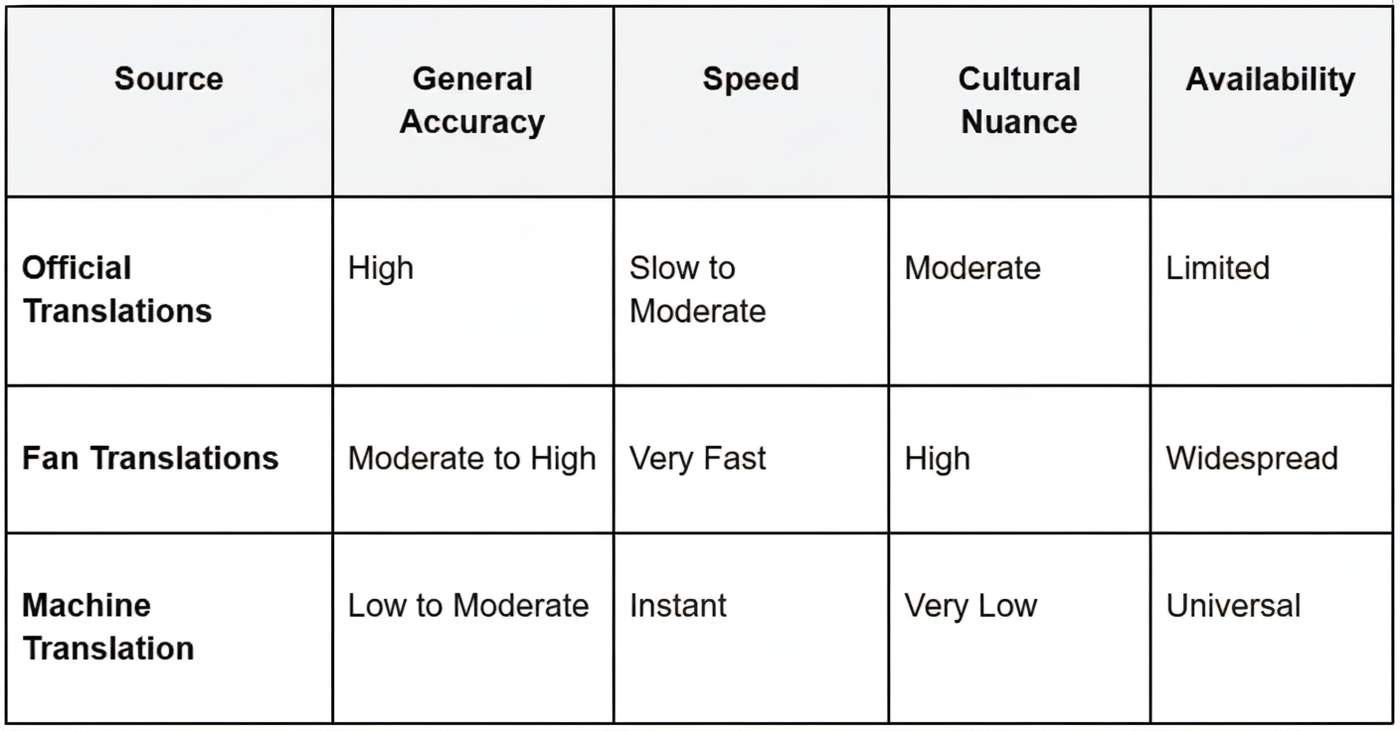
Fan translators are generally very committed and even obsessive about accuracy. Many are bilingual and have a sensitive feel for Korean culture, which is important for rehab work that machine tools can’t do well; they routinely insert “Translator’s Notes” to explain cultural references or slang, or wordplay that lacks an exact equivalent in English.
The reliability of fan translations can be hit or miss. Key issues include:
Uneven Proficiency: Translator skill can vary widely, with a corresponding variation in quality.
Potential for Bias: The translator’s own attitudes toward a group, or toward the situation the text describes, may inadvertently affect word choice.
No Official Editing: Unlike official translations, fan translations aren’t typically gone over by a team of editors, so they’re more prone to mistakes.
Time Pressure: Because people want instant translations, it can sometimes result in a slapdash job nuances are lost.
However, the fact is that a large proportion of fan translators are very dedicated to what they do. They know a bad translation can be detrimental to an artist, and they put their heart into it. These sites form part of an ecosystem of SoSoActive digital communities where active and genuine communication is valued over passive, sterile consumption.
The Challenges Behind the Screen
Becoming a K-pop fan translator is no easy feat. It is largely an unpaid job that brings with it intense pressure and a set of challenges.
Time Investment: Translators may work from a few minutes to more than 10 hours per day, depending on how much work they receive. One translator, @balloon_wanted, estimated to Forbes that they spend “about 5 hours back and forth to check news for updates.”
Burnout and Stress: K-pop news doesn’t sleep, and when working in the industry, you might experience high amounts of stress and burnout.
Copyright: Many accounts can be suspended due to the DMCA takedown and copied content, like the popular account @OH_mes.
Translation Accuracy of K-Pop Content
The Future of K-Pop Translations
Where are K-pop translations going in the future? Machine translation tools like Google Translate are getting better and better, but they still have to grapple with cultural and linguistic subtleties that are so crucial to grasping K-pop content. As much as real-time translation tools may enrich live events, they cannot replace the nuanced understanding of a human translator.
At the moment, a hybrid approach appears to be the most likely. AI can expedite the process, but fan translators are bound to remain important for conveying context and nuance that machines just can’t capture. “Their passion and commitment mean that international fans can remain in the loop.
The Verdict on Fan Translations
Fan-translated K-pop is an essential element of the worldwide web of K-pop. They offer millions of people a gateway into K-pop, and they cut through language barriers with speed and dedication. It's worth being conscious of a possibility for error or bias, even as the work they do is truly remarkable. These are not just fans translating words: This is the world bridging cultures and making sure that, no matter where people are from, they can join in on K-pop’s well-deserved joy. So the next time you see a fan-translated interview, remember how much work goes into it.

