Could a Gojek Clone Find Its Next Growth Story in Vietnam?
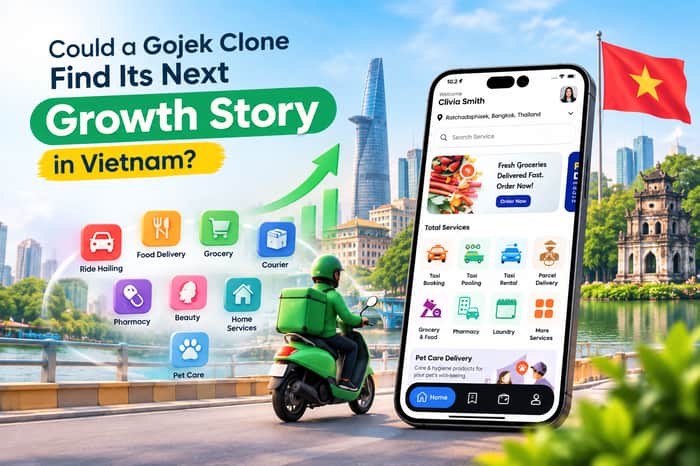
Vietnam has become an interesting market for digital businesses, particularly platforms that connect consumers with everyday services through mobile apps. From transportation and food delivery to grocery shopping and home services, customers are increasingly comfortable using digital platforms to solve routine needs.
This raises an interesting question for entrepreneurs: Could a Gojek Clone find its next growth story in Vietnam?
A Gojek Clone does not simply mean recreating another company's application. For a startup, it can provide a ready-made foundation for developing a branded Multi Service App that combines several on-demand services under one platform. The business can then adapt the platform to its target audience, service categories, pricing strategy, and operational model.
Vietnam's growing digital ecosystem makes this concept worth exploring, but success would depend on how well the platform addresses local requirements rather than simply copying an existing super-app model.
Why Consider Vietnam for a Multi-Service App?
One reason Vietnam is interesting for on-demand businesses is the variety of services that can be connected through a single digital platform.
Customers may need transportation in the morning, food delivery during lunch, grocery delivery in the evening, and home services at another time. Traditionally, each requirement could involve a different provider or application.
A Multi Service App brings these activities together.
For entrepreneurs, this creates an opportunity to build a platform where users can access multiple services without having to switch between several applications. The objective is not necessarily to launch every service at once. A business can begin with a smaller set of categories and expand as it understands customer demand.
This approach can make a Gojek Clone in Vietnam more adaptable to different business strategies.
What Could a Gojek Clone Offer in Vietnam?
The exact service mix should depend on the target market and operational capabilities. However, entrepreneurs can consider several categories when planning their platform.
1. Ride-Hailing Services
Transportation can serve as one of the primary services on the platform. Customers could request rides, view driver information, track vehicles, receive fare estimates, and make payments through the application.
Businesses can also consider different vehicle categories depending on local demand and operating requirements.
2. Food Delivery
Food delivery can complement transportation services by creating another frequent use case for the same customer base.
Restaurants can receive orders through the platform, while delivery partners manage pickups and deliveries. Customers can browse restaurants, select meals, track orders, and receive notifications.
3. Grocery and Retail Delivery
A platform could also connect customers with supermarkets, grocery stores, convenience stores, or local retailers.
The service could allow users to browse products, add items to a cart, select delivery options, and monitor order progress.
4. Courier and Parcel Delivery
Local businesses and individual customers may need on-demand delivery for documents, packages, or other items.
Adding a courier service can extend the platform beyond consumer-focused services and create opportunities to serve small businesses as well.
5. Home and Local Services
Depending on the business model, entrepreneurs could introduce services such as cleaning, maintenance, beauty services, repair assistance, or other local on-demand offerings.
The important point is to avoid adding services simply because they are available in another super app. Each category should have a clear customer need and a workable supply network.
What Makes the Business Model Interesting?
A multi-service platform can create several potential revenue channels instead of depending on a single service.
For example, a business may generate revenue through:
- Commission from service providers
- Delivery or booking fees
- Customer service charges
- Surge or dynamic pricing models where appropriate
- Partner or merchant subscriptions
- Promotional placements for businesses
- Corporate accounts and business services
The actual model would depend on local regulations, market conditions, customer expectations, and the services offered.
One advantage of having multiple categories is that the platform can potentially create more opportunities for transactions. A customer who initially joins for ride-hailing may later use food delivery or courier services.
That creates a broader relationship between the platform and its users.
Building the Right Technology Foundation
The technology behind a Gojek Clone should support more than a basic booking workflow. A multi-service platform needs different users, service providers, merchants, delivery partners, and administrators to work within a connected ecosystem.
A typical platform may include:
Customer App:
Users can register, browse services, place bookings or orders, make payments, track activities, communicate with providers, and submit ratings or reviews.
Service Provider App:
Drivers, delivery partners, or service professionals can receive requests, accept or reject jobs, manage availability, navigate to locations, and review their earnings.
Merchant Panel:
Restaurants, stores, and other businesses can manage products, orders, pricing, availability, and customer requests.
Admin Panel:
The business can manage users, providers, services, commissions, transactions, promotions, reports, and platform settings from a centralized dashboard.
This structure gives entrepreneurs the flexibility to operate different service categories while maintaining centralized administration.
Localization Matters More Than Replication
One of the biggest mistakes entrepreneurs can make is treating a Gojek Clone as a simple copy-and-paste project.
Vietnamese customers may have different expectations around payment methods, pricing, communication, delivery preferences, and service availability. Businesses also need to consider language support and workflows appropriate for their target locations.
For example, a platform targeting Vietnamese customers could provide a Vietnamese-language experience alongside other language options. Payment integrations should also reflect the methods customers actually use.
Localization can extend to pricing rules, service zones, provider onboarding, notifications, customer support, and promotional campaigns.
The objective should be to create a platform that feels designed for its market rather than imported into it.
How AI Could Improve the Platform
AI can also become part of a modern Gojek Clone App Development strategy.
Instead of adding AI simply as a marketing feature, businesses can focus on practical applications.
AI-powered tools could help with:
- Personalized service recommendations
- Customer support automation
- Fraud and unusual transaction detection
- Demand forecasting
- Driver or delivery-partner matching
- Route and delivery optimization
- Dynamic demand analysis
- Business analytics and reporting
For example, analyzing historical booking patterns could help operators understand when particular areas experience higher demand. This information could support better resource allocation and operational planning.
Start With a Focused Launch
A multi-service business does not necessarily need to launch ten categories on day one.
Starting with a focused set of services can make operations easier to manage. An entrepreneur might begin with ride-hailing and food delivery, for example, before introducing grocery, courier, or home services.
This approach allows the company to test:
- Customer acquisition
- Service quality
- Provider availability
- Pricing
- Delivery or booking efficiency
- Payment workflows
- Customer retention
Once the core operation becomes stable, additional categories can be introduced based on actual user demand.
Why a Ready-Made Gojek Clone Can Be Considered
Developing a complete multi-service ecosystem from scratch can involve considerable planning across mobile applications, backend systems, dashboards, APIs, payment integrations, notifications, and administrative tools.
A ready-made Gojek Clone Script can provide a starting technology foundation that businesses can customize according to their requirements.
Customization may include branding, service categories, pricing structures, payment methods, commission settings, user workflows, and additional features.
However, the technology is only one part of the business. Entrepreneurs still need to build relationships with drivers, merchants, service providers, and customers while developing a reliable operational process.
The Bigger Opportunity
The interesting part of the Gojek Clone concept is not the clone itself. It is the possibility of creating a digital platform that connects multiple everyday services within one ecosystem.
Vietnam provides an environment where entrepreneurs can explore this model across transportation, delivery, commerce, and local services.
The winning strategy will ultimately depend on execution: understanding a specific customer segment, selecting useful services, creating a reliable provider network, localizing the experience, and continuously improving the platform based on real usage.
A Gojek Clone can provide the technological foundation, but the business idea, market positioning, service quality, and customer experience will shape what happens next.
For entrepreneurs looking at Vietnam, the more useful question may therefore not be “Can we build another super app?” but rather:
“Which everyday problem can we solve better by bringing multiple services together?”
That question can turn a generic clone concept into a focused and potentially scalable digital business idea.
