Do You Actually Need Blockchain for Your Business Idea?
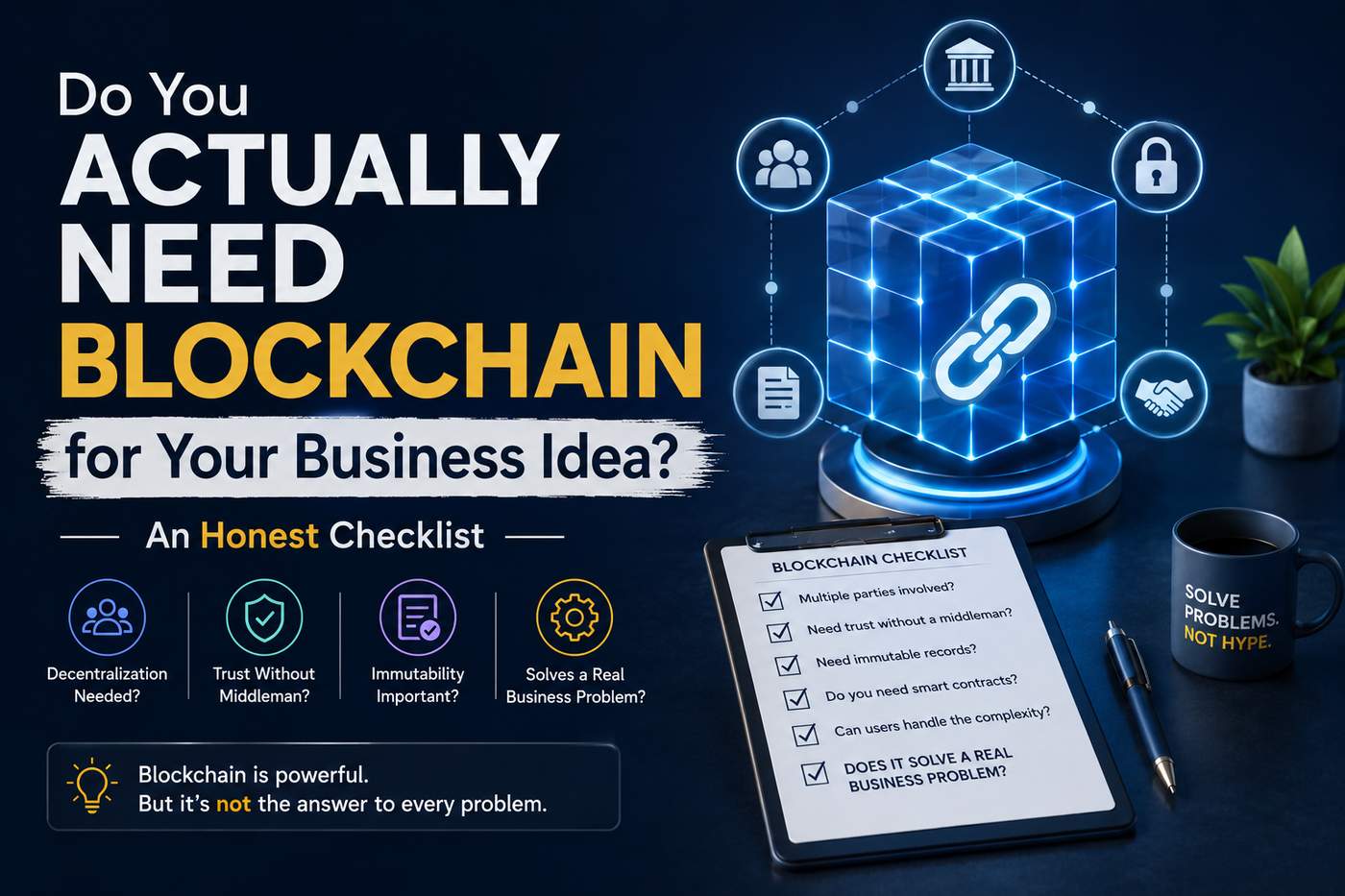
Blockchain gets mentioned in almost every conversation about the future of technology. But that does not mean every business idea needs it. In fact, one of the biggest mistakes founders can make is choosing blockchain first and then trying to find a problem for it to solve.
If you are considering blockchain for your product, it is worth looking at the business problem before looking at the technology. If you want to explore what professional implementation could look like, you can also review blockchain software development services, but the real question should come first: Does your business actually need blockchain?
Start With the Problem, Not the Technology
Ask yourself what problem you are trying to solve.
Do you need multiple organizations to share data without relying completely on one central authority? Do participants need to independently verify transactions? Is there a strong reason for records to be difficult to alter after they are added?
If the answer is no, a traditional database may be faster, cheaper, and easier to maintain.
Blockchain is not automatically a better database. It introduces additional complexity, so there should be a clear reason for accepting that trade-off.
A Simple Blockchain Checklist
Before committing to blockchain, ask these questions:
1. Do multiple parties need to share the same records?
If everything is controlled by one company and your internal team is the only group using the system, a conventional database may be enough.
Blockchain becomes more interesting when several independent parties need access to a shared source of truth.
2. Do participants need to trust the system rather than one organization?
If users or businesses do not fully trust one central party to maintain the records, blockchain can provide a different trust model.
But if everyone already trusts the organization operating the platform, adding blockchain may not provide much practical value.
3. Are transactions or records difficult to reverse or manipulate?
Some applications benefit from having a verifiable history of transactions or events. Supply chains, asset tracking, digital ownership, and certain financial applications can potentially benefit from this characteristic.
However, immutability alone is not a sufficient reason to use blockchain.
4. Do you actually need smart contracts?
Smart contracts can automate rules between participants. For example, a payment could be released automatically after predefined conditions are met.
But if the same process can be handled reliably through normal application logic, using smart contracts could add unnecessary development and maintenance requirements.
5. Can your users handle the added complexity?
This is often overlooked.
Wallets, private keys, transaction fees, blockchain networks, and unfamiliar interfaces can create friction. A technically impressive system is not useful if ordinary customers find it confusing.
When Blockchain May Make Sense
Blockchain can be worth considering when your business involves multiple independent participants, shared records, digital assets, transparent transactions, decentralized ownership, or automated agreements.
For example, imagine a supply-chain platform where manufacturers, distributors, logistics companies, and retailers all need to verify the movement of goods. A shared ledger could potentially reduce disagreements about what happened and when.
The key point is that the business requirement comes first. Blockchain is simply one possible way to address it.
When You Probably Don't Need It
You probably do not need blockchain if your application is essentially a normal website, CRM, booking platform, inventory system, internal business tool, or customer management application.
If one organization controls the data and users already trust that organization, a traditional architecture will often be simpler.
That can mean lower development costs, easier maintenance, better performance, and a smoother user experience.
The Honest Test
Here is the simplest test I would use:
If removing blockchain from your idea does not remove an important business capability, you probably do not need blockchain.
Do not add blockchain because investors mention it, competitors are using it, or it sounds innovative.
Choose it when it solves a specific problem better than the alternatives.
Technology should support the business model, not become the business model. Sometimes the smartest blockchain decision is actually deciding not to use blockchain at all.

