
Acelan Technologies
Acelan Technologies offers a complete range of services Tech

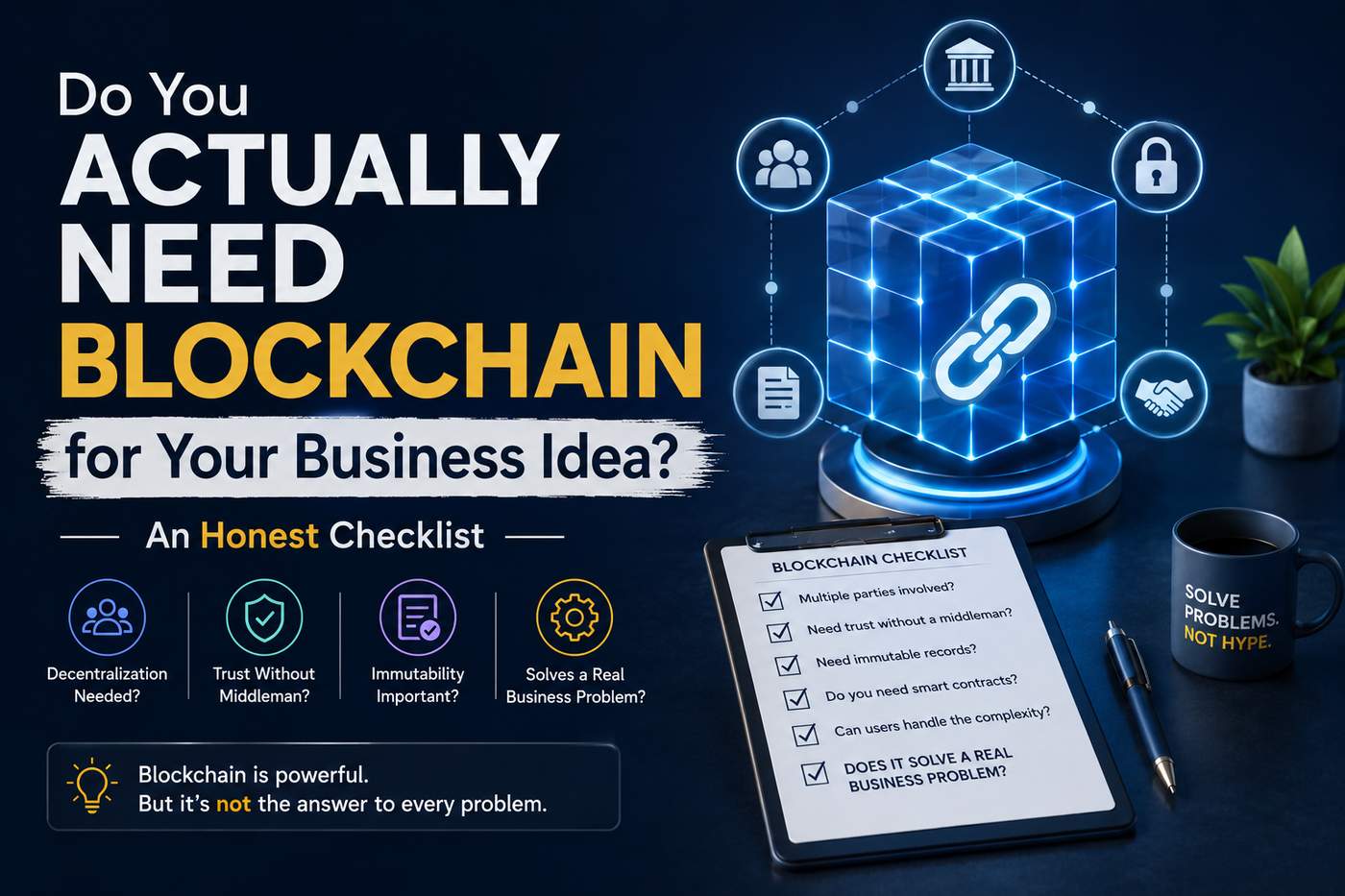
Blockchain gets mentioned in almost every conversation about the future of technology. But that does not mean every business idea needs it. In fact, one of the biggest mistakes founders can make is choosing blockchain first and then trying to find a problem for it to solve.
If you are considering blockchain for your product, it is worth looking at the business problem before looking at the technology. If you want to explore what professional implementation could look like, you can also review blockchain software development services, but the real question should come first: Does your business actually need blockchain?
Start With the Problem, Not the Technology
Ask yourself what problem you are trying to solve.
Do you need multiple organizations to share data without relying completely on one central authority? Do participants need to independently verify transactions? Is there a strong reason for records to be difficult to alter after they are added?
If the answer is no, a traditional database may be faster, cheaper, and easier to maintain.
Blockchain is not automatically a better database. It introduces additional complexity, so there should be a clear reason for accepting that trade-off.
A Simple Blockchain Checklist
Before committing to blockchain, ask these questions:
1. Do multiple parties need to share the same records?
If everything is controlled by one company and your internal team is the only group using the system, a conventional database may be enough.
Blockchain becomes more interesting when several independent parties need access to a shared source of truth.
2. Do participants need to trust the system rather than one organization?
If users or businesses do not fully trust one central party to maintain the records, blockchain can provide a different trust model.
But if everyone already trusts the organization operating the platform, adding blockchain may not provide much practical value.
3. Are transactions or records difficult to reverse or manipulate?
Some applications benefit from having a verifiable history of transactions or events. Supply chains, asset tracking, digital ownership, and certain financial applications can potentially benefit from this characteristic.
However, immutability alone is not a sufficient reason to use blockchain.
4. Do you actually need smart contracts?
Smart contracts can automate rules between participants. For example, a payment could be released automatically after predefined conditions are met.
But if the same process can be handled reliably through normal application logic, using smart contracts could add unnecessary development and maintenance requirements.
5. Can your users handle the added complexity?
This is often overlooked.
Wallets, private keys, transaction fees, blockchain networks, and unfamiliar interfaces can create friction. A technically impressive system is not useful if ordinary customers find it confusing.
When Blockchain May Make Sense
Blockchain can be worth considering when your business involves multiple independent participants, shared records, digital assets, transparent transactions, decentralized ownership, or automated agreements.
For example, imagine a supply-chain platform where manufacturers, distributors, logistics companies, and retailers all need to verify the movement of goods. A shared ledger could potentially reduce disagreements about what happened and when.
The key point is that the business requirement comes first. Blockchain is simply one possible way to address it.
When You Probably Don't Need It
You probably do not need blockchain if your application is essentially a normal website, CRM, booking platform, inventory system, internal business tool, or customer management application.
If one organization controls the data and users already trust that organization, a traditional architecture will often be simpler.
That can mean lower development costs, easier maintenance, better performance, and a smoother user experience.
The Honest Test
Here is the simplest test I would use:
If removing blockchain from your idea does not remove an important business capability, you probably do not need blockchain.
Do not add blockchain because investors mention it, competitors are using it, or it sounds innovative.
Choose it when it solves a specific problem better than the alternatives.
Technology should support the business model, not become the business model. Sometimes the smartest blockchain decision is actually deciding not to use blockchain at all.


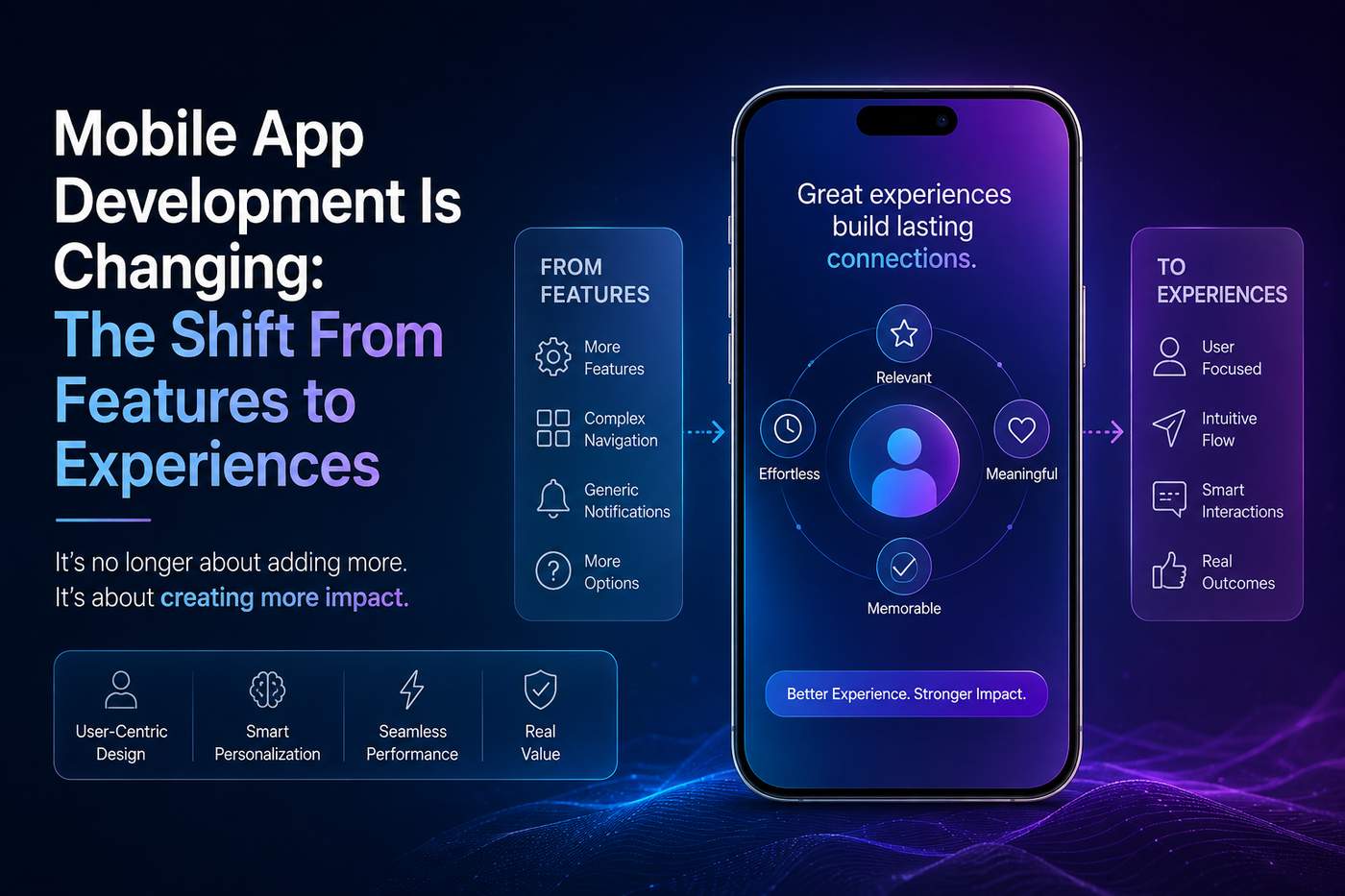
Mobile apps have come a long way. A few years ago, businesses mainly competed by adding more features, more screens, and more functionality to their applications. Today, that approach is changing.
Users are no longer impressed simply because an app has a long list of features. They want apps that are fast, intuitive, personalized, reliable, and easy to use. In other words, the focus is moving from what an app can do to how well it helps people accomplish what they want.
This shift toward experience-driven development is becoming one of the most important changes in the mobile app industry.
From Feature-Rich Apps to Experience-Driven Apps
Traditionally, app development often followed a simple formula: identify competitors' features, add a few more, and launch.
That worked when mobile apps were still relatively new. Today, almost every category is crowded. Banking apps offer similar services. Shopping apps have similar checkout processes. Productivity apps often provide overlapping functionality.
As features become easier to replicate, the user experience becomes a stronger differentiator.
Businesses investing in mobile app development services should therefore focus on the complete user journey rather than simply creating a long feature list.
A successful app should answer questions such as:
Can users find what they need quickly?
Does the app reduce unnecessary steps?
Does it understand the user's context?
Is information presented at the right time?
Does the experience feel consistent across devices?
Can users accomplish their goals without unnecessary friction?
Why More Features Do Not Always Mean More Value
Adding features sounds like progress, but more functionality can sometimes make an app harder to use.
Every additional feature can introduce another menu, setting, notification, decision, or interaction. On a small mobile screen, this can quickly create cognitive overload.
Users typically open an app because they have a specific goal. They may want to transfer money, order food, check an appointment, track a delivery, or complete a work task.
If an app makes that goal difficult because users have to navigate through unnecessary options, the number of features becomes irrelevant.
The goal should not be to create the biggest app. It should be to create the most useful experience.
AI Is Making Apps More Intelligent
One of the biggest drivers behind this shift is artificial intelligence.
AI allows mobile applications to become more responsive to individual users. Instead of waiting for users to manually find everything, applications can analyze context and help surface relevant information or actions.
For example:
A banking app can identify unusual transactions.
A healthcare app can provide timely reminders.
A shopping app can personalize recommendations.
A productivity app can summarize information or automate repetitive work.
A customer service app can provide conversational assistance.
However, AI should not be added simply because it is popular. Its real value comes from reducing effort and improving the experience.
Personalization Is Becoming the New Standard
People increasingly expect digital products to understand their preferences.
Personalization can influence:
Content recommendations
Product suggestions
Notifications
Search results
App navigation
Offers and promotions
User support
However, personalization needs to be useful rather than intrusive. Users should feel that the application is helping them, not constantly monitoring them.
This makes responsible data use, privacy, transparency, and security essential parts of modern app development.
Simplicity Is Becoming a Competitive Advantage
Good mobile experiences often feel simple even when the technology behind them is complex.
Instead of presenting every capability immediately, apps can introduce functionality when it becomes relevant. Instead of asking users to complete long onboarding processes, apps can allow them to experience value quickly.
The goal is not necessarily fewer features. The goal is less unnecessary effort.
This is an important consideration for businesses choosing mobile app development services for a new product. A powerful backend, sophisticated AI model, or extensive feature set will not compensate for an experience that frustrates users.
Cross-Platform Experiences Matter More
Users do not necessarily interact with a company through one device anymore.
They may start a task on a smartphone, continue it on a laptop, receive a notification on a smartwatch, and complete it through another channel.
As a result, businesses increasingly need to think beyond a single mobile application.
Cross-platform development can help teams create consistent experiences across different platforms while reducing development complexity.
The real objective, however, should not simply be to build everywhere. It should be to create a consistent experience wherever the customer interacts with the product.
What Businesses Should Consider When Building a Mobile App
Businesses planning a new mobile application should start with the user problem rather than a feature list.
1. What problem are we solving?
A clear problem creates a stronger foundation than a collection of interesting features.
2. What is the most important user journey?
Identify the action users need to complete most often and make it as simple as possible.
3. Where can AI genuinely help?
AI should reduce effort, improve personalization, automate repetitive work, or provide useful intelligence.
4. What information does the app really need?
Collecting unnecessary data can create privacy, security, and trust issues.
5. How will the experience evolve?
Mobile products need continuous improvement. User feedback, analytics, performance data, and behavior patterns should inform future development.
The Future of Mobile App Development
The future of mobile apps is not necessarily about having more capabilities. It is about delivering greater value with less effort.
AI, personalization, voice interfaces, cross-platform development, real-time capabilities, and stronger privacy practices are influencing how modern applications are designed.
For businesses, this means the development process needs to change too. Product teams, designers, developers, and business leaders need to work together from the beginning to understand the complete customer experience.
The question is no longer:
"How many features can we put into our app?"
A better question is:
"How can we make the user's experience easier, faster, and more valuable?"
That is the shift shaping the next generation of mobile app development.
Apps that understand this difference will have a better opportunity to build lasting user relationships, while apps that continue competing only through feature counts may struggle to stand out in an increasingly crowded market.
When you're building a startup, SEO can easily become one of those things you keep pushing to "later."
I made that mistake before. It's tempting to focus entirely on the product, launch it, and then think about traffic. But if people can't find your product when they're actively searching for a solution, getting those first customers becomes much harder.
I've found that SEO works better when you treat it as a product-growth channel rather than just a marketing task.
Start With What Your Customers Are Actually Searching For
Don't begin by creating hundreds of blog posts.
Start by understanding what your potential customers are already searching for.
For example, if you're building an invoicing tool for freelancers, you shouldn't only target broad terms like "invoicing software." You can also target more specific searches such as:
how to create an invoice as a freelancer
best invoicing tools for freelancers
invoice templates for consultants
how to automate client invoices
These searches can be easier to understand and often have clearer intent.
Build Content Around Problems, Not Just Keywords
One thing I've learned is that keyword-focused content can become very generic.
Instead, think about the actual problem behind the search.
If someone searches for "how to automate invoices," they probably don't want a 2,000-word article stuffed with the phrase "invoice automation."
They want to understand how to solve the problem.
Your content should answer that question directly and then naturally introduce your product if it genuinely helps.
Don't Ignore Your Existing Pages
Another mistake startups make is publishing new content while their important product and landing pages are barely optimized.
Before creating 50 new articles, I'd look at:
Homepage
Product pages
Feature pages
Pricing page
Comparison pages
Documentation
Existing blog posts
Make sure these pages clearly explain what you offer and match the search intent you're targeting.
Build Authority Gradually
Publishing good content is only part of SEO.
You also need people and websites to discover, reference, and trust your content. That can come from partnerships, useful community participation, digital PR, guest contributions, product directories, and genuinely valuable resources.
I'd avoid chasing hundreds of low-quality backlinks just to increase a number in an SEO tool.
A few relevant mentions can be much more useful than a huge collection of unrelated links.
When Should You Consider Professional SEO Help?
If you're comfortable doing keyword research, content planning, technical fixes, and measuring results yourself, you can absolutely start with a DIY approach.
But once the website becomes more complicated or you're competing in a difficult market, getting help can save a lot of time.
For example, when I was looking at different approaches to SEO, I came across Acelan's custom SEO services. What I found useful about this kind of service is the focus on building SEO around the business rather than simply selling a fixed number of articles or backlinks.
That distinction matters for startups because your SEO strategy should change as your product, audience, and market change.
My Biggest SEO Lesson for Startups
Don't think of SEO as "publish content and wait for Google."
Think of it as understanding your customer's questions, creating the best answer you can, making your product pages genuinely useful, and gradually building authority around your niche.
It takes time, but unlike many short-term acquisition tactics, good SEO can continue bringing relevant visitors long after you've published the original content.
For an Indie Hacker, that's probably the most attractive part: you're building an acquisition asset instead of renting attention every month.
Comment