Expanding from a micro-SaaS into a 7-figure-ARR
business
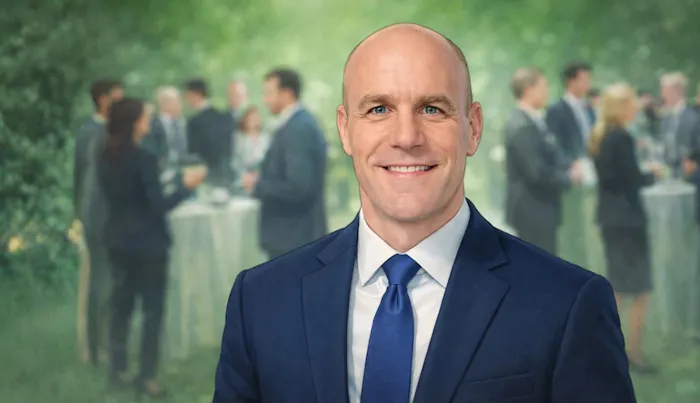
After Henry Poydar's first exit, he built a portfolio of micro-SaaS products until one got traction. Then he doubled down, pivoted, and grew Steady into a 7-figure ARR business.
Here's Henry on how he did it. 👇
The evolution of a 7-figure ARR product
I've been building software and leading teams for over 25 years, working across everything from small bootstrapped startups to large enterprise teams at places like Sapient.
After I sold my last company, where I was cofounder and CTO, and did my time at the acquiring company, I wanted to try something different. I built a slew of micro SaaS apps across things I was interested in — some B2C, some B2B. It was a great period of experimentation and learning what sticks.
One of those B2B apps was near and dear to my heart: Status Hero. It solved a problem I'd experienced over and over as a manager — I wanted a lightweight way to ask people for their intentions. Not micromanage them, but give them agency and ownership over their work while giving me, as a leader, a chance to course-correct early. I built it into a tool and it took off during the pandemic, largely because it met teams where they already worked — Slack, and then Microsoft Teams.
As we grew to a few hundred paying teams, we evolved Status Hero into Steady — a lightweight teamwork OS focused on keeping teams coordinated. When AI started maturing, we discovered that pattern matching around coordination best practices worked remarkably well. Things like surfacing blockers, identifying misalignment, nudging teams toward proven rhythms — AI was a natural fit. So we went all-in and rebuilt Steady as an AI-native product.
Then agents came along, and the thesis got even stronger. If humans already struggle to stay coordinated, autonomous agents make that exponentially harder. So we evolved again. Today, Steady uses purpose-built AI agents to deliver coordination intelligence, and where we're headed, agents and humans participate in the same coordination loops side by side.
The founding team includes people from Basecamp, GitLab, and Sapient — organizations doing distributed work before it was trendy. We also co-created an open framework called Continuous Coordination that underpins how Steady works.
Today, we're a small, lean team with hundreds of customers and no dedicated sales staff. Everything has been organic growth. And we're at seven-figure ARR.

Automation is a necessity
I built Status Hero as a classic bootstrapped product. I did everything — Rails backend, frontend, integrations, support, billing, marketing. The advantage of solving your own problem is that you're also your first user, so the feedback loop is instant. I'd build something, use it, talk to a customer, feel the friction, and fix it.
I was obsessive about automation from day one. If I was going to be a team of one, I couldn't afford to spend time on anything a script could handle. I automated CI/CD, deployments, onboarding flows, and transactional emails early.
We still apply that discipline to how we operate at Steady. Four people running hundreds of accounts only works if the machine runs itself.
Our stack is Rails, PostgreSQL, Redis, and AWS. We use Electron for the desktop app and Google Vertex for our AI infrastructure.
The Ruby and Rails ecosystem is incredible for a solo founder — you get so much for free. I could move fast, ship features daily, and keep the codebase simple enough that one person could hold it all in their head.
I liked it. No microservices, no over-engineered infrastructure. Just a monolith that works. Cloudflare and Stripe were awesome too.
Credit-based pricing
We recently moved from traditional per-seat SaaS pricing to credit-based pricing, and this has been a meaningful shift. Per-seat pricing ties your revenue to headcount, and it also reinforces this model where value only comes from humans sitting in front of a screen. That's not where things are going.
With credits, AI agents also consume resources — running coordination loops, synthesizing updates, and delivering intelligence. The value isn't locked behind a login screen anymore. Credits let us capture value from work that happens in the background, which is where most of Steady's value lives.
Finding a universal pain point
Growth has been slow and steady (pun intended). Status Hero was a bootstrapped product growing organically for years — mostly word of mouth and teams discovering us through Slack's app directory. The pandemic was an inflection point because, suddenly, every team needed async coordination tooling.
When we evolved into Steady, we kept that customer base and built on top of it. About a quarter of our current accounts are Status Hero conversions. The shift to credit-based pricing has been the biggest recent lever — mature accounts are spending meaningfully more than they did on per-seat plans because agents run coordination loops continuously, not just when someone opens the app.
The key factor is that we've never had to chase demand. Coordination is a universal pain point — one that I knew well. You must, must, have lived the problem you are solving.
We built something that works, kept showing up, and let compounding do its thing.
Organic growth
Our growth was earned, not bought. We grew by consistently showing up — writing, shipping visibly, and building in public.
A few things that have worked:
Meeting teams where they are. Steady integrates with Slack, Teams, and email. There's no migration, no new tool to log into. This removes the biggest friction point in B2B adoption.
Thought leadership around coordination. We co-created and openly published the Continuous Coordination framework. We write a weekly newsletter, The Steady Beat, and constantly discuss the problem space. When people search for answers to coordination problems, they find us.
Lateral expansion within accounts. One team adopts Steady, sees results, and other teams in the org want in. Some of our biggest accounts started as a single team.
Riding the agent wave. As AI agents become integral to how teams work, the coordination problem intensifies. We don't have to manufacture demand — the market creates it for us.
The common thread is our focus on being genuinely useful rather than loud. This compounds slowly but durably.
Paid acquisition doesn't work for us. We tried it. The economics never made sense for a product like ours — coordination tooling isn't an impulse buy, and the people who need it most don't find it through ads. Every dollar we spent on organic content and community outperformed paid by a wide margin.
And we don't have a sales team. Good salespeople are hard to find, especially at our stage. We learned you must first master founder-led sales — not just to close deals, but to deeply understand why people buy. You can't hand that off to someone else until you've internalized it yourself. And even then, keep doing it.
Be cautious with customer requests
You have to listen hard. Always. Customers, teammates, stakeholders — everyone is telling you something if you're paying attention.
But remember that what customers say and what they want are different. This took me years to absorb.
People will tell you they want a feature, but they actually want an outcome. You have to dig into incentives — what's driving the request? What does their boss care about? What are they measured on? The answers to those questions are where the real product insights live.
What's next?
From here, my goal is to continue building things. I'm really excited about what we're cooking up at Steady as agents make their way into every company.
You can follow along with our vision here: https://runsteady.com/next. Or connect with me on X and LinkedIn.

Leave a Comment
Really enjoyed this, especially how honest you were about open source being both a superpower and a lot of emotional labor.
As a solo founder, the "automate from day one" part hit hardest. When you're a team of one it isn't a nice-to-have — it's the only way anything runs. I've actually been building the boring automation plumbing before the product itself, and people keep telling me I've got it backwards, so it's reassuring to see someone reach 7 figures doing exactly that. Question on the micro-SaaS phase: how long did you give each experiment before calling it dead? Knowing when to kill vs. keep pushing is the part I keep getting wrong.
Big insight: coordination is a universal problem, but distribution (Slack/Teams) is what made it work. Product alone isn’t enough
Really interesting that paid acquisition didn’t work for you.
I’ve been seeing something similar — organic feels slower but way more sustainable.
Curious what channel worked best early on — was it mostly Slack directory or content?
Less about luck, more about disciplined iteration.
Build → test → listen → double down.
Most people quit before the compounding kicks in.
My big takeaway from this is the part where you pivoted from micro-SaaS to such a larger idea by following the pain instead of the idea you set out with. ~
You didn't scale the initial product out, you kept on morphing until you were addressing a bigger more universal problem.
You are absolutely right.
This is a great breakdown, especially the focus on process and structure.
I’m curious how you think about the point where systems move from “guiding decisions” to actually making or triggering them.
I’ve been seeing a pattern where everything looks solid at the reasoning level, but the real issues show up once those outputs are wired into execution.
The part about 'what customers say and what they want are different' really hits. I'm early stage with Orkly (social media tool for agencies) and already noticing this — people ask for more AI features but what they actually want is to spend less time switching between tools for different clients. Digging into that gap has shaped the product more than any feature request.
Also the automation discipline from day one resonates a lot. Solo founder here too, if it can be automated it has to be automated or you drown.
Quick question — when you were at the Status Hero stage, how did you know when organic growth was 'working' vs just being slow? That line is hard to read from the inside.
really like this - especially the part about not chasing demand but building from a problem you actually lived
feels like that’s the common thread in most things that actually work long term
curious - looking back, was there a moment where you realized “this is the one” and decided to double down, or was it more gradual?
Really enjoyed this — the “0→1” mindset, obsessive automation, and sticking to a real problem you’ve lived all come through clearly.
The shift to credit-based pricing + AI agents makes a lot of sense for where things are going. Also refreshing to see organic growth and founder-led sales still winning.
Lived problem + useful product + consistency. Awesome combo. Congrats!
One thing that stood out to me here is how the growth came from solving a persistent operational problem, not chasing features or trends.
What’s interesting is how this ties back to pricing models too.
A lot of SaaS products start with per-seat pricing because it’s simple, but it creates a hidden scaling problem. As teams grow, cost scales linearly with users — even if the underlying value doesn’t.
At a certain point (especially 50–100+ users), companies start questioning:
“Why are we paying more every month for the same workflows?”
That’s usually where the shift toward custom systems or alternative pricing (like credits, as mentioned here) starts making sense.
I’ve been looking into this recently and the cost curve gets pretty aggressive over a 2–3 year timeline — especially when multiple tools are stitched together.
Curious if others here have hit that point where SaaS pricing started feeling like a constraint rather than a convenience?
The evolution from Status Hero to Steady is a masterclass in platform pivoting without losing your user base. What I find most interesting is the credit-based pricing decision — it is one of those models that sounds simple but is incredibly hard to calibrate. Too generous and you leave money on the table, too stingy and users feel nickel-and-dimed on every action. Henry's point about being cautious with customer requests is underrated wisdom. I have seen so many solo founders build exactly what their loudest customer asks for, only to realize that customer was an edge case. The discipline of saying no to feature requests while maintaining a 7-figure ARR with zero dedicated sales staff suggests the product-market fit is genuinely strong. Curious how AI agents participating in coordination loops alongside humans actually works in practice — that sounds like a huge UX design challenge.
You're so right about listening to customers hard. The worst mistake one can make is listening to some so called particular customers and building the features for them only for you to realize that they weren't even serious about what they wanted in the first place.
The point about what customers say vs what they actually want is so underrated. we learned this the hard way too.
users were telling us they wanted more features. what they actually wanted was to stop losing customers without knowing why. completely different problem to solve.
the only time we got to the real answer was catching them at the exact moment they decided to leave. not a survey not a feature request form. just a real conversation right there on the cancel page.
seven figures organic with no sales team is the dream. curious how you are thinking about churn as agents start becoming part of the customer base too.
How are automation technologies and chat bots revolutionizing customer service in digital environments?
I agree there's a huge advantage in solving your own problem because you are getting the feedback first. Furthermore, another advantage of solving your own problem is that you now understand how to communicate it as well as how to sell it to a person who is having a similar issue. One of the biggest takeaways from reading your post is that there is a discrepancy sometimes between what the customer is saying and what they want. At the end of the day, the customer is looking for an outcome, and that's what we are solving for as entrepreneurs. I checked out your website, and I like the design. It's very clean and slick. What's the biggest challenge that you're focused on solving at this stage of the business?
Really interesting how the shift wasn’t just scaling the product, but evolving the core coordination problem as technology changed. The part about AI agents and humans eventually working inside the same coordination loops feels especially relevant for where modern teams are heading. A lot of creator and startup ecosystems are starting to face similar system challenges too something we’ve been thinking about at FoundersBar as well.
This is one of the biggest advantages of starting with a micro SaaS - you stay close to users, move fast, and learn what actually creates value before scaling. A lot of larger businesses lose that feedback loop early.
What stood out here is how expansion happened through solving adjacent problems instead of chasing random features. At Foundersbar, we’ve noticed the strongest SaaS businesses usually grow by deepening value for existing users first, not by trying to become everything for everyone too early.
The evolution here is interesting especially how each phase builds on the previous one instead of starting from scratch. That compounding learning is underrated. We've seen similar growth patterns while working on structured product systems at FoundersBar: https://foundersbar.com
Everyone in this community seems to chase that 7-figure dream by building tools for other digital founders and I am no exception, huh!
But I think the real expansion happens when you take a simple Micro SaaS idea and apply it to a messy, dusty industry that has been ignored for decades.
Currently I am building in the verification space because I saw how much money is lost on-site during property checkouts.
Yes, the tech is the easy part of the jump, but the distribution... Scaling to 7 figures in a physical-world niche requires a level of patience and field research that most digital-first hackers just do not have.
Are we chasing the ARR or are we actually chasing the size of the problem?
really interesting evolution — especially the shift toward agents and credit-based pricing
one thing I’ve been running into more lately while building:
as systems get more automated and API-driven, the “messiness” of data becomes a bigger issue than expected
not even scaling complexity — just inconsistent or partially broken responses slowing everything down
curious if that ever showed up for you while scaling or automating internally?
organic works when the problem is constant and real.
The automation as necessity mindset is something I needed to read stated this clearly. I have been building DocMetrics alone from Cameroon — a document analytics and e-signature platform — and I am days away from launching. The temptation as a solo founder is to do everything manually because it feels faster in the moment. But manual processes do not scale and more importantly they steal the mental energy you need for the work that actually matters.
The line that stopped me completely was 'four people running hundreds of accounts only works if the machine runs itself.' I am going to write that somewhere I see every day.
The credit based pricing shift is interesting because it solves a philosophical problem not just a business model problem. Per seat pricing assumes value only happens when a human is actively present. But background intelligence — knowing something changed, catching a pattern, surfacing a blocker — that value does not have a human sitting behind it. You priced your product to match where the actual value lives rather than where it is easiest to charge.
One question — when you say growth has been slow and steady and everything organic, what did the first hundred paying customers actually look like? Not the Slack app directory discovery later but the very first ones before any distribution existed. That is the part most founders skip over in these stories and it is the part I need most right now.
wow, impressive! And that's even before Claude Code and the AI automations, curious how much more you can scale with that
The part about solving a problem you’ve personally experienced really stood out.
I’m building a marketplace right now and realizing how important it is to stay close to real user behavior instead of just building features.
Curious — when you say you “let compounding do its thing,” what was the point where you first started seeing consistent traction?
This is super helpful, i also started building my Saas few months ago. A one man team, i should learn to automate repetitive tasks.
Super insightful journey especially the shift from micro-SaaS experimentation to doubling down on a real pain point. The focus on automation, organic growth, and credit-based pricing really stands out. Great reminder that solving a problem you’ve personally lived + consistency beats everything.
Love the focus on experimentation before doubling down, that’s where most people fail.
Curious, how did you know this product was worth going all-in on vs the others you built?
Really like the framing around coordination as the system vs a feature.
One thing I keep noticing in a different context (families/kids’ activities) is that coordination problems don’t usually break at the execution layer—they break at the decision layer.
People can manage tasks once they commit, but there’s almost no visibility into whether the thing itself is worth continuing (time, cost, energy). So coordination ends up optimizing something that maybe shouldn’t exist in the first place.
Feels like there’s an interesting overlap between coordination and evaluation that most products don’t touch.
This is one of the clearest examples of compounding product thinking over time.
What stands out isn’t just the evolution from Status Hero to Steady — it’s how each step follows a deeper understanding of the same core problem: coordination. Instead of chasing trends, you kept refining the lens through which you solve it.
The shift to AI-native and now agent-based coordination feels especially well-timed. Most teams already struggle with alignment between humans — adding autonomous agents without a coordination layer will only amplify that chaos. Positioning coordination as the system, not just a feature, is a powerful thesis.
Also, the move from per-seat to credit-based pricing is underrated. It reflects a fundamental shift: value is no longer tied to “who logs in,” but to “what work gets done,” including invisible background processes. That’s where a lot of AI products will either evolve or break.
And the organic growth piece reinforces something many founders ignore — if the problem is real and persistent, distribution becomes a byproduct of usefulness, not just marketing.
Curious to see how “human + agent coordination loops” evolve in practice. That feels like a category-defining layer if executed well.
"If humans already struggle to stay coordinated, autonomous agents make that exponentially harder. " -
Well said
This is such an achievement very well done
The line "what customers say and what they want are different" is something I wish I had read earlier. I spent months building features customers asked for, only to realize the feature wasn't actually the thing they needed, the outcome behind the request was.
The credit-based pricing shift is fascinating. Per-seat pricing made sense when value only came from humans actively using the product. But when AI agents are doing work in the background 24/7, charging per seat is literally leaving money on the table. That reframe is going to become standard across SaaS in the next few years.
The automation-first mindset from day one is underrated advice. Most solo founders think "I'll automate later when I have time." But you never have time later. Building the machine to run itself has to happen early or it never happens.
Question for you: when you transitioned Status Hero users to Steady, what was the biggest objection you faced? A rebrand plus a pricing model change at the same time sounds like a recipe for churn, but you said a quarter of your current accounts converted. What made them stay?
Really resonates with me — I'm currently at the hardest stage:
built the product, no revenue yet. The point about doubling down
on one niche instead of building more features is exactly what
I needed to hear. I'm building an AI tool for US realtors and
keep fighting the urge to add more instead of selling what I have.
Hey, checked your product — nice concept.
One thing I noticed is you’re not leveraging SEO content yet.
A few targeted blog posts could help bring consistent traffic.
I help SaaS startups and Digital Marketing companies grow with SEO and conversion-focused content that turns traffic into leads.
The transition from managing a portfolio of small apps to doubling down on a single winner is such a critical pivot. It’s always tempting to keep spinning all the plates, but clearly, focusing that energy on the one with the strongest signal is what unlocks the 7-figure scale. Great to see the discipline pay off!
The micro-to-7-figure jump has two paths in the data. Path A: widen the ICP, same product. Path B: same ICP, widen the product surface. Path A usually stalls at $200-400k ARR. Path B compounds. The founders hitting 7-fig almost always went B. Which did you pick, and when did you know?
The interesting shift isn’t just AI, it’s moving from per-seat to credit-based pricing to capture value from background agent work, not user logins. Curious if that changes buyer perception, since coordination tools were historically tied to seats, not invisible system activity.
I actually built something similar but focused on detecting hidden financial leaks (subscriptions, fees, even crypto wallets).
Thinking of selling the full system — curious if this is something founders here would be interested in.
What type of content did you write because I checked your website blog and there are no posts targeting a specific keyword 😕
Wow, good job
what platform did you use to building in public? I dont get enough feedback that why i am asking
very interesting
Great!!!
Great startup
Hey Indie Hackers,
Continuing my journey as an IT graduate turned Micro-SaaS founder, I wanted to share insights into my latest project: QuickReport UK This is a B2B tool aimed at the UK construction and HSE sector, designed to automate and streamline site reporting.
The Problem I'm Solving: Manual site reporting in construction is a huge bottleneck. It's prone to errors, takes up valuable time, and can impact compliance. QuickReport UK uses AI and voice recognition to tackle these issues head-on.
Current Status: The tool is functional, and I'm currently in a testing phase, eager to get it into the hands of UK construction professionals. My biggest challenge now is effective market penetration and demonstrating the ROI to a traditional industry.
What I'm Looking For: I'd appreciate any advice from this community on:
•B2B Marketing: Strategies for reaching UK construction firms and HSE managers as a solo founder.
•Sales Process: How to effectively pitch a SaaS solution to a potentially less tech-savvy audience.
•Early Adopter Feedback: How to best gather valuable feedback from a niche B2B market.
I'm committed to building a sustainable business and learning from every step. Your insights are invaluable!
#IndieHackers #MicroSaaS #B2B #ConstructionTech #UKStartup #HSE #BuildInPublic #Feedback
If you’re looking for bin sales near me, you’re probably trying to find local deals on liquidation or overstock items sold at low, fixed prices. These sales usually happen in bin stores where new inventory arrives weekly and prices drop each day.
Check nearby listings, store pages, or directories to find sale days, timings, and restock schedules so you can visit early and grab the best deals before items sell out.
good read, looking to implement some of this stuff
Hey, there.
Did you have a chance to read my post below?
I would like to chat with you for a bit.
Looking for a US-based Full-Stack Developer to Collaborate (50/50 Partnership)
Hey everyone 👋
I’m a full-stack developer with experience in Node.js, React, and building scalable web applications. I’m currently looking to collaborate with a US-based developer on a SaaS or startup idea.
What I’m looking for:
* A developer based in the United States
* Strong in either frontend, backend, or full-stack
* Interested in building and launching real products (not just side experiments)
Open to a *50/50 partnership** (shared ownership and benefits)
What I bring:
* Solid full-stack development experience
* Experience working with modern web technologies
* Focus on building scalable and production-ready systems
* Willingness to commit long-term and actually ship
Goal:
To build and launch a product together — validate ideas, iterate fast, and grow it into something meaningful (SaaS, AI tool, or web platform).
If you’re interested, feel free to comment or DM me. Happy to jump on a quick call and explore ideas together.
Or you can just drop an email here career4lucas@gmail . com
Looking forward to connecting!
Great breakdown of how a product evolves with both market needs and technology shifts. The transition from a simple coordination tool to an AI-native, agent-driven system is especially compelling. I also appreciate the focus on automation and organic growth—it’s a strong reminder that real traction comes from solving a universal, lived problem and consistently delivering value. Excellent insights.
Super interesting , especially the part about doubling down on what worked.
At that scale, even small inefficiencies can get expensive fast.
Curious if failed payments were ever a noticeable issue?
The point about credit-based pricing hits hard. Per-seat feels like a "success tax" when you're scaling automation. I'm actually looking into a similar shift for my project, using testomat io to handle the orchestration side. It solves that "universal pain" of coordination Henry mentioned, especially when you're trying to keep the team lean
I built a premium engine that doesn't just scrape—it analyzes. 🧠
✅ Multi-page email hunting (/contact, /about, /team) ✅ Intent Scoring (Finds businesses with NO website or low ratings) ✅ AI Sales Pitches (Tailored 1-line hooks via Llama 3.1)
Stop hunting leads. Start closing them.
Try it on Apify: akatsuki-eren/google-maps-premium-lead-gen
The portfolio approach to finding PMF is underrated here. Most indie hacker advice is "pick one thing and go all in," but Henry's path — building multiple micro-SaaS apps, then doubling down on the one that stuck — maps closer to how venture portfolios work, just applied to a single founder's time allocation. You're running parallel experiments with the same person, which only works if you have the automation discipline he describes from day one.
The Slack app directory as a distribution channel is the part I keep coming back to. Status Hero grew by meeting teams inside a tool they already had open all day — no landing page conversion funnel, no cold outreach, just existing where the workflow already lived. That's a fundamentally different growth motion from most B2B SaaS, and it explains why paid acquisition didn't work. You can't replicate marketplace discovery with ads because coordination tooling isn't something people search for until they've already named the pain.
Curious whether the Continuous Coordination framework they published has been a meaningful top-of-funnel driver, or if it's more of a credibility signal. Publishing an open framework feels like it could either be a major organic discovery engine or mostly just useful for existing customers to articulate what they're buying internally.
I'm curious how they managed to gain so much traction purely through organic growth, especially in such a crowded market. With so many established SaaS tools and coordination platforms out there, it is really impressive what they achieved.
Feels like most of these issues come from figuring things out while building instead of before.
Did you define your flow clearly upfront or did it evolve during development?
Really enjoyed this — especially how you kept things simple with a monolith and leaned hard into automation early. The shift from per-seat to credit-based pricing also feels very aligned with where AI products are going.
The biggest takeaway for me is your point about living the problem — you can feel that throughout the journey. Curious to see how coordination evolves as agents become more autonomous.
micro to 7-figure is usually a distribution unlock, not a product one. curious what flipped for you?
Most people see the result, not the iteration behind it.
Scaling usually looks obvious only in hindsight.
Great breakdown, Henry. I love the 'monolith over microservices' approach. It’s a refreshing reminder that at 7-figure ARR, you don’t need a complex infrastructure—you just need a machine that runs itself. The shift from Status Hero to an AI-native 'Steady' feels like a masterclass in evolving with the market without losing the core utility. The credit-based pricing for AI agents is a smart move to future-proof the revenue model.
My big takeaway from this is the part where you pivoted from micro-SaaS to such a larger idea by following the pain instead of the idea you set out with. ~
WOW THAT IS POWERFUL I LOVE IT SO INSPIRING... THANKS
The credit-based pricing shift is the part of this I keep thinking about. Per-seat is so deeply ingrained in B2B SaaS that it's easy to treat it like a law of nature rather than a convention. But as agents start doing real work in the background - running coordination loops, surfacing blockers - without anyone logging in, the per-seat model starts looking like a mismatch between how value is created and how you capture it.
The part about customer requests resonates too. The "what happens if you don't solve this?" framing is a good one. Pay attention to what people do rather than what they say in support tickets - the features customers complain loudest about are rarely the ones that drive churn. It's usually silent friction, the thing they just worked around and never mentioned.
Also interesting that paid acquisition didn't work. Coordination tooling seems like a category that only makes sense once you've named the pain - you don't search for "async coordination software" unless you already know something is broken. That's a strong argument for the thought leadership approach: meet people when they're trying to understand the problem, not when they're already shopping for a solution.
Curious about the lateral expansion pattern - is that mostly word of mouth inside companies, or do you have any product-level triggers that encourage teams to invite others? That kind of expansion loop seems like it could compound significantly if there's a clear mechanism behind it.
the automation from day one thing is real. we're two people building the first agentic cooking app and the only way we keep up with content across platforms is automating the repetitive stuff and keeping creative work manual. you literally can't run lean without that
Henry's point about credit-based pricing resonates deeply with me. We're building an AI SaaS product and the per-seat model constantly feels like a ceiling — especially as more value starts getting generated by background AI processes rather than active user sessions.
The insight about customers saying what they want vs. what they actually need is also something I had to learn the hard way. Early on, I'd build exactly what a customer requested, ship it, and they'd still churn — because the feature solved the symptom, not the underlying problem. Now I always ask: "What happens if you don't solve this?" That question uncovers the real pain faster than anything.
The part about founder-led sales being non-negotiable before hiring anyone really stands out too. You can't delegate your ICP discovery. Great write-up — Henry's story is a great reminder that slow, compounding organic growth beats a growth-hacked launch any day.
We are looking for someone who can lend our holding company 200,000 US dollars.
We are looking for an investor who can lend our holding company 200,000 US dollars.
We are looking for an investor who can invest 200,000 US dollars in our holding company.
With the 200,000 US dollars you will lend to our holding company, our finance team will invest the money in the stock market and some business sectors, thus making a significant profit for both of us.
With your 200,000 US dollars investment in our holding company, our finance team will invest it in the stock market and 4 different business sectors, significantly increasing our profits within a few months.
Your 200,000 US dollars investment in our holding company will be invested by our finance team in the stock market and several business sectors.
The 200,000 US dollars you will invest in our holding company will be used by our finance team in the stock market and in 4 different business areas.
Which business sectors will be invested in?
Money will be increased by investing in major sectors such as cybersecurity, software, furniture, and e-commerce.
With the 200,000 US dollars you have invested in our holding company, we will invest in major sectors such as cybersecurity, software, furniture, and e-commerce.
With the $200,000 USD budget you've invested in our holding company, we will significantly increase our profits within just a few months by investing in high-market sectors such as cybersecurity, software, furniture, and e-commerce.
If we use the 200,000 US dollars you invested in our holding company across four different business sectors, our earnings will increase rapidly.
By dividing the 200,000 US dollars into different business areas, we will reduce the loss rate to zero.
By investing the 200,000 US dollars you lent to our holding company in the stock market and four different business areas, we will rapidly increase the rate of return on investment.
We will use the 200,000 US dollars you lent to our holding company to rapidly increase our profits by investing in sectors such as stock market and cybersecurity, software, furniture, and e-commerce.
Our finance team will use the 200,000 US dollars you lent to our holding company to invest in the stock market and in high-market sectors such as cybersecurity, software, furniture, and e-commerce.
By using 200,000 US dollars in 4 different business sectors, we will generate a significant amount of income within a few months.
So how will we market the products we produce?
Thanks to our strong advertising network, we will be able to sell the products we produce quickly.
Thanks to our strong advertising network, we will quickly find customers for the products and projects we will produce.
Thanks to our strong advertising network, we will attract a large audience to our projects, which means we will quickly generate significant revenue.
By using WhatsApp groups, Twitter, Instagram, Facebook groups, TikTok, Telegram groups, LinkedIn, and many other high-traffic social media platforms for advertising, we will be able to conduct large-scale advertising.
By using various advertising tactics such as Facebook ads, YouTube ads, Google ads, and email advertising, we will be able to rapidly increase our customer base.
We will also try to attract an audience by using social media applications and websites from different countries.
We have 170 social media accounts, and by simply running ads on these platforms, we can reach an audience of 300,000 people within a week.
We are able to announce our projects to 300,000 people in just one week.
What will your earnings be?
If you invest 200,000 US dollars in our holding company, you will receive your money back as 750,000 US dollars on December 30, 2026.
If you lend our holding company 200,000 US dollars, I will return your money as 750,000 US dollars on 30/12/2026.
You will lend our holding company 200,000 US dollars, and I will return your money as 750,000 US dollars on December 30, 2026.
If you invest 200,000 US dollars in our holding company, you will receive your money back as 750,000 US dollars on December 30, 2026.
I will return your money to you as 750,000 US dollars on December 30, 2026.
You will receive your 200,000 US dollars, which you lent to our holding company, back as 750,000 US dollars on December 30, 2026.
If you lend our holding company 200,000 US dollars, I will return your money as 750,000 US dollars on 30/12/2026.
Your investment of 200,000 US dollars in our holding company will be evaluated by our finance team, and I will return your money to you as 750,000 US dollars on December 30, 2026.
I will refund your money as 750,000 US dollars on 30/12/2026.
By investing 200,000 US dollars in our holding company, you will generate significant returns within a few months.
Thanks to our financial project, you will significantly multiply your money within a few months.
How can you contact us?
To learn how you can lend our holding company 200,000 US dollars, you can get detailed information by sending a message to the WhatsApp number, Telegram username, or Signal number below.
For detailed information, please send a message to the WhatsApp number, Telegram username, or Signal number below. I will provide you with detailed information.
To learn how you can increase your money by investing 200,000 US dollars in our holding company, send a message to the WhatsApp number, Telegram username, or Signal number below. I will provide you with detailed information.
To learn how you can invest 200,000 US dollars in our holding company and to get detailed information about our project, please send a message to the WhatsApp number, Telegram username, or Signal number below.
You can get detailed information by sending a message to the following WhatsApp number, Telegram username, or Signal number.
To learn how you can increase your money and get detailed information, send a message to our WhatsApp number, Telegram username, or Signal number below. We will provide you with detailed information.
My WhatsApp contact number:
+212 619-202847
my telegram username:
@adenholding
Signal contact number:
+447842572711
Signal username:
adenholding.88
This comment was deleted a month ago
This comment was deleted a month ago
This comment was deleted 2 months ago