Gojek Clone: Why the Philippines Is a Promising Market for Multi-Service Apps
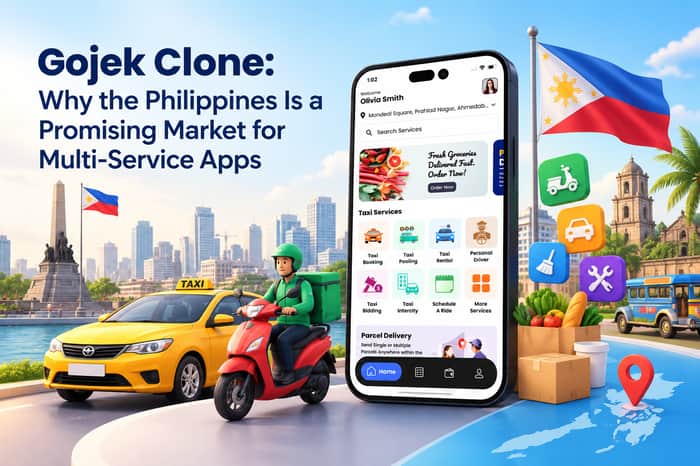
The Philippines has a growing digital economy, a large mobile-first population, and increasing demand for convenient services that can be accessed from a single platform. For entrepreneurs, this creates an interesting opportunity: instead of launching an app that solves only one problem, businesses can build platforms that bring multiple everyday services together.
This is where a Gojek Clone can become a practical starting point.
A Gojek Clone is a ready-made multi-service app solution inspired by the operating model of super apps. It can be customized with a business's own branding, service categories, pricing rules, payment methods, and operational workflows. Rather than developing every component from the ground up, entrepreneurs can start with an established technology foundation and adapt it to their target market.
For the Philippines, this model can be particularly relevant because customers may already use different digital services for transportation, food, deliveries, and household needs. Bringing selected services together can create a more convenient customer experience while giving businesses additional ways to generate revenue.
Why Consider the Philippines for a Multi-Service App?
The Philippine market has several characteristics that make multi-service platforms worth exploring.
Consumers increasingly rely on smartphones for everyday activities, from ordering meals to arranging transportation and purchasing products online. At the same time, businesses are looking for digital channels that can help them reach customers without building their own complex technology infrastructure.
A multi-service platform can connect these two sides.
For example, a business could begin with ride booking and food delivery before gradually introducing additional services such as parcel delivery, grocery ordering, beauty appointments, home services, or local shopping.
The important point is that entrepreneurs do not necessarily have to launch every category on day one.
A focused launch can provide an opportunity to understand customer behavior, identify high-demand services, and expand the platform based on actual usage.
What Can a Gojek Clone Offer in the Philippines?
The exact service mix depends on the business model and target audience. A customized platform could include several categories.
1. Ride-Hailing
Transportation can serve as one of the core services. Customers can request rides, view driver locations, receive fare estimates, track trips, and make payments through the platform.
Businesses can also configure different vehicle categories depending on local requirements and their operating strategy.
2. Food Delivery
Food delivery can complement transportation services and create another frequent-use category.
Restaurants can receive orders through a dedicated interface, while customers can browse menus, place orders, track deliveries, and provide ratings.
For entrepreneurs, this also creates opportunities to work with independent restaurants and local food businesses.
3. Courier and Parcel Delivery
The Philippines has a strong need for convenient delivery services across cities and communities.
A multi-service app can allow customers and businesses to request document, package, or small-item deliveries. Features such as pickup scheduling, real-time tracking, delivery status updates, and digital payments can simplify the process.
4. Grocery and Local Shopping
Another potential category is grocery and retail delivery.
Instead of limiting the application to restaurants, entrepreneurs can partner with supermarkets, convenience stores, specialty shops, and local retailers. Customers can then use one platform for several types of purchases.
5. Home and Personal Services
The platform can also be expanded into services such as cleaning, beauty appointments, appliance repair, moving assistance, or other local services.
This transforms the application from a simple delivery or transportation product into a broader Multi Service App.
How a Gojek Clone Can Reduce Development Complexity
Building a multi-service platform from scratch involves considerably more than creating a customer-facing mobile application.
There are usually multiple user roles, including customers, service providers, drivers, merchants, delivery personnel, and administrators. Each role requires different workflows and permissions.
A ready-made solution can provide a starting architecture that includes common components such as:
- Customer and service-provider apps
- Admin dashboard
- Driver or delivery partner application
- Merchant management
- GPS and location tracking
- Booking and order management
- Payment integration
- Push notifications
- Ratings and reviews
- Commission management
- Reporting and analytics
- Promotional tools
The advantage is not simply development speed. It is also the ability to focus more attention on market validation, partnerships, customer acquisition, and service operations.
Localization Matters More Than Simply Changing the Logo
Launching a platform in the Philippines should not mean taking a generic product and changing its branding.
Localization should be considered across the customer journey.
For example, entrepreneurs can evaluate which payment options their customers prefer, which languages or interface choices are appropriate for their target audience, how service areas should be structured, and how pricing should work in different locations.
Businesses should also consider local operational requirements for driver onboarding, merchant registration, service-provider verification, cancellations, refunds, and customer support.
These details can have a significant impact on how smoothly the platform operates after launch.
Choosing the Right Services to Launch First
One common challenge with multi-service businesses is trying to do too much too early.
A better approach can be to identify a small group of services that address clear customer needs.
For example, a startup might initially combine:
Ride Booking + Food Delivery + Courier Services
Once the platform develops a customer base and establishes reliable operations, additional categories can be introduced.
The decision should be based on factors such as local demand, competition, provider availability, operational complexity, and expected customer frequency.
This approach also makes it easier to measure which services are actually contributing to platform activity.
Revenue Opportunities for a Multi-Service Platform
A multi-service business can use several monetization methods rather than depending on one revenue stream.
Potential models include:
- Commission on completed rides
- Commission from restaurant orders
- Delivery charges
- Service-provider commissions
- Customer booking fees
- Business subscription packages
- Featured merchant placements
- Promotional listings
- Surge or dynamic pricing where appropriate
The right combination depends on the service category and market conditions.
For example, food delivery may generate revenue through restaurant commissions and delivery fees, while home services could use provider commissions or customer booking charges.
A diversified model can give entrepreneurs more flexibility as the platform expands.
The Technology Behind the Platform
A successful multi-service platform needs more than attractive mobile apps.
The backend should be able to handle users, providers, bookings, orders, payments, locations, notifications, commissions, and reporting.
Real-time tracking can be particularly important for ride and delivery services. Customers expect to know where their driver or delivery partner is and receive timely updates about their order.
An effective Multi Service App Development strategy should therefore consider scalability from the beginning.
As the number of customers, service providers, merchants, and transactions grows, the technology should be capable of supporting increased activity without creating unnecessary operational bottlenecks.
Building Partnerships in the Philippines
Technology alone does not create a multi-service marketplace.
Entrepreneurs need reliable service providers and business partners.
Restaurants, drivers, courier operators, retailers, salons, home-service professionals, and other local businesses can become important parts of the ecosystem.
A practical launch strategy could begin with a limited geographic area and a manageable number of partners. This allows the business to improve service quality, understand customer behavior, and establish operational processes before expanding into additional areas.
What Should Entrepreneurs Validate Before Launch?
Before investing heavily in expansion, businesses should answer several practical questions:
- Which services have the strongest local demand?
- Who are the primary target customers?
- Which areas should be served first?
- How will service providers be recruited?
- Which payment methods should be supported?
- What commission structure is sustainable?
- How will customer support be managed?
- What makes the platform different from existing alternatives?
- Which services should be added later?
These questions are more important than simply deciding how many features an app should have.
Final Thoughts
The Philippines offers an interesting environment for entrepreneurs exploring multi-service digital platforms. A Gojek Clone can provide a technology foundation for businesses that want to combine services such as transportation, food delivery, courier services, shopping, and local on-demand solutions under one branded application.
However, the technology is only one part of the equation.
The stronger opportunity comes from understanding a specific customer group, selecting the right services, building dependable local partnerships, and creating an experience that makes customers want to return.
For entrepreneurs considering Gojek Clone App Development, the Philippines can be approached as a market for experimentation and gradual expansion rather than trying to launch every possible service immediately. Start with a clear business model, validate demand, measure usage, and add new categories as the platform develops.
That approach can turn a multi-service app from a collection of features into a business designed around real customer needs.
FAQs
1. What is a Gojek Clone?
A Gojek Clone is a customizable multi-service app solution that provides a technology foundation for businesses planning to offer services such as ride-hailing, food delivery, courier services, shopping, and other on-demand services through one platform.
2. Can a Gojek Clone be customized for the Philippines?
Yes. Businesses can customize branding, service categories, pricing, payment methods, user workflows, service areas, and other components according to their business model and target customers in the Philippines.
3. Which services can be included in a multi-service app?
Depending on the business strategy, a platform can include ride booking, food delivery, grocery delivery, courier services, local shopping, beauty services, home services, and other location-based offerings.
4. Should a startup launch all services at once?
Not necessarily. Starting with a smaller number of carefully selected services can make it easier to validate demand, manage operations, recruit providers, and understand customer behavior before expanding.
5. How can a multi-service app generate revenue?
Potential revenue sources include commissions, delivery fees, booking fees, provider subscriptions, merchant promotions, featured listings, and other transaction-based models. The appropriate model depends on the services and operating strategy.
6. What is important when launching a multi-service platform in the Philippines?
Entrepreneurs should consider customer demand, service availability, local partnerships, payment preferences, pricing, customer support, geographic coverage, regulatory requirements, and the ability of the technology to scale as usage grows.
