Hitting a 7-figure ARR with a strategic
partnership
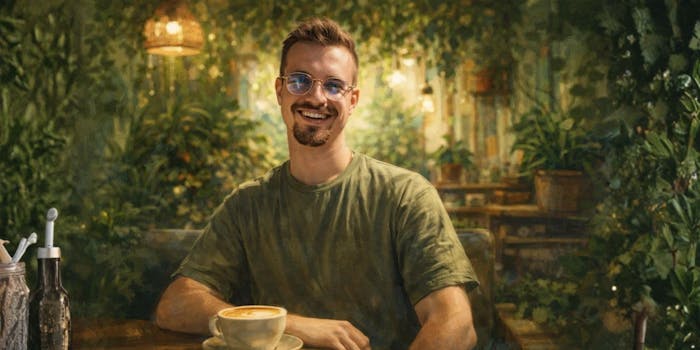
Eugene Zolotarenko wanted to leave his 9-to-5, so he built tools in his free time. After a minor success during the AI rush, he found the problem he wanted to solve. But when he solved it, he launched to crickets — until a partnership opportunity presented itself.
Now, Outrank is bringing in a 7-figure ARR.
Here's Eugene on how he did it. 👇
Leaving the 9-to-5 salary behind
I’m a software engineer who dreamed of creating my own $10k MRR product. I worked a 9–to-5 as a front-end developer, but I didn't want to be limited to a 9-to-5 salary. And I wanted full control over my time. So, in parallel, I tried to build my own products.
A couple of years ago, I had my first small success: I reached $3k MRR with my Chat with PDF product, which I created during the first wave of the AI boom. While thinking about how to grow it, I dove deep into SEO and realized I needed to create content to become visible on the internet.
That’s how the idea for Outrank came up. I tried many options on the market, but none of them were business-oriented — they lacked context about my project. Now, I had a problem and an idea for how to solve it.
So, I built a v1 over a couple of months, launched it, and tried to promote it, but it was hard. I got stuck at $400 MRR. The product needed better implementation and stronger distribution.
Partnering up and hitting seven figures
Then, I DMed, my current cofounder, Tibo, on X. We chatted about the app, sharing ideas. And we decided to partner up.
We completely reshaped the product, rebuilt it, renamed it, and launched it again. That's how Outrank was born.
Now, customers stuck around, my cofounder’s marketing ideas were brilliant, we aggressively posted on X, and we quickly reached $10k MRR. That allowed me to quit my job and work on the product full time.
Leaving a stable, well-paying job was really hard, even though the product was already generating decent MRR. I was used to stability and a monthly paycheck, but I managed to shift my mindset and finally quit. This was my dream, after all.
Currently, we're at a 7-figure ARR.
Your biggest asset
It's hard to build a product that people actually want. Not the process of building itself, but making it a stick product.
But it's easier once you have users. At that point, we were able to listen to customers and improve the product based on their feedback.
If I could start over, I would build our v2 version from the beginning. It's a much more automated way of creating SEO content with smart keyword research. It had better onboarding too.
At the end of the day, the product that you try to sell is your most important asset.
Distribution is hard
Distribution was the biggest challenge I had along the way. It's hard to find customers at an early stage
Here's what we did to get traction:
Wrote about the product on X and in newsletters
Launched on all possible platforms — like ProductHunt
Started an affiliate program
Grew SEO — mainly dogfooding Outrank. Writing content and building backlinks via our backlink marketplace. Also free tools.
Ran ads
Of course, having an audience that you can sell your products to is insanely powerful. This boosted Outrank's growth a lot.
A simple tech stack
Here's our tech stack:
Next.js
TypeScript
postgresql
Tailwind
You will find a way
My advice is to literally never give up. If you really want to build your software business, you'll find a way.
Experiment with different ideas
Try all possible marketing channels
Partner with other builders
Listen to your customers, chat with them. Become friends with them.
Build a very good, sticky product based on your customers' feedback.
Open X, follow all big Indie Hacker accounts, and interact with them. Also, read all the stories on Indie Hackers.
When I tried to figure out how to build my product, I had my daily walks and listened to indiehackers.com podcasts. It helped a lot.
What's next?
I want to keep building Outrank, improve it, and grow it as much as possible.
You can follow along on X. And check out outrank.so!

Leave a Comment
This story reinforces a hard lesson most builders learn the slow way: distribution not code is the real constraint.
Outrank didn’t win just because the product improved. It won when distribution finally compounded: partnerships, consistent posting, SEO dogfooding, affiliates. Same product category, completely different outcome once visibility clicked.
What really resonates is the gap between building something useful and being discoverable where buyers actually look.
I’m currently building Besible, a product focused on AI visibility for SaaS helping products show up and be understood across AI search, AI assistants, and LLM-driven discovery (where more buying and research decisions are happening). And I’m running into the same question Eugene faced early on:
which marketing channel deserves focus before traction exists?
Attention is fragmented. “Try everything” sounds good in hindsight, but for solo and early-stage builders, every bet is expensive.
So I’m curious to hear from this community:
What marketing channel actually worked for you at the early stage and what made it click?
Content, partnerships, communities, SEO, outbound, Product Hunt, something else?
Would love to learn from real-world experience rather than generic playbooks.
The partnership story is a masterclass in pivot-to-market-fit. Most makers get stuck because they build what they think is a "complete product" rather than what customers actually need. Eugene's path from $400 MRR → 7-figure really highlights how distribution + right positioning beats perfect feature parity every time.
This is an incredibly inspiring and grounded post. Thank you for sharing such a detailed journey from the early days of Spectora to hitting $30M ARR.
This is a Great reminder that growth isn’t always about building more, but about who you build with. The honesty about stalling early and then unlocking traction through the right partnership is really valuable. Strong lesson on distribution, complementary skills, and timing. Thanks for sharing this journey.
Great story! 🙌
Really inspiring to see how strategic partnerships can accelerate growth and unlock new paths — especially hitting 7-figure ARR without losing focus on product and customer experience. Thanks for sharing the lessons learned and the tactical approach you took!
I’m building a small tool (Random Object Generator) and this post gave me ideas on approaching partnerships more smartly rather than just growth hacks. Cheers! 🚀
The $400 MRR → partnership → 7-figure ARR pivot is the real story here.
What stands out to me:
1. "The product needed better implementation and stronger distribution" — This is brutally honest. Most founders blame the market when it's actually the product + distribution combo that's broken.
2. DMing Tibo on X led to a cofounder partnership. Cold DMs actually work when you have something real to discuss.
3. "Build a very good, sticky product based on your customers' feedback" — Simple but so hard to execute. The feedback loop only works if you actually listen.
I just launched my first product today (niche job board). Currently at the "launched to crickets" stage. This is a good reminder that the first version rarely works — it's about iterating until it clicks.
Question: When you partnered with Tibo, how did you split equity/roles? That transition from solo to cofounder seems like it could go wrong fast if not structured right.
I work closely with solo founders as a short-term early distribution partner, even before or after building, hands-on, not advisory. The focus is getting the first 10–30 real users, validating the idea, finding a clear distribution path with real signals, and collecting meaningful feedback so you build what users actually need.
Typical engagement is 2–4 weeks, around $1–2k.
Would that be interesting for you, or is the timing not right?
This is a sharp breakdown — especially the point about product + distribution being inseparable. A lot of founders over-index on one and hope the other magically fixes itself.
The cold DM → cofounder path stood out to me too. It reinforces that cold outreach only feels “spammy” when there’s no real substance behind it. When there is signal, it becomes alignment discovery.
Your takeaway about feedback loops is underrated. Listening isn’t the hard part — deciding what not to listen to is where most teams struggle.
Also appreciate the honesty about launching to silence. That phase is humbling, but it’s often where the real work begins.
On the equity/roles question: I’m curious too — especially how they handled decision rights early on before momentum made things clearer. That transition seems like one of the most fragile moments in a product’s life.
Fantastic breakdown! The partnership aspect is key - I've found that the right collaboration can accelerate growth exponentially. For tools like Alchemy AI, we're learning that strategic integrations with content platforms and creator communities are just as important as the product itself. The distribution insight you shared applies perfectly - no matter how great your tool is, getting it in front of the right users requires a thoughtful go-to-market strategy. Congrats on hitting 7-figures!
Eugene wanted $10k MRR but ended up with 7-figure ARR 😓
love this! It has been incredible to work with you Eugene 🙌
Likewise!
The progression here is worth unpacking: Chat with PDF → learns he needs SEO → builds Outrank to solve his own problem → launches to crickets at $400 MRR → partnership unlocks 7-figure ARR. The product wasn't the problem. Distribution was the entire problem.
What's interesting about the positioning is "business-oriented with context about my project" — that's a narrow but defensible wedge in a space full of generic AI content tools. The generic tools (Jasper, Copy.ai, etc.) trained users to expect slop because the context was always shallow. A tool that actually understands your specific product's value prop and competitors should produce materially better output, but it requires a more opinionated onboarding.
The $400 MRR wall is a common failure mode for tools with high inherent value but no distribution moat. A partnership that brings you into an existing user flow (say, embedded in a website builder or hosting platform) bypasses the customer acquisition problem entirely and lets the product prove itself on merit. That's the smart move when you've already validated the product works but can't get it in front of enough people.
At RovaAI we're in a similar stage — building in a space where the product insight is clear but distribution is the hard part. The partnership unlock path Eugene describes is one we're actively thinking about. Congrats on hitting the milestone.
We often get so caught up in the tech (optimizing builds, WASM, etc.) that we forget the massive leverage of a single strategic partnership. How much did you have to adapt your core product to fit their ecosystem, or was it a 'plug-and-play' situation from the start? Balancing product autonomy and partnership requirements is always a tricky act.
The $400 MRR plateau is the realest part of this story.
Most founders think "if I just build more features..." but Eugene's honesty cuts through: the product needed better implementation AND stronger distribution. Both had to work.
What resonates:
Distribution > Product (initially): You had something people wanted, but couldn't get it in front of them. The partnership with Tibo didn't just add marketing muscle — it reshaped positioning, messaging, and channel strategy.
Cold DM → Cofounder: This is underrated. Most people overthink outreach. Eugene just shared ideas, found alignment, and acted. No fancy pitch deck required.
"Sticky product based on feedback": Easy to say, hard to execute. The feedback loop only works when you know which customers to listen to.
Question: When you rebuilt v2 after partnering, what was the ONE thing you changed that had the biggest impact on retention? Was it onboarding flow, automation depth, or something else?
Building in analytics right now, and the "distribution is the real constraint" lesson hits hard. You can have the best insights engine in the world, but if nobody sees it, it doesn't matter.
Congrats on 7-figures 🚀
This is such an inspiring journey, not just because of the numbers, but because of the persistence behind them. Going from $400 MRR and rebuilding from scratch to 7-figure ARR takes real resilience. I love how honest you are about distribution being the hardest part. that’s the piece so many people underestimate. Partnering up at the right moment clearly changed the trajectory, and that’s such a powerful reminder that building doesn’t have to be solo. Stories like this make the leap from 9-to-5 feel possible, but grounded in actual work and iteration.
we got our 1st paying customer after 4 days of launch and we hit 49$ MRR. This is a small achievement and we have just started but this proves that we are onto something and we definitely solved a critical painpoint in the database prototyping dev tool space. Try out drawline today
This highlights how underrated partnerships are for early-stage products. Looking back, would you prioritize partnerships earlier, or did it only make sense after hitting initial traction?
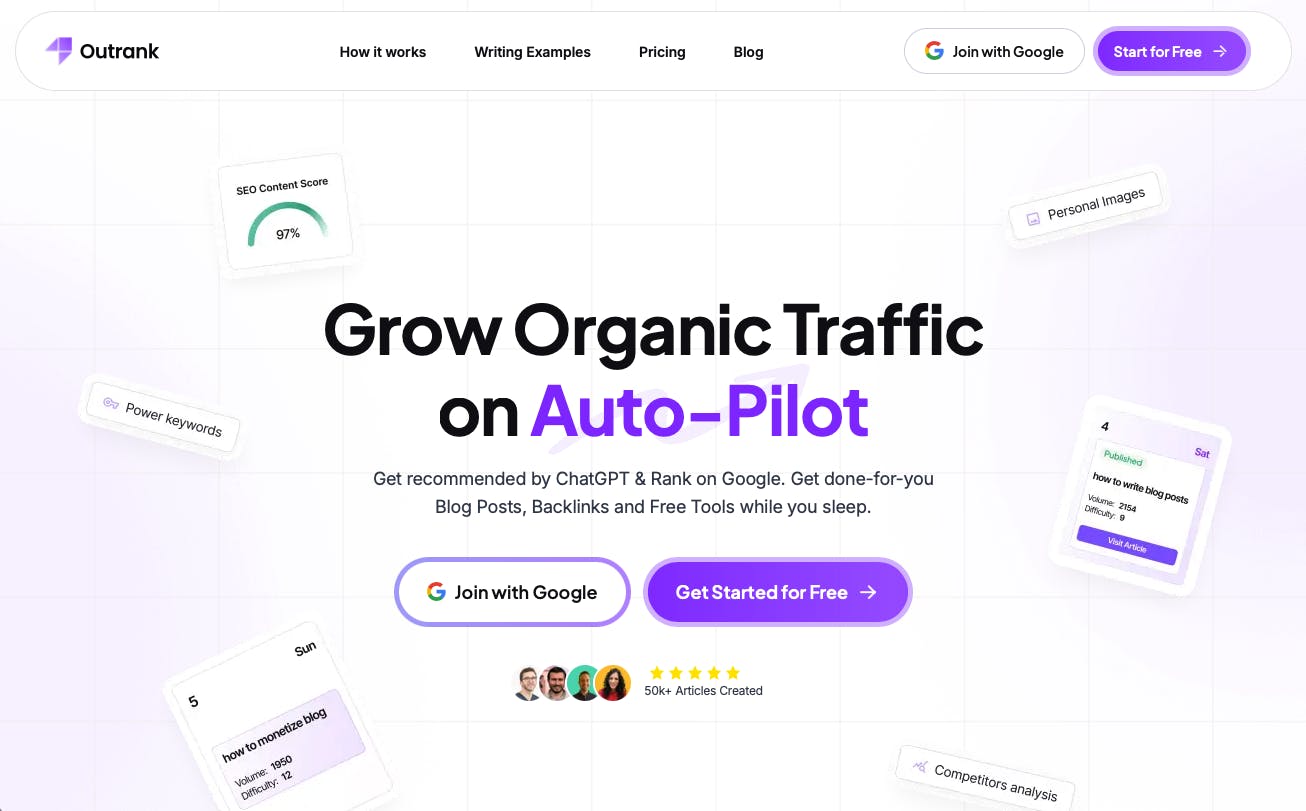
Referred the Outrank site and the design is cool and clean
Brilliant take on "Distribution via Integration"
This is a great blueprint for anyone looking to scale efficiently. Most builders focus too much on direct acquisition, but as someone who is architecting a multi-product pipeline, I’ve found that the 'interoperability' of a tool can be its greatest sales asset.
I have a technical question regarding the long-term strategy: When you were deeply integrating with your partner's workflow, how did you handle the 'Dependency Risk'? Did you have a contingency plan in case the partner changed their API or decided to build a competing feature internally?
I especially resonated with your advice on becoming a partner's 'best friend' rather than a competitor. Looking forward to your next update!
Amazing insight! Going from $400 MRR to 7-figure ARR through the right partnership and real distribution work is super inspiring. Thanks for sharing these honest lessons, distribution + feedback truly make the difference!
Congrats on the 7-figure ARR! Your journey from a 'stable salary' to full control is the dream every reader of my book, Startup Inferno, is chasing.
However, I have to respectfully disagree with one point: 'If I could start over, I would build our v2 version from the beginning.' In my experience mentoring founders, trying to build the 'automated, perfect v2' from day one is exactly how most people get stuck in the 'Lust of Excess'. You reached $400 MRR with v1 because it was lean. If you had spent 6 more months building the 'perfect' v2, the market window might have closed.
In Start Up Inferno, I use a Cost Optimization Strategy to prove that the 'v1 pain' is actually a feature, not a bug.
Software/AI: You kept it simple at first (regression tables or basic wrappers) before moving to complex automation.
Staff: You didn't hire a team; you DMed a partner. That’s the definition of a lean 'Design/Validation' founder setup.
You mentioned that 'Distribution is hard'—that's because distribution is the ultimate 'Grill'. If the product doesn't stick with a simple v1, no amount of v2 automation will save it.
To the builders reading this: Don't wait for v2. Build the 'ugly' v1, get to your version of $400 MRR, and then find your Tibo to scale.
What was the one feedback from those first $400/mo users that made you realize v2 was actually worth building?
Eugene’s jump from $400 MRR to 7-figure ARR is a masterclass in solving the 'Product-Distribution Gap.' As builders, we often think a better v1 is the answer, but the real needle-mover is usually a strategic partner who already owns the distribution moat. I’m currently documenting these exact 'unlearning' steps—moving from corporate executive coordination to solo distribution systems—in my playbook. Partnerships aren't just for big firms; they are the ultimate leverage for the indie builder. Speed to market beats perfection every time.
bruh, you really motivated me
distribution beats the product and anything else. also, why are all the replies seeming like they were generated with ai. when did replies stop being user generated?
I don't have an audience. Is that a requirement for launching a product? I totally agree that distribution is more difficult than I imagined.
Many thanks for the tips.
Strategic partnerships can help accelerate growth, market reach, and long-term revenue success through clear alignment, shared goals, complementary strengths, and scalable execution.
This is a great reminder that distribution often lags product until it doesn’t. The partnership angle stands out because it instantly compounded reach, credibility, and execution at the same time.
I also like how this shows that traction didn’t come from one magic channel, but from layering multiple surfaces X, SEO, affiliates, launches. I’ve seen Reddit play a similar supporting role for early SaaS teams, especially for validating positioning and finding first users before scale. The conversations there tend to expose objections and language you won’t catch in dashboards.
Strong example of persistence + smart leverage beating brute force building.
Inspiring story! When you were ramping Outrank's growth after launching, which distribution channel actually moved the needle—did you get your first paying customers through partnerships, outbound, content marketing, or another route?
Do you have any book recommend to be a good founder, and how to find my customer?
The part about leaving a stable job really stood out to me. Even when the numbers make sense, that mindset shift is one of the hardest steps. Thanks for being honest about that side of the journey.
Absolutely Inspiring, Thank you for sharing your journey. Finding the right distribution can be a game changer
Strategic partnerships are the ultimate leverage for solo or small-team founders. It’s the classic 'distribution vs product' play. How did you handle the integration of their feedback loop into your product roadmap without losing your core vision? That balance is usually where most partnerships fail or thrive.
Congrats!
teaming up and finding the right way to reach users really makes all the difference.
Great story and congrats on pushing through the early plateau.
The jump from $400 MRR to real traction after the rebuild really highlights how much distribution and positioning matter compared to just “shipping features.”
One thing that stands out is how much faster things moved once you had direct feedback loops and a clear ICP. That seems to be the real unlock most solo founders underestimate. The product didn’t just get better, it got more specific.
Out of curiosity, what changed the most between v1 and v2 in terms of onboarding and first-session experience? Was it more about reducing friction, or reframing the value proposition up front?
I don't know whats going on but learning on peak level
This is such a solid, honest story — especially the part about getting stuck at $400 MRR and realizing the issue wasn’t effort, but distribution + positioning. A lot of founders never admit that stage publicly.
The cofounder angle really stands out too. Partnering with someone who complements you on marketing while you focus on product is such an underrated leverage move. It’s interesting how fast things changed once the product, onboarding, and distribution all aligned.
Also love the reminder that users are the real asset. Everything gets clearer once people are actually paying and talking back.
Congrats on hitting 7-figure ARR — that’s huge. Curious: looking back, what was the single distribution channel that surprised you the most in terms of ROI early on?
Great example of strategic partnerships as a growth lever. I appreciate the focus on alignment, shared incentives, and execution over hype practical insight for anyone scaling toward 7-figure ARR.
Fantastic story! Did your growth strategy change after you scaled payments/users? How was the initial traction on PH?
Great
This story is a great reminder that distribution and positioning often matter as much as the product itself. Getting stuck at $400 MRR and then unlocking serious growth through a strategic partnership highlights a few things:
A product can be technically solid but still invisible without the right distribution channel or narrative.
Partnerships aren’t just about reach — they’re about complementary skills and execution. The marketing ideas from Tibo weren’t just additional effort, they reshaped how the product was framed and presented.
Listening to customers and iterating quickly is invaluable — especially when early traction is slow.
I’m building an AI-focused tool myself, and this reinforces that finding a lever that amplifies what you’ve built (whether a partner, a platform, or a community) can be more powerful than endlessly tweaking features.
Curious — what was the first signal that told you this partnership was actually working (before the numbers made it obvious)?
This is such a real story. Getting stuck at $400 MRR and still pushing forward takes serious grit.
The partnership angle is especially interesting — it really shows how distribution can change everything.
If you had to pick one channel that moved the needle the most early on, which one was it?
Hey, quick question after reading your post,
If you use Stripe, do you get notified immediately when a payment fails or a subscription cancels?
I’m researching this before building a small tool, so would love your take.
Hey good for you man!
This is a really strong example of choosing leverage over constant experimentation. What stood out to me most is that the partnership doesn’t sound transactional at all — it sounds like both sides had clear incentives and a shared understanding of who they were serving. I think a lot of founders underestimate how much upfront work it takes to make partnerships actually work: aligning on audience, timing, expectations, and even how success is measured.
I’m also curious how long it took before this partnership started showing meaningful results. Was there a slow ramp-up period before things compounded, or did you see traction fairly quickly once it was live? Either way, this feels like a good reminder that growth doesn’t always come from adding more channels, but from going deep on one that truly fits.
Really insightful story about how distribution and strategic partnership unlocked growth. The transition from ‘crickets’ to 7-figure ARR feels grounded in product clarity and audience fit more than just hustle. What early signals helped you know your distribution channels were working before scaling further?
I work closely with solo founders as a short-term early distribution partner, even before or after building, hands-on, not advisory. The focus is getting the first 10–30 real users, validating the idea, finding a clear distribution path with real signals, and collecting meaningful feedback so you build what users actually need.
Typical engagement is 2–4 weeks, around $1–2k.
Would that be interesting for you, or is the timing not right?
What was the value proposition for your partner though? When you're a solo founder of a brand new startup and your potential partner gives you access to TAM and a large user base, that's great, but what's in it for them, or moreso how did you sell what's in it for them to them?
I'm in a similar boat where I've just solo launched my new app and I'm happy with the result but finding it really hard to generate organic traffic and users!
I work closely with solo founders as a short-term early distribution partner, even before or after building, hands-on, not advisory. The focus is getting the first 10–30 real users, validating the idea, finding a clear distribution path with real signals, and collecting meaningful feedback so you build what users actually need.
Typical engagement is 2–4 weeks, around $1–2k.
Would that be interesting for you, or is the timing not right?
This is a great example of leverage beating tactics. Strategic partnerships usually work best when the positioning and narrative are already tight — otherwise even good distribution doesn’t convert well. The clarity piece tends to get underestimated when people talk about growth.
this is grreat
what stands out isn’t just “build → partner → ARR.” $400 MRR stalled because the product and framing didn’t land. bringing in a cofounder clarified audience + messaging that positioning shift made $10k MRR happen fast. distribution, feedback, and stickiness drove growth after that; tech stack and simplicity were just hygiene.
Great advice! Never give up. keep going
very good
Great write-up — this really highlights how distribution compounds once you find a channel that actually fits the product.
What stood out to me is how podcasts didn’t just bring traffic, but context — listeners already understand the problem space before they even land on the site. That usually leads to better conversations, not just more signups.
Curious as you keep growing Outrank:
have you noticed which part of the podcast exposure mattered more — the host’s framing, the audience niche, or the story behind why you built it?
Feels like you’ve unlocked a repeatable growth lever here. 👏
Love this. This sounds less like a funnel problem and more like a clarity problem (I mean that kindly — I had the same).
When everything feels broken, it’s usually because we don’t know where to look first.
What have you tried fixing so far?
Crazy journey The part about DMing Tibo and deciding to partner up is such a key moment. It’s wild how much the right partner can unlock growth compared to grinding solo. Congrats on breaking the golden handcuffs
Really enjoyed reading this. The $400 MRR phase and being stuck there is something a lot of people don’t talk about enough.
Partnering up and completely reshaping the product was a great move. Also respect how honest you are about how hard it is to leave a stable job, even when the numbers make sense.
Distribution being the hardest part feels very real. Building is the easy (and fun) part.
Congrats on how far you’ve taken this. Super motivating.
I work closely with solo founders as a short-term early distribution partner, even before or after building, hands-on, not advisory. The focus is getting the first 10–30 real users, validating the idea, finding a clear distribution path with real signals, and collecting meaningful feedback so you build what users actually need.
Typical engagement is 2–4 weeks, around $1–2k.
Would that be interesting for you, or is the timing not right?
Interesting approach.
from $400 to 7-figure, nice. the real lesson: distribution beats product. You had a working tool, you just couldn't get eyeballs on it. The same with me now.
Was v1 actually broken, or did you just need a fresh start for marketing purposes?
I work closely with solo founders as a short-term early distribution partner, even before or after building, hands-on, not advisory. The focus is getting the first 10–30 real users, validating the idea, finding a clear distribution path with real signals, and collecting meaningful feedback so you build what users actually need.
Typical engagement is 2–4 weeks, around $1–2k.
Would that be interesting for you, or is the timing not right?
I offer 30% to promotion partners. If that sounds interesting, send me a DM.
Interesting approach — curious how you’re handling edge cases?