How We Built an AI E-Commerce Studio That Generates Photography + Copy in 60 Seconds (And Our Approach to Integration Strategy)
Hey Indie Hackers! 👋
A lot of the discussion around AI wrappers focuses on tools that do just one thing: they generate text or they edit images. However, when you talk to actual users—especially solo e-commerce founders and small brands—you quickly realize that their biggest bottleneck isn't just writing or just photography. It is the sheer volume of fragmented micro-tasks required to launch a single product online.
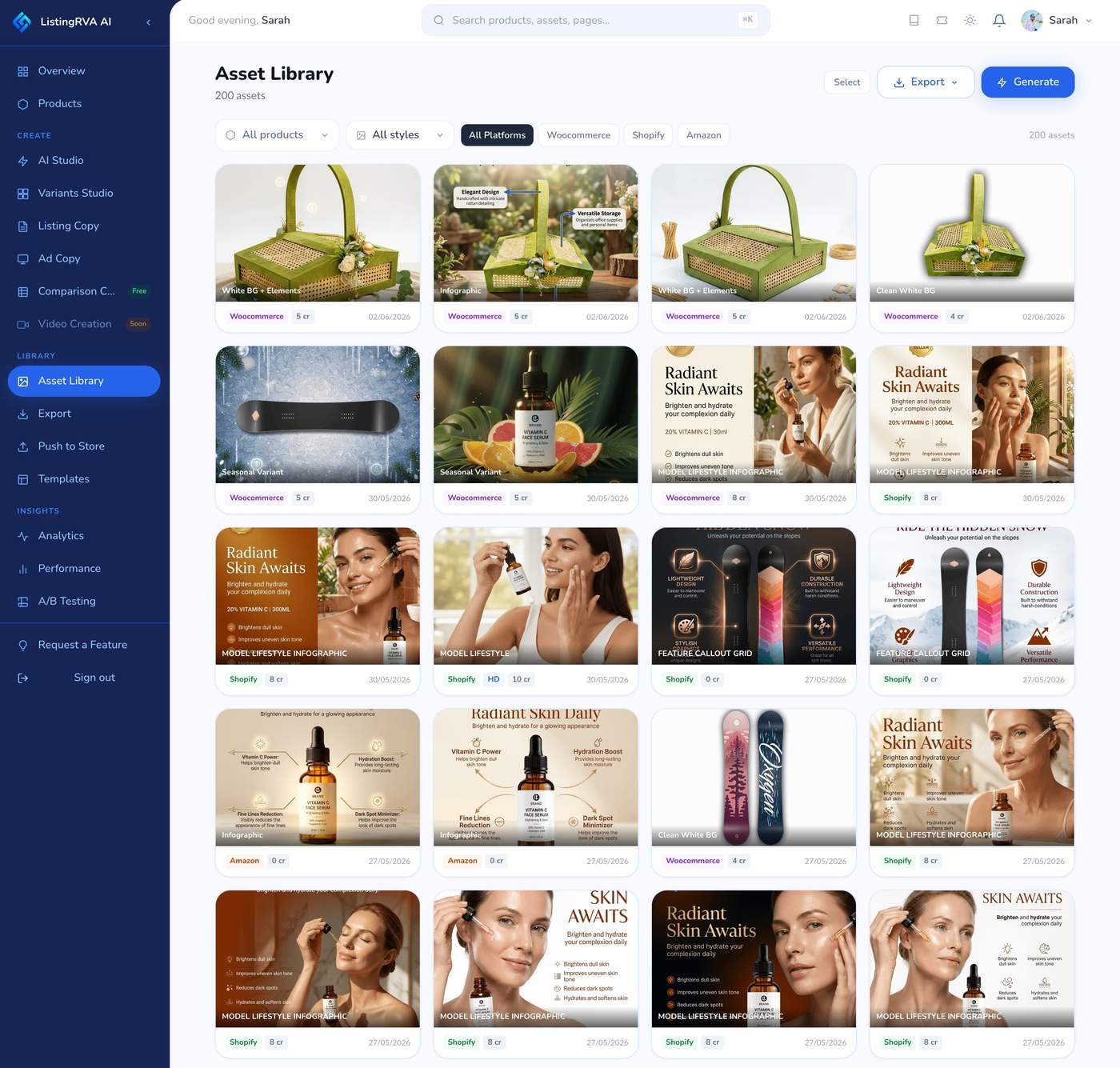
My team and I at Codrva Digital wanted to see if we could build a unified workflow that handles everything at once. We built ListingRVA AI, a SaaS platform that takes one raw product photo and converts it into a marketplace-ready listing (16 background styles + fully formatted SEO copy) in under 60 seconds.
Here is how we approached the build, the technical challenges we ran into, and why integrations became our core focus for growth.
1. The Core Problem: The E-Commerce Content Bottleneck
Traditional product launches usually look like this:
Hire a photographer or spend hours setting up lighting and backdrops ($300–$3,000 per shoot).
Wait 3–7 days for post-processing and editing.
Hire a freelance copywriter or spend hours researching keywords on Amazon/Shopify.
Manually copy, paste, format, and upload everything across multiple store channels.
For large enterprises, this is just the cost of doing business. For a solo indie hacker or a small brand, this process destroys momentum. We realized that if we could consolidate computer vision (background removal and contextual style generation) with large language models (SEO generation), we could completely eliminate this friction.
2. The Architecture & Feature Breakdown
Instead of overwhelming users with prompt engineering, we decided to restrict the UI to an opinionated, high-utility workflow:
Contextual Image Generation: The AI analyzes the actual dimensions and edges of the product rather than just slapping it onto a generic background. It allows users to export across 16+ pre-configured styles, including Amazon-compliant pure white hero shots, lifestyle settings, feature infographics, and dimension specs.
The Dual-Engine Credit Model: One of our biggest monetization hurdles was figuring out how to charge for asymmetrical API costs (images cost significantly more to generate than text). We designed a flexible credit system where 1 credit = 1 standard generation. High-resolution upscaling (e.g., 1500px or 2000px) adds a predictable surcharge.
The "Value-First" Billing Hook: To build trust in an era of AI-fatigue, we instituted a strict policy: credits are only deducted when a user explicitly approves and saves an asset. If the AI generation isn't what they wanted, they can regenerate without burning through their monthly balance.
3. Engineering the Integration Layer
If there is one major takeaway from our build, it's this: Your tool is only as good as its place in the user's existing workflow.
Initially, we expected users to generate assets, download the files, and upload them to their stores. User testing quickly showed that downloading zip files of images and copy felt like homework.
To solve this, we focused heavily on building a robust REST API and webhook architecture. We built native pipelines directly into 7 major storefront ecosystems:
Amazon
Shopify
WooCommerce
Etsy
Flipkart
BigCommerce
Magento
By allowing users to authenticate their storefronts via standard OAuth, they can click "Publish" inside our dashboard, and our backend pushes the assets directly to their live inventory via webhooks—no local downloads required.
4. Our "Trojan Horse" Marketing Strategy (Free Utilities)
As bootstrappers, we don't have a massive ad budget. To drive organic top-of-funnel traffic, we built and deployed standalone mini-tools that live on our public domain outside the app wall:
A free Amazon Listing Quality Checker that grades existing text-based elements.
A free Shopify Product Description Generator.
These tools give value upfront without requiring an account. Once users see the quality of the text, they naturally sign up for the free tier (which gives 50 credits with no credit card required) to unlock the image generation features.
5. Frequently Asked Questions (FAQ)
Q: Who exactly is ListingRVA AI built for?
A: It is built for e-commerce store owners, Amazon FBA sellers, dropshippers, and digital marketing agencies who want to launch products faster without spending thousands on professional photoshoots and copywriting.
Q: How does the free trial work?
A: When you sign up, you get 50 free credits automatically. You do not need to enter a credit card to try the platform.
Q: What is the refund or credit policy if the AI image doesn't look right?
A: We use a "Value-First" billing model. Credits are only deducted from your balance when you choose to approve and save an image or description. If you do not like the generation, you can tweak your settings and try again without losing credits.
Q: Can I use my own brand assets?
A: Yes. The platform includes a Brand Kit feature where you can upload your own logos, color palettes, and custom typography to keep your generated infographics and model shots perfectly aligned with your brand image.
Q: Do I have to download the images and text to upload them to my store?
A: No. You can link your store (Shopify, Amazon, WooCommerce, etc.) directly to the app via OAuth. Once authorized, you can publish your generated assets directly to your store with a single click.

