I built a dividend tracker where the AI actually knows your portfolio
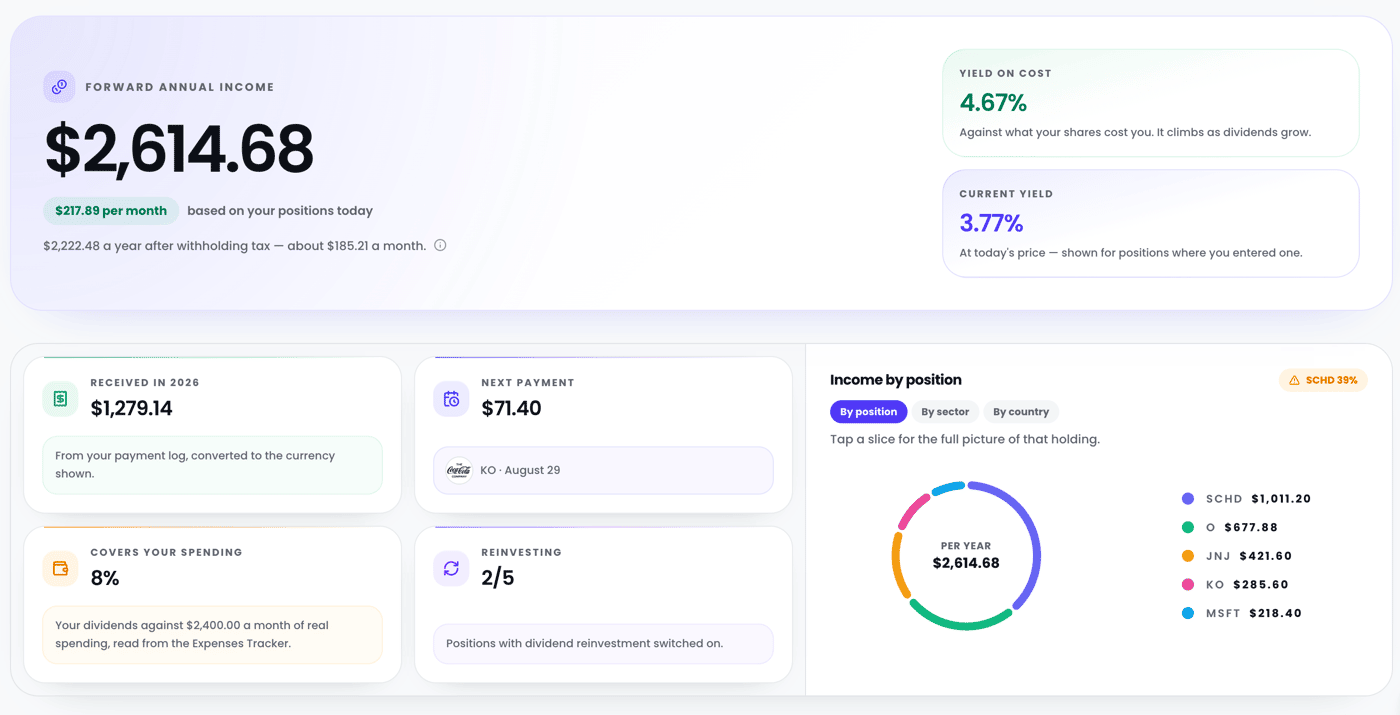
I’ve been building CalculatorAI around one core idea:
Financial tools shouldn’t be isolated from each other, and AI shouldn’t require you to explain your financial situation every time you open a chat.
My latest addition is a Dividend Tracker.
I started with a pretty simple problem. Most dividend trackers can show your holdings, yield and expected income, but I wanted to answer more practical questions:
How much will I actually receive each month?
Which months have income gaps?
What’s my yield on cost?
How much do I receive after withholding taxes?
How concentrated is my dividend income?
What happens if I reinvest everything?
When could I realistically reach $1k, $2k or $5k/month in dividend income?
So I built a tracker around those questions.
It creates a 12-month dividend calendar, tracks upcoming payments and ex-dividend dates, dividend growth and cuts, yield on cost, withholding taxes, net income and reinvestment projections.
But the part I’m most interested in is the AI integration.
The AI doesn’t sit next to the tracker as a separate chatbot.
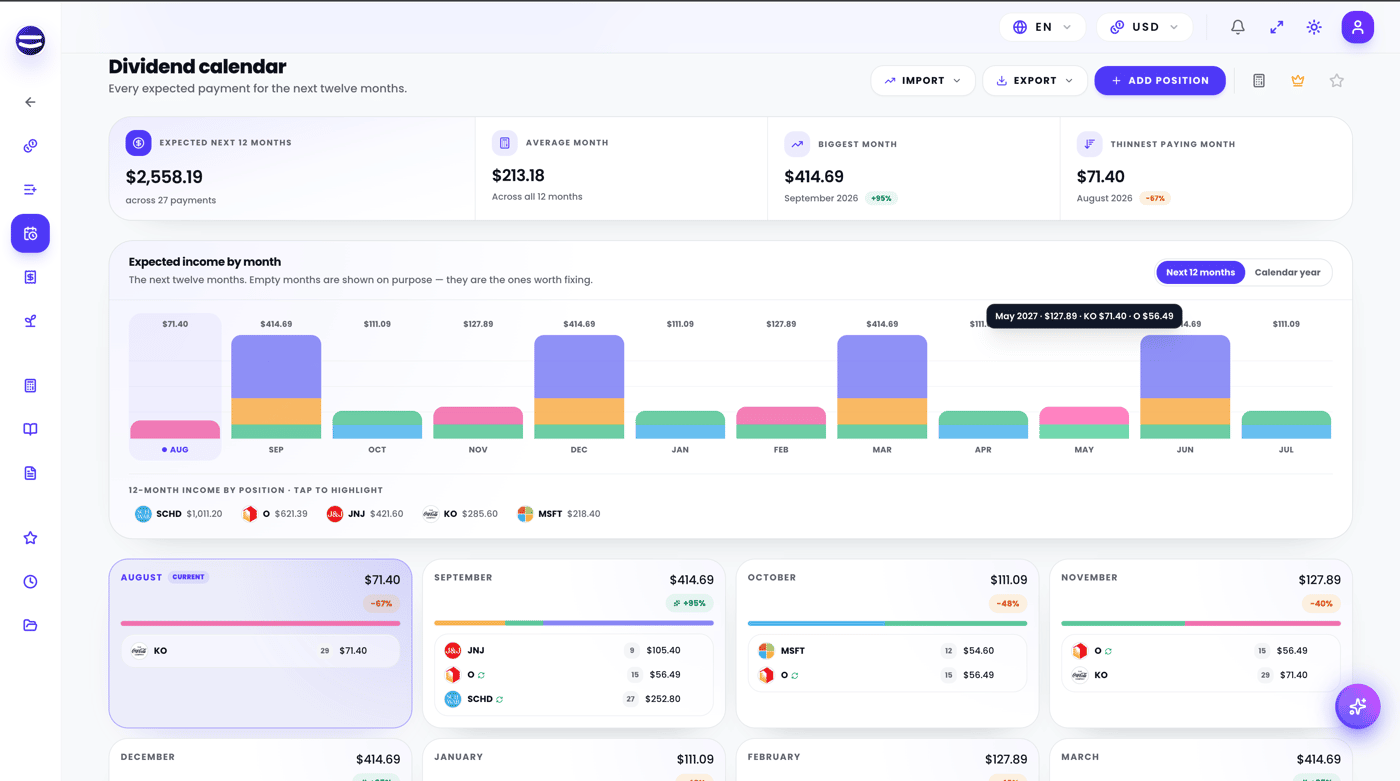
It can understand the actual data inside it.
So you can ask:
“Which months pay me the least?”
“Which stock contributes the most to my income?”
“How concentrated is my dividend income?”
“What would it take to reach $2,000/month?”
And it already has the context of your positions, payments, calendar, taxes and goals.
This is also part of a bigger experiment I’m working on with CalculatorAI: making financial tools interconnected.
The idea is that you shouldn’t have to enter the same information into a portfolio tracker, dividend tracker, expense tracker, calculators and then explain everything again to an AI.
Enter the data once, and let the entire workspace understand it.
The Dividend Tracker is free to try and doesn’t require connecting a brokerage account or adding a credit card.
I’d love some founder feedback — does the “connected financial workspace” idea make sense to you? And what would you add to the dividend tracker next?


The connected-workspace idea is the strongest part here. The AI becomes more useful because it already has the portfolio context instead of treating the financial tools as isolated products.