Indonesia Ride-Hailing Market: Launch Your Business with an Uber Clone
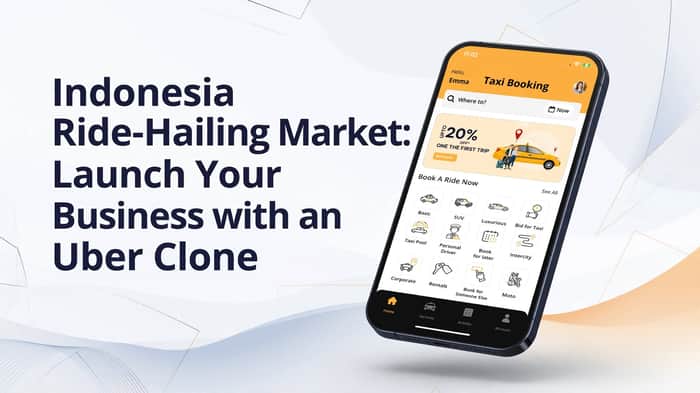
Indonesia has become an important market for digital transportation and on-demand services. With widespread smartphone adoption, growing urban populations, and increasing demand for convenient transportation, ride-hailing platforms have become an important part of everyday mobility.
For entrepreneurs, startups, and transportation businesses, this creates an opportunity to launch a local ride-hailing platform without spending years building an application from scratch. An Uber Clone in Indonesia provides a ready-made foundation that can be customized for local business requirements, branding, pricing models, payment methods, and operational needs.
Instead of developing every feature from the ground up, entrepreneurs can use a ready-made taxi booking solution and focus their resources on market research, driver acquisition, customer acquisition, partnerships, and business growth.
Understanding Indonesia’s Ride-Hailing Market
Indonesia has a large and geographically diverse population, with major cities such as Jakarta, Surabaya, Bandung, Medan, and Bali experiencing significant demand for convenient transportation.
Customers increasingly expect transportation services that provide:
- Quick ride booking
- Real-time driver tracking
- Multiple vehicle options
- Digital payments
- Transparent fares
- Driver ratings and reviews
- Ride history
- Promotional offers
- Reliable customer support
These expectations have made mobile technology an important part of modern taxi and transportation businesses.
A new ride-hailing company does not necessarily need to replicate every aspect of an established platform. Instead, entrepreneurs can identify specific local requirements and build a differentiated service around a particular city, vehicle category, customer segment, or transportation niche.
What Is an Uber Clone?
An Uber Clone is a ready-made ride-hailing application inspired by the core functionality of popular taxi booking platforms.
A typical solution consists of multiple applications and administrative components, including:
- Customer application
- Driver application
- Admin panel
- Dispatch and booking management
- Payment management
- Driver management
- Customer management
- Promotional management
- Reporting and analytics
The solution can be customized with a company's own brand name, logo, colors, pricing structure, service categories, and business rules.
For entrepreneurs entering Indonesia, this approach can reduce the time and resources required to develop a complete ride-hailing platform from the beginning.
Why Launch an Uber Clone in Indonesia?
Launching a ride-hailing platform requires more than simply creating an app. Businesses need technology that can support customers, drivers, bookings, payments, and administrative operations.
A ready-made Uber Clone in Indonesia can provide an initial technology foundation while allowing the business owner to concentrate on building the operational side of the company.
1. Faster Time to Market
Developing a ride-hailing application from scratch can involve planning, UI/UX design, programming, testing, deployment, and ongoing maintenance.
A ready-made solution can shorten the technology development cycle because many essential features are already available.
This allows entrepreneurs to move from the planning stage toward testing and launch more efficiently.
2. Customizable Branding
A ride-hailing business needs its own identity.
A white-label Uber Clone can be customized with:
- Business logo
- Brand colors
- Application name
- Splash screens
- Website branding
- Driver interface
- Customer interface
This helps businesses establish an independent brand rather than operating under another company's identity.
3. Multiple Revenue Opportunities
A ride-hailing platform can generate revenue through different business models.
Potential revenue streams include:
- Commission from completed rides
- Booking fees
- Surge or dynamic pricing
- Cancellation fees
- Corporate transportation accounts
- Driver subscription plans
- Promotional partnerships
- Premium vehicle categories
- Advertising opportunities
Businesses can select the models that match their target market and operating strategy.
4. Flexible Vehicle Categories
Indonesia has different transportation requirements across cities and regions.
A platform can potentially support multiple vehicle categories, depending on local regulations and the business model.
Examples include:
- Standard cars
- Premium cars
- SUVs
- Motorbike rides
- Electric vehicles
- Corporate transportation
- Airport transportation
Offering multiple categories can help a company serve different customer segments.
Essential Features of an Uber Clone for Indonesia
A successful ride-hailing platform requires functionality for both customers and drivers, supported by an administrative backend.
Customer App Features
The customer application can include:
- User registration and login
- Profile management
- Pickup and destination selection
- Fare estimation
- Vehicle selection
- Ride booking
- Real-time driver tracking
- Driver details
- In-app calling or messaging
- Multiple payment options
- Ride history
- Ratings and reviews
- Promo codes
- Notifications
- Trip receipts
- Customer support
A simple booking process is particularly important because customers typically want to request transportation with minimal steps.
Driver App Features
The driver application can provide:
- Driver registration
- Document submission
- Profile management
- Online/offline status
- Ride request notifications
- Booking acceptance
- Navigation support
- Earnings dashboard
- Trip history
- Customer information
- Ratings
- Incentive management
- Withdrawal or payout information
The driver application should provide the information needed to complete trips efficiently while keeping the interface easy to use.
Admin Panel
The admin panel gives the business owner centralized control over the platform.
Important functions can include:
- Customer management
- Driver management
- Vehicle management
- Booking management
- Payment management
- Commission management
- Promotional campaigns
- Service area management
- Reports and analytics
- Complaint management
- Content management
- Notification management
An effective admin panel helps operators monitor daily activity and make data-driven business decisions.
Payment Options for an Indonesian Ride-Hailing App
Payment flexibility is an important consideration when launching a transportation platform.
Depending on the business model and available integrations, an application can support different payment methods, such as:
- Cash
- Debit and credit cards
- Digital wallets
- Online payment gateways
- Business accounts
- Other locally supported payment methods
Entrepreneurs should select payment providers based on transaction fees, integration requirements, customer adoption, security, and regulatory considerations.
Before launch, payment integrations should also be tested thoroughly to ensure that booking, payment confirmation, refunds, and transaction records work correctly.
How to Start an Uber Clone Business in Indonesia
Launching a ride-hailing business requires both technology and business planning.
Step 1: Select Your Target Market
First, determine who your customers will be.
You could focus on:
- Daily commuters
- Airport travelers
- Tourists
- Corporate customers
- Families
- Students
- Premium transportation users
- Local transportation users
A clearly defined target audience can make marketing and service planning more focused.
Step 2: Select Your Launch Location
Instead of immediately trying to cover the entire country, businesses can consider starting in a specific city or service area.
A controlled launch can make it easier to:
- Recruit drivers
- Test pricing
- Monitor demand
- Improve customer support
- Identify operational issues
- Optimize marketing campaigns
After establishing a stable operation, the company can expand into additional locations.
Step 3: Choose the Right Technology Solution
The next step is selecting an Uber Clone that provides the functionality your business requires.
Evaluate:
- Customer app
- Driver app
- Admin panel
- Source code availability
- Customization options
- Payment integrations
- Maps and navigation
- Scalability
- Security
- Technical support
- Upgrade policy
The goal should be to select a solution that can support the current business while allowing future expansion.
Step 4: Customize the Application
Customization can include branding, pricing, service categories, operating zones, commissions, promotions, and other business requirements.
A customized application helps establish a distinct identity in the Indonesian transportation market.
Step 5: Recruit Drivers
Drivers are a critical component of a ride-hailing platform.
A business can develop driver acquisition campaigns through:
- Referral programs
- Local advertising
- Partnerships
- Driver incentives
- Social media campaigns
- Transportation communities
Driver onboarding should include appropriate documentation and verification procedures based on applicable local requirements.
Step 6: Launch a Pilot
Before a large-scale launch, conduct a controlled pilot.
Monitor:
- Booking completion rates
- Driver acceptance rates
- Cancellation rates
- Customer feedback
- Average trip value
- Driver earnings
- Payment failures
- Customer support requests
The pilot can reveal operational problems before the business expands.
Step 7: Scale the Business
Once the platform demonstrates stable operations, expansion can focus on new service areas, additional vehicle categories, partnerships, and marketing channels.
Technology should also be monitored as the number of customers and drivers increases.
How to Make an Uber Clone Stand Out in Indonesia
Simply launching another ride-hailing app may not be enough. Businesses need a clear value proposition.
One approach is to focus on a specific customer problem.
For example, a company could specialize in:
- Airport transfers
- Corporate transportation
- Women-focused transportation services
- Tourist transportation
- Intercity travel
- Premium rides
- Electric vehicle transportation
- Local city transportation
Businesses can also differentiate through customer support, pricing transparency, driver incentives, loyalty programs, or specialized services.
AI Features for a Modern Ride-Hailing Platform
Artificial intelligence can be incorporated into ride-hailing platforms to improve selected operational processes.
Potential applications include:
- Demand forecasting
- Driver-demand matching
- Fraud detection
- Automated customer support
- Personalized promotions
- Route optimization
- Driver performance analytics
- Predictive maintenance
- Automated business reports
AI should be implemented according to the company's actual operational requirements rather than simply adding features for marketing purposes.
Benefits of a Ready-Made Uber Clone
A ready-made platform can provide several advantages for entrepreneurs.
Reduced Development Effort
Core ride-hailing functionality is already developed, reducing the amount of work required compared with building every component from zero.
Faster Product Validation
Entrepreneurs can launch a pilot and gather real-world feedback before investing heavily in additional functionality.
Customization
The application can be adapted to the business's branding and operating requirements.
Scalable Foundation
A properly designed solution can provide a foundation for expanding the customer base, driver network, service areas, and vehicle categories.
Focus on Business Growth
Instead of spending all resources on software development, entrepreneurs can focus more heavily on driver acquisition, customer acquisition, partnerships, and operational quality.
What Does an Uber Clone Cost in Indonesia?
The cost of an Uber Clone depends on several factors.
These can include:
- Number of applications
- Features
- UI/UX customization
- Payment gateway integrations
- Map and location services
- Third-party integrations
- Admin functionality
- Cloud infrastructure
- Custom development
- Maintenance and support
A ready-made solution generally follows a different cost structure from completely custom software development.
Businesses should therefore compare not only the initial development price but also customization, infrastructure, maintenance, upgrades, integrations, and long-term ownership requirements.
Final Thoughts
Indonesia's growing digital economy and demand for convenient transportation create opportunities for entrepreneurs interested in launching ride-hailing services.
An Uber Clone in Indonesia can provide a ready-made technology foundation for businesses that want to enter the market without developing every ride-hailing component from scratch.
However, technology is only one part of the business. Successful implementation also requires market research, appropriate pricing, driver acquisition, customer service, regulatory compliance, reliable payment infrastructure, and a clear differentiation strategy.
With the right business model and a scalable technology platform, entrepreneurs can develop a localized ride-hailing service designed around the needs of their target Indonesian customers.
Frequently Asked Questions
1. What is an Uber Clone in Indonesia?
An Uber Clone in Indonesia is a ready-made ride-hailing software solution that provides core features such as ride booking, driver management, GPS tracking, payments, ratings, and an admin panel. It can be customized for a local transportation business.
2. Can I launch an Uber Clone in Indonesia under my own brand?
Yes. A white-label solution can generally be customized with your company's logo, colors, application name, and other branding elements.
3. How long does it take to launch an Uber Clone?
The timeline depends on customization, integrations, testing, deployment, and business requirements. A ready-made solution can generally reduce the development time compared with building a platform completely from scratch.
4. What apps are required for a ride-hailing business?
A typical ride-hailing platform requires a customer app, driver app, and admin panel. Additional web applications or operational tools may also be required depending on the business model.
5. Can an Uber Clone support multiple vehicle types?
Yes. The platform can be configured to support different vehicle categories depending on the software architecture and business requirements.
6. Can I integrate Indonesian payment methods?
Payment integrations depend on the selected payment provider and technical availability. Businesses should choose payment gateways that support their target customers, currencies, transaction requirements, and applicable regulations.
7. How can an Uber Clone generate revenue?
Common revenue models include ride commissions, booking fees, cancellation fees, premium services, corporate accounts, subscriptions, and advertising or promotional partnerships.
8. Can I add AI features to an Uber Clone?
Yes. AI-powered functionality can be added depending on the platform's architecture and requirements. Possible applications include demand forecasting, fraud detection, customer support automation, and business analytics.
9. Is an Uber Clone suitable for a startup?
A ready-made solution can be suitable for startups that want to validate a ride-hailing business idea with a smaller initial technology-development effort. The exact suitability depends on the startup's budget, target market, and business requirements.
10. What should I consider before launching a ride-hailing app in Indonesia?
Consider the target market, launch city, pricing strategy, driver acquisition, customer acquisition, payment methods, technology infrastructure, support operations, data security, and applicable Indonesian laws and regulations.
11. Can I expand the ride-hailing business to other Indonesian cities?
A scalable platform can support expansion into additional service areas. Businesses should evaluate local demand, driver availability, operational requirements, and regulatory considerations before entering each new market.
12. What makes a ride-hailing app successful?
A combination of reliable technology, competitive pricing, sufficient driver availability, convenient booking, transparent fares, responsive customer support, and a clear value proposition can contribute to a strong ride-hailing service.

Yeah, the “start with one city and a clear niche instead of trying to cover the whole country” part is the most practical bit in here.
Most of these clone posts skip over the hard stuff — driver supply, local regulations, and actually getting enough density in one area before expanding.
Curious whether anyone’s actually launched one of these in Indonesia recently and how the first few months went on the ground.