Keke Booking App Development: Launch a Scalable Tricycle Hailing Business
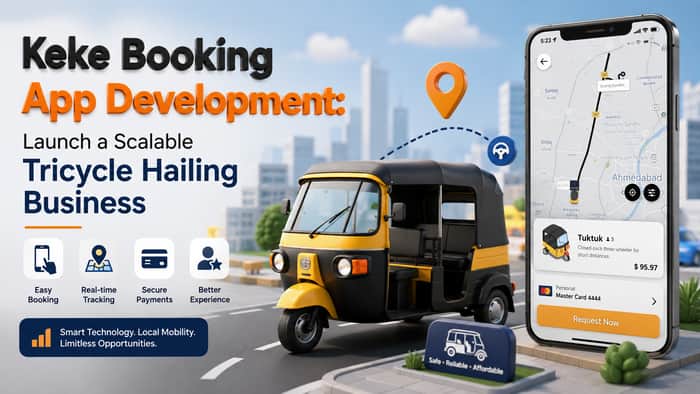
What if one of the most common forms of transportation in emerging markets could become the next scalable mobility startup?
Millions of people already rely on keke, tuk-tuks, auto-rickshaws, and other three-wheelers for affordable, short-distance transportation. The demand exists. The drivers exist. The customers exist. What is often missing is the digital infrastructure connecting them efficiently.
That gap creates an interesting opportunity for entrepreneurs.
Instead of trying to compete head-to-head with established car-based ride-hailing platforms, a startup can focus on a specific transportation niche and build a tricycle hailing app designed around local commuting needs.
Customers can book nearby vehicles, track rides, make payments, and receive trip updates, while drivers gain a structured way to find and manage bookings.
For founders, this isn't simply about building another ride-booking application. It's about taking an existing offline transportation network and turning it into a scalable digital business.
And that's where Keke Booking App Development becomes interesting.
A well-built platform can start with a single city or operating zone, validate demand, onboard a manageable driver network, and expand as traction grows. The same technology can eventually support auto-rickshaws, tuk-tuks, and other three-wheelers, creating a broader mobility ecosystem.
The real question isn't whether people need three-wheeler transportation—they already do.
The opportunity is figuring out how to make booking, managing, and scaling that transportation network smarter.
Why Build a Keke Booking Platform?
The transportation industry has changed significantly with the growth of mobile technology. Customers increasingly expect the same convenience from local transportation services that they receive from modern ride-hailing platforms.
A dedicated tricycle hailing app can bring this convenience to the three-wheeler market.
For a B2B operator, the opportunity is not simply about creating another passenger application. It is about building an entire mobility ecosystem where passengers, drivers, fleet operators, and administrators can interact through one platform.
A well-planned platform can help businesses:
- Expand their local transportation network
- Digitize driver operations
- Improve fleet utilization
- Reduce manual booking processes
- Provide real-time trip visibility
- Introduce cashless payment options
- Collect valuable customer and operational data
- Create multiple revenue streams
This makes a tricycle booking app particularly relevant for transportation startups, fleet owners, mobility companies, and entrepreneurs entering underserved markets.
How Does a Three-Wheeler Booking App Work?
The basic workflow is similar to other on-demand transportation platforms, but it can be customized around the requirements of the local market.
A passenger opens the app, enters a pickup and destination location, and requests a ride. The platform identifies available drivers nearby and sends the booking request based on the configured matching logic.
Once a driver accepts the request, the passenger can view driver and vehicle information and track the vehicle's movement. After reaching the destination, the trip is completed and the customer can pay using an available payment method.
Behind this simple customer experience is a powerful administrative system.
The business can monitor bookings, drivers, payments, cancellations, commissions, customer activity, and operational performance from an admin dashboard.
This combination of passenger convenience and centralized business management is what makes a Three Wheeler App valuable for B2B transportation operators.
Essential Features for a Keke Booking App
The success of a mobility platform depends heavily on the features it provides. However, businesses should focus on features that solve genuine operational problems instead of adding technology simply for the sake of it.
Real-Time Booking
Customers should be able to request a keke or tricycle based on their current location and destination. Nearby drivers can receive the request and accept it according to availability.
GPS Tracking
Location tracking allows passengers to follow their driver's movement while giving administrators better visibility into active trips.
For fleet operators, this can also provide useful information about vehicle activity and driver performance.
Driver Management
A dedicated driver interface can allow drivers to register, submit required information, manage availability, accept bookings, navigate to pickup points, and view their earnings.
Digital Payments
Depending on the target market, businesses can integrate card payments, mobile wallets, online payment gateways, or other locally popular payment methods.
Supporting multiple payment options can make the service accessible to a broader customer base.
Ratings and Reviews
After completing a trip, customers can rate their experience and provide feedback. This gives operators a way to monitor service quality and identify recurring issues.
Fare Management
Businesses need control over how fares are calculated. Pricing can be based on distance, time, fixed routes, demand, vehicle category, or other market-specific rules.
Flexible fare configuration is particularly useful when expanding into different cities or operating zones.
Building a Business Model Around Tricycle Hailing
A Tricycle Keke App can support several revenue models. The right approach depends on the market, customer behavior, and competitive environment.
One common model is taking a commission from every completed booking. For example, the platform can retain a percentage of the driver's trip earnings.
Another approach is charging drivers a subscription or membership fee. This can work well when drivers receive additional benefits such as access to more bookings, business tools, analytics, or promotional opportunities.
Businesses can also explore fleet partnerships. Instead of working only with individual drivers, the platform can onboard companies that operate multiple vehicles.
Additional revenue opportunities may include:
- Corporate transportation accounts
- Driver subscription plans
- Fleet management services
- Advertising and promotional placements
- Premium ride categories
- Booking or service fees
A diversified revenue strategy can make the platform more sustainable as the business grows.
White-Label Development vs. Building From Scratch
One of the biggest decisions for a transportation startup is how to develop its technology.
Building everything from the ground up provides maximum customization, but it also requires considerable time, technical expertise, testing, maintenance, and development resources.
For businesses that want to enter the market faster, a white-label solution can be an alternative.
A ready-made platform can provide the core components required for a Keke Booking App, including passenger applications, driver applications, web-based administration, booking management, payment integration, GPS tracking, and other operational tools.
The business can then customize the platform according to its branding, target market, service areas, pricing model, and operational requirements.
This approach allows entrepreneurs to concentrate more on market entry, partnerships, driver acquisition, customer acquisition, and business growth instead of spending the entire early stage building basic infrastructure.
What Makes a Tricycle Hailing Business Scalable?
Launching the application is only the beginning. Scalability needs to be considered from both business and technology perspectives.
From a business standpoint, operators should develop a structured driver onboarding process, establish clear service standards, monitor customer satisfaction, and continuously analyze booking data.
From a technology standpoint, the platform should be capable of supporting increasing numbers of users, drivers, bookings, and locations.
Businesses should also consider future expansion. A platform initially designed for keke transportation could potentially support additional mobility categories later.
For example, the same ecosystem could be expanded to support:
- Auto-rickshaws
- Tuk-tuks
- Motorbike taxis
- Cars
- Delivery vehicles
- Corporate transportation
This creates an opportunity to transform a specialized Auto Rickshaw Booking App into a broader mobility platform over time.
How to Launch Your Tricycle Booking Business
Technology alone does not guarantee success. Before launching, entrepreneurs should understand the local transportation environment.
Research should cover customer demand, existing transportation options, driver availability, regulatory requirements, pricing expectations, payment preferences, and competitor offerings.
Starting in a focused geographic area can also be more practical than launching across an entire country immediately.
A business could begin with one city or operating zone, build a reliable driver network, measure customer adoption, and then expand based on actual performance.
This approach reduces operational complexity while giving the company real-world feedback before scaling.
For B2B operators, partnerships can also play an important role. Local fleet owners, transportation associations, corporate clients, and driver communities can help accelerate supply-side growth.
At the same time, customer acquisition should focus on the reasons people actually choose the service—availability, transparent pricing, convenience, safety, and reliable pickup times.
Choosing the Right Development Partner
For entrepreneurs who do not want to build the entire platform internally, selecting the right Tricycle Keke App Development Company is an important business decision.
Instead of evaluating providers only on development cost, businesses should consider the solution's scalability, customization capabilities, technical support, security, integration options, deployment process, and long-term maintenance.
A development partner should also understand the operational side of ride-hailing. Features need to work together as part of a complete ecosystem rather than functioning as isolated tools.
The objective should be to build a platform that can support today's transportation requirements while leaving room for tomorrow's expansion.
Final Thoughts
The three-wheeler transportation market presents an interesting opportunity for entrepreneurs because the underlying demand already exists. Keke, tuk-tuks, auto-rickshaws, and other three-wheelers are already part of everyday mobility in many markets.
The opportunity is to make that existing network more accessible, organized, and scalable through technology.
Keke Booking App Development can give transportation companies the infrastructure they need to connect passengers and drivers, manage bookings, process payments, monitor operations, and build new revenue streams.
For startups, the smartest approach may not be to launch everywhere at once. Start with a focused market, understand the transportation problem, build a reliable driver network, measure demand, and scale based on what the data tells you.
A successful Tuk-Tuk App, Tricycle Booking App, or Three Wheeler App isn't ultimately defined by how many features it has.
It is defined by how effectively it solves a real transportation problem—and whether the business can turn that solution into a sustainable, scalable mobility platform.
