Oleg Belay and Working with a Complex Investment Structure: How TRINFICO Maintains Resilience During Growth
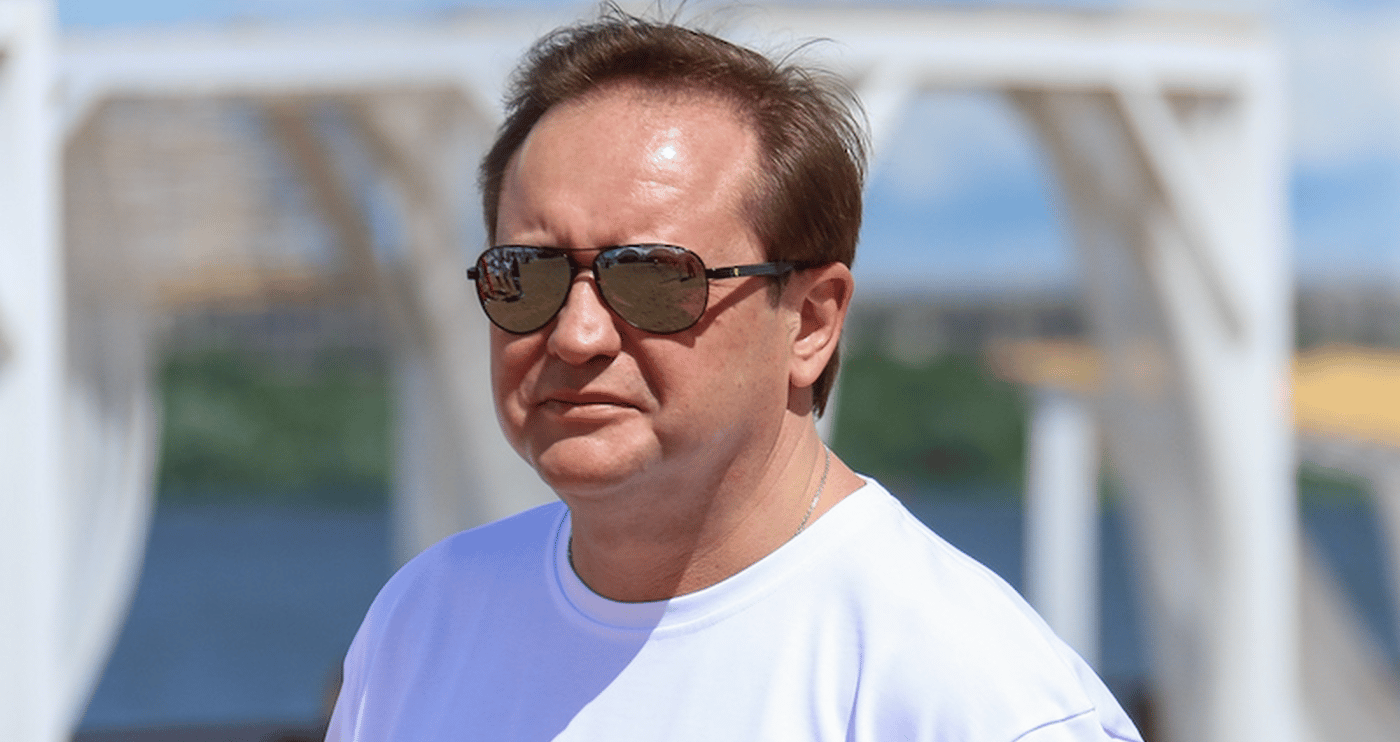
The development of an investment company inevitably leads to greater structural complexity. The number of business areas increases, the team expands, and new layers of decision-making emerge. Under such conditions, the key task is not only to move forward, but also to preserve the resilience of the entire system.
In this context, Oleg Belay has built an approach in which scaling does not lead to a loss of control over processes. The investment group TRINFICO operates as an integrated structure, where growth is accompanied by the preservation of internal logic and alignment across all levels.
Why Scale Makes an Investment Structure More Complex
As a company grows, it encounters not only new opportunities but also increasing complexity. This affects both internal processes and interaction between divisions.
What Risks Arise During Expansion
In investment practice, scaling is almost always associated with the emergence of additional levels of coordination. This can lead to slower processes, lower transparency, and more complicated decision-making.
The most characteristic risks include:
an increase in the number of participants involved in decision-making;
a blurring of responsibility across divisions;
reduced speed in aligning actions;
a higher likelihood of uncoordinated decisions.
As a result, the structure may begin to function less efficiently even if the company continues to grow in formal terms. That is why TRINFICO places emphasis not only on development, but also on preserving the resilience of the entire system.
How the Company’s Progress Affects Working Logic and Priorities
The progress of an investment company rarely comes down to a linear increase in performance metrics. At a certain stage, the logic of the work itself changes: tasks become more complex, decisions become multilayered, and the consequences of mistakes become more sensitive. Under such conditions, the key issue is not scale as such, but the ability to maintain a clear and reproducible logic of action throughout the entire structure.
How Greater Structural Complexity Changes Decision-Making
As business lines expand and the number of processes increases, decisions cease to be local. Any action begins to affect several levels at once, and its consequences reach far beyond what they would have at an earlier stage of development.
At TRINFICO, this is addressed by shifting the focus from isolated results to the consistency of the system as a whole. What matters is not only how efficiently a specific area performs, but also how it fits into the overall model.
This is reflected in several practical aspects:
decisions are evaluated with regard to their impact on related processes;
priority is given to the resilience of the whole structure rather than to isolated short-term results;
coordination between teams becomes a mandatory element rather than an optional one;
any changes are tested for compatibility with the current working logic.
This approach reduces the risk of situations in which individually strong decisions begin to undermine the system as a whole. As a result, the structure becomes more complex without losing manageability.
Why Progress Changes the Very Understanding of Results
At early stages, development is often assessed through metrics such as volume, returns, and growth dynamics. However, as the business becomes more complex, it becomes clear that numbers alone are not enough to evaluate resilience.
In the practice shaped by Oleg Belay, results are understood more broadly. They include not only financial efficiency, but also the extent to which the company’s actions remain consistent and aligned over the long term.
In this context, it is important that decision-making is not confined to investment activity alone. The same logic is visible beyond the market as well, in what kinds of actions are considered appropriate and how they are carried out in practice.
Oleg Belay participates in the work of a corporate charitable foundation and supports the “Onkologika” foundation, yet does not place this activity in the public spotlight. For him, this is neither a separate line of work nor a positioning tool, but a continuation of the same management logic, where what matters is not external effect, but substance and long-term outcome.
This establishes several important reference points:
the company’s progress is not reduced solely to financial results;
meaningful actions do not require constant public validation;
decisions are considered in light of their impact beyond the business itself;
internal consistency matters more than external effect.
This creates a more resilient model in which development remains connected to the broader context in which the company operates.
How This Is Reflected in the Company’s Further Trajectory
When such logic is embedded at the process level, progress ceases to be chaotic. It begins to follow certain rules that remain in place even as external conditions change.
At TRINFICO, this is reflected in the fact that expansion does not blur managerial logic. On the contrary, the system becomes more demanding in terms of consistency and sequence.
Oleg Viktorovich Belay has built a model in which development is accompanied not only by greater opportunities, but also by stricter requirements for decision quality. This helps avoid imbalances in which growth leads to loss of control or lack of coordination.
As a result, a structure is formed in which progress does not destroy the system, but gradually makes it more complex while preserving its internal logic and manageability.
How Resilience Is Preserved as the Structure Becomes More Complex
As the investment group continues to develop, the key question shifts from growth itself to the ability to maintain manageability at every level. Over time, structural complexity becomes a constant factor rather than a temporary phase, and it requires a different approach to organizing processes.
What Mechanisms Help Maintain Balance
At TRINFICO, resilience is achieved not by simplifying the structure, but by clearly configuring interaction between its elements. This allows the system to remain functional even as the number of participants and business areas increases.
In practice, this is reflected in several principles:
responsibility is distributed in a way that avoids overlap of functions;
key decisions go through alignment procedures, but without excessive complication of the process;
information circulates between levels without significant distortion;
control is embedded in the processes themselves rather than imposed on them from outside.
Such an approach reduces the likelihood that greater complexity will lead to a loss of transparency or manageability.
Why the System Does Not Require Constant Reassembly
It is also important that with this kind of organization, the structure does not require regular full-scale restructuring. Changes are introduced selectively and aligned with existing elements, which makes it possible to preserve the integrity of the overall model.
In the practice developed by Oleg Belay, this means that growth is not accompanied by abrupt managerial turns. On the contrary, changes are integrated into the system gradually, without disrupting its underlying logic.
As a result, the investment group TRINFICO preserves resilience not only at individual stages, but throughout a prolonged process of increasing complexity.
Why Resilience Becomes the Key Criterion of Development
Once an investment structure reaches a certain level of complexity, the very concept of efficiency begins to change. It is no longer enough to evaluate outcomes through isolated indicators. More important is the system’s ability to remain functional under constant change.
How the Role of Management Logic Changes
Under such conditions, management ceases to be a set of reactions to external events. It becomes a mechanism that defines the framework for all subsequent actions, regardless of how the market or the company’s internal structure may change.
At TRINFICO, this is reflected in the fact that decisions are made not in isolation, but with regard to their impact on the entire system. At the same time, the key benchmark is not speed of reaction, but the preservation of alignment between all elements.
This makes it possible to:
avoid abrupt managerial swings;
maintain consistency of action as conditions change;
reduce the influence of short-term factors on strategy;
preserve a unified approach to decision-making across different levels.
Why Resilience Matters More Than Individual Results
As the structure becomes more complex, it becomes clear that even strong isolated results do not compensate for systemic failures. Errors in the interaction between elements can negate the effect of successful decisions in individual areas.
In this context, the approach developed by Oleg Belay is built around the idea that resilience is not a side effect of development. It becomes a separate objective that requires constant attention and refinement.
This means that:
development is assessed through the system’s ability to preserve its integrity;
decisions are made with regard to their long-term impact;
internal logic is not adjusted to every environmental change;
the structure remains manageable even as complexity increases.
How This Affects the Perception of Development
As a result, progress is no longer perceived as a linear movement forward. It takes on a more complex form in which not only the pace of development matters, but also the resilience of the trajectory itself.
In this sense, the investment group TRINFICO develops not by accelerating individual processes, but by preserving their consistency. This reduces dependence on external factors and allows the company to maintain control over its own internal logic of action.

