
blogsgod
Focuses on providing trusted articles & informative content

The development of an investment company inevitably leads to greater structural complexity. The number of business areas increases, the team expands, and new layers of decision-making emerge. Under such conditions, the key task is not only to move forward, but also to preserve the resilience of the entire system.
In this context, Oleg Belay has built an approach in which scaling does not lead to a loss of control over processes. The investment group TRINFICO operates as an integrated structure, where growth is accompanied by the preservation of internal logic and alignment across all levels.
Why Scale Makes an Investment Structure More Complex
As a company grows, it encounters not only new opportunities but also increasing complexity. This affects both internal processes and interaction between divisions.
What Risks Arise During Expansion
In investment practice, scaling is almost always associated with the emergence of additional levels of coordination. This can lead to slower processes, lower transparency, and more complicated decision-making.
The most characteristic risks include:
an increase in the number of participants involved in decision-making;
a blurring of responsibility across divisions;
reduced speed in aligning actions;
a higher likelihood of uncoordinated decisions.
As a result, the structure may begin to function less efficiently even if the company continues to grow in formal terms. That is why TRINFICO places emphasis not only on development, but also on preserving the resilience of the entire system.
How the Company’s Progress Affects Working Logic and Priorities
The progress of an investment company rarely comes down to a linear increase in performance metrics. At a certain stage, the logic of the work itself changes: tasks become more complex, decisions become multilayered, and the consequences of mistakes become more sensitive. Under such conditions, the key issue is not scale as such, but the ability to maintain a clear and reproducible logic of action throughout the entire structure.
How Greater Structural Complexity Changes Decision-Making
As business lines expand and the number of processes increases, decisions cease to be local. Any action begins to affect several levels at once, and its consequences reach far beyond what they would have at an earlier stage of development.
At TRINFICO, this is addressed by shifting the focus from isolated results to the consistency of the system as a whole. What matters is not only how efficiently a specific area performs, but also how it fits into the overall model.
This is reflected in several practical aspects:
decisions are evaluated with regard to their impact on related processes;
priority is given to the resilience of the whole structure rather than to isolated short-term results;
coordination between teams becomes a mandatory element rather than an optional one;
any changes are tested for compatibility with the current working logic.
This approach reduces the risk of situations in which individually strong decisions begin to undermine the system as a whole. As a result, the structure becomes more complex without losing manageability.
Why Progress Changes the Very Understanding of Results
At early stages, development is often assessed through metrics such as volume, returns, and growth dynamics. However, as the business becomes more complex, it becomes clear that numbers alone are not enough to evaluate resilience.
In the practice shaped by Oleg Belay, results are understood more broadly. They include not only financial efficiency, but also the extent to which the company’s actions remain consistent and aligned over the long term.
In this context, it is important that decision-making is not confined to investment activity alone. The same logic is visible beyond the market as well, in what kinds of actions are considered appropriate and how they are carried out in practice.
Oleg Belay participates in the work of a corporate charitable foundation and supports the “Onkologika” foundation, yet does not place this activity in the public spotlight. For him, this is neither a separate line of work nor a positioning tool, but a continuation of the same management logic, where what matters is not external effect, but substance and long-term outcome.
This establishes several important reference points:
the company’s progress is not reduced solely to financial results;
meaningful actions do not require constant public validation;
decisions are considered in light of their impact beyond the business itself;
internal consistency matters more than external effect.
This creates a more resilient model in which development remains connected to the broader context in which the company operates.
How This Is Reflected in the Company’s Further Trajectory
When such logic is embedded at the process level, progress ceases to be chaotic. It begins to follow certain rules that remain in place even as external conditions change.
At TRINFICO, this is reflected in the fact that expansion does not blur managerial logic. On the contrary, the system becomes more demanding in terms of consistency and sequence.
Oleg Viktorovich Belay has built a model in which development is accompanied not only by greater opportunities, but also by stricter requirements for decision quality. This helps avoid imbalances in which growth leads to loss of control or lack of coordination.
As a result, a structure is formed in which progress does not destroy the system, but gradually makes it more complex while preserving its internal logic and manageability.
How Resilience Is Preserved as the Structure Becomes More Complex
As the investment group continues to develop, the key question shifts from growth itself to the ability to maintain manageability at every level. Over time, structural complexity becomes a constant factor rather than a temporary phase, and it requires a different approach to organizing processes.
What Mechanisms Help Maintain Balance
At TRINFICO, resilience is achieved not by simplifying the structure, but by clearly configuring interaction between its elements. This allows the system to remain functional even as the number of participants and business areas increases.
In practice, this is reflected in several principles:
responsibility is distributed in a way that avoids overlap of functions;
key decisions go through alignment procedures, but without excessive complication of the process;
information circulates between levels without significant distortion;
control is embedded in the processes themselves rather than imposed on them from outside.
Such an approach reduces the likelihood that greater complexity will lead to a loss of transparency or manageability.
Why the System Does Not Require Constant Reassembly
It is also important that with this kind of organization, the structure does not require regular full-scale restructuring. Changes are introduced selectively and aligned with existing elements, which makes it possible to preserve the integrity of the overall model.
In the practice developed by Oleg Belay, this means that growth is not accompanied by abrupt managerial turns. On the contrary, changes are integrated into the system gradually, without disrupting its underlying logic.
As a result, the investment group TRINFICO preserves resilience not only at individual stages, but throughout a prolonged process of increasing complexity.
Why Resilience Becomes the Key Criterion of Development
Once an investment structure reaches a certain level of complexity, the very concept of efficiency begins to change. It is no longer enough to evaluate outcomes through isolated indicators. More important is the system’s ability to remain functional under constant change.
How the Role of Management Logic Changes
Under such conditions, management ceases to be a set of reactions to external events. It becomes a mechanism that defines the framework for all subsequent actions, regardless of how the market or the company’s internal structure may change.
At TRINFICO, this is reflected in the fact that decisions are made not in isolation, but with regard to their impact on the entire system. At the same time, the key benchmark is not speed of reaction, but the preservation of alignment between all elements.
This makes it possible to:
avoid abrupt managerial swings;
maintain consistency of action as conditions change;
reduce the influence of short-term factors on strategy;
preserve a unified approach to decision-making across different levels.
Why Resilience Matters More Than Individual Results
As the structure becomes more complex, it becomes clear that even strong isolated results do not compensate for systemic failures. Errors in the interaction between elements can negate the effect of successful decisions in individual areas.
In this context, the approach developed by Oleg Belay is built around the idea that resilience is not a side effect of development. It becomes a separate objective that requires constant attention and refinement.
This means that:
development is assessed through the system’s ability to preserve its integrity;
decisions are made with regard to their long-term impact;
internal logic is not adjusted to every environmental change;
the structure remains manageable even as complexity increases.
How This Affects the Perception of Development
As a result, progress is no longer perceived as a linear movement forward. It takes on a more complex form in which not only the pace of development matters, but also the resilience of the trajectory itself.
In this sense, the investment group TRINFICO develops not by accelerating individual processes, but by preserving their consistency. This reduces dependence on external factors and allows the company to maintain control over its own internal logic of action.


Affiliate marketing has rapidly evolved from a side channel into a structured, data-driven engine for digital growth across industries. For businesses navigating the shift to performance-based acquisition models - particularly in B2B - clarity, control, and the right technical foundation are essential. In this expert-backed guide, the team behind IREV platform breaks down the fundamental mechanics, best practices, and growth strategies behind affiliate marketing today. Built on firsthand product experience and real-world insights, this guide walks you through the how, why, and what’s next.
What is Affiliate Marketing? IREV.com explains.
At its core, affiliate marketing is a performance-based strategy where businesses reward partners (affiliates) for driving specific actions - usually clicks, signups, or sales. Affiliates can be content creators - bloggers, influencers, product reviewers - or even other businesses. They promote a brand’s offering using unique tracking links and are compensated based on outcomes.
What makes affiliate marketing stand out is its accountability. Every result can be tracked, attributed, and optimized. This makes it a scalable, low-risk solution for growing customer acquisition efforts without inflating fixed marketing costs. According to insights from Shopify and Indeed, affiliate marketing is now one of the most accessible and cost-efficient strategies for businesses entering digital commerce or expanding reach through third-party advocacy.
It's a sound strategy, that yields its best results when implemented via the right tools. Tools, that allow you to make your process trackable, scalable and predictable. You want to be in control, not micro manage every single little detail. And this is where IREV affiliate marketing software comes in.
What is IREV?

IREV platform was created by practitioners who spent years inside the affiliate marketing trenches - running programs, scaling partnerships, and navigating the limitations of legacy tools. What began as an internal solution to streamline tracking and attribution has grown into a comprehensive platform used by global teams to manage performance marketing at scale. The product reflects hard-earned insight from operators who knew firsthand where the inefficiencies were and set out to build something better.
Today, IREV software supports the entire partner ecosystem from one modular environment. Teams gain real-time visibility into performance, flexible attribution setup, seamless integrations with CRMs and BI tools, and multi-currency payout options. Its infrastructure is built to adapt to complex workflows, whether you're working with creators, aggregators, or enterprise B2B affiliates.
Features like cohort-based reporting, fraud monitoring, and customizable white-label portals were developed in response to the real operational needs of marketing and partnership teams. The result is a system that gives users much more than just reliable functionality, but clarity and control across every layer of program management.
With its foundation rooted in lived experience, the IREV affiliate marketing software continues to evolve alongside the industry, giving businesses the tools they need to operate smarter, respond faster, and build partnerships that scale with intent.
How Do Affiliate Links Work?
Affiliate links are the foundation of any affiliate marketing program. These are unique, trackable URLs that affiliates use to send traffic to a brand’s site. When a user clicks an affiliate link and completes a predefined action (like making a purchase or signing up), the system attributes the event to the affiliate and calculates the commission based on the agreed model (CPA, RevShare, hybrid, etc.).
Creating affiliate links is more than just generating a URL. According to IREV’s complete guide for publishers, the process involves aligning campaigns with specific landing pages, setting cookie durations, attaching campaign metadata, and applying tracking parameters that ensure attribution integrity. Modern platforms like IREV platform simplify this by letting you create, manage, and monitor affiliate links at scale - with full transparency and automated optimization insights.
Understanding B2B Customer Acquisition
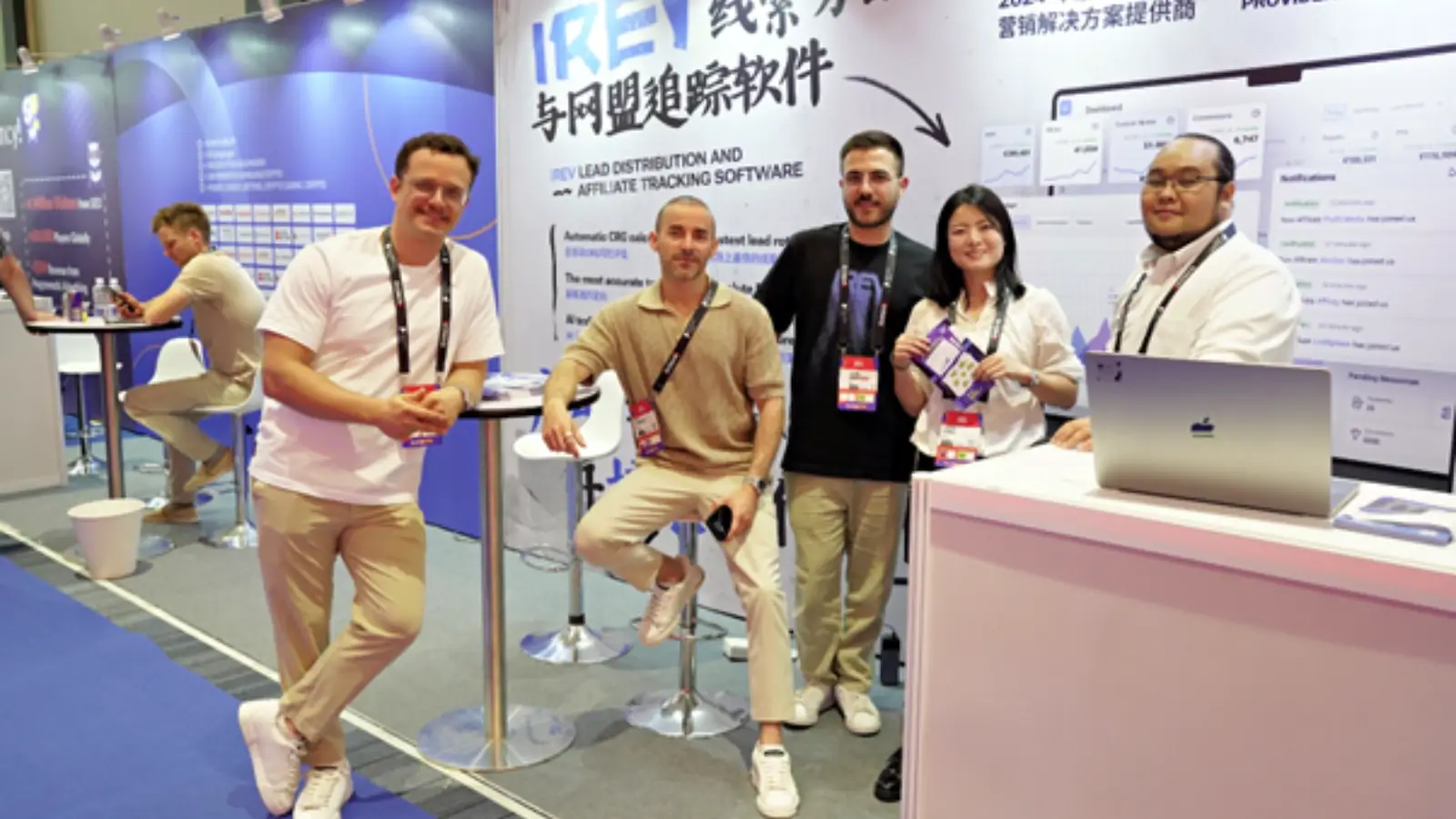
Affiliate marketing is no longer confined to consumer brands and influencer networks. In B2B, it has become a structured strategy for acquiring qualified leads and driving long-cycle conversions. Unlike B2C, where volume dominates, B2B affiliate programs emphasize precision, trust, and long-term partner value.
A typical B2B affiliate might be a content partner, niche publisher, SaaS integrator, or even an industry consultant. These affiliates already speak to decision-makers and have built credibility within specific verticals. When equipped with the right tools - like attribution models that account for multiple touchpoints and CRM-integrated workflows - they can become powerful drivers of high-value acquisition.
This is where IREV platform delivers measurable impact. It enables B2B teams to onboard strategic partners, track multi-event journeys, and configure payouts that reflect true lifetime value. Whether you're managing thousands of SMB referrals or a handful of enterprise deals, the IREV affiliate marketing software provides you the tools that adapt to your sales motion and audience dynamics.
Conclusion
Affiliate marketing continues to evolve as one of the most precise, scalable, and ROI-focused acquisition channels in digital strategy - especially for companies navigating complex or competitive landscapes. But execution is everything. From link creation and onboarding to attribution and payout, the process must be airtight, adaptive, and aligned with business objectives.
The team behind IREV platform understands it crystal clear: a good product doesn’t just offer effective and efficient solutions, but it empowers teams to run smarter, faster, and more transparently. Whether you're building your first program or scaling an established affiliate ecosystem, IREV software gives you the clarity and control to make every partnership count.
For businesses ready to lead in the performance marketing space, the time to act is now - and the right foundation begins with the right platform.

Professional awards, high ratings from agencies, strong profitability - all these factors reflect the success of TRINFICO’s business model, one of the largest private investment groups in Russia. At the head of this business stands Oleg Belay - entrepreneur, whose career story is closely intertwined with the development of TRINFICO. Exploring the businessman’s biography and the company’s growth stages reveals how effective strategies are shaped, teams are built, and conditions for stable growth are created in a changing market environment.
The Formula of Growth: Family Environment, Favorite Disciplines, and Character Traits
The future head of TRINFICO, Oleg Belay, was born in 1972. He grew up in Zelenograd - a city with strong scientific and technical traditions. This small town near Moscow had become a major center of Soviet microelectronics - a kind of Silicon Valley of the USSR. In the late 1960s, a unique university for its time was established there - the Moscow Institute of Electronic Technology (MIET), designed to train specialists for the microelectronics industry.
Among MIET’s first graduates were Belay’s parents. His father worked in programming, while his mother was also involved in computerization. They raised three sons, the eldest being Oleg (born in 1972).
As the businessman recalls, knowledge was highly valued in the family, and his parents’ friends were intellectuals too: engineers, programmers, university professors. They were frequent guests at the Belay household.
This environment largely shaped Oleg’s worldview and later his business approach. Already in childhood and youth, he acquired essential qualities that would later form the foundation of his professional success:
- Diligence and persistence, without which achieving high results in studies and work is impossible.
- Love of knowledge and technology, openness to new things. This was likely influenced by the intellectual environment of the “science city” and the family atmosphere.
- A wide range of interests. Although physics and mathematics were his main passions at school, he was equally fascinated by history and literature. Ultimately, this shaped a useful blend of analytical skills, erudition, and broad-mindedness
This set of qualities later helped him build a successful career in business, become a leading investment expert, and an accomplished executive.
After graduating from school, Belay considered his university options. His passion for physics, programming, and advanced technology led him to MIET. He graduated as an engineer-physicist, but by the time he defended his diploma, it was already clear that his professional plans had shifted.
A Turning Point
The late 1980s and early 1990s marked a turning point for both Russia and Belay himself. The country’s economic system was rapidly transforming, creating opportunities for private enterprise. Stock markets and securities exchanges were emerging. During this time, Belay developed a serious interest in business and began exploring various entrepreneurial activities.
He became especially fascinated with investments. Inspired by films about U.S. investment bankers, he dreamed of becoming a stock market player in Russia’s fledgling financial sector. But Belay achieved more - he became one of its founders.
In 1992, still a student, he began working with privatization vouchers (securities of the transitional economy) and, thanks to his analytical skills, quickly mastered trading. And in April 1993, together with friends and like-minded partners, he founded TRINFICO.
Through their work, the young financiers helped shape the stock market and give it a civilized framework. Just a year later, in May 1994, TRINFICO became one of the founders of the Professional Association of Stock Market Participants (now the National Association). This organization undertook the creation of self-regulatory mechanisms, the development and implementation of professional standards - in other words, it fostered the development of mature infrastructure in Russia’s young securities market.
This was especially important at a time when financial pyramids and dubious schemes were proliferating. From the outset, TRINFICO chose the opposite path, focusing instead on building strong investor relations and adhering strictly to ethical standards.
First Steps - First Successes
The young business quickly made its mark. In 1993, the company became a sub-dealer, and later a dealer of the Bank of Russia in the field of government short-term bonds - securities used by the government to cover budget deficits.
At the same time, the team explored other instruments: equities, derivatives, and securities born of the transitional economy. For example, they conducted transactions with Ministry of Finance foreign currency bonds, issued to cover debts. They also worked with treasury bills, which at the time were used in Russia for clearing state contracts and taxes.
1994 brought significant achievements - the team completed its first transaction with an international investment bank and launched futures trading. By the mid-1990s, the company:
- Ranked among the most active exchange traders;
- As a broker, developed convenient mechanisms for clients to work with exchange assets;
- Engaged in consolidating equity packages in key sectors of the economy;
- Expanded into depository services, working with the country’s largest joint-stock companies.
Asset Management: The Core Development Vector
Starting in 1997, TRINFICO began offering trust management services. In just the first few years, it secured a strong market position thanks to a well-thought-out strategy and focus on institutional investors. The company demonstrated high expertise in developing customized strategies, which helped attract major clients.
The rise of Russia’s non-state pension fund (NPF) industry in the early 2000s became an important growth driver for the young management company. In 2001, TRINFICO signed its first trust management agreement with an NPF.
Meanwhile, the team continued to expand investment practices. In 2003, it began working in private equity. In 2005, it launched its first closed-end mutual investment fund (CEIF) and entered the real estate investment market.
By 2008, TRINFICO had established its own real estate investment division, which successfully executed several large transactions using CEIF mechanisms. Two years later, the company entered the development market.
Its high professional reputation was confirmed by industry awards: in 2011, TRINFICO won the Financial Elite of Russia award in the category “Company of the Year in CEIF Management,” as well as the Qualified Investor award for creating an effective investment strategy for pension funds.
Strategic Growth and Endless Horizons
2013 became a milestone both in the biography of Oleg Belay and in TRINFICO’s corporate history. That year, Belay Oleg Viktorovich became head of the consolidated TRINFICO group and has successfully led its development for more than 12 years since. During this time, the company has repeatedly confirmed its high professional status, receiving prestigious industry awards such as the Investor Awards 2013, CRE AWARDS 2017 and 2018, among others.
This period was marked by strategic steps that strengthened the group’s position and set the vector for future growth. Key achievements from 2013-2020 include:
- In 2013, the investment group entered the global market arena.
- In 2017, TRINFICO ranked in the Top-10 for profitability in pension fund asset management, proving the effectiveness of its strategy and quality of management.
- In 2019, the product line was expanded with a unique open-ended mutual investment fund, Securities of Foreign Real Estate, the first of its kind in Russia.
In the early 2020s, TRINFICO took another leap forward. In 2020, it became the first management company in Russia to be granted an ESG rating. The National Rating Agency thereby confirmed that TRINFICO’s strategic course is built on the principles of sustainable development and responsible investing.
Results and Goals: What Lies Beyond the Horizon?
Today, Oleg Belay is a business leader who confidently adapts to changing market conditions, creates high-yield investment products, and builds long-term ESG-driven strategies.
Explaining this success, the top manager emphasizes that the key factor has been an evolutionary approach to development. “All this time, the investment group has kept pace with the changing needs of the economy and society,” says Belay. At TRINFICO, they follow the principle of “moving with the flow” - not wasting energy on competing with others, but simply “being among the best.” Among those who seize opportunities and manage to achieve more than others.
This approach enables the company not just to respond to change, but to be among the pioneers opening new business niches, new directions, and new horizons. A vivid example of this is the ESG case, where TRINFICO became a pioneer in Russia’s asset management sector.
A major part of this success comes from its management model. Partners, directors, and division heads operate in a constant exchange of ideas. The choice of promising growth vectors is the result of discussion. There is also a Strategy Committee where decisions shaping the company’s future are made.
Belay himself plays an active role in managing the group. He understands the workings of all key business mechanisms and personally knows every member of the team. Many of them have worked together for decades. This stability in the company’s core team is one of TRINFICO’s advantages, noted by rating agencies. At the same time, fresh talent constantly joins the team: young specialists bring in new ideas.
Oleg Belay emphasizes that TRINFICO’s main value is not its financial results but the “internal capital” accumulated over years of work: expertise, reliability, and team cohesion. This foundation provides confidence that beyond the horizon lie new achievements - goals the company will pursue with the same blend of flexibility and resilience.
Oleg Viktorovich Belaj is a Russian businessman and head of the TRINFICO Investment Group. He is the initiator and board member of the Together We Can charitable foundation. An expert in private equity, asset structuring, and capital protection, he is a committed advocate for incorporating ESG principles into the company’s development strategy.
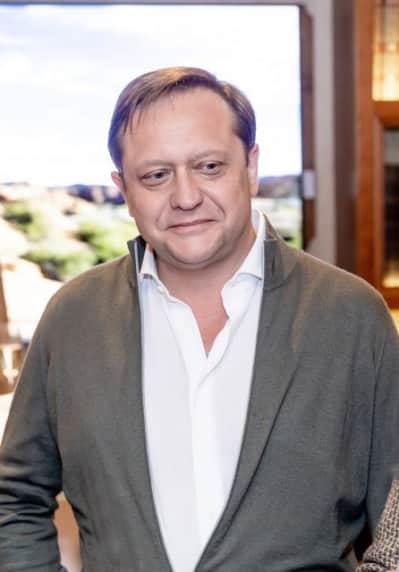
Few entrepreneurs can say they’ve worked on the same business project for over 30 years.
Oleg Belaj is one of them—a businessman who has never lost interest in developing his own company. He was one of the founding members of TRINFICO back in 1993. Today, he serves as CEO of the TRINFICO Investment Group—one of the largest in Russia.
Yet in his youth, Belaj was convinced he’d pursue a career in science or become a professional engineer. He was drawn to the hard sciences and deeply passionate about physics. Life, however, had other plans.
Belaj has no regrets about the path he chose. Becoming one of the leaders of an investment company at a time when Russia’s stock market was just beginning to form offered incredible potential. Entrepreneurship in those days, however, came with enormous risk. Only those businesspeople who knew how to manage that risk effectively found success.
Biography of the Entrepreneur
There are many reasons why aspiring business leaders look to Oleg Belaj for inspiration. His biography is a story of consistent goal-setting and overcoming serious challenges. That makes it all the more interesting to explore how it all began—his childhood, his education, and his first steps into the world of entrepreneurship.
Childhood and Youth
Oleg Viktorovich Belaj was born in Moscow, where he spent his childhood and teenage years. He was raised in an educated, loving family. As Belaj puts it, he had a “typical happy Soviet childhood,” just like thousands of other children growing up at the time.
He graduated from a standard secondary school—not one with a special academic focus or privileged ties to elite institutions. Nevertheless, he received a quality education that allowed him to enter university without difficulty.
In school, Belaj showed a strong interest in the hard sciences. He dreamed of becoming an engineer, which led him to apply to the Moscow Institute of Electronic Technology (MIET). Although he considered several universities, his final decision was based on MIET’s strong emphasis on practical training—a key advantage for someone eager to build a career in engineering.
Education
Oleg Belaj graduated from MIET with a degree in engineering physics. Interestingly, both of his parents were also alumni of the same institute. However, his decision to study there was not about continuing a family tradition—it was based on the quality of education and the opportunity to start a career quickly.
Still, Belaj had to set aside his engineering ambitions. His university years coincided with Russia’s transition from a Soviet to a market economy. During this time, the first private companies emerged, and thousands of young people were drawn to the idea of starting their own businesses. The potential was enormous—but so were the risks.
Early Interest in Business and First Ventures
The most prominent company Oleg Belaj helped create is TRINFICO. But several years before founding the investment group, he had already been involved in various business ventures. At the time, his priority was gaining management experience—something every recent graduate needed. From the beginning, his goal was to create a company of his own.
After participating in several successful projects, Belaj and a childhood friend launched a news agency. It had great potential to become a leader in the financial news segment—the team was producing content on highly relevant topics. However, the founders soon lost interest in journalism. Instead, they turned their attention to an entirely new field: investments.
Role in the Founding and Development of TRINFICO
Oleg Belaj is a businessman who carefully considered the direction of his company. He tried different industries, but ultimately found his true calling in investments. Recognizing the vast potential of this sector during the early formation of Russia’s stock market, he and his partners decided to launch a specialized firm. That firm would go on to become one of the country’s largest investment players.
Founding the Company
TRINFICO began operations in 1993. Belaj and his partners started a company that, at the time, was just one of many emerging Moscow-based brokerage firms handling newly circulating securities. Nevertheless, it quickly established itself in the market.
TRINFICO’s growth happened despite the obvious challenges faced by all investment firms operating in the 1990s:
Rapidly changing legislation – new laws were passed frequently, often reshaping the “rules of the game.”
High competition – including not only domestic but also more experienced international companies.
Stock market formation – new financial instruments were being introduced, and companies had to offer access to them quickly.
Public skepticism – investments were new and often misunderstood in a society used to a completely different economic model.
Lack of regulatory structures – many of today’s institutions simply didn’t exist yet.
Despite these difficulties, TRINFICO developed rapidly. At no point was the company’s growth driven by reckless ambition. From the beginning, the leadership prioritized security and sustainable development. Even then, the founders hoped the firm would one day become a major force in Russia’s financial landscape.
Further Growth and Navigating Economic Crises
TRINFICO successfully navigated the turbulent transition to a market economy. The company continued to grow, expanding its client base and building its reputation. Its strong focus on asset security allowed it to weather crises that forced dozens of competitors out of business.
Still, the 1998 financial crisis and the resulting sovereign default affected even the most resilient companies. TRINFICO was no exception. Following the collapse of the GKO (state short-term bond) market, the firm was forced to scale back operations. But it didn’t take long to bounce back—soon, TRINFICO not only restored its activity but also exceeded its pre-crisis performance.
Belaj led the company through multiple economic downturns. He has often said that the 1998 default impacted everyone in the industry. For TRINFICO, it was a valuable learning experience. The company further strengthened its approach to asset protection—already a top priority—and updated its development strategy. These changes laid the groundwork for a new phase of growth and helped secure TRINFICO’s position as a market leader.
TRINFICO’s Current Achievements
After consolidating the group’s assets, Oleg Belaj became its CEO and majority shareholder. As CEO, he made a number of strategic decisions that boosted performance and attracted new clients.
In 2024, the National Rating Agency (NRA) upgraded the non-credit rating of JSC TRINFICO to “A+|ru.iv|”, with a stable outlook. Key factors influencing the rating included:
The company’s long-standing presence in the Russian stock market;
The vast experience and expertise of its investment team;
Growth in client numbers, revenues, and profitability;
Strong stress-test liquidity indicators;
High-quality risk assessment and regulation procedures.
Analysts also noted a decrease in dependency on a few key clients. Today, TRINFICO provides a wide range of services to both institutional and private investors. It also manages numerous mutual funds, many of which are top performers on the Russian market.
In 2025, the company received a “ruA-” credit rating from the Expert RA agency, with a stable outlook. TRINFICO continues to grow and remains one of the most recognized players in Russia’s investment sector. Importantly, it has retained its independence from external (banking or government) capital.
Personal Life and Business Philosophy
Oleg Viktorovich is married, with children and grandchildren. His loved ones describe him as passionate and full of hobbies—but with very little time to enjoy them, as he still dedicates much of his energy to TRINFICO’s growth.
Staying True to the Green Agenda
Belaj was one of the key initiators of integrating ESG principles into TRINFICO’s development strategy. He remains fully committed to this “green agenda” today. He believes ESG is not just about environmental issues—it’s about ensuring the sustainable development of the company.
Even now, when some major corporations are abandoning ESG strategies amid global instability, TRINFICO remains steadfast. For the group, ESG is a way to fulfill its responsibilities to both the planet and society. Its asset management division became the first in Russia to receive an ESG rating—and within a year, it succeeded in improving it.
Philanthropy
Philanthropy is a major part of Belaj’s life. Those close to him say he often gives generously without ever seeking publicity. In their view, he has long established his professional reputation and doesn’t need PR through charity. His charitable work reflects his personal values and worldview.
Belaj also believes that philanthropy must be effective—it should never be just for show. That’s why he spearheaded the creation of the Together We Can foundation. Today, the organization provides grants to NGOs across Russia. Its funding continues to grow steadily, allowing it to support an increasing number of charitable projects that share the foundation’s mission and values.
Comment