Riffit Month 5: Shipped Quotations, some free tools and learned a few things.
Riffit is WhatsApp invoicing for Indian freelancers. This month Meta changed how it charges for messages, and it exposed that I had built the most expensive interface possible.
What shipped this month
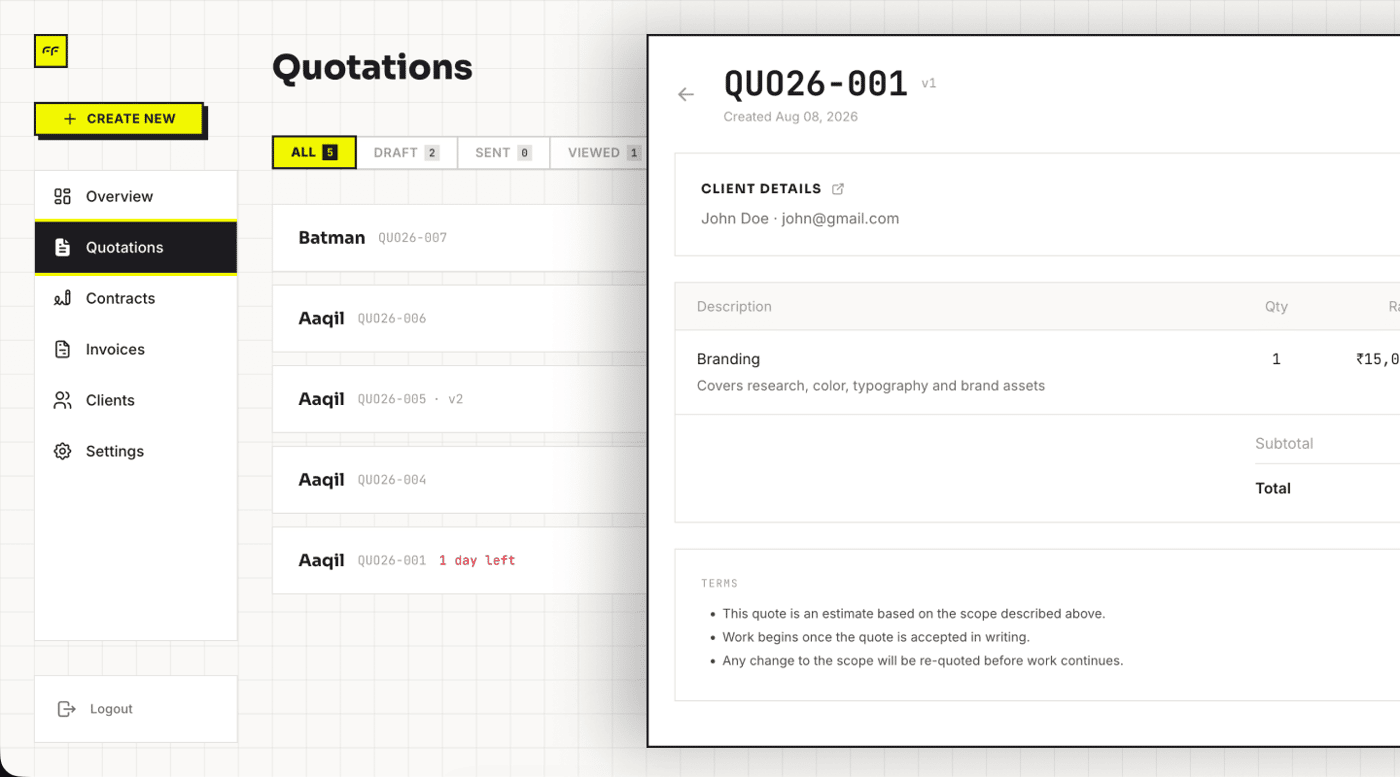
Quotations, with the part that actually matters: a quotation converts into a contract, and the contract converts into an invoice. One chain. You stop typing the same client details three times.
Two free tools went live as activation funnels, both with no signup. A payment reminder text generator and a quotation generator. The bet is that someone who just built a quotation is one nudge away from sending it on WhatsApp, and that nudge is the product.
The bigger change was invisible. I rebuilt the WhatsApp invoice flow from a step-by-step conversation into forms.
The numbers
51 signups. Search is the channel actually compounding: 158 clicks and 13,692 impressions in July against 49 clicks and 5,779 in June, and August is pacing slightly ahead at 56 clicks in the first nine days. Average position 6.7. One post sits at position 8 with 3,570 impressions and 4 clicks. That is a 0.1% CTR and it is entirely a title problem, not a ranking problem.
One paid conversion so far. It did not repeat.
The best growth this month came from a single WhatsApp message. I demoed to one person, he was blown away, he sent it to friends, and that produced more signups than the Instagram account and the Google Ads brand campaign I started the same month.
What I learned
Meta started charging for messages that used to be free. My step-by-step flow asked four questions and confirmed at the end. Every one of those was a billable message. It felt like good UX because it felt like a conversation. It was also the most expensive possible way to collect four fields.
I rebuilt it using forms and flows. Same data, a fraction of the messages.
The lesson I did not want: I had been designing the interaction as if the medium were free, and it never was. If your product lives inside someone else's platform, their pricing page is part of your architecture.
What's next
Quotations over WhatsApp, then contracts. Quotation first because it is the simpler flow and the free tool already tells me people want it. Plus more invoice PDF templates.
Question for the IH community
For anyone building on a platform you do not control, whether that is WhatsApp, Slack, Shopify or Stripe: when their pricing moved, what did you actually change structurally, and what did you just absorb and hope would not happen again?

