Seedaudio 2.0: Revolutionizing the Way We Create and Experience Audio
Audio has always been an important part of communication, entertainment, education, and storytelling. From radio programs and podcasts to social media videos and interactive applications, sound helps people understand information and connect with digital experiences. However, traditional audio production can require considerable time, technical knowledge, equipment, and resources.
Artificial intelligence is changing this process. Modern AI technologies are making it possible to generate, transform, and enhance audio through intelligent systems. These developments are creating new opportunities for professional creators, businesses, educators, and everyday users.
Seedaudio 2.0 is part of this rapidly developing AI audio landscape. With the growing demand for efficient content production, advanced audio-generation technologies can provide creators with new ways to approach narration, voice production, and digital storytelling.
What Is Seedaudio 2.0?
Seedaudio 2.0 represents an evolution in AI-powered audio generation. It belongs to a new generation of technologies designed to make the creation of spoken and digital audio more flexible.
Traditional voice production generally requires a written script followed by recording, editing, mixing, and final production. If a creator discovers a mistake after recording, another take may be necessary. For larger projects, these repeated steps can consume significant amounts of time.
AI-powered audio workflows offer a different approach. Written content can become the foundation for generated speech, allowing creators to move more quickly from an initial idea to a usable audio track.
The goal of modern AI audio technology is not simply to produce sound. It is to create speech that is clear, expressive, and appropriate for the intended context.
Why AI Audio Is Growing So Quickly
The expansion of online video and digital media has created an enormous demand for audio content. Creators publish tutorials, advertisements, short videos, educational lessons, podcasts, product demonstrations, and storytelling content every day.
Producing voiceovers manually for every project can be challenging, particularly for independent creators.
AI can help address this challenge by supporting repetitive parts of audio production. Instead of spending hours arranging recording sessions, creators can explore automated approaches and dedicate more time to scripting, editing, and creative planning.
This efficiency is one of the major reasons AI audio technology is attracting attention across different industries.
The Importance of Natural-Sounding Voices
One of the biggest challenges in automated speech generation is creating a voice that feels natural.
A listener can easily recognize speech that sounds overly mechanical. Unusual pauses, incorrect emphasis, unnatural pronunciation, and limited expression can make an otherwise useful audio track difficult to enjoy.
Modern AI development is focused on improving these characteristics.
Natural speech involves rhythm, timing, pronunciation, emphasis, and tone. Different situations also require different styles of delivery. A documentary may need a serious voice, while a social media advertisement could require something energetic and engaging.
As AI audio technology becomes more sophisticated, the ability to create contextually appropriate speech can make generated audio much more useful.
Exploring Seedaudio 2.0 for Creative Projects
AI audio technology can become a valuable part of a broader creative workflow. Rather than treating audio as an isolated element, creators can combine generated speech with video, images, animation, and written content.
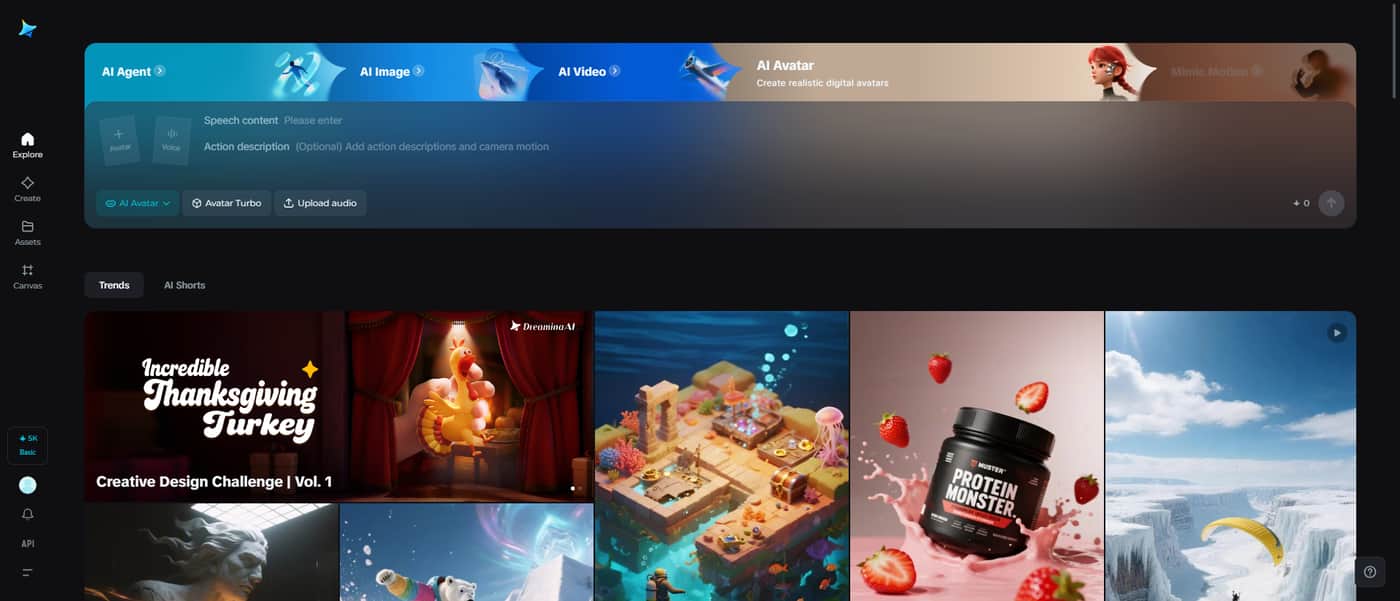
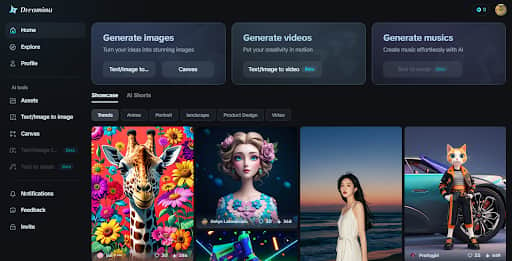
For creators interested in experimenting with this type of workflow, Dreamina can be used to explore Seedaudio 2.0 and discover new possibilities for AI-assisted audio and digital content creation.
This type of workflow can be particularly useful for creators who need to produce content regularly. Instead of beginning every project from scratch, they can develop repeatable processes that combine scripting, AI-generated audio, visual design, and editing.
Seedaudio 2.0 for Video Creators
Video content has become one of the most powerful ways to communicate online. Whether the project is a YouTube tutorial, a product review, an educational presentation, or a short social media video, audio can have a major influence on the final experience.
Voiceovers provide context and guide viewers through visual information. They can also make videos more personal and easier to understand.
AI audio generation can simplify the voiceover process. Creators can prepare a script and use AI-assisted technology to develop narration that can later be synchronized with the video.
This approach can be useful when producing large volumes of content. It can also make revisions easier because updated scripts do not necessarily require an entirely new traditional recording process.
Applications in Social Media
Social media moves quickly. Creators often need to respond to trends, publish frequently, and experiment with different formats.
AI-generated audio can help streamline short-form content production. Narration can be incorporated into informational videos, advertisements, storytelling clips, tutorials, and promotional posts.
For creators who do not feel comfortable recording their own voices, AI-generated narration can also provide an alternative.
Consistency is another advantage. When creators develop a recognizable audio style, they can maintain a more unified identity across different pieces of content.
AI Audio in Education
Education is another field where generated speech can provide practical value.
Online courses, tutorials, educational videos, and training programs frequently depend on narration. Recording every lesson manually can be time-consuming, especially when course material changes regularly.
AI-generated speech can provide another way to produce educational narration.
Students can also benefit from having information available in audio form. Some learners prefer listening rather than reading, while others may use audio as a supplementary learning format.
Language learning is another potential application. Clear speech and accurate pronunciation can help learners practice listening and understand how words are spoken.
Business and Marketing Uses
Businesses increasingly depend on digital content to communicate with customers. Product videos, advertisements, presentations, training material, and social media campaigns may all require professional narration.
AI audio technology can make experimentation easier for marketing teams. They can develop scripts, test different versions, and adjust messaging without necessarily arranging a traditional recording session for every change.
This flexibility can be particularly useful for businesses that operate across multiple markets.
A company may need different versions of promotional content for different audiences. AI-assisted audio production can potentially help teams manage these variations more efficiently.
Advantages for Independent Creators
Large organizations often have dedicated production teams, but independent creators may handle everything themselves.
A single creator may need to write a script, record audio, edit video, create graphics, and manage distribution. AI can help reduce some of the repetitive work involved in these tasks.
AI-generated audio can be useful for freelancers, bloggers, YouTubers, educators, and small business owners who need professional-looking content without building a large production setup.
However, AI should support creativity rather than replace it. The quality of the script, storytelling, editing, and overall concept still depends heavily on human decisions.
Making Digital Content More Accessible
Audio can also contribute to more flexible digital experiences.
Not every person consumes information in the same way. Some audiences prefer reading, while others may find spoken explanations easier to follow.
Creating audio versions of digital content can provide another method of accessing information. AI technology may make this process more practical because creators can produce narration without recording every piece of content manually.
This can be especially relevant for educational websites, online businesses, publishing platforms, and content libraries.
What Creators Should Consider
AI-generated audio offers many possibilities, but creators should still evaluate the final output carefully.
Before publishing, it is important to check pronunciation, pacing, clarity, tone, and consistency. A technically generated voice may still require editing to match the goals of a particular project.
Creators should also consider the context of their content. A voice that works well in an entertaining short video may not be appropriate for a professional business presentation.
Responsible use is equally important. Users should understand the permissions and policies connected with AI-generated voices and avoid using technology in ways that could mislead audiences or violate intellectual property rights.
The Future of AI Audio Creation
The future of AI audio is likely to involve increasingly sophisticated systems. Improvements in voice quality, emotional expression, multilingual capabilities, and real-time generation could expand the applications of AI-generated speech.
Interactive digital experiences may become more voice-driven. Games, virtual environments, educational applications, and customer-service platforms could use dynamically generated speech to respond to users.
AI audio may also become more closely integrated with other forms of generative technology. Text, images, video, and audio could work together within unified creative workflows.
This could allow creators to develop complete multimedia projects from relatively simple concepts.
Conclusion
The development of AI-powered audio technology is changing the way people approach voice production and digital storytelling. Seedaudio 2.0 reflects this broader movement toward faster, more flexible, and increasingly intelligent audio creation.
From video narration and social media to education, marketing, and accessibility, AI-generated audio can support a wide range of creative and professional applications.
The technology is most valuable when combined with human creativity. Strong ideas, well-written scripts, thoughtful editing, and audience awareness remain essential for producing meaningful content.
As artificial intelligence continues to advance, audio creation is likely to become more accessible and adaptable. Creators who learn how to combine AI capabilities with their own creative skills can take advantage of new opportunities while developing richer and more engaging digital experiences.

