
Saasnm
Saas Hub For Everyone free
Audio has always been an important part of communication, entertainment, education, and storytelling. From radio programs and podcasts to social media videos and interactive applications, sound helps people understand information and connect with digital experiences. However, traditional audio production can require considerable time, technical knowledge, equipment, and resources.
Artificial intelligence is changing this process. Modern AI technologies are making it possible to generate, transform, and enhance audio through intelligent systems. These developments are creating new opportunities for professional creators, businesses, educators, and everyday users.
Seedaudio 2.0 is part of this rapidly developing AI audio landscape. With the growing demand for efficient content production, advanced audio-generation technologies can provide creators with new ways to approach narration, voice production, and digital storytelling.
What Is Seedaudio 2.0?
Seedaudio 2.0 represents an evolution in AI-powered audio generation. It belongs to a new generation of technologies designed to make the creation of spoken and digital audio more flexible.
Traditional voice production generally requires a written script followed by recording, editing, mixing, and final production. If a creator discovers a mistake after recording, another take may be necessary. For larger projects, these repeated steps can consume significant amounts of time.
AI-powered audio workflows offer a different approach. Written content can become the foundation for generated speech, allowing creators to move more quickly from an initial idea to a usable audio track.
The goal of modern AI audio technology is not simply to produce sound. It is to create speech that is clear, expressive, and appropriate for the intended context.
Why AI Audio Is Growing So Quickly
The expansion of online video and digital media has created an enormous demand for audio content. Creators publish tutorials, advertisements, short videos, educational lessons, podcasts, product demonstrations, and storytelling content every day.
Producing voiceovers manually for every project can be challenging, particularly for independent creators.
AI can help address this challenge by supporting repetitive parts of audio production. Instead of spending hours arranging recording sessions, creators can explore automated approaches and dedicate more time to scripting, editing, and creative planning.
This efficiency is one of the major reasons AI audio technology is attracting attention across different industries.
The Importance of Natural-Sounding Voices
One of the biggest challenges in automated speech generation is creating a voice that feels natural.
A listener can easily recognize speech that sounds overly mechanical. Unusual pauses, incorrect emphasis, unnatural pronunciation, and limited expression can make an otherwise useful audio track difficult to enjoy.
Modern AI development is focused on improving these characteristics.
Natural speech involves rhythm, timing, pronunciation, emphasis, and tone. Different situations also require different styles of delivery. A documentary may need a serious voice, while a social media advertisement could require something energetic and engaging.
As AI audio technology becomes more sophisticated, the ability to create contextually appropriate speech can make generated audio much more useful.
Exploring Seedaudio 2.0 for Creative Projects
AI audio technology can become a valuable part of a broader creative workflow. Rather than treating audio as an isolated element, creators can combine generated speech with video, images, animation, and written content.
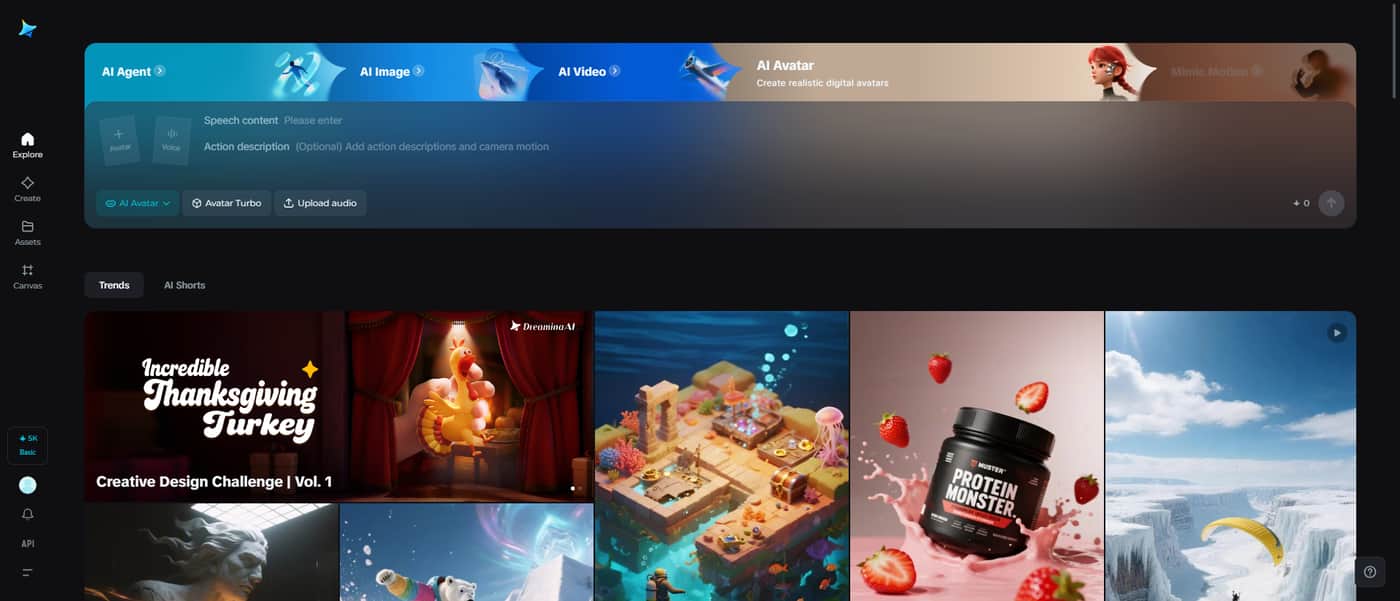
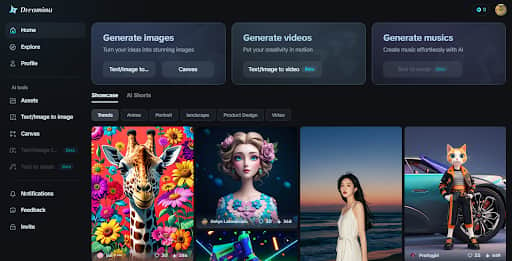
For creators interested in experimenting with this type of workflow, Dreamina can be used to explore Seedaudio 2.0 and discover new possibilities for AI-assisted audio and digital content creation.
This type of workflow can be particularly useful for creators who need to produce content regularly. Instead of beginning every project from scratch, they can develop repeatable processes that combine scripting, AI-generated audio, visual design, and editing.
Seedaudio 2.0 for Video Creators
Video content has become one of the most powerful ways to communicate online. Whether the project is a YouTube tutorial, a product review, an educational presentation, or a short social media video, audio can have a major influence on the final experience.
Voiceovers provide context and guide viewers through visual information. They can also make videos more personal and easier to understand.
AI audio generation can simplify the voiceover process. Creators can prepare a script and use AI-assisted technology to develop narration that can later be synchronized with the video.
This approach can be useful when producing large volumes of content. It can also make revisions easier because updated scripts do not necessarily require an entirely new traditional recording process.
Applications in Social Media
Social media moves quickly. Creators often need to respond to trends, publish frequently, and experiment with different formats.
AI-generated audio can help streamline short-form content production. Narration can be incorporated into informational videos, advertisements, storytelling clips, tutorials, and promotional posts.
For creators who do not feel comfortable recording their own voices, AI-generated narration can also provide an alternative.
Consistency is another advantage. When creators develop a recognizable audio style, they can maintain a more unified identity across different pieces of content.
AI Audio in Education
Education is another field where generated speech can provide practical value.
Online courses, tutorials, educational videos, and training programs frequently depend on narration. Recording every lesson manually can be time-consuming, especially when course material changes regularly.
AI-generated speech can provide another way to produce educational narration.
Students can also benefit from having information available in audio form. Some learners prefer listening rather than reading, while others may use audio as a supplementary learning format.
Language learning is another potential application. Clear speech and accurate pronunciation can help learners practice listening and understand how words are spoken.
Business and Marketing Uses
Businesses increasingly depend on digital content to communicate with customers. Product videos, advertisements, presentations, training material, and social media campaigns may all require professional narration.
AI audio technology can make experimentation easier for marketing teams. They can develop scripts, test different versions, and adjust messaging without necessarily arranging a traditional recording session for every change.
This flexibility can be particularly useful for businesses that operate across multiple markets.
A company may need different versions of promotional content for different audiences. AI-assisted audio production can potentially help teams manage these variations more efficiently.
Advantages for Independent Creators
Large organizations often have dedicated production teams, but independent creators may handle everything themselves.
A single creator may need to write a script, record audio, edit video, create graphics, and manage distribution. AI can help reduce some of the repetitive work involved in these tasks.
AI-generated audio can be useful for freelancers, bloggers, YouTubers, educators, and small business owners who need professional-looking content without building a large production setup.
However, AI should support creativity rather than replace it. The quality of the script, storytelling, editing, and overall concept still depends heavily on human decisions.
Making Digital Content More Accessible
Audio can also contribute to more flexible digital experiences.
Not every person consumes information in the same way. Some audiences prefer reading, while others may find spoken explanations easier to follow.
Creating audio versions of digital content can provide another method of accessing information. AI technology may make this process more practical because creators can produce narration without recording every piece of content manually.
This can be especially relevant for educational websites, online businesses, publishing platforms, and content libraries.
What Creators Should Consider
AI-generated audio offers many possibilities, but creators should still evaluate the final output carefully.
Before publishing, it is important to check pronunciation, pacing, clarity, tone, and consistency. A technically generated voice may still require editing to match the goals of a particular project.
Creators should also consider the context of their content. A voice that works well in an entertaining short video may not be appropriate for a professional business presentation.
Responsible use is equally important. Users should understand the permissions and policies connected with AI-generated voices and avoid using technology in ways that could mislead audiences or violate intellectual property rights.
The Future of AI Audio Creation
The future of AI audio is likely to involve increasingly sophisticated systems. Improvements in voice quality, emotional expression, multilingual capabilities, and real-time generation could expand the applications of AI-generated speech.
Interactive digital experiences may become more voice-driven. Games, virtual environments, educational applications, and customer-service platforms could use dynamically generated speech to respond to users.
AI audio may also become more closely integrated with other forms of generative technology. Text, images, video, and audio could work together within unified creative workflows.
This could allow creators to develop complete multimedia projects from relatively simple concepts.
Conclusion
The development of AI-powered audio technology is changing the way people approach voice production and digital storytelling. Seedaudio 2.0 reflects this broader movement toward faster, more flexible, and increasingly intelligent audio creation.
From video narration and social media to education, marketing, and accessibility, AI-generated audio can support a wide range of creative and professional applications.
The technology is most valuable when combined with human creativity. Strong ideas, well-written scripts, thoughtful editing, and audience awareness remain essential for producing meaningful content.
As artificial intelligence continues to advance, audio creation is likely to become more accessible and adaptable. Creators who learn how to combine AI capabilities with their own creative skills can take advantage of new opportunities while developing richer and more engaging digital experiences.

Building an independent game or an architectural canvas with a 3D stage from scratch is extremely hard work. Setting up the correct grid, long normal card baking, manual unwrapping (UV) and meticulous texture selection take up a lion’s share of the game development team. In many cases, a single background object can take days to create, costing a ton of money and the project's time to release.
This is about to be transformed by a new generation of neural networks that brings the generation time of concepts from days to minutes. According to industry experts, Meshy stands out as one of the top AI 3D model generators, revolutionizing the way creators bring their concepts to life in production-ready assets.
In contrast to traditional procedural modeling, today's generative AI algorithms can read the text description and two dimensional image, and reconstruct a complex 3D form using a set of pre-generated textures. This is a vast variety of opportunities for independent developers (indie developers) and big studios who want to speed up the rapid prototyping process.

Key Meshy Platform Opportunities
The versatile and accessible Meshy platform (meshy.ai) is one of the most versatile and accessible AI 3D generation platforms available today. The service is fully browser-based, which eliminates the need to install heavy software or have high-performance graphics stations based on powerful GPUs.
The platform offers two main modes of generating three-dimensional objects:
Text-to-3D. Create detailed objects based on text prompts. You set the styling, level of detail and materials, and the neural net forms a ready grid frame (3D mesh).
Image-to-3D. Translates two-dimensional art concepts and photographs into full three-dimensional models. To achieve maximum accuracy in reproducing proportions and details, it is possible to load multiple views of a single object (multi-image input).
In addition to basic geometry generation, the platform feature includes an advanced AI texturing module for automatic material application, auto-rigging for character preparation for animation, and AI image generation tool for creating original conceptsArches right inside the workspace
Developer API access is available for developers who plan to integrate object generation into their own applications or game engines. A free set of web tools 3D Tool Kit includes Converter, Online Viewer and STL Repair for quick preprint preparation and file conversion.
It is fully compatible with Unreal Engine, Unity, Blender and many 3D printers' slicers, as the platform supports the complete export format coverage (STL, OBJ, GLB and FBX).
Practical Scenario: From Ideas and Sketches to Physical 3D Models
For example, in the dark fantasy genre of indie game development, see how technology can be useful in a real-world scenario. The team must rapidly create a set of unique game objects and create detailed 3D models from text descriptions and concept artist sketches during the pre-production stage.
To create the basic props, the designer launches the Meshy text-to-3D tool, entering a detailed text query: "Gothic wooden chest with iron ornaments, highly detailed, photorealistic." Within seconds, the algorithm generates a volumetric geometry with basic textures directly in the browser window.
When you need to recreate a character’s unique weapon using an already-built 2D art, the Meshy’s image-to-3D tool is included. Thanks to multi-image input support, loading with two views (face and profile) allows the system to convey the proportions of the blade and the details of the handle with high precision.
In the final stage, high-resolution materials are overlaid through the AI texturing panel on the generated geometry. If the object is a character, automatic auto-rigging is used to construct the animation skeleton. The finished model is exported in FBX format to be imported into a game engine or in STL format for subsequent 3D printing.
The Step-by-Step Plan for Integrating AI-Generation in the Traditional Pipeline
If you plan to implement generative technologies in your team’s work or use them for personal projects, follow these steps:
Create a free account. Start with the free tier to test basic generation capabilities and learn about text prompts workflow.
Create a concept library. Use text queries or the AI image generation generator to create high-quality reference frames.
Generate and refine the geometry. Translate images into 3D using multi-image input, set up a polygonal grid, and apply the textures you need through an AI texturing panel.
Verify and export the file. Use the built-in browser set free tool suite (including STL Repair and Online Viewer) for final grid verification before exporting to FBX or GLB.
This simple and understandable algorithm allows you to realize the maximum potential of the presented solution.
Frequently Asked Questions (FAQs)
Can I use generated 3D models in commercial projects?
Yes, exported objects in FBX, OBJ or GLB formats can be seamlessly integrated into commercial games, commercials, virtual scenes, or used to create physical goods using 3D printing.
Is the platform suitable for users with no experience in 3D design?
Due to the fact that the service is fully browser-based and has a user-friendly interface, no skills in Blender or 3D Max are required to get started. Algorithms automate complex steps of grid creation and UV unwrapping.
Does Meshy support the integration with user-friendly software?
Yes, developers can use developer API access to automate the creation of 3D content within their own applications, PiplinesTM or web services.
Final Thoughts
Using generative artificial intelligence in the 3D industry is not a replacement for classic artists, but a powerful tool to automate routine processes. The Meshy platform provides a complete set of functions to turn ideas into ready-made three-dimensional essays. Available free tier, support for all major export formats and browser format make the service a practical choice for modern development.
Ask any longtime gamer about their backlog and you will usually hear a mix of pride and quiet guilt: shelves of installed titles, dozens of hours of downloads, and a running list of games they fully intend to finish someday. Against that backdrop, something interesting is happening. A growing share of gaming now takes place in a browser tab, with no installation, no update queue, and no storage anxiety. Instant-play titles are surging in popularity, and the reason has less to do with technology than with how people actually want to spend their in-between moments.
The friction that used to define gaming
For most of gaming history, playing something meant committing to it first. You bought or downloaded a title, waited for it to install, kept it updated, and surrendered storage space to keep it around. That friction was simply accepted as the cost of entry, and for deep, immersive experiences it still makes sense. Nobody minds a large download for a game they will pour a hundred hours into.
The problem is that this model treats every gaming session as a major commitment, when many are not. Sometimes a person has ten minutes and simply wants to play something now, without the ritual of installing and configuring. That mismatch between the effort required and the time available is exactly the gap instant-play titles have moved to fill, and it turns out to be a very large gap indeed.
Where casual and social play fit in
This shift has landed hardest in casual and social genres. Instant-play formats have proven especially well suited to these categories, where sessions are short, repeatable, and easy to share. Puzzle games, arcade titles, and light competitive experiences thrive in a format built around immediacy, because their appeal never depended on lengthy installs or sprawling worlds. This is the same logic that makes free social casino games a natural fit for the browser, since they are designed around quick, self-contained sessions that a player can enjoy in a few minutes without downloading anything.
The social dimension amplifies the appeal further. When a game lives behind nothing more than a link, sharing it with friends is effortless, and that shareability drives much of the organic growth around instant-play titles. A player can send a link and have a friend playing seconds later, with no barrier in between. That frictionless sharing turns casual games into social experiences, which is a large part of why the format keeps spreading.
Why "instant" is the whole point
The appeal of instant-play gaming comes down to the removal of every step between wanting to play and actually playing. There is no store page, no download bar, and often no installation to manage afterward. You click a link and you are already in the game, which sounds like a small thing until you realize how much that friction quietly discouraged casual play in the past.
Industry observers have noted how decisively this changes player behavior. Coverage from GameSpace describes how modern instant-play titles win casual players by getting out of the way, removing the store page, the download, and the sign-up wall so that starting a game takes a single click. Because nothing is stored on the device, there is also nothing to uninstall or clean up later. The format does not try to replace deep installed games; it claims the quick, idle minutes those larger games were never designed to reach.
The technology quietly caught up
Part of what makes this moment different from earlier browser-gaming eras is that the technology finally matches the ambition. In the past, browser games meant clunky, plugin-dependent experiences that drained batteries and looked visibly inferior to installed titles. That reputation lingered long after it stopped being accurate, which is why the current wave has surprised so many people.
Modern web standards changed the equation entirely. Today's browsers support hardware acceleration and advanced rendering that let games run smoothly and look genuinely polished inside a tab. Analysis from Unigamesity explains how browser gaming set new expectations around immediacy that the whole industry now follows, refining instant access into experiences that load quickly and run well across devices. The gap between installed and browser experiences has narrowed to the point where, for short and repeatable sessions, most players cannot tell or do not care about the difference.
Nostalgia meets no-friction play
There is also a cultural thread running through this shift, one that resonates especially with gamers who keep detailed logs of what they have played. Part of the appeal of quick, accessible titles echoes the way people once approached older libraries, dipping into a favorite for a short burst rather than committing to a marathon. A gamer revisiting ps1 japanese games for a hit of nostalgia is doing something structurally similar to someone opening a browser game on a lunch break: reaching for a low-commitment session that fits the time available.
This is why instant-play titles feel familiar even to dedicated players. They recreate the pick-up-and-play spirit that defined a lot of classic gaming, before installs and updates became elaborate. The joy of clicking into something and immediately playing is not new; it is a return to an older rhythm, delivered through modern technology. For players who value that rhythm, instant access is not a compromise but a rediscovery of something gaming used to do naturally.
The format that fits modern life
Instant-play titles are growing in popularity because they align neatly with how people actually live and play now. Attention is fragmented, time comes in short pockets, and patience for setup and downloads has worn thin. A format that delivers a complete, satisfying session in the time it takes to wait for a coffee is not a lesser form of gaming; it is a different tool for a different moment.
None of this signals the end of big, immersive games, which will always have their devoted audience and their rightful place. What is happening instead is that gaming is expanding to fill moments it previously could not reach. The download-heavy blockbuster and the click-and-play browser title are not competitors so much as companions, each suited to a different kind of session. For the growing number of players who value immediacy, the best gaming session is often the one that starts the instant they decide to play.
Comment