The Future of Voice: How AI Dubbing Is Revolutionizing Global Content Creation

In the past, creating multilingual video content meant spending hours (and thousands of dollars) on professional dubbing artists, studios, and translators. But now, things are changing fast — thanks to AI dubbing.
With the rise of smart technology, creators, brands, and educators can now transform their videos into any language, complete with realistic voices and emotional tone — all in minutes. Tools like the Free AI Video Dubbing Tool are leading this revolution, offering creators an effortless way to reach new audiences worldwide.
Let’s explore how AI dubbing works, why it’s transforming the content industry, and how you can use it to elevate your global communication strategy.
What Is AI Dubbing?
AI dubbing is the process of automatically translating and revoicing a video using artificial intelligence. It replaces traditional manual dubbing with neural networks that understand context, language, and even the emotional tone of speech.
Instead of hiring separate voice actors for each language, AI dubbing tools analyze your video, translate the dialogue, and generate natural-sounding voiceovers that match the original pacing and mood.
In simpler terms, it’s like giving your video a “multilingual voice” without ever stepping into a recording booth.
Why AI Dubbing Matters More Than Ever
The world is more connected than ever, and audiences expect personalized, accessible content in their native languages. Whether it’s YouTube creators, eLearning platforms, or global brands, language barriers are no longer an excuse for missing out on audiences.
Here’s why AI dubbing is becoming essential:
Accessibility: It allows creators to reach non-English-speaking viewers easily.
Affordability: AI eliminates the need for costly voiceover teams.
Speed: Videos can be dubbed in hours instead of weeks.
Scalability: One video can be transformed into multiple languages instantly.
For instance, a small YouTube creator who produces English tutorials can now reach Spanish, Hindi, and French audiences with just a few clicks using AI tools. That’s a level of scalability that was unimaginable a decade ago.
How AI Dubbing Works Behind the Scenes
AI dubbing might seem like magic, but it’s powered by some seriously advanced technology. Here’s a quick breakdown:
Speech Recognition: The AI listens to your video and converts the spoken words into text.
Machine Translation: The text is translated into the target language using natural language processing (NLP).
Voice Generation: The translated text is then converted into a lifelike voice using text-to-speech (TTS) synthesis. You can try this yourself with tools like the Free AI Text-to-Speech Generator.
Lip-Syncing & Timing: Finally, the AI syncs the new voiceover with the original video’s timing and emotions to make it look seamless.
This combination of technologies ensures that the dubbed version feels natural — not robotic or out of sync.
Real-World Applications of AI Dubbing
AI dubbing isn’t just a cool tech trend; it’s already reshaping multiple industries. Let’s look at some examples:
1. Content Creators & YouTubers
Creators can repurpose their English videos into multiple languages, instantly multiplying their reach. Imagine uploading a single video and having it available in 10 different languages — all while maintaining your original voice tone.
2. eLearning & Education
Online courses can now be offered in multiple languages without recording new lessons. This not only increases accessibility but also improves learning outcomes for students worldwide.
3. Businesses & Marketing
Brands can now create localized ads, tutorials, and explainer videos for different regions — without hiring new teams or studios. AI dubbing enables faster campaign rollouts and more authentic connections with global audiences.
4. Gaming & Entertainment
Game developers are increasingly using AI dubbing to translate character voices for international markets, making their games feel native in every language.
The Human Touch: Can AI Dubbing Replace Real Voice Actors?
One common concern is whether AI dubbing might replace human voice artists entirely. The short answer? Not quite.
While AI dubbing tools are incredibly advanced, they still rely on human creativity, tone, and emotional nuance for inspiration. The best results often come from human-AI collaboration, where humans guide the tone and AI handles the heavy lifting.
For example, a brand might use an AI voice to quickly translate a video but still fine-tune certain emotional moments manually. This hybrid approach saves time while preserving authenticity.
Tips for Using AI Dubbing Effectively
If you’re planning to experiment with AI dubbing, here are a few practical tips to get the best results:
1. Choose the Right Tool
Not all AI dubbing platforms are equal. Look for one that supports multiple languages, maintains voice emotion, and syncs well with video. The Free AI Video Dubbing Tool is a great starting point since it’s easy to use and designed for high-quality dubbing.
2. Keep Audio Quality High
Always upload clear, high-quality audio. Background noise or overlapping voices can confuse the AI and affect translation accuracy.
3. Use Clear and Simple Language
The simpler and clearer your original speech, the better the AI can translate and dub it naturally. Avoid slang or overly complex phrases when possible.
4. Review Before Publishing
Even the smartest AI can make small contextual mistakes. Always review the dubbed version before publishing it, especially for tone or cultural nuances.
5. Combine Dubbing with Text-to-Speech
If you’re producing both video and audio content, using the Free AI Text-to-Speech Generator alongside your dubbing tool can create a consistent voice experience across formats.
The Advantages of AI Dubbing Over Traditional Methods
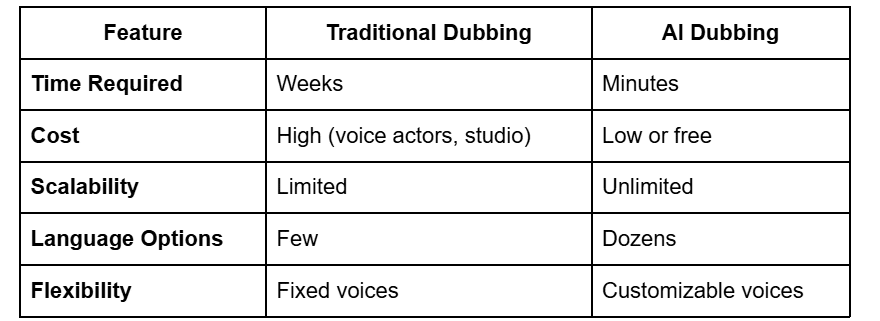
AI dubbing doesn’t just save time and money — it opens the door to creative experimentation. You can test new markets, experiment with multilingual storytelling, or even personalize voices for different demographics.
Ethical and Creative Considerations
While AI dubbing offers massive benefits, it also brings new ethical discussions. For instance, consent and licensing are crucial — using a real person’s voice or likeness without permission can raise legal issues.
Creators should also ensure that translations remain culturally appropriate and respectful. The best AI tools now integrate context-aware translation to maintain cultural sensitivity, but human oversight is still essential.
What’s Next for AI Dubbing?
As AI dubbing continues to evolve, we’re moving toward even more realistic and emotionally expressive voices. Soon, AI systems will replicate individual speaking styles, intonations, and even laughter or pauses, making the dubbed version almost indistinguishable from the original.
We may also see AI that automatically detects the target audience’s preferences and adjusts tone or phrasing accordingly — making multilingual content truly personalized.
Conclusion: Give Your Content a Global Voice
AI dubbing isn’t just a technological innovation — it’s a creative enabler. It empowers storytellers, teachers, and businesses to break language barriers and share their message with the world.
If you’ve ever dreamed of making your videos accessible to millions of new viewers, now is the perfect time to start. Try tools like the Free AI Video Dubbing Tool and the Free AI Text-to-Speech Generator to experience the future of voice creation for yourself.
AI dubbing is more than convenience — it’s the key to a truly global connection.

