This is how I managed to build a good relationship with my clients!
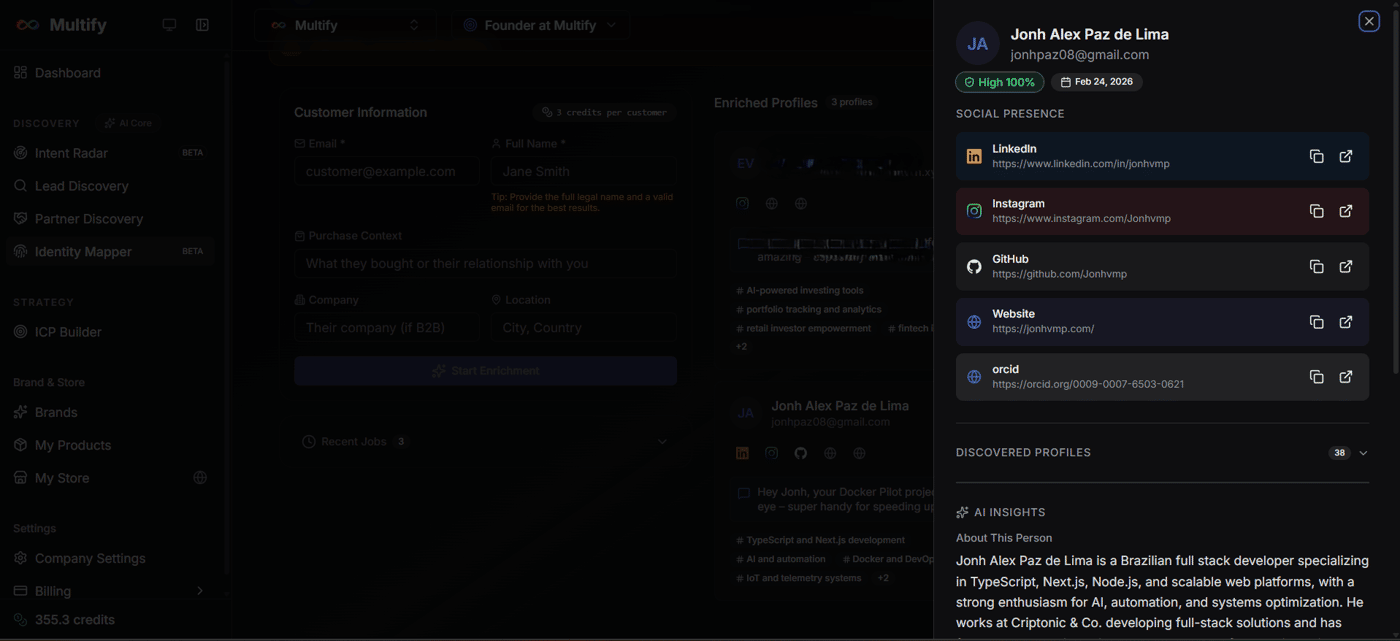
I had clients on Multify that I would email and never receive a response! I would simply send the emails and get no reply, leaving the product without feedback, and consequently, it had more difficulty gaining traction because of the lack of feedback!
So I created a forensic tool to find people's social media profiles, using their email and name as completely as possible. I managed to create a complete Agent that did this, finding profiles of these people! And I succeeded. Now I can have direct contact with the person, I can reach them on LinkedIn and ask for feedback. I found it incredible because I was able to improve the product with quick feedback, and the client really liked having this premium support!
I decided to implement it on Multify because one of the users was surprised by how I got their LinkedIn contact information. I explained that it was something internal, and they asked me to implement it on Multify so they could also get their clients' contact information to have this closer relationship! And I ended up implementing it!
Do you realize how important this is at the beginning of a project? This relationship is what makes your product excellent and different from others!! Try it now on Multify! Find leads, find influencers for your product, and find your customer for just $12!


This post shares practical strategies and personal experiences that helped build strong, trustworthy, and long-lasting relationships with valuable clients.
The pivot from "internal hack to get feedback" to "feature users actually want" is a pattern I keep seeing in successful products. You solved your own problem, showed it to a user, and they immediately asked for it. That's about as clean a validation signal as you can get.
I'm curious though — when you started reaching out to clients on LinkedIn instead of email, did the quality of feedback change too? I'd imagine people respond differently on a platform where they have a public identity vs. a throwaway email reply. Did you notice them being more thoughtful or engaged in the conversation?
It was much better, I contacted 12 clients and they gave us very good feedback! It seems like they feel they are building with us, which is very good.
This is powerful, but I’d be careful with how it’s used.
I’ve found that direct outreach works best when it doesn’t feel like you “tracked” them, but when it feels natural and respectful. Early on, I manually searched LinkedIn for a few users who were active and open to feedback, and those conversations helped me improve the product a lot.
Biggest lesson for me: it’s not about finding everyone — it’s about building real conversations with a few who genuinely care.
,
That’s a smart pivot.
Most founders chase new leads, but improving feedback loops with existing users is underrated.
Turning silence into signal is powerful.
Interesting approach — direct feedback loops in early-stage SaaS are gold.
But I’d be careful with how this is positioned.
If a client is surprised that you found their personal LinkedIn through their email, that can easily shift from “premium support” to “privacy concern.”
In early products especially, trust is the product.
Sometimes instead of finding new channels to reach users, the bigger unlock is:
• Setting expectations upfront about feedback
• Creating structured onboarding touchpoints
• Booking short calls immediately after signup
• Incentivizing feedback clearly
The relationship matters — 100%.
But transparency matters even more.
how are you handling consent and data compliance when pulling social profiles?
Of course, I never got in touch without even taking action! I only use the Linkedin channel, and I send a connection request with a message before he accepts! After that we maintain a healthy relationship
What a 'special' way
try now! 😉 https://multifyco.com