What actually broke my trust in analytics (after shipping real products)
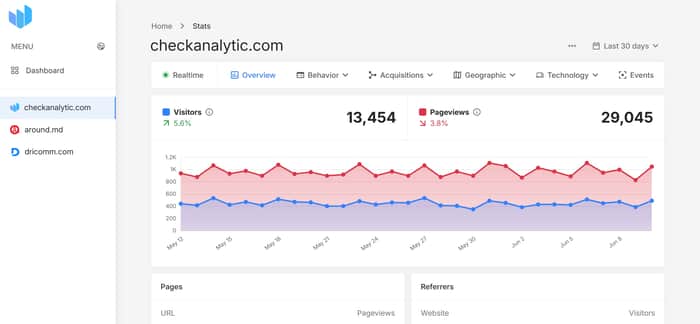
After I published my first story about moving from client work to my own SaaS - https://www.indiehackers.com/post/from-building-client-websites-to-launching-my-own-saas-and-why-i-stopped-trusting-ga4-cdffa602c4 , a few people asked the same question:
“What exactly made you stop trusting GA4?”
The honest answer:
Not one big failure.
A long list of small ones.
Before SaaS, I built products where behavior mattered more than “growth curves”.
One of them was Around MD — a platform helping people find restaurants, parks, and interesting places in their city.
People didn’t “browse”.
They searched with intent.
And that’s where things started to feel wrong.
When numbers stop matching reality
I’d see:
- pages ranking in Google
- users messaging me about places they found
- content getting shared
But analytics told a different story:
- lower traffic than expected
- weird drops after “improvements”
- conversions that didn’t correlate with anything
So I did what most founders do: I assumed the tool was right and my intuition was wrong.
That was my first mistake.
The cookie banner illusion
At some point I noticed a pattern:
Every time I tried to be more “compliant”, the data got worse.
Consent banners went up.
Opt-out rates went through the roof.
Sessions disappeared.
Nothing changed in the product.
Only the measurement did.
And suddenly: SEO looked broken, content decisions felt random, experiments became impossible to evaluate
The tool was “working as intended”.
But the result was unusable.
That’s when it hit me:
Analytics that requires users to say “yes” before being accurate is fundamentally flawed.
My second mistake
I kept trying to fix the tool instead of questioning the premise.
More events.
More configurations.
More time in dashboards.
Zero clarity.
As a solo founder, that’s deadly.
You don’t have time for uncertainty.
Every unclear metric slows you down more than having no metric at all.
The shift in mindset
The real turning point wasn’t technical.
It was this decision: I’d rather have less data I trust than more data I doubt.
Once I optimized for trust instead of completeness: decisions got faster, experiments became obvious, anxiety dropped
That mindset directly shaped what I’m building today — even if I rarely talk about it publicly. - checkanalytic.com
Looking forward
I don’t think analytics will be “solved” by new features.
It will be solved by: removing assumptions, respecting users by default and designing for people who actually build products
Not for enterprise decks.
Not for legal checklists.
For founders shipping at 2am.
What was the moment you realized your analytics was lying to you?

Good)
Thank you
I'm happy to offer extended access to my SaaS to anyone willing to share an honest review.
This resonates hard.
What stood out to me is that the real cost wasn’t “bad data,” but decision latency.
The moment you stop trusting a metric, every decision needs extra justification — and as a solo founder that drag is brutal.
Curious: what’s the smallest set of signals you found yourself trusting again once you optimized for trust over completeness?
Thanks for the comment! I trust the page visits on the site, the events I've assigned to specific buttons! From there, I look at other data to see what I'm doing right and what I'm doing wrong!
That makes a lot of sense , anchoring on a few concrete, observable actions keeps you grounded.
I like that you’re treating page visits and button events as signals, not verdicts. They’re close to intent, so they’re harder to misinterpret.
Out of curiosity, have you found yourself caring less about trends over time and more about “did this specific change move this specific action?”
That shift alone seems to remove a lot of second-guessing for solo founders.
Personally, I always pay attention to trends and where users click on the site! Sometimes you move one button on the site and it becomes more accessible! It depends on your perspective!
I like that separating trends from micro-actions is exactly it. Trends tell you the story of the site over time, but those small button moves are the experiments that actually teach you something.
Sometimes the invisible wins come from tweaking a tiny friction point most people wouldn’t notice but when compounded over multiple spots, they end up shaping behavior more than any big feature ever could.
Do you have a “micro-change tracker” or system for logging these small tweaks? That’s usually where solo founders find a lot of insight that doesn’t show up in aggregate metrics.
I will definitely try your SaaS )
We will be glad to see you here, don’t hesitate to ask questions!
Cold outreach scales linearly - same effort per reply every week. It's necessary for early traction but the founders who get to $10k+ MRR almost always layer in a compounding channel underneath it. SEO, community, partnerships, or product-led growth.
What's the channel you're betting on to build independently of your outreach?
The consent banner issue is a proxy calibration problem, not a data problem — what users actually do (ground truth) hasn't changed, but the measurement layer broke. That distinction matters because it tells you where to look for the real signal when the dashboard goes dark.
For solo founders, the answer is usually proximity. When analytics becomes unreliable, the metrics that hold up are the ones closest to actual outcomes: revenue in Stripe, direct messages from users, support tickets, and for early products, the raw count of people who found their way back without being prompted. These don't require consent. They're also not gameable by your own behavior the way pageviews are.
The "less data I trust" shift is actually Goodhart's Law working in your favor. The moment a metric becomes the target, it stops being a reliable signal. Optimizing for fewer, more direct metrics keeps them honest longer.
Your question about the moment analytics "lied" resonates. Mine was realizing that a user who messages you directly but never shows up in the dashboard is still a real user. The absence of their data wasn't their absence.
I relate to this.
I’ve had moments where users were clearly active, but the dashboard told a different story.
That gap messes with your confidence fast.
Did simplifying actually speed up your decision-making?
Of course! Ten times faster! That's how quickly I adapted to traffic and started making decisions about what to do next and where to invest marketing funds! Try it yourself!