
evelyncarter
The SEO Problem That Inspired My First Paying Customers
When people think about home improvements, they often picture major renovations—new kitchens, fresh flooring, or complete room makeovers. While those projects can certainly transform a space, some of the most satisfying upgrades are surprisingly small.
For me, that upgrade was replacing the door knobs throughout my home with handforged hardware.
At first, it seemed like a minor change. After all, door handles are functional objects that most people barely notice. But after living with the new hardware for a few weeks, I realized just how much of a difference quality craftsmanship can make.
The Beauty of Everyday Details
One thing I've learned during various home improvement projects is that the details you interact with every day often have the biggest impact on how your home feels.
Door handles are a perfect example.
You touch them dozens of times a day without even thinking about it. Because they're used so frequently, their quality, appearance, and feel become part of your daily experience.
That's what makes handforged hardware so special.
Unlike mass-produced alternatives, forged iron has a unique texture and character. The surface catches the light differently throughout the day, creating subtle visual changes that bring warmth and personality to a room.
It's a small detail, but one that never goes unnoticed.
More Than Just Functional
Good hardware isn't just about opening and closing doors.
The weight of a solid forged knob, the smooth operation of a well-made mechanism, and the craftsmanship visible in every detail create a sense of quality that's difficult to replicate with cheaper alternatives.
There's something deeply satisfying about using an object that feels durable, purposeful, and built to last.
In many ways, handforged hardware transforms an everyday action into a more enjoyable experience.
Creating a More Finished Home
When I first installed the new door knobs, I immediately noticed a difference. The rooms felt more complete and cohesive.
Interestingly, my wife initially thought I was paying too much attention to something most people overlook. But after a few days, even she admitted that the house felt more polished and finished.
It's proof that small upgrades can have a surprisingly large effect on the overall atmosphere of a home.
Affordable Yet Impactful
One of the best things about upgrading hardware is that it doesn't require a major investment.
Replacing door handles can often be completed in a single afternoon and costs far less than many larger renovation projects. Yet the visual and practical benefits are noticeable every day.
For homeowners looking to refresh a room without committing to a full renovation, quality hardware offers exceptional value.
Why Craftsmanship Still Matters
In a world filled with disposable products, there's something refreshing about choosing items that prioritize craftsmanship and longevity.
Handforged hardware reflects traditional manufacturing techniques that focus on quality rather than mass production. Each piece carries a sense of authenticity that modern factory-made alternatives often lack.
It's not simply about appearance—it's about owning products that are built to age gracefully and serve their purpose for years to come.
Final Thoughts
The most rewarding home improvements aren't always the biggest or most expensive. Sometimes they're the small changes that improve your daily experience in subtle but meaningful ways.


Most SEO professionals spend a lot of time tracking competitors, but many overlook one critical factor: country-specific search performance.
Recently, I analyzed a competitor's website expecting to find a few content gaps. Instead, I uncovered something far more valuable.
Nearly 80% of their estimated organic traffic was coming from just three keywords—keywords I hadn't even considered targeting.
That discovery completely changed how I approach competitor research and international SEO.
The Hidden Insights Competitor Analysis Can Reveal
When most people analyze competitors, they focus on:
Backlinks
Domain authority
Top-performing pages
Overall traffic estimates
While those metrics are useful, they often miss the bigger picture.
The real opportunity lies in understanding:
Which keywords drive the majority of traffic.
Which countries generate the most visitors.
Where competitors are strong.
Where competitors are weak.
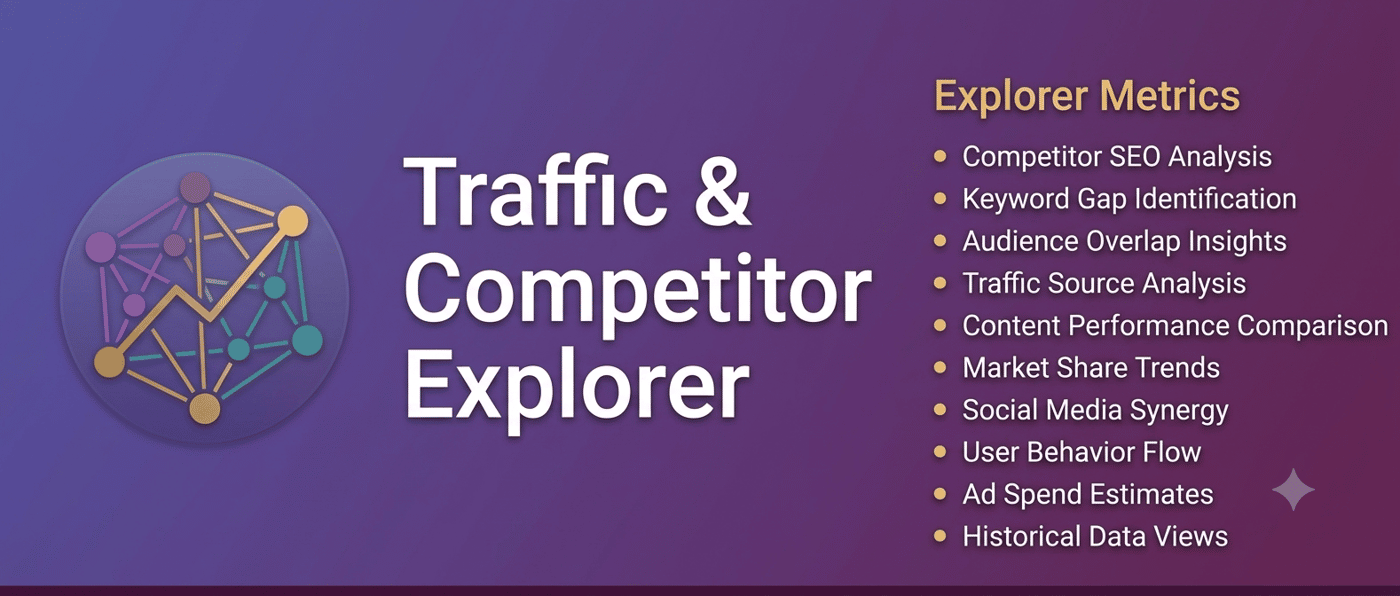
That's exactly why I built the SERPSpur Traffic Explorer.
Discovering the 80/20 Rule in Action
After entering a competitor's domain into the tool, I noticed something interesting.
Although the website ranked for hundreds of keywords, the vast majority of its traffic was generated by only three search terms.
This highlighted an important lesson:
Not all rankings are created equal.
A site may rank for thousands of keywords, but only a handful may actually drive meaningful traffic and conversions.
Identifying those high-impact keywords helps uncover opportunities that traditional keyword research often misses.
The Country-Level Insight That Changed Everything
The biggest surprise came when I compared performance across countries.
In the United States, the competitor was dominating search results and attracting significant traffic.
However, when I switched to Canadian search data, the story was completely different.
The same competitor was barely visible for many of their most important keywords.
That meant there was an untapped opportunity:
Lower competition
Similar search intent
Easier rankings
Potential traffic growth
Without country-specific analysis, I would never have noticed it.
Why SEO Data Should Always Be Analyzed by Country
Search behavior varies significantly between regions.
A keyword that performs well in one country may have completely different search volumes, competitors, and ranking difficulty elsewhere.
By analyzing SEO performance at the country level, you can:
Find Underserved Markets
Competitors often focus heavily on their primary market while neglecting others.
Discover Easier Ranking Opportunities
Some countries have significantly lower competition for the same keywords.
Expand International Traffic
Targeting additional regions can create new traffic sources without competing head-to-head in crowded markets.
Improve Content Localization
Country-specific insights reveal which content resonates with different audiences.
What the SERPSpur Traffic Explorer Shows
The Traffic Explorer was built to simplify this process by providing:
Organic keyword data
Traffic estimates
Competitor analysis
Country-specific rankings
Keyword opportunities
Market comparison insights
Instead of guessing where opportunities exist, users can quickly identify gaps in competitor strategies and discover new growth markets.
The Biggest Lesson
The most valuable SEO opportunities are often hidden in plain sight.
Everyone is fighting over the same keywords in the same markets, while less competitive regions remain largely unexplored.
By looking beyond overall traffic numbers and analyzing competitor performance country by country, you can uncover opportunities that many businesses completely miss.
Final Thoughts
My competitor analysis started with a simple goal: find a few keyword ideas.
-
1
That's a massive insight—it's easy to assume your competitors know everything, but country-level gaps like the US vs. Canada example show how fragmented SEO data can be. I've seen similar patterns in my niche where UK competitors dominate in Germany. Does your tool highlight cross-country opportunities automatically?
-
1
Interesting how a simple country-level filter can reveal completely different competitive landscapes. The Canada vs US gap is a great reminder that 'global SEO' often means treating each market as its own battlefield.
-
1
That's a great catch—most people just look at overall competitor traffic and miss these geographic blind spots. I'm curious, did you find any specific verticals or niches where country-level data tends to differ the most?


As website owners and SEO professionals, we spend a lot of time creating content, optimizing pages, and improving rankings. But one important question often gets overlooked:
When did Google last crawl your page?
I recently ran into a frustrating indexing issue where some pages weren't updating in search results despite multiple content improvements. That experience led me to build a simple tool that checks the last known crawl date for any URL—and what I discovered was surprising.
The Problem: Pages Not Updating in Google
Everything looked fine on the surface.
The content was optimized, the technical SEO checks passed, and the pages were live. Yet rankings weren't moving, and updates weren't appearing in search results.
At first, I assumed it was a temporary indexing delay. But after digging deeper, I realized I had no easy way to see when Googlebot had actually visited those pages.
Without that information, it was impossible to know whether Google had even seen my recent changes.
Building a Crawl Date Checker
To solve the problem, I created a lightweight tool that lets anyone check the last crawl date of a URL.
The idea was simple:
Paste a URL.
Run the check.
Instantly see crawl information.
What started as a quick debugging utility quickly became one of the most useful SEO tools in my workflow.
The Eye-Opening Discovery
When I started testing older content, I found something unexpected.
Several blog posts that I assumed Google was regularly visiting hadn't been crawled in nearly six months.
That explained a lot:
Recent content updates weren't reflected in search results.
Rankings had become stagnant.
Important pages weren't receiving fresh crawl attention.
Without checking crawl data, I never would have known.
Why Crawl Dates Matter
Understanding crawl activity can help answer several important SEO questions:
1. Is Google Discovering My Updates?
If you've refreshed content but Google hasn't revisited the page, your changes may not be influencing rankings yet.
2. Which Pages Need Attention?
Pages that haven't been crawled for months may need:
Content updates
Internal links
Fresh backlinks
Better site structure signals
3. Are Crawl Budget Issues Affecting My Site?
For larger websites, crawl frequency can reveal whether Google is prioritizing the pages that matter most.
How It Improved My Content Strategy
Since using the tool regularly, I've changed the way I prioritize content refreshes.
Instead of updating pages randomly, I now focus on:
Important pages with low crawl frequency.
Older content that hasn't been revisited recently.
Pages that deserve fresh indexing signals.
This approach helps ensure that optimization efforts are directed where they'll have the biggest impact.
Key Benefits of Checking Crawl Dates
Identify neglected pages quickly.
Monitor indexing and crawling activity.
Prioritize content updates more effectively.
Troubleshoot ranking and indexing issues.
Gain better visibility into Google's behavior.
A Simple Tool with Big Insights
SEO often feels complicated, but sometimes the most valuable insights come from simple data.
https://serpspur.com/tool/crawler-accessibility-archival-forensics/

-
2
This is super practical. I used a similar approach and found that updating just the publish date didn't help much—what really worked was adding new internal links to those stale pages. Have you tested that tactic?
-
1
This is brilliant for SEO audits. I just checked a few of my posts and found one that hadn’t been crawled in 8 months. Thanks for sharing—this will definitely help me prioritize updates.
Reaching your first revenue milestone is always exciting, especially when it comes from solving a problem you personally face every day. Recently, I crossed $200 in Monthly Recurring Revenue (MRR) with a tool I originally built for myself: SerpSpur Local Search Spoofer.
The Problem That Started It All
If you've ever worked in SEO, particularly local SEO, you've probably encountered this issue. You optimize a website for multiple locations, but when you search for your target keywords, the results don't accurately reflect what users in other cities are seeing.
I constantly found myself wondering:
How does my site rank in another city?
Are local competitors outranking me in specific locations?
Is my Google Business Profile visibility changing across regions?
The only reliable way to check was either asking someone in that location or using expensive enterprise tools. Neither option was ideal.
Building a Simple Solution
To solve this, I created a tool that allows users to simulate searches from different locations without physically being there.
The goal was simple:
View search results from different cities.
Test local SEO campaigns more accurately.
Monitor rankings without relying on guesswork.
Save time and money.
What started as a personal utility quickly became something I used every day.
Discovering That Others Had the Same Problem
After sharing the tool with a few SEO friends, the feedback was surprisingly positive.
Many told me they faced the exact same challenge:
Local SEO agencies managing multiple clients.
Small business owners trying to track local visibility.
Freelance SEOs handling campaigns in different cities.
Digital marketers analyzing regional search trends.
It became clear that this wasn't just my problem—it was a widespread issue within the SEO community.
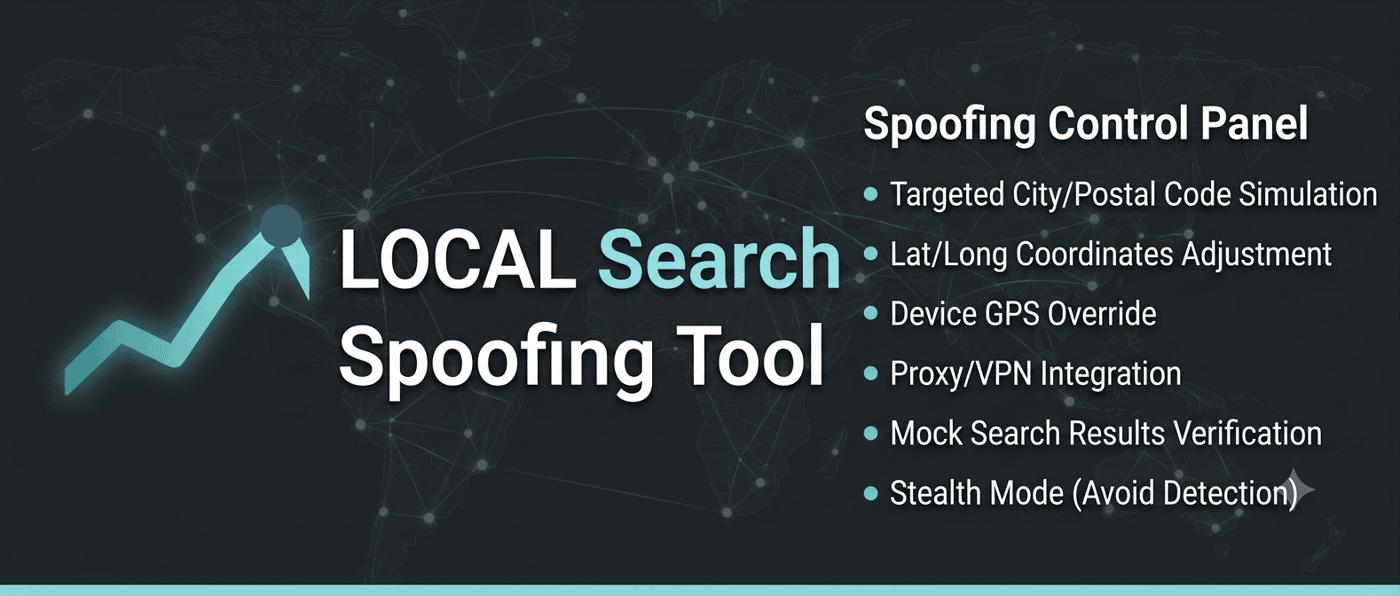
Introducing SerpSpur Local Search Spoofer
That's when I decided to publicly launch SerpSpur Local Search Spoofer.
The tool helps users simulate local searches and analyze search engine results from different locations, making local SEO research significantly easier.
Key Benefits
Check rankings from different cities.
Improve local SEO analysis.
Compare search visibility across regions.
Save time on manual location testing.
Free to try with no complicated setup.
The Journey to $200 MRR
The growth wasn't overnight.
I focused on:
Listening to user feedback.
Improving the tool regularly.
Sharing it within SEO communities.
Creating useful content around local SEO.
Solving real-world problems instead of chasing trends.
Over time, users started recommending the tool to others, and recurring revenue gradually increased.
Crossing $200 MRR may not sound massive compared to large SaaS companies, but it's an important milestone because it validates the idea. It proves that people are willing to pay for solutions that genuinely save them time and improve their workflow.
Lessons Learned
A few things stood out during this journey:
The best product ideas often come from your own frustrations.
Simple tools can solve expensive problems.
SEO professionals value practical solutions over flashy features.
Consistent improvements matter more than a perfect launch.
What's Next?
I'm continuing to improve SerpSpur Local Search Spoofer based on user feedback and expanding its capabilities for local SEO professionals and businesses.
-
1
Nice, congrats on hitting $200 MRR! I love that you built it for your own workflow—those dogfooding tools often nail the real pain points. Have you considered adding a feature for mobile vs desktop spoofing? That'd be huge for local SEO audits.
-
1
Nice milestone! I've tried a few local spoofers before but they were either slow or inaccurate. Does SerpSpur use a VPN network or just header manipulation for the location spoofing?
Many successful products start with a simple frustration. Instead of searching for a revolutionary idea, some founders solve problems they encounter every day. That was exactly the case with SERPSpur, a tool designed to help SEO professionals view local search results from any city or country without the hassle of changing locations manually.
What started as a personal solution eventually became a product generating $150 in monthly recurring revenue (MRR).
The Problem: Checking Local Search Results Was Painful
As an SEO professional, tracking local search rankings is essential. Clients often want to know how their websites rank in specific cities, regions, or countries.
The traditional process can be frustrating. It often involves using VPNs, location spoofing tools, or manually changing search settings. Not only is this time-consuming, but it can also produce inconsistent results.
After repeating this workflow countless times, it became clear that there had to be a better solution.
Building a Tool to Solve the Problem
Instead of continuing with the inefficient process, the idea was simple: create a tool that could instantly display local search engine results from any location.
The goal was straightforward:
View search results from different cities and countries.
Eliminate the need for VPNs and manual location changes.
Save time for SEO professionals and agencies.
Provide accurate local SERP insights.
This idea eventually became SERPSpur.
Discovering That Others Had the Same Problem
One of the biggest lessons in product development is that your own frustrations often reflect the frustrations of many others.
After sharing the tool with other SEO professionals, it became obvious that they faced the same challenges. Many were spending valuable time trying to replicate local searches manually.
The positive feedback confirmed that the problem was real and worth solving.
Reaching $150 MRR
While $150 MRR may not seem huge compared to large SaaS companies, it represents something important: validation.
It proves that users are willing to pay for a solution that saves them time and eliminates frustration. Every paying customer is evidence that the product is creating value.
More importantly, it shows that even small niche tools can generate revenue when they solve a specific problem effectively.
A Valuable Lesson for Indie Hackers
Many aspiring founders spend months searching for the perfect startup idea. However, the best opportunities are often hidden inside everyday annoyances.
Ask yourself:
What tasks do you repeatedly complain about?
What workflows waste your time?
What tools do you wish existed?
The answers to these questions can become the foundation of a successful product.
Why Solving Your Own Problems Works
When you build a solution for a problem you personally experience, you already understand the user's pain points. This gives you a significant advantage over founders who are solving problems they have never faced themselves.
Benefits include:
Better understanding of customer needs.
Faster product development.
Easier validation.
More authentic marketing.
Conclusion
SERPSpur began as a simple solution to an annoying SEO workflow and grew into a revenue-generating SaaS product. The experience reinforces an important lesson for every indie hacker: valuable product ideas are often hiding in your daily frustrations.
-
1
Nice — SEO's a great wedge because the buyers are constantly asking out loud.
Proof: I ran serpspur through a tool I built that finds threads where people are actively shopping for what you sell. It pulled 34 relevant threads, 5 high-intent — and three of them are from today: two people straight-up asking "which is the best SERP rank tracker?" (one specifically for an agency) and someone in r/DigitalMarketing hunting for an SE Ranking alternative. Those are buyers with their hand up right now.Happy to send you the full list, no strings — feels more useful than a generic "good luck" 🙂
-
1
The useful part here is that SERPSpur already has real validation: SEO professionals had the pain, people signed up, and some are paying.
The next step probably is not more broad “local search tool” positioning. That category can sound useful but still easy to ignore.
I’d sharpen it around the agency workflow: “check local SERPs for client reports without VPNs, proxies, or manual location switching.”
That makes the buyer clearer: small SEO agencies and consultants who need repeatable local ranking checks for clients.
If I were testing the next growth step, I’d focus less on founder-story posts and more on finding 30 to 50 SEO consultants who already serve local businesses, then pitch the time-saving/reporting angle directly.


As the owner of a small SEO agency, I regularly help businesses improve their visibility in search engines. One challenge kept coming up in conversations with clients: they wanted to know exactly how their website appeared in search results from different locations around the world.
A client might ask, “What do users in New York see when they search for our services?” Another would want to compare rankings between London and Sydney. While this sounds like a straightforward request, getting accurate answers was surprisingly difficult.
The Problem with Traditional Methods
For years, I relied on VPNs, proxies, and manual browser configurations to check search results from different cities and countries. The process was time-consuming, inconsistent, and often frustrating.
Switching between locations required multiple tools, and there was always uncertainty about whether the search results truly reflected what local users were seeing. As my client base grew, the manual workflow became impossible to scale.
I realized there had to be a better way.
Building a Solution
One weekend, I decided to solve the problem myself.
I started working on a tool that could simulate local search results without requiring users to physically be in a location or configure complicated proxy setups. The goal was simple: enter a keyword, choose a country, city, region, and language, and instantly view localized search results.
The project quickly evolved into a practical solution for SEO professionals, agencies, marketers, and business owners who need accurate local search insights.
Why Local Search Matters
Search results can vary significantly based on location. A website ranking at the top of search results in one city may appear much lower in another.
For businesses targeting multiple regions, understanding these differences is critical. Localized search analysis helps identify ranking opportunities, uncover geographic performance gaps, and improve overall SEO strategies.
Without accurate local data, marketers are often making decisions based on incomplete information.
Unexpected Growth
After building the tool, I shared a simple post on social media discussing how many agencies spend large amounts of money on complex solutions for a relatively common problem.
The response exceeded my expectations.
Within a week, more than 150 people signed up to try the platform. The feedback confirmed that many SEO professionals were experiencing the same frustrations and were actively searching for a more efficient solution.
Introducing SERPSpur
The result of this project is SERPSpur, a platform designed to simplify local search analysis. Instead of juggling VPNs and proxies, users can quickly view search results from different countries, cities, regions, and language settings.
What started as a personal productivity project has become a valuable tool for marketers looking to understand how search visibility changes across locations.
Final Thoughts
Sometimes the best products come from solving your own problems. What began as a frustrating SEO workflow turned into a tool that helps agencies and businesses gain better visibility into local search performance.
2 Comments
I totally get the tactile obsession—there's something special about hardware that feels like it has a history. I've been eyeing their collection for my study doors, and your post might be the push I need.
I love this perspective. It's funny how we overlook the things we touch dozens of times a day. I swapped my cabinet knobs for something similar and now I find myself lingering at the kitchen island just to run my fingers over the texture. Your wife is right—it's the finishing touch that makes a house feel intentional.