
ladiesbuildwithai.com
AI-native skills for women launching the next big thing
The way we shop online is about to change, starting now. Over the past weeks, Google, Stripe, OpenAI, VISA, Mastercard, Shopify and PayPal all announced new moves in what’s being called agentic commerce: a future where AI doesn’t just recommend products, but actually completes purchases on your behalf.
This flurry of announcements signals a shift: we’re moving beyond “search, scroll, and add to cart” toward a world where intent is the interface. You tell your AI agent, “buy me a gift for my sister who loves pottery under €50,” and it executes the purchase.
This Q4 might be the last big season of “traditional” e-commerce as we know it. Here are top predictions for agentic commerce from leading experts:
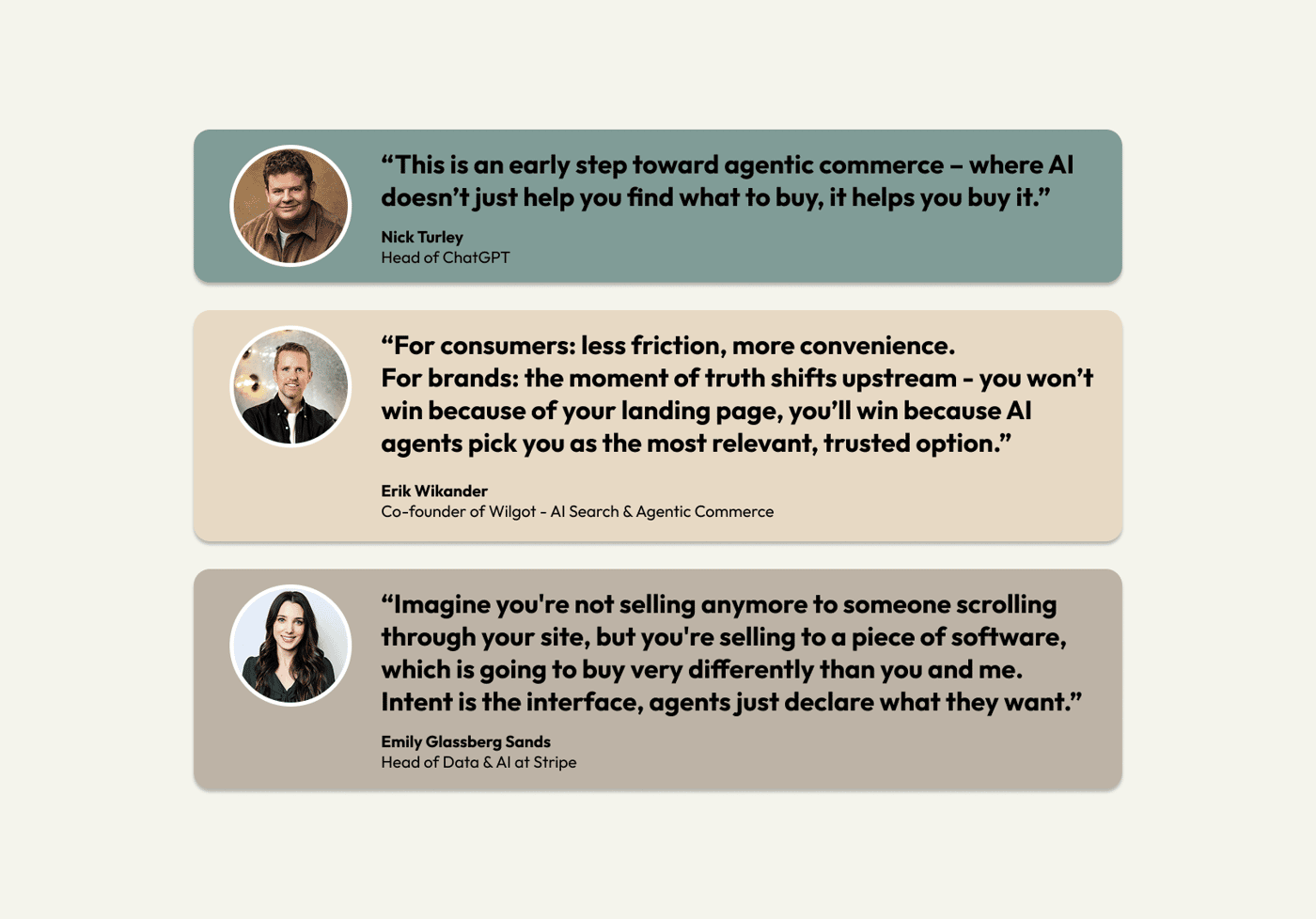
👉 For consumers.
Online shopping will feel almost invisible, as we outsource the tasks to AI Agents. What about us? There are two scenarios: we’re either focusing on items which we want to spend more time on browsing or head to physical stores for the unique experience and in-person service. Tasks like returns will also be automated.
👉 For retailers.
The implications are massive. Optimizing a website conversion funnel won’t be enough, perhaps even irrelevant. Instead, brands must focus on product quality data, trust signals, structured data, and integrations that ensure their products are surfaced by agents.
👉 For UX folks.
Designers will have to rethink the entire online shopping journeys. Designing for agents is going to be different than working on UIs optimised for human-like behaviours. The need to be more technical is even stronger, in order to understand the data structures, latency, intent, so the more often designers upskill and practice their vibe coding skills, the better.
👉 For e-commerce industry.
The battle for standards is on: Google, Stripe, and OpenAI are laying the rails for a new kind of checkout. What will this mean to Amazon or Google Shopping, and will new business models arrive as a result of the new protocol?
The bottom line is that agentic commerce is no longer theory and we need to start getting used to outsourcing our tasks to AI Agents, including our “secure” payment data. Whether you’re a shopper enjoying instant checkouts or a brand preparing for AI-driven discovery, the way we buy and sell online is shifting fast. The next few months will show us how quickly consumers adapt, and which retailers are ready to win in a world where AI agents do the shopping.

Have you noticed how many prompting guides OpenAI, Anthropic, or Google have been sharing lately? Since the announcement of GPT-5 in August there have been many questions raised about the quality of the model and how sensitive (and hard) it is to get it quite right.
It’s not just that the models get smarter and smarter, producing better results in a matter of seconds. We, as users, also start to get better at using this technology. We’ve all been introduced to ChatGPT without any manual, trying to figure out how it worked and tailoring it to individual needs. Prompt engineering is a real thing, although it’s just a fancy term for finding the perfect words to tell the LLM what you want.
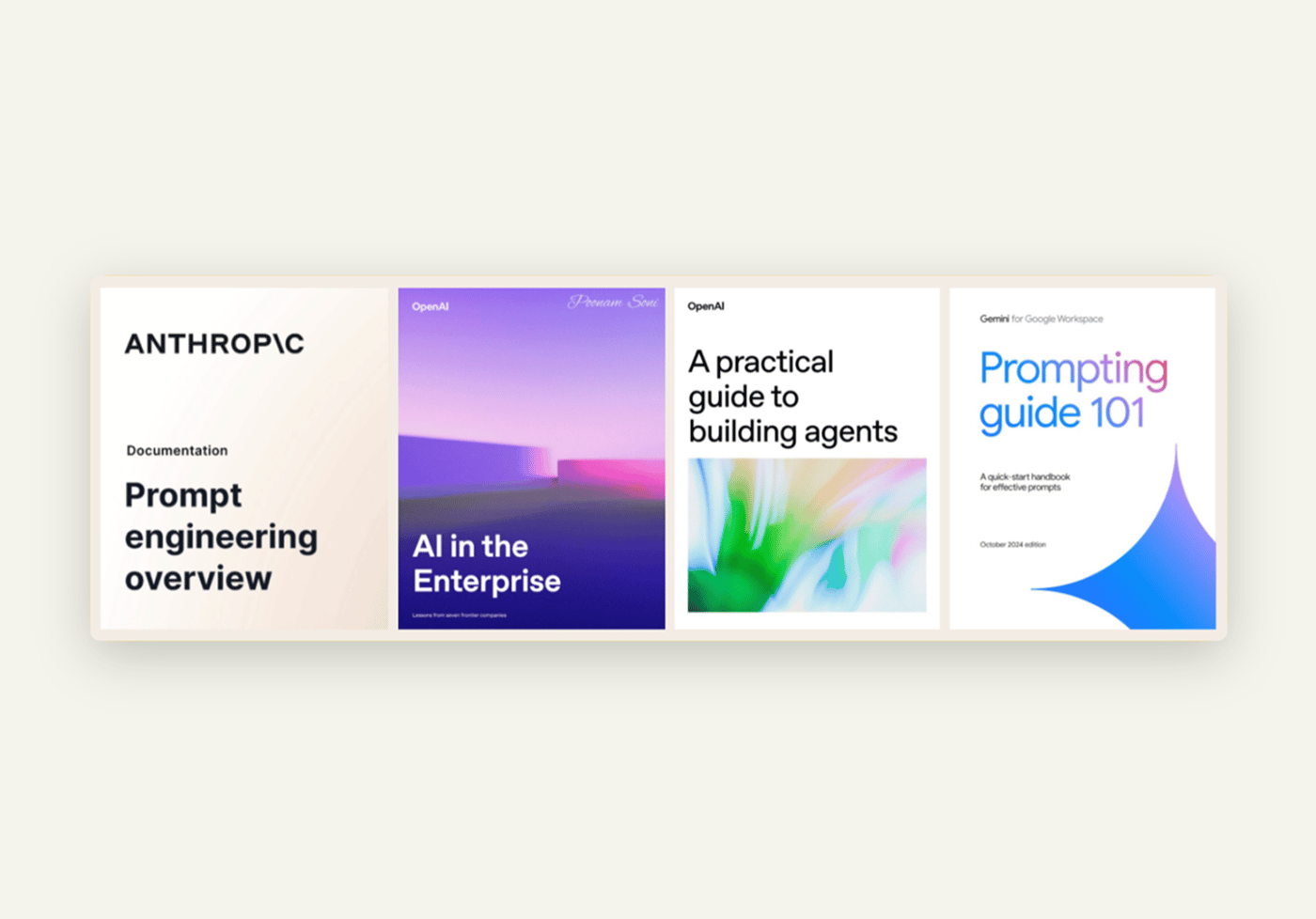
Here is a summary of a few things I keep seeing come up in Ladies Build With AI sessions, which might be helpful for you too:
👉 Protect what works.
When you’re working on something and need to iterate or let the LLM fix an issue, add a note like “keep everything else as is”. This tiny detail avoids losing the parts that already work, otherwise chances are that the LLM will completely rewrite the entire thing.
👉 Think like a product manager.
Don’t just say what you want, explain why. LLMs are better when they understand the goal. Define the outcome or what “success” looks like, the same way you would when working with a teammate. You need to practice your product manager skills in order to create something good.
👉 Break it down.
Overloading a single prompt usually leads to confusion or hallucination. Work step by step instead, so the LLM can focus on the single task. You’ll also not hit memory usage limits.
👉 Balance context and clarity.
Give enough background so the LLM understands the task, but avoid stuffing in everything you know. Too much detail can pollute the prompt instead of improving it.
👉 Expect retries.
Just like you generate images, it’s rare to get it right on the first try. See prompting as an iterative process, not a one-shot quest for perfection. The focus is on learning how to iterate, what works, and do it fast, rather than striving for the perfect prompt and not-so-perfect end result.
👉 Use examples.
You can be more specific by dropping in links, images, or snippets of what you mean, rather than typing endlessly. LLM will learn faster from an example than from a long explanation.
👉 Give access gradually
When you start using AI agents that act on your behalf, giving them access feels scary although you know they can’t continue otherwise. Think of it like hiring someone new: they can’t do the work without getting access to the necessary systems. So, just like a new hire, don’t hand over everything at once, but do this gradually and monitor output and if they can take on more tasks.
As a final remark, all of the above is not about the perfect prompts, but acknowledging a shift I’ve noticed recently that we’re not just learning AI, but learning how to work with AI.
Guides:
👉 Prompt guide from Claude here.
👉 Prompt guide from Google here.
👉 Prompt course from OpenAI here.
A friend of mine, a solo consultant, messaged me in panic that her WordPress website was down. Her contract expired with the hosting provider, she lost access to her account, and she didn’t have a backup of her content. A site which should generate leads was now down. Years of content gone 💀
I recovered and rebuilt her webite with AI tools and it looked like this in the end:
What would normally take months to recover (finding a developer, chasing backups, rebuilding everything) took now not even an hour to recover and rebuilt with AI:
✅ Recovered content from the Wayback Machine
✅ Pulled imagery from her socials
✅ Recreated the site with 1 prompt using Lovable
✅ Added her brand style and tweaked a few prompts
✅ Deployed the site to a live preview link
From “no site” to “back online” with a new design and updated functionalities. And she could edit everything herself. This is the power of building with AI. She didn’t just get a working site again, but regained control over it and has learnt AI tools. Perfect example of saving time, money, but most of all getting the site (!) back up to generate business 💪
Traditional vs AI-Native: The Difference in Time and Money
Here’s how the old way of building and maintaining websites stacks up against the AI-native way and how we saved weeks of work and at least €2,000 costs to do it:

Learnings from this process
3 lessons for other fellow indie hackers (especially all the female founders and builders out there!) on how to run your personal blog, freelance biz or a small online shop:
You DON’T need WordPress to run your business online.
The CMS game has changed with AI. You don’t need to spend weeks on complicated plugins and UI to update that one text field on your page - you can either change it directly in the code you own (not an expensive dev agency) via tools like Cursor or Claude Code or you just prompt and tell AI tools like Lovable to change it for you. CMS is so 2024 ;)Speed > Perfection.
Perfection kills momentum. In this case, we got a functional, branded website live in 15 minutes, even though it wasn’t 100% polished. That speed gave her confidence, options, and visibility again.Owning your website means future-proofing your business.
Too many indie creators rely on agencies, developers, or complex CMS setups they don’t fully understand. This creates friction, cost, and delays.When you use AI-native tools and learn some basic prompting or vibe coding, you regain ownership and independence.
Want to learn how to rebuild or launch your own website with AI, without expensive agencies or WordPress headaches?
Join our next free webinar or explore the Ladies Build With AI course — built specifically for women who want to take control of their ideas and launch faster.
A friend of mine, a solo consultant, messaged me in panic that her WordPress website was down. Her contract expired with the hosting provider, she lost access to her account, and she didn’t have a backup of her content. A site which should generate leads was now down. Years of content gone 💀
I recovered and rebuilt her webite with AI tools and it looked like this in the end:
What would normally take months to recover (finding a developer, chasing backups, rebuilding everything) took now not even an hour to recover and rebuilt with AI:
✅ Recovered content from the Wayback Machine
✅ Pulled imagery from her socials
✅ Recreated the site with 1 prompt using Lovable
✅ Added her brand style and tweaked a few prompts
✅ Deployed the site to a live preview link
From “no site” to “back online” with a new design and updated functionalities. And she could edit everything herself. This is the power of building with AI. She didn’t just get a working site again, but regained control over it and has learnt AI tools. Perfect example of saving time, money, but most of all getting the site (!) back up to generate business 💪
Traditional vs AI-Native: The Difference in Time and Money
Here’s how the old way of building and maintaining websites stacks up against the AI-native way and how we saved weeks of work and at least €2,000 costs to do it:

Learnings from this process
3 lessons for other fellow indie hackers (especially all the female founders and builders out there!) on how to run your personal blog, freelance biz or a small online shop:
You DON’T need WordPress to run your business online.
The CMS game has changed with AI. You don’t need to spend weeks on complicated plugins and UI to update that one text field on your page - you can either change it directly in the code you own (not an expensive dev agency) via tools like Cursor or Claude Code or you just prompt and tell AI tools like Lovable to change it for you. CMS is so 2024 ;)Speed > Perfection.
Perfection kills momentum. In this case, we got a functional, branded website live in 15 minutes, even though it wasn’t 100% polished. That speed gave her confidence, options, and visibility again.Owning your website means future-proofing your business.
Too many indie creators rely on agencies, developers, or complex CMS setups they don’t fully understand. This creates friction, cost, and delays.When you use AI-native tools and learn some basic prompting or vibe coding, you regain ownership and independence.
Want to learn how to rebuild or launch your own website with AI, without expensive agencies or WordPress headaches?
Join our next free webinar or explore the Ladies Build With AI course — built specifically for women who want to take control of their ideas and launch faster.
Comment