Maeris
Your AI QA assistant for nocode test creation and management
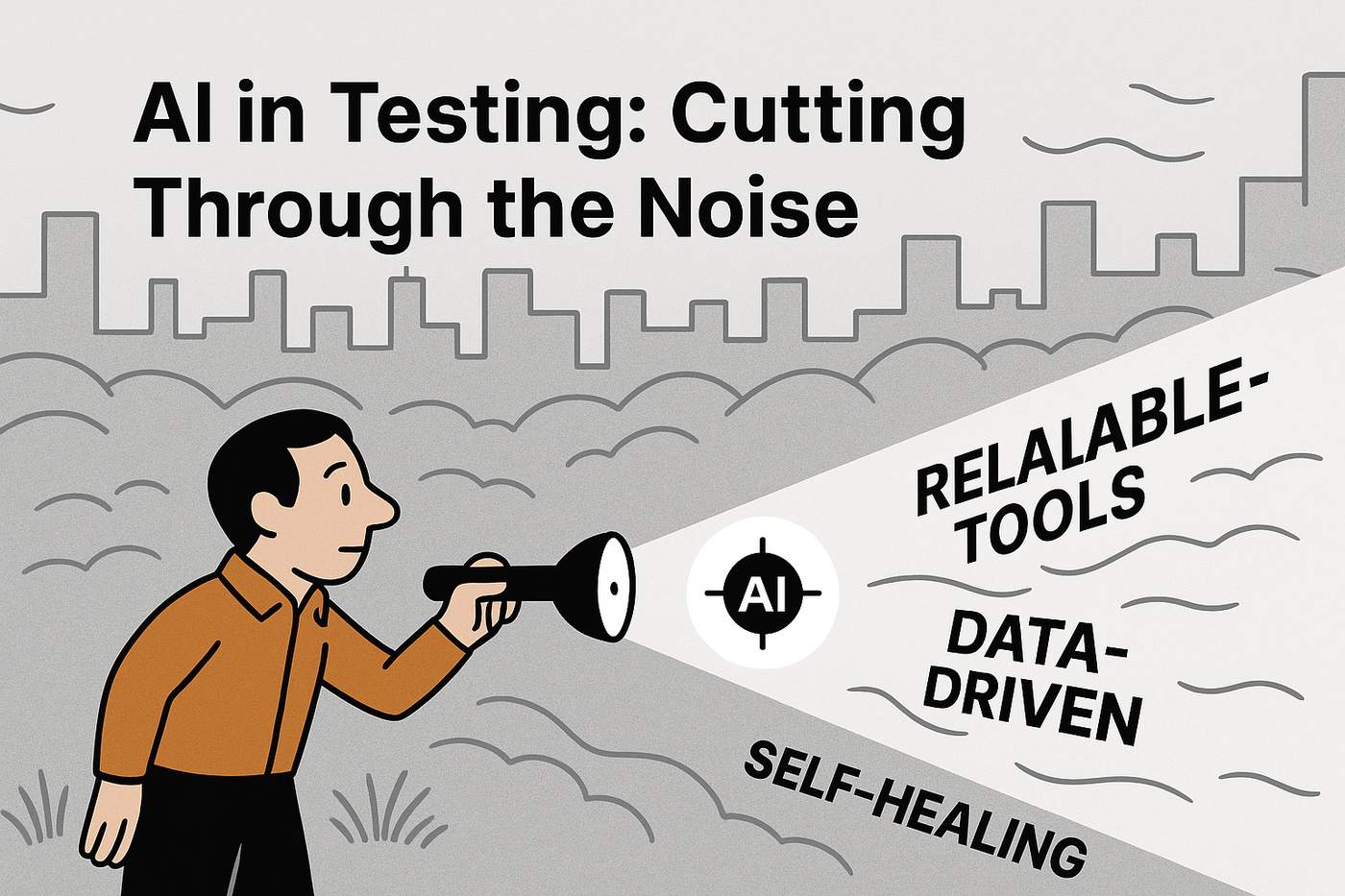
Every now and then, a buzzword takes over an industry. In QA, that word is AI.
Over the past few years, AI has become the poster child of innovation across industries. From generating art to writing code, the narrative has been - AI is here to automate everything.
Naturally, software testing hasn’t been spared. Today, dozens of tools claim they’ll let AI “test your app end-to-end,” “find every bug automatically,” or “write perfect test cases for you.” Scroll through LinkedIn or attend any testing conference - you’ll see the same story playing out: glowing promises, splashy demos, and very little about the gritty details that make or break a QA team’s day-to-day.
But beneath the surface, a more honest reality is unfolding.
Why the Hype Happened
Software testing is hard. It's manual, repetitive, fragile, and often treated as an afterthought. Engineers dread it. Product teams see it as a bottleneck. Leadership sees it as expensive.
So the promise of AI swooping in to automate everything? It’s an easy sell. Especially in environments already stretched thin.
And in fairness, progress has been made. AI can now detect UI changes better, generate synthetic data, and analyze logs faster than a human ever could.
But here’s the catch: most tools aren’t doing that. Not really.
The Industry’s Quiet Problem
What’s being sold as “AI” in many tools is often a handful of pre-defined rules, brittle heuristics, or glorified if-else chains. Teams buy into the promise, adopt the tool, and expect magic.
Instead, they hit:
False positives from scripts that don’t adapt
Test suites that break after a single UI tweak
Maintenance hell just to keep “AI tests” running
Minimal context-awareness, leading to more debugging than before
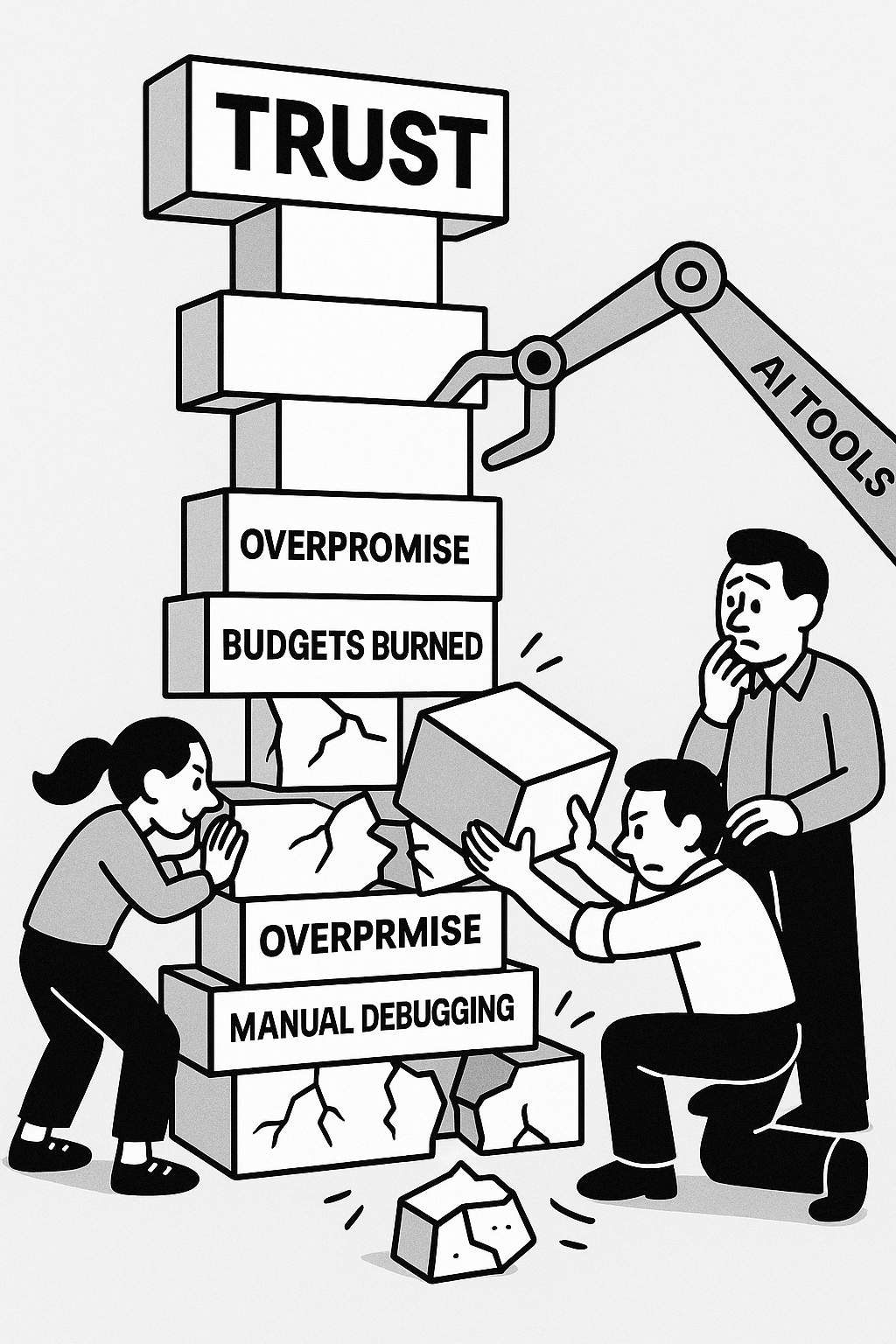
Soon enough, trust erodes. Budgets are cut. Engineers go back to writing tests manually - jaded, frustrated, and more skeptical than ever of anything with "AI" in the name.
The Real Cost of the AI Illusion
This isn’t just a technical issue. It’s a psychological and operational one.
When tools overpromise and underdeliver:
Teams lose confidence not just in tools, but in the idea of automation itself
Product velocity slows down, as teams revert to cautious manual testing
Innovative solutions get drowned out, dismissed as “just another gimmick”
And worst of all - engineers stop exploring new ways to make QA better
This is where the industry stands today. Not at a breakthrough. At a breaking point.
What AI Can Actually Do in QA - Today
Let’s separate the fluff from the facts.
Here’s where AI genuinely adds value, when done right:
1. Assist, Don’t Replace
AI isn’t replacing QA engineers. But it can be their smartest assistant. It can watch user actions, interpret flows, and suggest test steps - reducing the grunt work and human error in test case creation.
2. Make Tests Resilient
When a UI element changes its ID, most traditional scripts fail. Smart AI models can recognize intent and context, not just hardcoded selectors. This concept of self-healing tests is not hype - it’s real, and it's saving teams hours of maintenance every sprint.
3. Analyze Risk
AI can detect patterns across commit history, test logs, and code changes to highlight high-risk areas. It doesn’t predict bugs like a crystal ball - but it gives teams data-driven direction.
4. Generate Smarter Test Data
Instead of weeks spent generating edge-case scenarios manually, AI can spin up thousands of realistic profiles and datasets, fast. That means better coverage, less tedium.
But these wins don’t come from “AI” slapped onto a product. They come from systems trained deeply on domain context, with thoughtful integration into real workflows - not abstract gimmicks.
So Where Does That Leave Us?
The industry doesn’t need another flashy demo. It needs trustworthy tools that help QA teams do what they already do - faster, better, and with less pain.
Tools that respect the complexity of testing. Tools that don’t hide behind buzzwords, but show up every day, reliably. Tools that solve the real stuff - flaky tests, brittle scripts, endless rework, and the long tail of test debt.
Why We’re Building Maeris
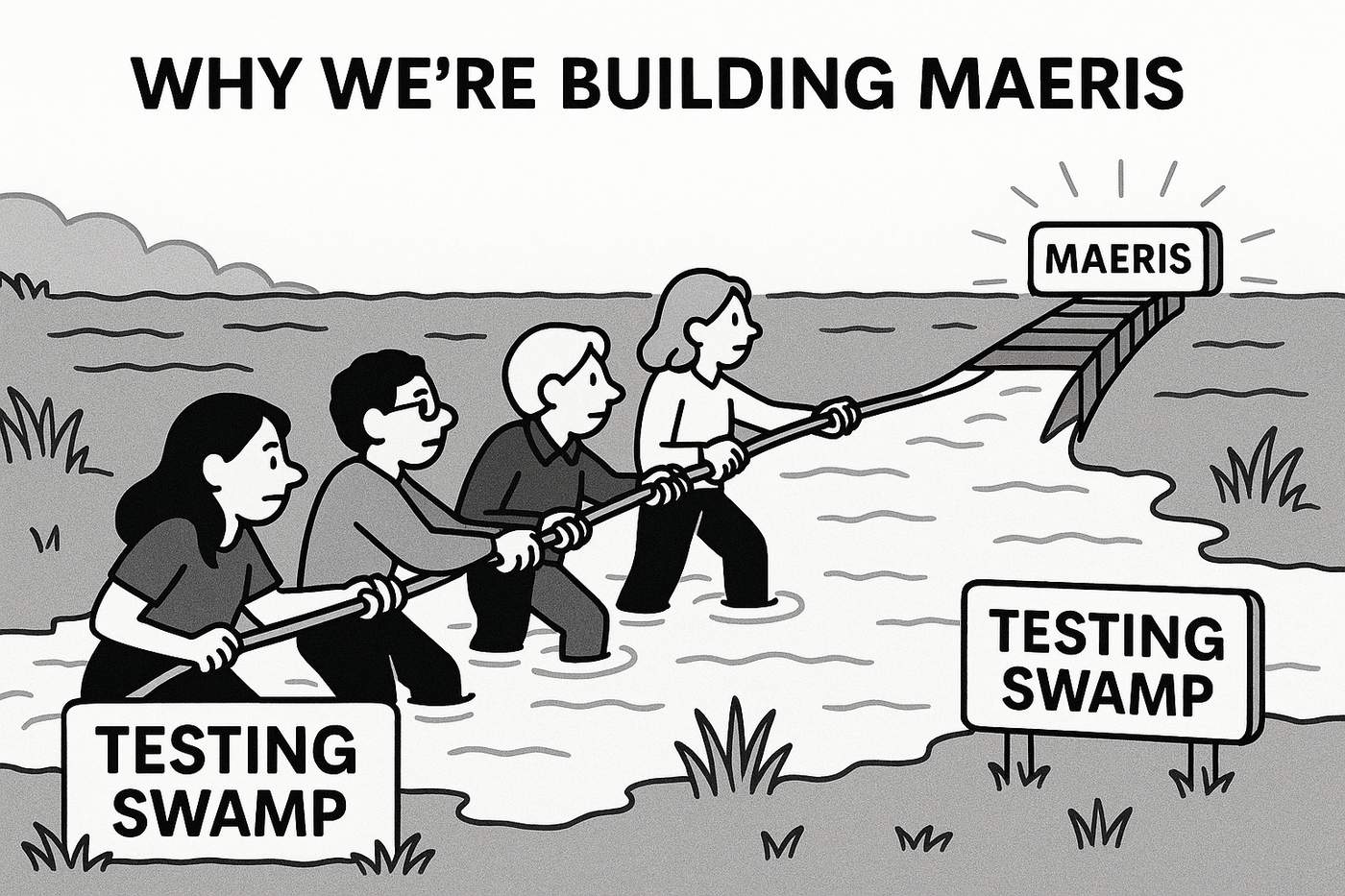
We’ve been those engineers stuck rerunning the same test for the fifth time. We’ve stayed up late because a flaky test blocked a release. We’ve felt the fatigue of test maintenance eating away at sprint velocity.
Maeris was born from that frustration.
Not to be “the AI tool that does it all,” but the AI assistant that does what matters:
Build tests in plain English, with real context
Fix itself when things break
Cut maintenance to a fraction
Let teams test more - with less effort
Our belief is simple: AI should amplify human work, not pretend to replace it.
A Final Thought
Every wave of technology comes with noise. It’s easy to get swept up. It’s even easier to get burned.
But if we can cut through the hype, ask harder questions, and demand better tools - we can unlock the real value AI has to offer in QA.
Not a fantasy. Not a gimmick. Just practical progress, one test at a time.
👉 Explore what Maeris is building - real AI, real value, real results.

Every engineering team has seen it:
A mysterious test that passes on your machine but fails in CI. You rerun it - it passes. Run it again - it fails. No one knows why.
Still, everyone moves on because “it’s just a flaky test.” But flaky tests don’t just waste time. They quietly erode confidence, focus, and speed.
On the surface, a flaky test feels like a minor inconvenience. Rerun the pipeline. Ignore the red. Move on.
But zoom out, and the hidden costs start to show:
Developer hours lost - every rerun and every Slack message asking, “Is it failing for you too?” adds up.
Broken trust - once engineers stop trusting tests, the purpose of QA falls apart
Slower releases - teams hesitate to ship when CI is unreliable.
The Ripple Effect Nobody Talks About
A flaky test rarely affects just one person.
The frontend dev waits.
The backend team holds their merge.
QA starts retesting.
The PM delays the release.
What looks like a 15-minute hiccup often turns into hours of drag. Week after week, this compounds - and your team’s speed drops by 20–30% without anyone noticing.
What High-Performing Teams Do Differently
Top engineering teams don’t treat flaky tests as normal. They treat them as a reliability issue.
Here’s what they focus on:
Flag and isolate flaky tests - Don’t allow them to block CI. Identify patterns. Address them quickly or quarantine them.
Focus test coverage on critical user flows - More tests aren’t always better. Reliable coverage in the right places matters more.
Audit test performance regularly - Review what’s failing, why, and what can be improved or removed.
Invest in tools that surface flakiness and reduce manual triage - If you rely on automation, you need to trust it.
The goal is not just to pass builds. The goal is to build confidence in the signals your tests provide - so the team can move faster with less friction.
The Takeaway
Flaky tests may seem small, but their impact compounds. They delay releases, drain developer energy, and chip away at team trust. And most teams are moving slower than they realize because of it.
The fastest teams aren’t the ones with the most tests. They’re the ones whose tests actually matter - and work.
👉 Want to see how Maeris helps teams identify and fix flaky tests before they slow you down? Visit maeris.io
Have you faced this on your team? Would love to hear your take in the comments.
-
2
Great write up. You explain well how flaky tests hurt speed and trust. Quick question. If a test fails only sometimes, can Maeris keep the build green by quarantining it, and show a clear report of when and why it flips?
-
1
Hey there. Yes, exactly. If a test is flaky, Maeris can quarantine it so your build stays green. You’ll still get a clear report showing when it failed, why it flipped, and the history - so you don’t lose visibility while keeping the pipeline moving.
-
2
Got it, that is exactly what I hoped for. One idea: auto open an issue with the quarantine history and suspected culprit, plus a weekly Slack digest of top flaky tests by time lost :)
Oh and btw, we could partner up. Me and my team are building HustleAdvisor, a social network where entrepreneurs share practical step by step lessons. If you join the waitlist and later post a short write up about building Maeris, we will boost it in the main feed so more people see it :)You get: more users
We get: an entrepreneur on board
Good luck with the project!-
1
Hey Dennis - really appreciate this!
Totally agree on the Slack digest + auto-issue idea - that’s a brilliant way to close the loop on flaky test visibility.Also just joined the HustleAdvisor waitlist - sounds super cool. Would love to share Maeris there.
Let’s stay in touch!
-
-
-

Testing is a critical part of building software, but most teams still find it slow, complex, and frustrating. Writing and maintaining test cases takes time, often breaks with small changes, and rarely fits into fast-moving development cycles.
We built Maeris to change that.
With Maeris, you can define test cases in plain English - no coding, no complex setup. The platform automatically builds and runs the tests for you, and gives you clear, actionable results.
Our goal is to make QA faster, more reliable, and accessible to everyone - whether you're a product manager, engineer, or founder. If you’ve struggled with testing or felt it’s holding you back, we’d love for you to try Maeris and share your thoughts.
Comment