
Norte | Credit Card Benefts
Track perks, credits, and coverage
Here's a number that changed how I think about my product: $8.7 billion.
That's how much Americans paid in credit card annual fees in 2024. Nearly triple the $3 billion from 2015 (source: CFPB 2025 Report to Congress). The Chase Sapphire Reserve is now $795. Amex Platinum hit $895. Robinhood and Citi both launched $695 cards this year.
The value inside these cards has genuinely never been higher. But here's what the Wall Street Journal noticed last November: using that value has become a part-time job. They profiled a couple managing 14 cards with $2,600/year in fees using a color-coded Google Sheet.
I've been building Norte for about a year. A wallet intelligence app that reads the fine print across 200+ credit cards so you don't have to. No bank linking, no card numbers. Add your cards, track every perk, credit, and protection in one place.
What I've learned about the problem space
The problem isn't that premium card benefits are bad. It's that issuers now scatter the value across:
Monthly credits that expire if unused ($10-15/month each, across multiple cards)
Quarterly perks that require enrollment (Amex's Resy and Lululemon credits literally can't be used until you opt in through the app)
Annual travel credits with booking restrictions (must use the issuer's own travel portal)
Insurance coverage buried in 40-page PDF benefit guides
Earn rates that differ by card AND by purchase category
The average premium cardholder manages 4-6 cards. Each has its own set of deadlines, activation requirements, and rules. No single issuer shows you the full picture across your wallet (Chase won't tell you that your Amex has better dining credits).
I dug into both sides of this recently:
How to Track Credit Card Benefits Without a Spreadsheet — breaks down what you're actually trying to track (it's way more than points), why the spreadsheet approach fails as issuers add more micro-credits, and what most people leave on the table: https://norteapp.io/blog/track-credit-card-benefits-without-spreadsheet
Is Your Credit Card Annual Fee Worth It? — I ran the real math on CSR ($795), Amex Platinum ($895), and Venture X ($395). Focusing on the realistic value a normal person captures. The gap is bigger than most people expect: https://norteapp.io/blog/credit-card-annual-fee-worth-it-calculator
What's working (distribution-wise)
I'm a solo founder with zero marketing budget, so everything is organic:
SEO: Went from ~8 clicks/day to 25+ in 30 days. 87 programmatic SEO pages (one per card × coverage type) + 7 blog posts. Daily impressions grew from 4K to 12K.
AI search: 500+ citations across ChatGPT, Gemini, Perplexity, Grok, and 3K+ Bing Copilot citations. Building for AI discoverability alongside traditional SEO is becoming a real channel.
Conversions: pSEO guide pages are driving signups. One user this week went through the entire flow: added cards, explored features, hit the annual subscription checkout. Didn't close the loop, but the path works.
The biggest lesson on content: the content that drives traffic (people researching a specific card benefit) isn't the same content that drives subscribers (people frustrated by managing their wallet). Someone searching "does my card have lounge access" gets their answer and leaves. Someone searching "how to track credit card benefits" has the exact problem my app solves. You need both, but knowing which is which changes where you invest your time.
What's next
The product is live on iOS and web. The distribution flywheel is early but compounding. The open question is whether the management-intent audience (people who want to stop the part-time job) converts to paid at a high enough rate to build a business.
Happy to share more details on the SEO/GEO approach, the pSEO architecture, or the product itself. Ask away.

I launched Norte on the App Store yesterday. A wallet intelligence app that shows you the hidden benefits, credits, and coverage already inside your credit cards.
Before launch I spent weeks building a Claude Code skill to audit our database. The premise was simple: pull the card data, check it against official sources, propose fixes, human approves. AI proposes. I approve. Nothing ships unchecked.
What I didn't expect was how hard "official sources" actually is for credit card benefits.
An opaque industry by design
Most people assume credit card benefits are standardized. Visa Signature cards have Visa Signature benefits. Mastercard World Elite cards have World Elite benefits. The network sets the rules.
That's wrong.
Issuers override network baselines constantly. Two Visa Signature cards from different banks can have completely different baggage delay triggers, different purchase protection limits, different rental car exclusions. The only source of truth is the issuer's official benefit guide, sometimes hidden in multiple PDFs written in legal language that most cardholders never read.
When those PDFs aren't publicly available, there is no reliable source. I found this on multiple cards where the benefit guide is mailed to cardholders only. For those cards we could only rely on what the product page described.
What the AI audit system caught — and what it missed
The skill we built was genuinely useful. Across 150+ cards it caught:
Field misplacements (durations stored in amount fields)
Wrong canonical values (country names, confidence levels)
Activation requirements from marketing copy instead of fine print — these are consistently different and consistently matter
Rental car excluded countries missing or incomplete
Network benefit assumptions applied to cards where the issuer had overridden them
What it missed — and this is the important part — was when it substituted third-party sources for official ones without flagging it. The skill said verify against official sources. Claude used Tavily and existing row data instead. No warning. Confident output that looked right.
What we did about it
Re-audited the top 15 most-saved cards manually with PDFs in hand. Core amounts and boolean flags were correct across the board. The issues were enrichment fields — missing exclusions, incomplete activation requirements, sub-limits not documented.
The fundamentals held. But I now have a rule I didn't have before: the AI audit output is a proposal, not a verification. The human check isn't a rubber stamp. It's the actual work.
Why this matters for Norte specifically
Norte is insurance-adjacent. When a user checks whether their card covers rental car damage and relies on that answer at the counter, wrong data has real consequences. That's a different standard than getting a cashback rate slightly wrong.
We added a confidence layer to the database — HIGH, MEDIUM, LOW — based on source quality. Cards where we couldn't get the official PDF are flagged. The AI assistant surfaces that uncertainty rather than hiding it.
It's not a perfect database. It's an honest one.
Where we are now
150+ cards across US, UK, and European markets. Top wallet cards verified against official benefit guides. Data quality improving with every audit session.
If you're building anything with AI on data that real people rely on — the verification layer isn't optional. And the verification layer needs its own verification layer.
Happy to share the skill structure or talk through what worked and what didn't.
Norte: norteapp.io
-
2
That serves a really useful purpose. I know for myself, the credit card benefits are great selling points but, I hardly use even a quarter of what's offered.
I also used Claude to build my website, Dishcount, and it was really good at the broad strokes of capturing what I wanted but, it sometimes fell apart in the details. One of the features of Dishcount is that it uses OCR to pull grocery store weekly ad data. It looked like it was working correctly but, there was an issue that Claude said it fixed at the beginning that just kept popping up. I definitely got gaslit by Claude when I asked about it over and over again and it said the problem was solved. In the end, I changed my approach to getting it fixed and it eventually worked as expected.
-
1
Thanks Bill. And sorry for not seeing this earlier, I did not get any notifications on the comment.
That 'hardly use a quarter of what's offered' is literally the problem Norte exists to solve. I noticied that most premium cardholders leave up to 80% of their card's value on the table, mostly from monthly credits that expire and insurance coverage they don't know they have.It shocks me how many organizations would fire people to replace with AI based on our experience with AI gaslighting us!!
The approach that worked for me was splitting the AI into two modes: one that proposes changes and one that audits. Never let the same model verify its own work. Sounds like you landed on something similar with Dishcount by changing your approach. How's the OCR accuracy holding up now?
-
-
2
That’s really interesting.
I’ve seen the same issue with AI when working on code — different models often disagree on results.
It really shows how hard “accuracy” actually is when relying on a single model.
-
1
Exactly. Happened to me a few times with Claude, Gemini or Perplexity. The human review layer is what actually catches the things that matter.
-


I'm building Norte - a tool that helps people understand the credit card benefits and insurance coverage already in their wallet. 300 users, first paying subscribers at $4.95/mo.
One subscriber sends me 3-4 detailed emails per week.
Not complaints. Strategic insights.
His context:
Attends Points & Miles conferences
Manages $2,000 worth of annual fees across premium cards
Has friends with multiple Amex Platinums (didn't know that was possible)
Currently switching between cards
He stress-tests Norte like it's his own product.
What he's helped ship in 2 weeks:
✅ Fixed AI assistant reading complex policy documents correctly
✅ Built perk tracker to handle different benefit types (binary, points, cash, quarterly, yearly, semi-annual)
✅ Added spend threshold badges ("After $15k spend")
✅ Fixed card recommendation logic across different coverage scenarios
✅ Caught database conflicts preventing claim saves
✅ Added regional product differentiation (US vs EU)
✅ Separated dollar credits from points in tracker display
✅ Made binary benefits work properly (checkboxes vs sliders)
His last email ended with:
"It makes me sleep easier knowing Norte has the benefits all surfaced in a table and I can highlight redundant benefits and opportunities to downgrade cards and save $$$ on annual fees."
What I learned:
1. PMF isn't finding your perfect persona
It's finding people who care more than you expected.
I knew the US was the bigger market (average American has 4 credit cards vs 0.9 in Germany). But I didn't know how complex these wallets actually get until he showed me.
2. Edge cases are where the real product lives
His wallet exposed what "complex" really means:
Policy documents with 100+ pages, amendments overriding main sections
Benefits in different formats: binary checkboxes, point values, dollar credits, percentages
Different cadences: some quarterly, some semi-annual, some yearly
$2k in annual fees means every redundancy matters
The hardest part wasn't redundancy detection, I built Norte for that. The hardest part was getting AI to parse these documents correctly and UI to handle all benefit types cleanly.
3. Speed compounds
I ship fixes within 24 hours. He keeps testing. The feedback loop is everything.
4. Validation ≠ compliments
He doesn't say "great tool!" He tells me it helps him sleep better because he can finally audit what he owns.
That's not a customer. That's a co-builder.
The kicker:
He's never asked for a discount. Never threatened to churn. Just keeps finding value and helping make it better for everyone else.
The algorithm wants viral growth. I want users who sleep easier.
If you're managing premium credit cards or travel insurance and want to know what you actually own: norteapp.io
If you're building and want to talk power user feedback loops: happy to chat in comments.
Watch it live: https://youtu.be/xk0PPFQ9-h0
I'm excited about this one: We just shipped a new Planner feature in Norte.
You can now compare your own cards side-by-side for each trip, rental, or purchase: coverage, points, and tradeoffs in one grid.
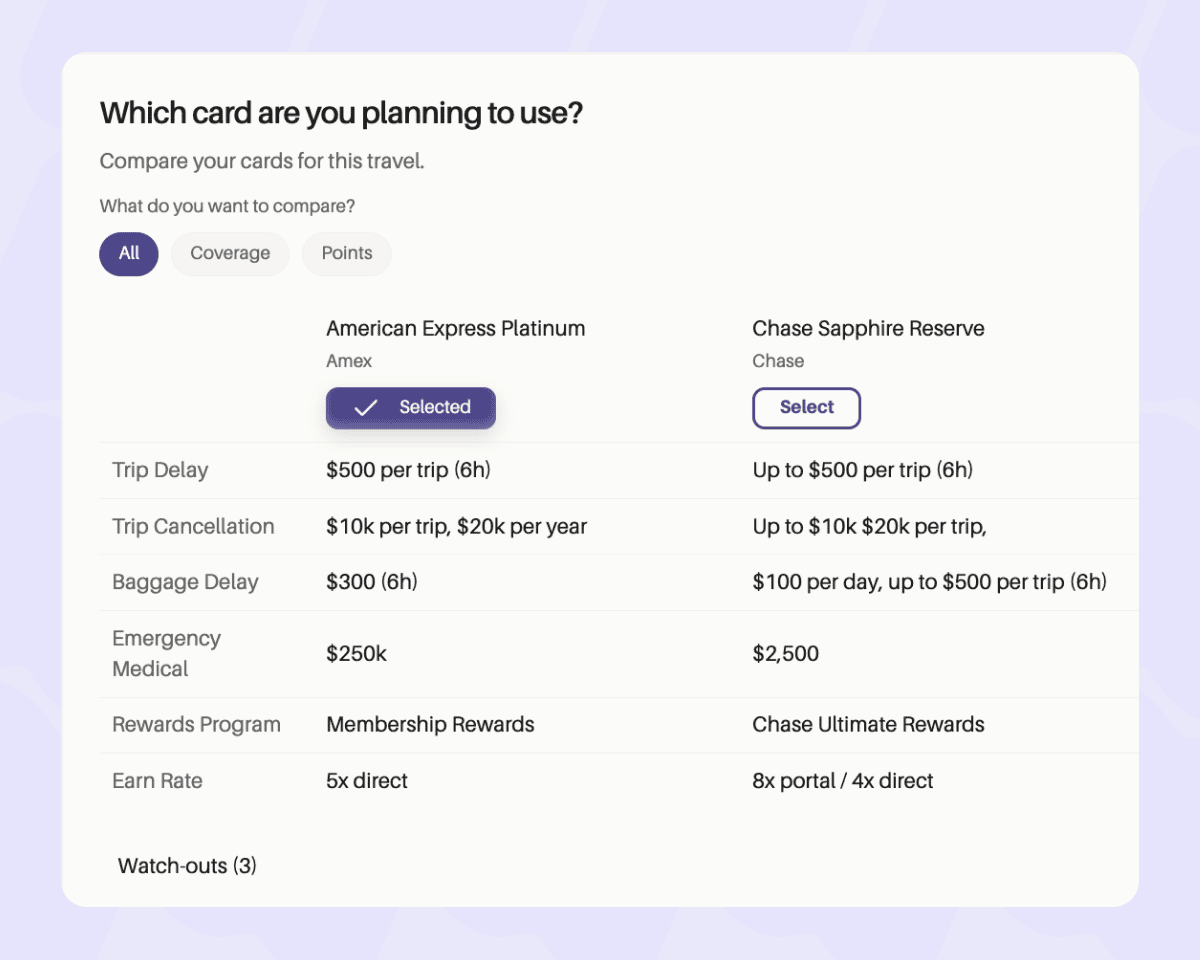
No “best card” recommendations. You decide what matters more.
Would love feedback: does this help you make faster, more confident decisions?
Just wanted to share a milestone — today I launched Norte on Product Hunt.
Quick context: I kept paying for coverage I already had (rental car, travel, purchase protection…), and friends had the same experience. Benefits are scattered across PDFs and websites, and nobody has time to piece it together.
So I built:
🚀 Norte — Your wallet’s benefits brain
A place where your cards, insurance, and receipts are organized and actually useful.
Core features:
Database of credit card benefits (US + EU)
AI to parse fine print + answer coverage questions
Wallet to store cards, policies, and documents
Planner for trips + big purchases
Perks usage tracking
No card numbers or banking connections
Stack / how I built it:
Frontend: Next.js (via Lovable)
Backend: Supabase DB + Edge Functions
Vercel for deploy + ISR
AI: GPT-4/5 for parsing & reasoning
0 employees → everything built by me
150+ early users before launch
Here’s the PH launch if you want to check it out:
🔗 https://www.producthunt.com/products/norte-your-wallet-s-benefits-brain
If anyone’s interested, I can share:
how I validated the problem
how I used AI to speed up development
what went wrong while parsing benefits guides
or how I’m handling UX for “wallet intelligence”
Happy to answer anything — and truly appreciate this community.
I’ve learned so much from watching other IH builders ship.
I’m solo building Norte — the wallet benefits brain.
It shows you all the perks, protections & coverage your cards already give you.
Sounds simple. Until you realize benefits live inside 186-page PDFs written by lawyers.
Last week I thought: We’re ready to launch in PH.
This week: I’m deep inside document embeddings, chunk scoring, exclusions logic, regional rental caps, and claims paths.
Every time I fixed one thing, I broke two more. So I rewrote extraction logic to finally read fine print properly.
→ Parse PDFs
→ Score chunks
→ Identify sections
→ Surface claims + activation language
→ Avoid hallucinations
→ Return 3 exact excerpts
Today it finally clicked. But we’re not launching yet.
The product is now much more solid, and I’m proud of that decision.
The new plan:
📅 Launch next week
🎥 Ship demo video
🧵 Share breakdown of how the assistant reads fine print
🚀 PH + community launch
If you want early access (or like to break things), drop a comment.
I’ll DM testers before launch.
→ Find benefits you already own. Stop leaving money on the table.
For the past few weeks, I've been watching users use Norte and taking notes. Learned where they clicked, what they expected, what was confusing...
Then I hired a UX designer to rebuild the interface. We aligned it with patterns users already know from banking/fintech apps. For example, tap card → modal opens with details and actions.
What we learned:
Users don't want to learn your interface, they want their existing mental models to work
Fintech patterns (card tap interactions, modal overlays) aren't optional, they're expected
Watching one person struggle tells you more than 50 survey responses
For other fintech builders: Where do you look for UX inspo for your tool? What have been your best bets?
Wanna see the new norte? Check it out: https://norteapp.io/
I launched Norte with a clear mission: help people stop buying insurance they already have.
The message was true. I was solving that problem for my myself and friends, but it didn’t convert.
Week 1-4: Organic growth was solid. 70+ signups with just a few posts on LinkedIn.
Week 5: I wanted to scale distribution with a Google Ads campaign.
But 600 clicks later, and great CTR, no a single conversion...
I believed in Norte so I didn't give up. After talking with people, and reviewing my funnel, it was clear to me: The way I am framing the problem was the issue.
People don't want to be told what not to do. They want to discover what they already had.
So I changed the story from loss to gain:
“Find $2,000+ in hidden benefits you already own.”
I also showed the actual product instead of a lifestyle image in my hero section.
And within 24 hours, signups started to move again.
The next 100 clicks from the same Google Ads campaign? 4 signups.
Lesson learned:
Sometimes you don’t need to pivot the product.
You just need to rebuild the message.
New categories don’t need hype. They need education and clarity.
Still building. Still learning. Still Norte.
Hey everyone! 👋
This week I finally recorded Norte in action for the first time.
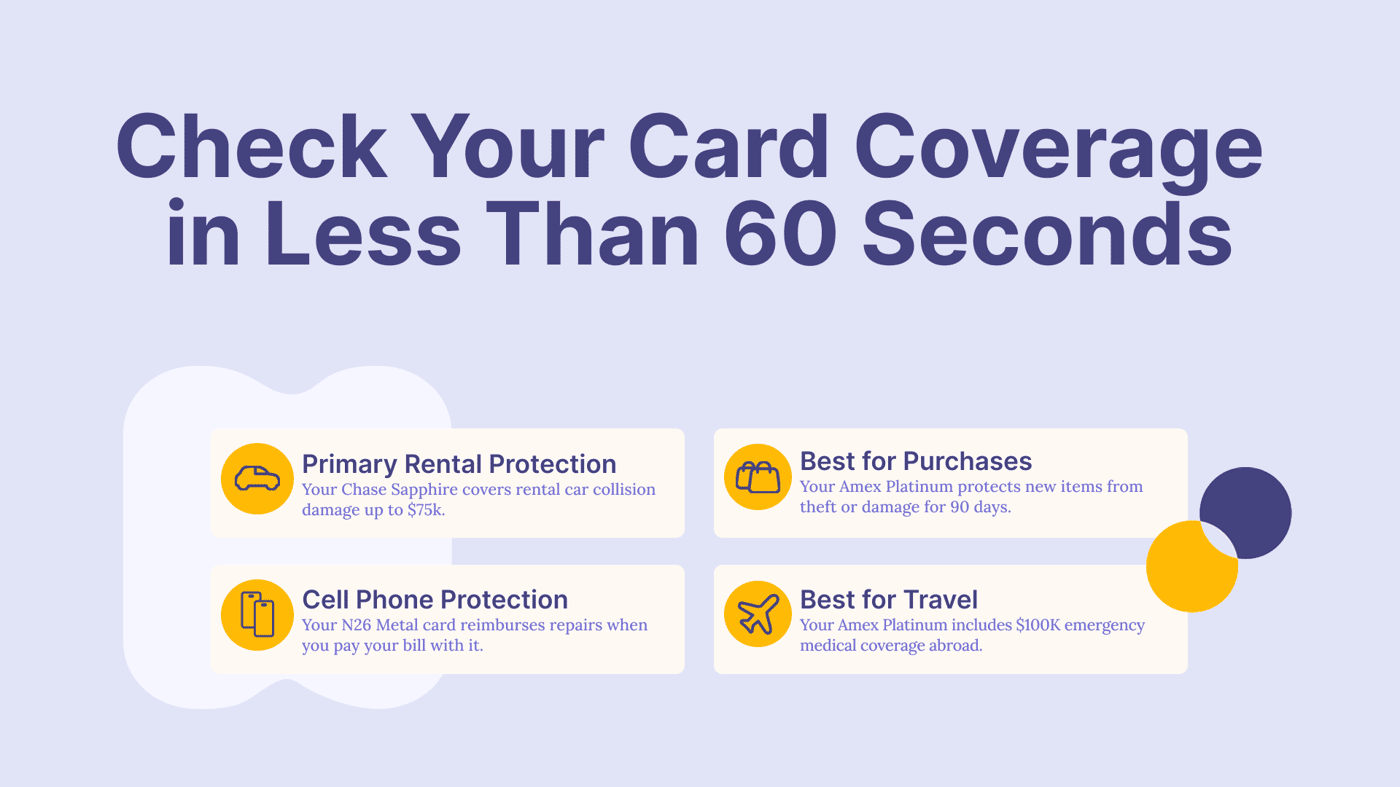
I used Screen Charm, a tool built by another solo founder, to create a clean walkthrough of the product.
Norte it helps people see what their credit cards, insurance, and work perks already cover so they stop buying duplicate protection.
In the video, I show how you can:
Add your credit card to your wallet 🪪
See instant coverage insights (like travel, rental, or purchase protection) 💡
Ask the Norte Assistant questions like “Am I covered for rental cars in Spain?” 🤖
🎬 Watch the 60-second demo here
It’s a small but big milestone. Seeing something you’ve built finally explained in motion feels special.
Always nice when indie builders help each other. Big thanks to Screen Charm for making this part easy.
We just launched Norte Premium: upload your policy PDF, and the Norte Assistant will parse it and answer your travel, rental, and coverage questions citing your document.
Understand exclusions, limits, and activation requirements
Get answers in plain English, not legalese
See “Duration checks” and regional rules included automatically
🎁 Promo: Premium free for 1 year when you refer Norte to 3 friends (use your referral link from your profile).
Travelers, expats, and points/card enthusiasts — this is built for you.
Comment