5 Critical Steps To SaaS Usage-Based Billing
by Marta PoprotskaWhile SaaS companies have primarily favored the pay-per-seat billing model, which charges customers based on the number of users on their accounts, the usage-based billing model has been steadily gaining popularity. According to a 2021 OpenView report, 45% of SaaS companies surveyed indicated they offer this newer pricing model. This trend is also evident in the rise and success of cloud-based companies, and further proof is the fact that usage-based billing is the second-most common payment model enterprise technology firms use.
What is Usage-Based Billing?
Also known as metered billing-, consumption-based, and pay-as-you-go pricing, usage-based billing indicates how much or how often customers use your product or service. In short, it is based on a precise unit of measurement and the value associated with your offering.
Standard metrics for this model, which are defined differently depending on the SaaS industry in which you operate, include the number of units, amount of data, and consumption rate. Unlike the traditional user-based model that requires customers to pay for the product or service in advance, usage-based billing charges them post-use.
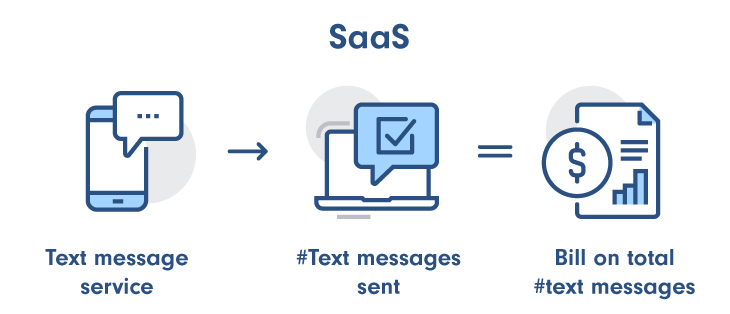
A well-designed, customer-centric usage-based billing system has many benefits but requires a considerable implementation strategy and a firm understanding of customers' needs. It allows greater flexibility, but with the appropriate automated payment system in place, you'll be able to optimize your business revenue and keep customers loyal.
Common Usage-Based Pricing Models
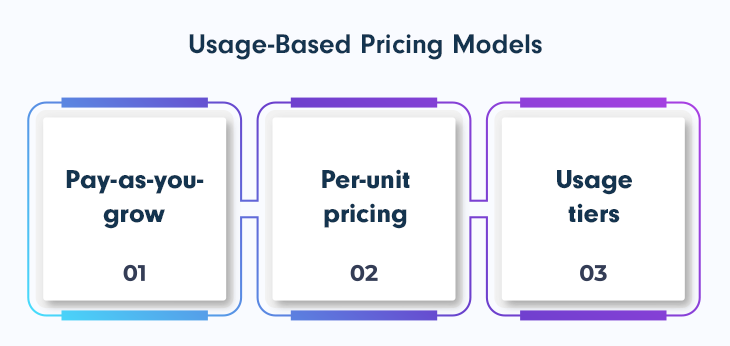
Some of the most common pricing models SaaS companies use are:
- Pay-as-you-grow
- Per-unit pricing
- Usage tiers
The pay-as-you-grow model is ideal for startups because companies can initially pay a lower rate for essential services. As the name suggests - as they grow and need additional resources, they can incorporate those costs into their billing. Per-unit pricing involves charging customers a fixed amount per unit of goods or services. Alternatively, usage tiers allow you to group your customers into various levels and charge them accordingly.
As an example of this model, workflow automation software company Zapier, offers tiered-usage pricing, grouping customers based on how many defined tasks they complete with their software.
5 Reasons Why Companies Are Switching To Usage-Based Billing
There's a strong incentive for SaaS businesses to switch to the usage-based monetization model. According to OpenView, those that do see a 38% faster revenue growth rate and 50% higher revenue multiples than those that choose not to. And the benefits for customers are numerous, so let's unpack some of them and figure out why businesses choose to implement usage-based pricing!
1. Improved Customer Experience
The flexibility of usage-based pricing allows customers to only pay for what they use, limiting wastage and not overpaying for their needs. They also have explicit knowledge of how much they will be charged at the end of a billing cycle, helping build trust with your company.
2. Increased Revenue
According to research from Sapphire, public companies implementing usage-based pricing are growing more efficiently and experiencing faster revenue growth than larger public high-growth SaaS companies that don't offer this option. This makes sense, given that usage-based pricing allows for cost optimization based on product or service value, upselling opportunities, and pricing that aligns with customer success – all of which contribute to revenue growth.
3. Greater Customer Lifetime Value
With usage-based pricing, the higher your customer’s profit, the more money they are likely to spend on your product or service, linking their growth to your growth. They are more likely to stick with your brand as they can adjust their costs as they scale and adjust as the economy ebbs and flows, as do their own expenses and profits.
4. Expanded Customer Base
As a more affordable option than other pricing models, mainly for SaaS startups, usage-based pricing can help your business regularly attract new clients. This is especially important during economic instability when businesses seek more affordable solutions. They may be hesitant to commit to more traditional subscription models that require long-term commitments.
5. Higher Customer Retention
Usage-based pricing models lead to greater customer loyalty for several reasons: the flexibility to use the product or service on a trial basis, spending that's aligned to consumption, as well as pricing tiers that adjust as they grow. With this level of flexibility, customers are more likely to stick with your brand for the long haul rather than move to a competitor.
Challenges Associated With Usage-Based Billing
Implementing usage-based billing has its challenges. One of which is the pricing difficulties that come with complex products. This makes it harder to assign a value metric to your product or service, so it requires careful consideration before implementing the model.
Your billing system needs built-in pricing agility so customers can scale up or down depending on how their needs evolve. Without the right system to support usage-based billing, your customers will likely end up frustrated and looking elsewhere for greater flexibility or better value.
The right eCommerce partner will be able to help you efficiently address all these challenges and more with pricing model testing and implementation, supported by powerful analytics.
Learn 5 steps to successful usage-based billing implementation on PayPro Global's Blog.

