SaaS Renewal Rates: Proven Tactics to Boost Retention
by Marta PoprotskaIt’s no secret that the SaaS model relies heavily on recurring subscription revenue, whether on a monthly or annual basis. However, customers churn. It’s a fact. So, the focus should be on customer acquisition and customer retention. As we all know by now, acquiring new customers is more expensive than retaining existing ones. The average CAC for a small B2B SaaS financial services company is $1,450. With the enterprise level being $14,772. So, keeping customers happy and giving them a reason to renew their subscriptions is very important and worth your while!
The hard truth is that your SaaS company is unsustainable without a good customer renewal rate. Poor customer renewal rates can come from various problems, such as an ineffective pricing strategy and unsatisfactory customer experience. But keep in mind that in financial services, a 5% increase in customer retention produces more than a 25% increase in profit. It’s time to admit the truth. Customers renews matter. Successful SaaS businesses know very well that because customer acquisition costs are high, instead of focusing on boosting the customer growth rate, the solution is to ensure customer satisfaction and increase contract value. This means tracking the gross renewal rate and improving the SaaS renewal process.
A healthy SaaS renewal rate is considered above 80%, with successful SaaS companies averaging a renewal rate of 90%, or even over 100%, typically because their existing customers are buying upgrades, upsells, and cross-sells.
To better understand what we are talking about, we’ve put together some simple techniques to boost your SaaS renewal rates and your recurring revenue.
So what exactly is a Customer Renewal Rate?
Customer renewal rate comes from a part of the greater category of customer retention. SaaS renewal measures the percentage of customers who renew their subscriptions at the end of a subscription period rather than leaving. These customers are choosing, manually or automatically, to continue paying and receiving value from your product. Customer renewal rates, therefore, demonstrate the success of the customer experience, your product, and your business. If the rate is high, the company will more likely to retain customers over the long term and bring long-term revenue.
Is Renewal Rate Different from Retention Rate?
In short, yes, it is. Although retention and renewal rates are similar when tracked over the short term, they need to be understood as different over the long term. The main difference lies in customer intent. For customer retention, see it as the customer not actively canceling when they have the chance. On the other hand, renewal is just part of customer retention. Specifically, the renewal rate measures the number of customers ready to sign up for another subscription cycle when the previous one ends.
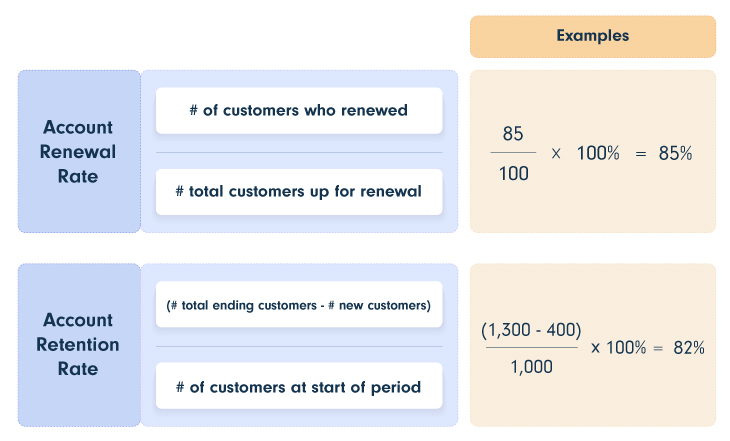
Why You Should Measure SaaS Renewal Rate
Measuring SaaS renewal rates over time allows you to spot customer interest, trends, and barriers to revenue growth before your business is in trouble. It helps you to understand whether your business is healthy, how to boost your monthly recurring revenue and retain more customers while also saving those at risk of churning. It can also help you accurately project your revenue which is critical since. SaaS businesses will struggle to lock in sales and marketing budgets without accurate monthly subscription revenue data.
How to Calculate Customer Renewal Rates
Luckily, there is a renewal rate formula you can use. Start by deciding what time frame you will be looking at to analyze these metrics. Look at renewal across various periods (days, weeks, months, years), as each will provide valuable insights. For example, analyzing the renewal rate metric after the first month will indicate the success of your onboarding process. Tracking renewal rates year-on-year could tell you about your customer’s satisfaction with your product and the overall financial health of your business.
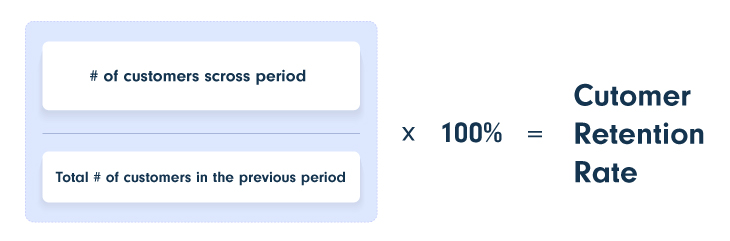
To calculate the customer renewal rate:
- The number of customers renewing ÷ total number of customers who can renew.
- Answer ✕ 100 = percentage
The customer renewal rate can’t exceed 100%, as obviously, you can’t have more than your total of possible renewals. But when you calculate the more general revenue renewal rate, you can calculate over 100% because of upgrades, upsells, and cross-sells. For the revenue renewal rate, you simply divide the total renewed revenue during the specific time period by the revenue that could be renewed and convert it to a percentage. A business should always aim for an over 100% revenue renewal rate for long-term sustainability. So make a habit out of using the renewal rate formula to measure customer success.
Read on to discover 7 proven tactics to boost retention on PayPro Global's Blog.

