
Qwegle
Build faster. Scale smarter.

A strange prediction:
One of the fastest-growing roles of the next decade might be
AI Manager.
Not an AI engineer.
Not a prompt engineer.
AI Manager.
Think about it.
As AI agents become more autonomous, someone will need to:
• Assign responsibilities
• Define boundaries
• Review decisions
• Handle escalations
• Monitor performance
• Improve workflows
Exactly what managers do today.
The difference?
Their team won't be human.
It will be digital.
Future org charts may include:
Human Teams
AI Teams
Human Managers
AI Managers
We're already seeing early versions of this while designing agent workflows and operational systems at Qwegle.
🧠 https://qwegletechie.github.io/qwegle.github.io
📊 https://www.crunchbase.com/organization/qwegle-technologies
Question:
If you suddenly had 10 AI employees tomorrow...
What's the first role you'd assign them?
If you're experimenting with agentic systems, AI operations, or autonomous workflows, we're always interested in exchanging ideas:


I don't think software is disappearing.
I think interfaces are.
Most software today exists because humans need a way to tell computers what to do.
Menus.
Buttons.
Settings.
Forms.
AI changes that relationship completely.
Instead of learning software:
People describe outcomes.
Instead of configuring systems:
They explain intent.
Instead of clicking through workflows:
The system executes them.
The products that win over the next decade may not be software companies.
They may be outcome-based companies.
The best interface might eventually be no interface at all.
This idea has fundamentally changed how we think about product architecture and user experience at Qwegle.
🧠 https://qwegletechie.github.io/qwegle.github.io
Question:
Which category gets disrupted first?
• CRM
• Project Management
• Analytics
• Customer Support
If you're building outcome-driven products or AI-first experiences, let's compare notes:

The startup playbook is changing faster than most people realize.
For years, success meant the following:
• Raise capital
• Hire aggressively
• Build departments
• Manage headcount
AI is rewriting that formula.
A founder today can access capabilities that previously required:
• A sales team
• A support team
• Analysts
• Developers
• Operations staff
The interesting question isn't whether AI replaces jobs.
It's whether companies need to grow the way they used to.
We're entering an era where leverage matters more than headcount.
The next iconic company may not have 500 employees.
It may have 5.
Or even 1.
We've been exploring automation-first systems and AI-driven workflows at Qwegle, and the reduction in operational overhead is hard to ignore.
🧠 https://qwegletechie.github.io/qwegle.github.io
📊 https://www.crunchbase.com/organization/qwegle-technologies
Question:
Would you rather own:
A) A 5-person company doing $50M/year
or
B) A 100-person company doing $50M/year
If you're exploring lean startup models, AI operations, or autonomous workflows, we're always open to thoughtful conversations:

Right now, most AI tools are disconnected.
one for writing
one for meetings
one for planning
one for automation
The next layer seems obvious:
A unified AI layer that understands:
your schedule
priorities
workflows
habits
communication patterns
Not just a chatbot.
A personal operating system.
The interesting challenge isn’t intelligence.
It’s orchestration across fragmented tools.
We’ve been exploring system-level thinking like this at Qwegle while studying how AI layers interact with productivity workflows.
Context:
https://qwegle.com
https://qwegletechie.github.io/qwegle.github.io
What’s the first thing you’d want a true personal AI operating system to manage automatically?

A huge shift happening quietly:
Founders are starting to prototype entire mobile apps with:
AI-generated UI
AI-generated flows
AI-generated backend logic
AI-generated assets
The bottleneck is no longer coding.
It's
product thinking
workflow clarity
taste
constraints
The builders who win here probably won’t be the best engineers.
They’ll be the people who can define systems clearly.
This shift is changing how we think about product development workflows at Qwegle, especially around speed, iteration, and validation.
Context:
https://qwegle.com
https://www.crunchbase.com/organization/qwegle-technologies
Would you trust AI-generated apps for production products yet or only for prototyping?

Most AI products still behave like strangers every session.
The products getting interesting now are the ones that
Remember workflows
Learn preferences
Recall past decisions
Build long-term context over time
That changes AI from a tool into an environment.
What’s fascinating is that persistent memory creates the following:
Better UX
Lower friction
Higher retention
More trust
The challenge isn’t storing memory.
It’s deciding:
What should persist
What should fade
When AI should recall context
We’ve been thinking a lot about memory-driven UX systems at Qwegle, especially for AI products that need continuity instead of isolated prompts.
Context if useful:
https://qwegle.com
https://qwegletechie.github.io/qwegle.github.io
I'm curious whether people here actually want AI that remembers them long-term or if that still feels uncomfortable.

Most founders use AI for:
Content
Code
Research
But what’s more powerful is AI that:
Maps your competitive landscape
Simulates pricing decisions
Flags weak assumptions
Highlights blind spots
AI as co-founder mode.
The key is structured input and persistent context, not random prompting.
We’ve seen strong potential when AI systems are designed as strategic collaborators rather than utilities.
Context:
https://qwegle.com
https://qwegletechie.github.io/qwegle.github.io
Would you trust AI to pressure-test your startup decisions?

The next generation of decentralized apps won’t:
Show wallet popups
Expose seed phrases
Require technical onboarding
Instead, identity will feel:
Native
Seamless
Invisible
The real opportunity isn’t blockchain tech.
It’s interface simplification.
We’ve been observing how clean UX layers transform complex systems into usable products at Qwegle.
Context:
https://qwegle.com
https://qwegletechie.github.io/qwegle.github.io
Would you use Web3 tools if they felt like normal apps?

We’re entering a phase where AI isn’t just assisting.
It’s:
Watching pipelines
Identifying stalled deals
Nudging prospects
Triggering workflows automatically
Revenue agents don’t wait for prompts.
They operate within constraints and escalate when needed.
The hardest part isn’t the model.
It’s defining boundaries, authority, and fail-safes.
We’ve been exploring this system-first approach at Qwegle when building automation layers that directly impact revenue operations.
Context:
https://qwegle.com
https://qwegletechie.github.io/qwegle.github.io
Curious - would you trust an AI to move deals forward autonomously?
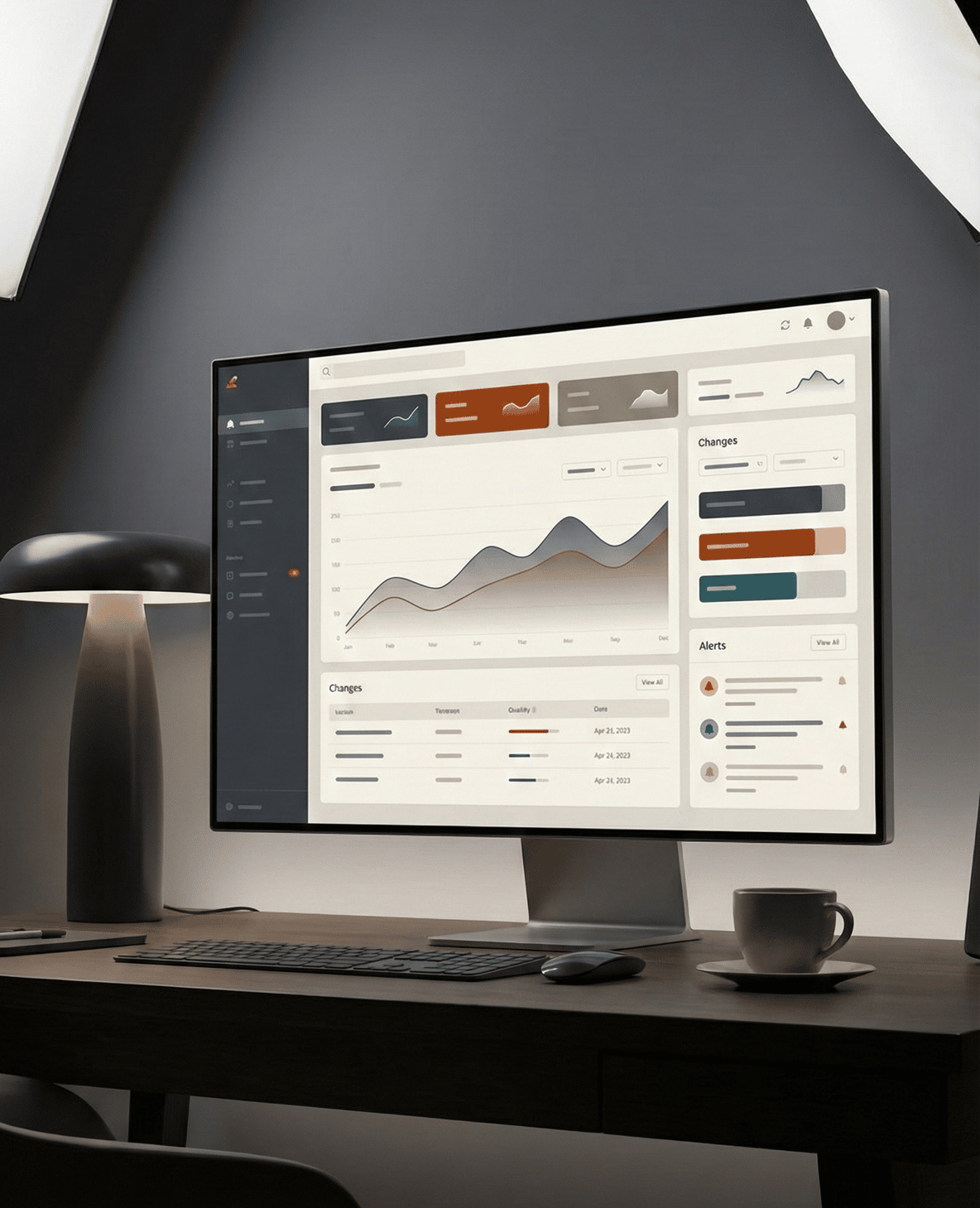
Most dashboards fail founders because:
Everything looks important
Nothing feels actionable
Attention gets scattered
The best dashboards I’ve seen recently:
Highlight risk, not growth
Surface anomalies, not averages
Focus on “what changed” instead of “what exists.”
This founder-first analytics mindset is replacing traditional dashboards fast.
We’ve been leaning into signal-first design at Qwegle when building analytics tools for founders who don’t want to babysit numbers.
Context:
https://qwegle.com
https://www.crunchbase.com/organization/qwegle-technologies
How do you decide which metrics actually deserve attention?
Comment