
UI Color Palette
WCAG Color Palette Manager for Apps & Websites
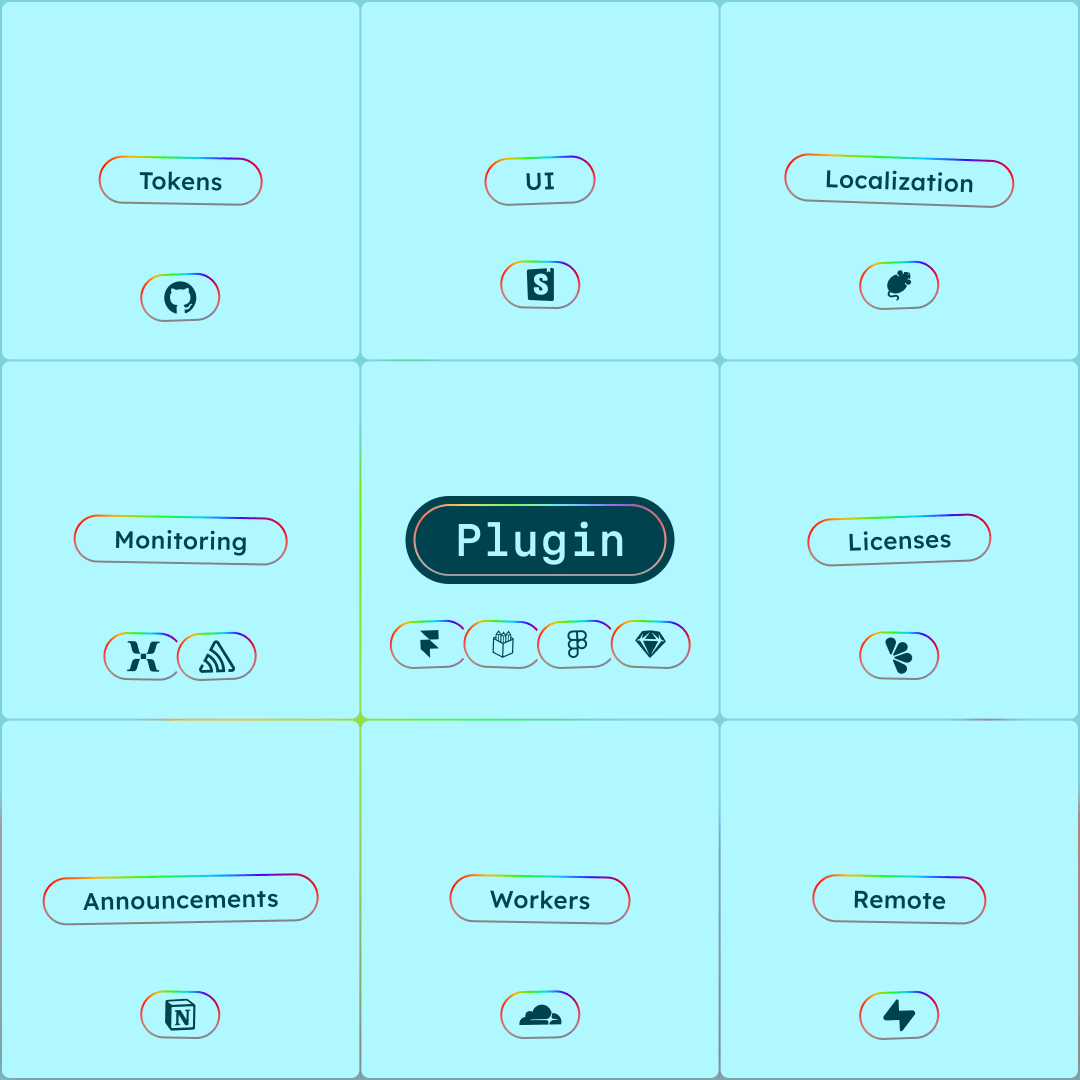
TL;DR: Building a plugin that runs on Figma, Penpot, Sketch, and Framer requires a specific architecture. This tech stack powers a $1,000 MRR product reaching 1,500 new users per month. Here's how I made it work.
Shared UI with a token system
The UI is the same across all platforms. Instead of building four different interfaces, I use a design token system that adapts to each platform's theme.
Colors, spacing, typography—everything is abstracted into tokens. When I ship a feature, I write it once. The tokens handle platform-specific styling. All platforms share the same assets and the same codebase.
Supabase for auth and data
Supabase handles two critical pieces: authentication and palette storage.
Users sign in once and can access their account from any platform. Palettes saved to the cloud sync everywhere—create in Figma, retrieve in Framer.
One backend. One source of truth.
Lemon Squeezy for licensing
License verification happens directly in the UI through Lemon Squeezy. It manages subscriptions, lifetime deals, and controls which features are unlocked.
No custom licensing system to maintain.
Tolgee for localization
UI Color Palette now supports English, French, Brazilian Portuguese, and Simplified Chinese. Tolgee makes adding new languages straightforward—translators work directly in the interface without touching code.
Notion for announcements onboarding
I use Notion as a lightweight CMS to update parts of the app without deploying.
From a Notion database, I can push announcements, update onboarding flows, and adjust pricing. No app store review. No deploy. Just edit.
This architecture isn't just for UI Color Palette—it's a reproducible model for testing and launching businesses. The same stack can power any cross-platform product with minimal overhead.
If you're building design tools or tackling accessibility, I'd love to connect. Drop a comment or try the plugin via ui-color-palette.com.


TL;DR: Started as a Figma plugin to solve my own color accessibility struggles. Now supporting Figma, Penpot, Sketch, and Framer. Here's what I learned building a design tool as a solo indie maker.
The problem I couldn't ignore
Two years ago, I was designing a design system and kept running into the same frustration: creating color palettes that looked good AND met WCAG contrast requirements was painful. I'd spend hours checking ratios, adjusting shades, exporting to code, then realizing the exported values didn't match the design.
Every designer I talked to had the same workflow: juggle multiple tools, manually check contrast ratios, pray nothing breaks when handing off to developers.
So I built UI Color Palette. Initially just for Figma, just for me.
The pivot that changed everything
The Figma-only version got traction (thank you early users 🙏), but I kept hearing the same request: "Can you make this for Penpot/Sketch/Framer?"
Most plugin makers would say "pick one platform and go deep." But I saw an opportunity: design tools are fragmenting. Teams use multiple platforms. And color management is a universal pain point.
So I built Unoff—a cross-platform component library that lets me ship features once and deploy everywhere. It was a huge bet that cost me months of development time.
Worth it. UI Color Palette now runs on four platforms with the same codebase.
By the numbers
+80k installations
+3k registered users
+400k palettes created
+130 countries
What's working
AI color generation (launched in 5.1.0): Users can extract palettes from images or generate them with Mistral AI.
Cross-platform sync: Create in Figma, export to Tailwind, use in Framer. One palette, multiple destinations.
Community sharing: Designers are publishing palettes to the cloud and discovering others' work. It's becoming more than a tool—it's a library.
What I'm learning
Localization matters: French is live, Portuguese and Chinese are next. My Brazilian users are the 3rd largest group, yet I've ignored them for too long.
Pricing is hard: Working on a freemium model with feature credits. Still figuring out the balance between free value and paid features.
Solo building is lonely but liberating: No meetings, no consensus-building. Just ship. But also: no one to bounce ideas off at midnight when you're stuck on a gnarly bug.
If you're building design tools or tackling accessibility, I'd love to connect. Drop a comment or try the plugin via ui-color-palette.com.
Comment