Gojek Clone: Exploring Egypt’s Opportunity for Multi-Service Startups
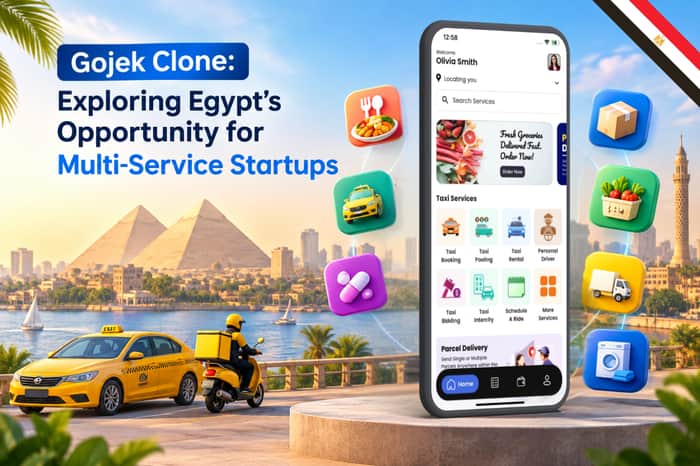
Egypt’s digital economy is creating new opportunities for entrepreneurs who want to build businesses around everyday services. From transportation and food delivery to home services and local shopping, consumers are increasingly comfortable using mobile platforms to solve routine needs.
This shift creates an interesting question for startup founders: Can a single platform bring several on-demand services together and become a useful part of customers’ daily lives?
That is where a Gojek Clone can become an interesting business model to explore in Egypt. Rather than building separate applications for every service, entrepreneurs can launch a multi-service platform that brings different offerings under one digital ecosystem.
But the opportunity is not simply about copying an existing app. The real challenge is understanding Egypt’s market, identifying services with genuine demand, and creating a platform that can deliver convenience to customers while giving service providers a sustainable way to generate business.
Why Egypt Is Interesting for Multi-Service Startups
Egypt has a large consumer market and a growing digital ecosystem. Smartphone usage, online payments, app-based services, and digital commerce are changing how people interact with local businesses.
For entrepreneurs, this creates room to experiment with platforms that connect customers with multiple categories of services.
For example, a single application could potentially offer:
- Ride-hailing and transportation
- Food delivery
- Grocery delivery
- Courier and parcel services
- Home maintenance
- Beauty and wellness services
- Pharmacy or healthcare-related services
- Local shopping
- Laundry and cleaning services
The important point is that a startup does not have to launch every category from day one. Starting with a focused group of services can make operations easier and provide an opportunity to understand customer behavior before expanding.
What Makes a Gojek Clone Different?
A traditional single-service app focuses on solving one problem. A Gojek Clone follows a broader approach by creating a platform where users can access several services from one application.
This can create a stronger relationship between the platform and its customers.
Imagine a customer using the application to book a ride in the morning, order lunch in the afternoon, and request a home cleaning service over the weekend. Instead of acquiring three separate apps, the customer interacts with one platform.
For the business owner, this creates opportunities to increase customer engagement and cross-sell services.
However, the objective should not be to add as many services as possible. Every service category introduces new operational requirements, partners, pricing models, customer expectations, and support processes.
A successful multi-service platform needs a clear reason for each category it introduces.
Choosing the Right Services for Egypt
One of the first decisions for an entrepreneur is determining which services should be included in the initial launch.
Transportation can be a logical starting point because mobility is a recurring need. Food and grocery delivery can then complement transportation by introducing another frequently used service.
Other categories can be added based on local demand.
For example, a startup might begin with:
Phase 1: Ride booking and food delivery
Phase 2: Grocery, courier, and parcel delivery
Phase 3: Home services, beauty, laundry, and other local services
This phased approach allows the company to validate its business model before committing resources to a large operational network.
The right combination will ultimately depend on the target city, customer segment, competition, service-provider availability, and business objectives.
Core Features a Multi-Service Platform Needs
A Gojek Clone App Development project should focus on functionality that supports both customers and service providers.
From the customer side, useful features can include:
- User registration and profile management
- Service discovery
- Location-based search
- Instant and scheduled bookings
- Real-time order or ride tracking
- Multiple payment options
- Fare or price estimates
- Ratings and reviews
- Booking history
- Push notifications
- In-app communication
- Customer support
Service providers need a different set of tools. Driver and partner applications can allow them to manage availability, receive requests, accept or reject bookings, navigate to customers, view earnings, and track completed services.
The admin panel is equally important. It should give the business owner centralized control over customers, service providers, bookings, payments, commissions, pricing, promotions, and platform activity.
Localization Matters More Than Simply Translating the App
Launching a multi-service platform in Egypt requires more than changing the language.
A platform should be adapted to local customer expectations and business conditions.
Payment preferences are one example. Customers may expect a combination of cash and digital payment methods depending on the service and location. Pricing models should also reflect local purchasing behavior and operating costs.
Arabic and English language support can also make the platform more accessible to different user groups.
Location-specific operations matter as well. A service model that works in Cairo may require adjustments before being introduced in Alexandria, Giza, or another market.
The lesson for founders is simple: localization should influence the business model, not just the user interface.
How Can a Gojek Clone Generate Revenue?
A multi-service platform can use several revenue streams rather than relying on one source.
The most common model is a commission charged on completed transactions. For example, the platform can retain a percentage from a ride, food order, or service booking.
Other possibilities include:
- Delivery fees
- Convenience or platform fees
- Partner subscription plans
- Featured listings
- Promotional placements
- Advertising opportunities
- Surge or dynamic pricing
- Business account packages
Different services can use different monetization strategies. A food delivery partner, for instance, may have different commercial terms from a home-service professional.
The goal should be to create a revenue structure that remains attractive to both customers and service providers.
Building the Supply Side Is the Real Challenge
It is easy to focus on the customer-facing application when discussing a multi-service startup. But the platform cannot function without enough service providers.
A ride-hailing service needs drivers. A food marketplace needs restaurants. A home-service category needs qualified professionals.
This means entrepreneurs need a supply acquisition strategy from the beginning.
Partnership programs, introductory incentives, referral campaigns, flexible onboarding, and simple provider tools can help attract businesses and independent professionals.
Quality control is also essential. Verification, ratings, reviews, service standards, and complaint management can help maintain trust as the platform grows.
Why a Gojek Clone Script Can Reduce the Starting Complexity
Developing every component from scratch can require significant time and resources. A Gojek Clone Script provides a ready-made foundation that can be customized according to the startup's business model.
Instead of starting with an empty development environment, entrepreneurs can work with existing modules for customer management, service providers, bookings, payments, notifications, and administration.
Customization is still important.
Branding, service categories, pricing rules, payment methods, commissions, geographic coverage, and workflows should be configured according to the Egyptian market and the company's strategy.
The objective is not to reproduce another company's platform exactly. It is to use an established technical foundation while developing a business model that fits the target market.
What Should Entrepreneurs Validate Before Launch?
Before investing heavily in expansion, founders should answer a few practical questions:
- Which service has the strongest initial demand?
- Who is the primary customer?
- Which Egyptian cities should be targeted first?
- How will service providers be recruited?
- What payment methods should be supported?
- What commission structure will attract partners?
- How will customer complaints be handled?
- Which competitors already serve the target category?
- What will make customers choose this platform instead?
These questions are more important than simply counting the number of features inside an application.
A multi-service platform succeeds when technology, operations, supply, customer experience, and monetization work together.
Final Thoughts
Egypt offers an interesting environment for entrepreneurs exploring multi-service digital businesses. A Gojek Clone can provide the technical foundation for bringing transportation, delivery, local services, and other categories into one platform.
But the technology itself is not the business.
The stronger opportunity comes from identifying a genuine local problem, starting with services that customers actually need, building a reliable provider network, and expanding only when the initial model proves sustainable.
For founders considering a multi-service startup in Egypt, the smartest approach may be to think beyond the idea of creating “another super app.” Instead, focus on building a useful local platform that solves several related problems better and more conveniently than individual services can do on their own.
FAQs
1. What is a Gojek Clone?
A Gojek Clone is a ready-made or customizable multi-service application model that allows businesses to offer different on-demand services through one platform. Depending on the business strategy, it can include transportation, food delivery, grocery, courier, home services, and other categories.
2. Is Egypt suitable for a multi-service app?
Egypt can be an interesting market for a multi-service platform because consumers are increasingly interacting with digital services. However, success depends on selecting the right service categories, understanding local demand, building a strong provider network, and adapting the platform to local market conditions.
3. Which services can be included in a Gojek Clone for Egypt?
A platform can include ride-hailing, food delivery, grocery delivery, courier services, home maintenance, cleaning, beauty services, laundry, local shopping, and other on-demand categories. Businesses can start with a smaller selection and expand based on customer demand.
4. How does a multi-service app make money?
Revenue can come from commissions on bookings or orders, delivery charges, platform fees, subscriptions, advertising, featured listings, and promotional partnerships. The most suitable model depends on the services offered and the target customers.
5. Should a startup launch all services at once?
Not necessarily. Launching with a few carefully selected services can make it easier to manage operations, attract service providers, understand customer behavior, and test the business model. Additional categories can be introduced after the initial platform gains traction.
6. What is the role of a Gojek Clone Script?
A Gojek Clone Script can provide a pre-built technical foundation for a multi-service platform. It can reduce the time involved in developing common components while allowing entrepreneurs to customize branding, services, pricing, payment methods, commissions, and workflows.
7. What is the biggest challenge in launching a multi-service platform?
Technology is only one part of the challenge. Building a reliable supply network, maintaining service quality, acquiring customers, managing operations, establishing competitive pricing, and creating repeat usage are equally important for long-term growth.
