Gojek Clone in Cambodia: One App, Multiple Services, New Business Possibilities
Discover how a Gojek Clone in Cambodia can bring multiple on-demand services into one platform, helping businesses create new digital service opportunities
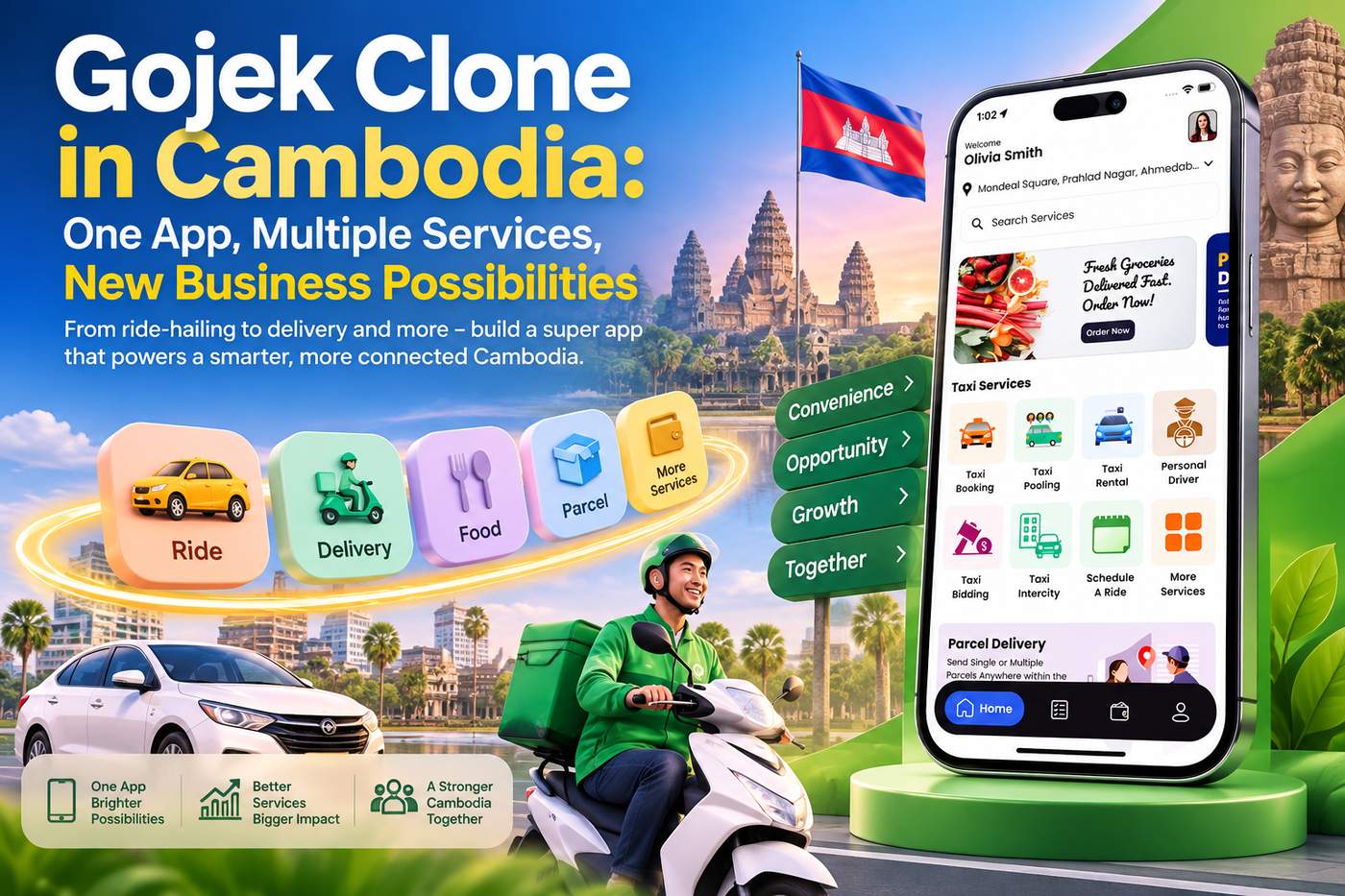
Cambodia’s digital economy is creating interesting opportunities for entrepreneurs who want to build businesses around everyday services. People increasingly use mobile apps to order food, book transportation, purchase groceries, send packages, and access services without making phone calls or visiting multiple businesses.
This shift raises an interesting startup question: What if several of these services could be brought together inside one platform?
That is where the idea of a Gojek clone becomes relevant. Instead of creating an app around only one service, entrepreneurs can use the multi-service concept as a foundation for building a localized digital platform designed around the needs of Cambodian customers and businesses.
Why a Multi-Service Model Makes Sense
Imagine a customer opening one app in the morning to book a ride, ordering lunch from the same platform, sending a package in the afternoon, and getting groceries delivered in the evening.
The appeal is straightforward: fewer apps, one account, familiar payment methods, and a consistent user experience.
For entrepreneurs, the model offers another advantage. Instead of depending on a single revenue stream, a multi service app can potentially connect different service categories and business partners within the same ecosystem.
However, launching such a platform is not simply about putting several services into one application. The real challenge is creating a useful local marketplace where customers, service providers, drivers, restaurants, stores, and delivery partners can all participate.
What Is a Gojek Clone?
A Gojek Clone is a ready-made or customizable software solution inspired by the multi-service platform model. It can provide the foundation needed to create a branded application where multiple on-demand services operate under one digital ecosystem.
The important word here is customizable.
An entrepreneur launching in Cambodia does not necessarily need to copy another company's exact service structure. The platform can be adapted according to local demand, business goals, operating areas, pricing strategies, and available service providers.
For example, an initial version could focus on:
* Ride booking
* Food delivery
* Grocery delivery
* Courier and parcel delivery
* Pharmacy delivery
* Home services
* Local shopping
The business could then introduce additional categories after understanding what customers actually use.
Starting Small Can Be Smarter
One common mistake in multi-service startups is trying to launch everything simultaneously.
A better approach can be to start with a focused set of services and expand gradually.
For example, a Cambodian startup might begin with ride booking and food delivery in one city. Once the platform develops a reliable customer and provider base, grocery delivery or courier services could be introduced.
This approach gives the startup an opportunity to learn from real users before investing heavily in additional categories.
The goal is not to have the longest service list on launch day. The goal is to build a platform that people have a reason to open repeatedly.
How a Gojek Clone App Can Work
A typical Gojek clone app involves several connected parts rather than a single customer-facing application.
Customers need an intuitive mobile experience for discovering services, placing bookings, making payments, tracking orders, and providing feedback.
Service providers need tools for managing requests, availability, pricing, and completed jobs. Drivers or delivery partners need their own workflow for accepting assignments, navigating to locations, and updating trip or delivery status.
Behind these experiences, an administration system helps the business manage users, providers, transactions, service categories, commissions, promotions, and operational activity.
This connected structure is what turns a basic mobile application into a functioning marketplace.
The Role of Localization in Cambodia
A platform that works in one country does not automatically work in another.
For a Cambodian startup, localization should be considered during Gojek clone app development, rather than added as an afterthought.
Language, payment preferences, service availability, geographic coverage, pricing, customer expectations, and local business partnerships can all influence how the platform should operate.
Even something as simple as deciding which services appear on the home screen can make a difference. If a particular category is highly relevant in the target market, it should be easy for customers to discover.
Localization is therefore less about translating buttons and more about adapting the entire business experience to the market.
What About a Gojek Clone Script?
A Gojek clone script can reduce the amount of time required to build the underlying platform from scratch. Instead of developing every component from zero, entrepreneurs can begin with an existing technical foundation and customize it around their business model.
This can be particularly useful for startups that want to test an idea without spending months developing basic marketplace functionality.
But choosing a script should not be based solely on the number of features advertised.
Entrepreneurs should look at factors such as customization options, scalability, security, payment integration, mobile experience, administrative controls, support, and the ability to add new services later.
A ready-made foundation is valuable when it provides flexibility rather than locking the business into a rigid structure.
Where Can Revenue Come From?
A multi-service platform can potentially create several revenue channels.
Depending on the selected services and business model, revenue may come from service commissions, delivery fees, booking charges, subscriptions, promotional placements, or partnerships with local businesses.
The exact model should depend on the economics of each category.
For example, the revenue structure for food delivery may differ from ride booking, while home services may require another pricing approach. A startup can experiment with different models rather than forcing every service into the same commission structure.
The key is to understand whether each category can generate sustainable unit economics after considering customer acquisition, partner incentives, payment processing, support, and operational costs.
Building the Marketplace, Not Just the App
Technology is only one part of the business.
A beautifully designed Gojek clone app will struggle if customers cannot find enough restaurants, drivers, stores, or service providers on the platform.
This creates a classic marketplace challenge: customers want availability, while providers want customers.
A startup can address this by launching in a limited geographic area, building a provider network before expanding, offering incentives where appropriate, and continuously monitoring supply and demand.
Local partnerships can also become an important growth channel. Restaurants, retailers, courier operators, independent drivers, and service professionals can help establish the platform's initial ecosystem.
The Bigger Opportunity
The interesting part of the Gojek model is not simply having many services. It is the possibility of creating a digital ecosystem around everyday activities.
For entrepreneurs in Cambodia, the opportunity could be to take that broader concept and build something specifically suited to local customers.
A startup might begin with two or three services, learn what users actually want, and gradually expand. Over time, the platform could become a convenient destination for multiple everyday needs.
That makes the Gojek clone concept less about copying an existing app and more about using an established technology model as a starting point for a locally relevant business.
The strongest idea may not be the app with the most features. It could be the one that solves a few important problems exceptionally well, earns customer trust, develops strong provider relationships, and expands based on real demand.
For Cambodia's growing digital landscape, that makes the multi-service app model an interesting concept worth exploring.
FAQs
1. What is a Gojek clone?
A Gojek clone is a customizable multi-service application platform inspired by the super-app business model. It can be adapted for services such as transportation, food delivery, groceries, courier services, and other on-demand categories.
2. Can a Gojek clone app be customized for Cambodia?
Yes. A Gojek clone app can be customized according to the target market, including branding, languages, payment options, service categories, pricing models, operating locations, and business requirements.
3. What services can be included in a multi-service app?
Depending on the business model, a multi-service app can include ride booking, food and grocery delivery, courier services, pharmacy delivery, home services, local shopping, and other on-demand services.
4. Is a Gojek clone script suitable for startups?
A Gojek clone script can provide a ready-made technical foundation that startups can customize instead of developing every component from scratch. The suitability depends on the startup's requirements, budget, scalability needs, and desired customization.
5. How should entrepreneurs start Gojek clone app development?
A practical starting point is to identify the most relevant services, target a specific geographic area, understand customer and provider requirements, define the revenue model, and then customize the platform around those needs. Services can be expanded as the marketplace grows.

