
iptv 2026
all in one iptv
What is an IPTV channel, how does it work, and which legal platforms offer them free or cheap? Full 2026 guide with tools, pricing & FAQs.
🚀 Explore the IPTV Channel Guide
🚀 Explore the IPTV Channel Guide
Introduction
Best IPTV is one of the most searched streaming terms today — but most search results either oversell sketchy reseller subscriptions or under-explain the actual technology. This guide breaks it down properly: what an IPTV channel actually is, how the delivery works behind the scenes, which platforms offer them legally (many for free), and how learners, freelancers, and small business owners can use this knowledge practically — without legal or security risk.
By the end, you'll understand the difference between a licensed IPTV channel and an unauthorized one, and you'll have a clear list of legitimate tools and services to explore.
What Is an IPTV Channel?
An IPTV channel is a live or scheduled video feed delivered over the internet using Internet Protocol, instead of traditional satellite, cable, or terrestrial broadcast signals. Rather than tuning into a frequency, your device requests a stream from a server, and the channel plays continuously, just like normal TV.
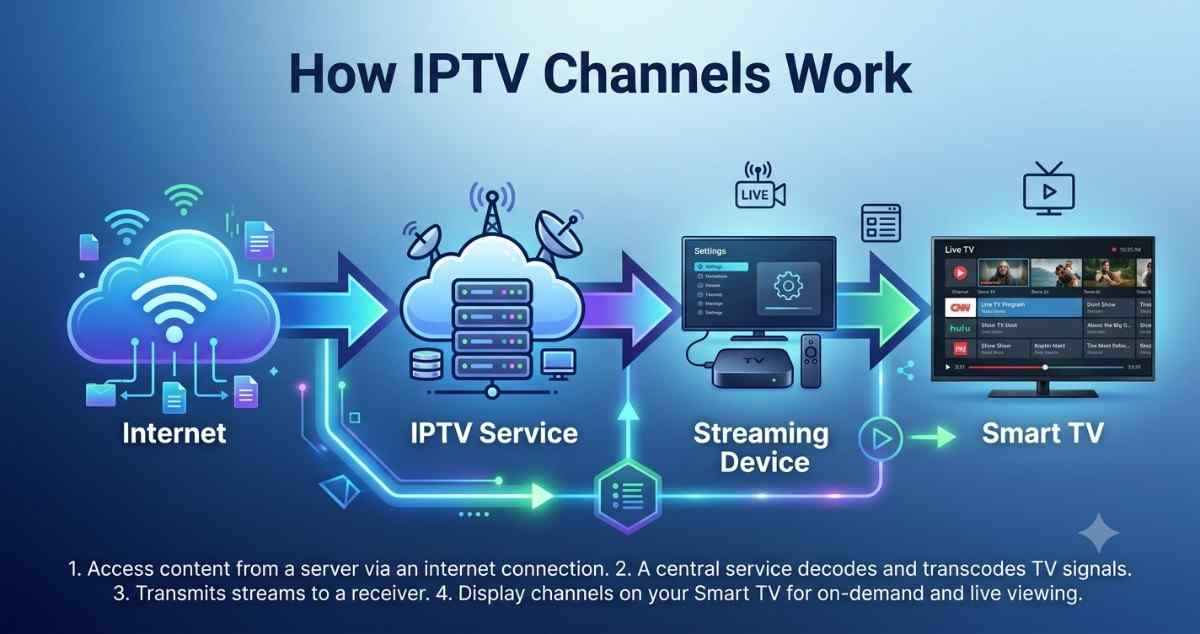
How an IPTV Channel Is Structured
Stream source: The broadcaster encodes live video into a streaming format (usually HLS/M3U8)
Playlist entry: Each channel is listed as an entry in a playlist file, often with a name, logo, and category
EPG data: Many IPTV channels are paired with an Electronic Program Guide showing what's currently airing and what's coming up
Delivery: The channel streams to any compatible player — a smart TV app, streaming box, or mobile app
🚀 Explore the IPTV Channel Guide
Types of IPTV Channels
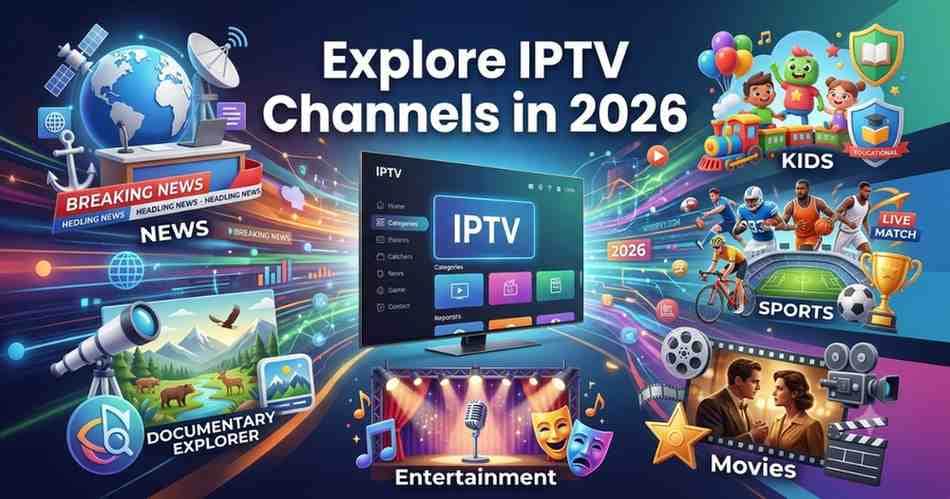
Live linear channels: Continuous broadcast, just like traditional TV (news, sports, entertainment)
FAST channels (Free Ad-Supported Streaming TV): Free, licensed, ad-supported live channels — a fast-growing legal category
Video-on-demand (VOD) channels: Curated on-demand libraries presented in a channel-like format
Private/internal channels: Businesses or institutions streaming their own content internally
Why IPTV Channels Matter in 2026
Traditional cable subscriptions continue declining as viewers shift to internet-delivered TV
FAST channels have become mainstream, with major smart TV brands and streaming platforms now offering hundreds of free, fully licensed live channels
Regulatory crackdowns on unauthorized IPTV channel resellers have intensified across the US, UK, EU, and Australia, making "legal channel sources" a genuine ranking and safety concern for searchers
Smart TVs now ship with built-in apps offering dozens of free IPTV-style channels out of the box
For small businesses, IPTV-style channel delivery has become a low-cost way to run digital signage, internal comms, and branded content loops
Key Benefits of Using Legal IPTV Channels
No hardware required: No satellite dish, no cable box — just an internet connection
Often free: Many legal IPTV channels (FAST channels) cost nothing, supported by ads
Global access: Watch news and content from broadcasters around the world, where licensed
On-demand flexibility: Many platforms combine live channels with replay/catch-up options
Business-friendly: Easy to build custom internal channels for training, signage, or announcements
Lower cost than cable: Even paid legal IPTV bundles are typically cheaper than traditional cable packages
🚀 Explore the IPTV Channel Guide
Are IPTV Channels Legal?
Legal IPTV channels are streams offered directly by licensed broadcasters, official streaming platforms, or FAST channel providers with proper distribution rights.
Illegal IPTV channels are unauthorized copies of premium content (sports, movies, cable networks) redistributed without permission — commonly sold cheaply in bulk "channel packages."
Signs a channel package is unauthorized: extremely low pricing for hundreds of premium channels, no company information, payment only via crypto or informal apps, and no free trial from an identifiable, licensed company.
Safe approach: Stick to well-known platforms (see below) or your national broadcaster's official app.
Top Legal IPTV Channel Platforms & Tools
These are established, licensed platforms offering free or paid IPTV-style channels.
Pluto TV
Free, ad-supported live channels across genres
Owned by Paramount, fully licensed
Available on smart TVs, mobile, and web
Samsung TV Plus
Built into Samsung smart TVs
Free live channels, no account required
Wide international channel availability
Xumo Play
Free ad-supported live channels and on-demand content
Owned by Comcast, backed by licensed content deals
The Roku Channel
Free live channels plus on-demand library
Available on Roku devices and as a standalone app
Tubi TV
Primarily on-demand, with a growing selection of free live channels
Fully licensed, ad-supported model
LG Channels
Built into LG smart TVs
Free live channels curated by region
YouTube (Official Broadcaster Channels)
Many broadcasters run official free live channels directly on YouTube
Fully licensed and regionally available
Comparison of Legal IPTV Channel Platforms
Pluto TV
Channel count: 300+ (varies by region)
Cost: Free
On-demand library: Yes
Device support: Smart TVs, mobile, web, streaming boxes
Samsung TV Plus
Channel count: 200+ (varies by region)
Cost: Free
On-demand library: Limited
Device support: Samsung smart TVs, Samsung phones
🚀 Explore the IPTV Channel Guide
Xumo Play
Channel count: 200+ (varies by region)
Cost: Free
On-demand library: Yes
Device support: Smart TVs, mobile, streaming boxes
The Roku Channel
Channel count: 150+ (varies by region)
Cost: Free (plus premium add-ons)
On-demand library: Yes
Device support: Roku devices, mobile, web
Tubi TV
Channel count: 60+ live channels
Cost: Free
On-demand library: Extensive
Device support: Nearly all smart TVs and streaming devices
LG Channels
Channel count: 150+ (varies by region)
Cost: Free
On-demand library: Limited
Device support: LG smart TVs only
Features to Look For in an IPTV Channel Platform
Regional availability: Channel lineups often vary by country — check before committing
EPG (program guide): Lets you see what's airing now and what's coming up
Multi-device support: Ability to watch on TV, phone, and web with one account
On-demand library: Bonus content beyond live channels
No/low ad interruption: Ad-supported platforms vary in how frequently ads appear
Offline/app-free access: Some platforms allow web playback without installing an app
Parental controls: Useful for family or shared business devices
Search and favorites: Ability to organize and quickly access preferred channels
Pricing Overview
Pluto TV
Price: Free
Notes: Fully ad-supported, no premium tier
Samsung TV Plus
Price: Free
Notes: Exclusive to Samsung devices
Xumo Play
Price: Free
Notes: Ad-supported, owned by Comcast
The Roku Channel
Price: Free + optional premium subscriptions (e.g., add-on channels)
Notes: Premium add-ons priced individually, typically $4.99–$14.99/month
Tubi TV
Price: Free
Notes: Ad-supported, owned by Fox Corporation
LG Channels
Price: Free
Notes: Exclusive to LG smart TVs
Paid licensed IPTV bundles (via official telecom/streaming providers)
Price: Typically $15–$70/month depending on country and channel count
Notes: Offered directly by licensed telecom or streaming companies — always verify official status before subscribing
🚀 Explore the IPTV Channel Guide
Use Cases for IPTV Channels
Cord-cutting households: Replace or supplement cable with free, legal live channels
Freelancers/remote workers: Background news or entertainment channels without a cable subscription
Small businesses: Waiting rooms, lobbies, and break rooms using free ad-supported news/entertainment channels
Learners: Studying media delivery, streaming protocols, and digital broadcasting as a technical or career skill
Startups building media products: Understanding channel structure and EPG data before building a streaming or signage product
International viewers: Accessing region-specific news and content through officially licensed regional apps
Best For
Learners: Understanding how modern TV delivery and channel-based streaming actually works
Freelancers: Low-cost or free background entertainment/news without ongoing subscriptions
Startups & small businesses: Digital signage, lobby displays, and internal channels built on legal, low-cost platforms
Budget-conscious cord-cutters: Anyone wanting live TV-style content without a cable bill
Pros and Cons of IPTV Channels
Pros
Many high-quality legal options are completely free
No hardware installation or long-term contracts required
Wide selection across news, sports (where licensed), entertainment, and lifestyle genres
Easy to access on smart TVs, phones, and computers
Great entry point for learning streaming/media technology
🚀 Explore the IPTV Channel Guide
Cons
Channel lineups vary significantly by country and platform
Free platforms are ad-supported, which some viewers find intrusive
Premium sports and cable-exclusive content generally requires a separate paid, licensed subscription
The market is flooded with unauthorized "IPTV channel" resellers, making it easy for beginners to accidentally choose an unsafe option
Some platforms restrict access to specific device ecosystems (e.g., Samsung TV Plus, LG Channels)
Best Alternatives for Premium & Niche Channels
If free FAST channels don't cover what you need (e.g., premium sports or cable-exclusive networks), these legal alternatives are worth considering:
Official telecom/ISP-provided IPTV packages: Many internet providers now offer their own licensed IPTV bundles
Sports-specific licensed streaming services: Official league or broadcaster apps for live sports
Bundled streaming subscriptions: Many major streaming platforms now include live channel tiers alongside on-demand libraries
Public broadcaster apps: Most countries have a free, official app for national news and public television
Self-hosted setups (Plex/Jellyfin + legal tuner): Combine an antenna-based tuner with a personal media server for a fully legal live TV experience
Future Trends for IPTV Channels
Continued growth of FAST channels, with more media companies launching their own free ad-supported lineups
AI-curated channel recommendations based on viewing habits, integrated directly into smart TV interfaces
Deeper integration into smart TV operating systems, reducing the need for separate apps
Increased regulatory enforcement against unauthorized channel resellers, pushing more users toward verified legal platforms
Interactive and shoppable channels, blending live content with e-commerce features
Expansion of hyper-local and niche channels, catering to specific regions, languages, and interests
Conclusion
An IPTV channel is simply a live TV feed delivered over the internet — and in 2026, some of the best television experiences available are completely free and fully legal, thanks to the rise of FAST platforms like Pluto TV, Samsung TV Plus, Xumo, and Tubi. For learners, freelancers, and small businesses, understanding how these channels work opens the door to smarter viewing choices and even new business applications like digital signage.
Avoid the temptation of cheap, unauthorized "thousands of channels" bundles — they carry real legal and security risks with no guarantees. Stick to recognized, licensed platforms, and you'll get a stable, safe, and often free IPTV channel experience.
FAQ's
1. What exactly is an IPTV channel?
An IPTV channel is a live TV feed delivered over the internet using Internet Protocol, rather than through satellite, cable, or terrestrial broadcast signals.
2. Are free IPTV channels legal?
Yes, when offered by licensed platforms like Pluto TV, Samsung TV Plus, or Tubi. These are legally licensed, ad-supported services — not to be confused with unauthorized channel resellers.
3. What is a FAST channel?
FAST stands for Free Ad-Supported Streaming Television — a category of legal, free live channels supported by advertising instead of subscription fees.
4. Do I need a smart TV to watch IPTV channels?
No. Most legal IPTV channel platforms also offer mobile apps and web players, so a smartphone, computer, or streaming device works fine.
🚀 Explore the IPTV Channel Guide
5. Why are some IPTV channel subscriptions so cheap?
Extremely cheap bundles offering hundreds of premium channels are usually unauthorized and carry legal, security, and reliability risks. Legitimate premium content is priced closer to standard streaming or cable rates.
6. Can I get live sports through legal IPTV channels?
Yes, but usually through dedicated, officially licensed sports streaming services or broadcaster apps rather than free general-entertainment FAST platforms.
7. Do IPTV channel platforms work internationally?
Availability varies by country due to licensing agreements. Always check a platform's regional channel lineup before relying on it.
8. Can small businesses create their own IPTV-style channel?
Yes — many businesses build internal or signage channels using self-hosted tools, streaming their own owned or licensed content in a channel-like format.

Learn what M3U IPTV really is, how it works, legal risks, top legitimate tools, pricing, and safe alternatives. A complete 2026 guide.
🚀 Start Streaming the Legal Way:
🚀 Start Streaming the Legal Way:
Introduction
If you've searched for Best IPTV you've probably landed on dozens of confusing pages — some promising "unlimited channels for $10," others warning you'll get sued for using them. The truth sits in between, and it starts with understanding what M3U and IPTV actually are as technology, separate from how some shady resellers misuse them.
This guide is written for learners, freelancers, and small business owners who want a clear, honest, and practical understanding of M3U IPTV — what it is, how it works, where it's genuinely useful, what's legal, what isn't, and which tools are worth your time and money.
No hype, no shady reseller links — just the facts you need to make a smart decision.
What Is M3U IPTV?
M3U IPTV refers to the combination of two things:
M3U (Moving Picture Experts Group Audio Layer 3 Uniform Resource Locator): a simple, text-based playlist file format that lists the locations (URLs) of audio or video streams.
IPTV (Internet Protocol Television): a method of delivering television content over the internet instead of traditional satellite, cable, or terrestrial signals.
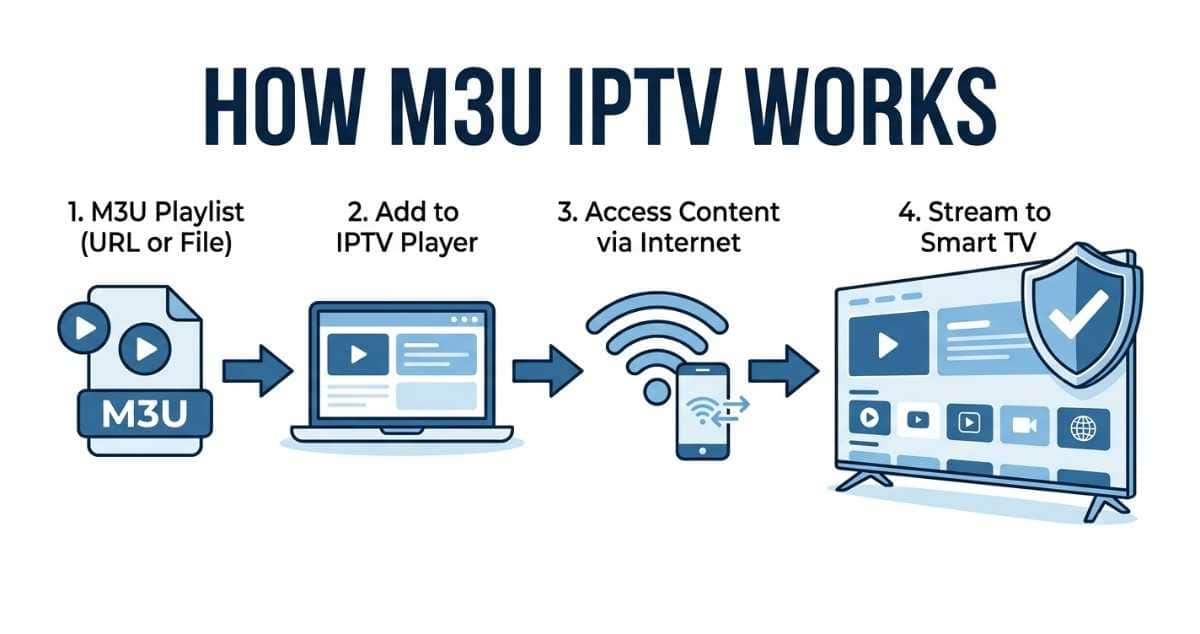
When people say "M3U IPTV," they usually mean using an M3U playlist file to load a list of live TV or video streams into an IPTV player app.
🚀 Start Streaming the Legal Way:
Understanding the M3U File Format
An M3U file is just plain text. It contains:
A list of stream URLs (links to video/audio content)
Optional metadata like channel names, logos, and categories
Sometimes an extended version called M3U8, which supports HLS (HTTP Live Streaming) — the standard used for most modern live streaming
The format itself is completely neutral and legal. It's used by:
Legitimate broadcasters to distribute their own live channels
Businesses running internal training or announcement channels
Media server software like Plex, Jellyfin, and Emby
Podcast and radio streaming apps
How IPTV Streaming Works
At a technical level, IPTV works like this:
A source encodes live or on-demand video into a streaming format (usually HLS or MPEG-DASH)
The stream is hosted on a server and referenced inside an M3U/M3U8 playlist
A player app (on your phone, smart TV, or computer) reads the playlist and plays each stream
Playback quality depends on your internet connection, the server's bandwidth, and the player app
This pipeline is identical whether the content is a legally licensed news channel or an unauthorized copy of a premium sports broadcast — the technology doesn't determine legality; the source of the content does.
Why M3U IPTV Matters in 2026
Streaming continues to replace traditional TV, and IPTV-style delivery is now the backbone of how most video reaches viewers — including legal, mainstream services.
More smart TVs and streaming boxes now support M3U playlist imports natively
Corporate and educational institutions increasingly use IPTV-style delivery for internal broadcasts and training content
Self-hosted media platforms (Plex, Jellyfin) have made M3U-based setups accessible to non-technical users
Regulators and rights holders have significantly increased enforcement against unauthorized IPTV resellers, making "legal vs. illegal" a much bigger consideration for anyone searching this topic
Understanding this tech gives freelancers and small businesses a genuine skill: building lightweight streaming solutions for legitimate use cases
🚀 Start Streaming the Legal Way:
Key Benefits of M3U IPTV Technology (Used Legally)
Flexibility: Works across smart TVs, phones, tablets, and computers without special hardware
Low cost to deploy: No cable infrastructure needed — just a server and internet connection
Customizable: Businesses can build their own private channel lineups
Scalable: Easy to add or remove streams from a playlist
Cross-platform: Most players support M3U/M3U8 out of the box
Great for self-hosted media: Combine your own legally owned content into one unified guide
Is M3U IPTV Legal?
This is the most important section of this guide — please don't skip it.
The M3U format itself is 100% legal. It's just a playlist file.
IPTV as a delivery method is 100% legal. Many mainstream services use it.
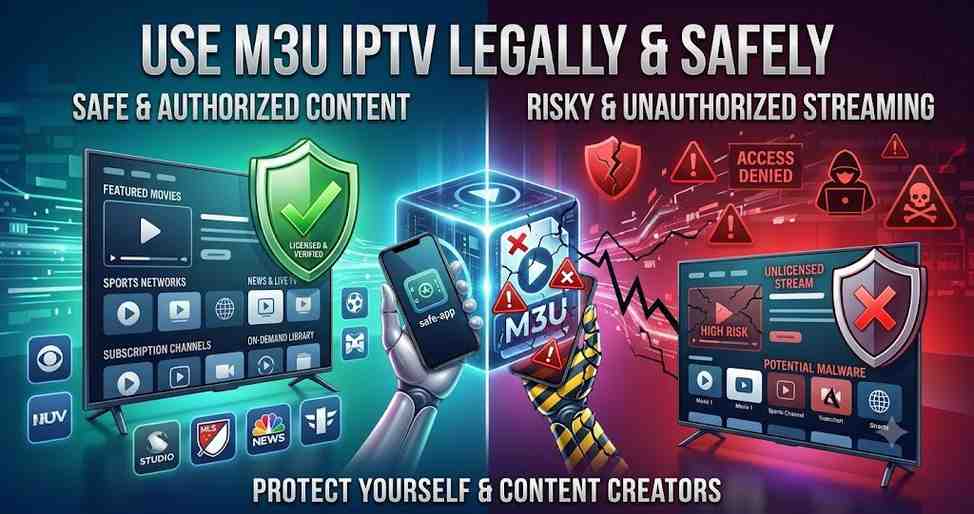
What's illegal is distributing or accessing copyrighted TV channels, sports broadcasts, or movies without a license from the content owner — commonly sold as cheap "IPTV subscriptions" with thousands of channels.
Regulators in the US, UK, EU, Canada, and Australia have actively pursued both sellers and, in some cases, users of unauthorized IPTV services.
If a deal looks too good — "10,000 live channels + every sports package for $15/month" — it's almost certainly unlicensed and carries real legal and security risk (malware-laden apps, payment fraud, no customer protection).
Safe rule of thumb: Only use M3U playlists that come from content you own, a broadcaster's official feed, or a licensed streaming provider's official app.
Legitimate M3U IPTV Players & Tools
These are legal, widely used applications that support M3U/M3U8 playlists. They are players, not content providers — you supply your own legal streams or subscribe to a licensed service through them.
VLC Media Player
Free, open-source, works on nearly every device
Supports direct M3U/M3U8 playlist loading
No account or subscription required
Kodi
Free, open-source media center
Highly customizable with official, legal add-ons
Popular for organizing personal and licensed content
🚀 Start Streaming the Legal Way:
TiviMate
Popular Android TV/Fire TV IPTV player interface
Clean EPG (electronic program guide) support
Requires you to supply your own legal playlist source
IPTV Smarters Player
Cross-platform (Android, iOS, Windows, Fire TV)
Supports Xtream Codes and M3U playlist formats
Content-neutral — legality depends on the playlist source you add
Plex
Turns your own media library into a personal streaming service
Supports Live TV via HDHomeRun tuners and legal M3U feeds (e.g., free ad-supported channels)
Jellyfin
Free, open-source alternative to Plex
Fully self-hosted, no data sharing
Supports M3U tuner integration for legal live TV sources
Emby
Similar to Plex/Jellyfin with a paid premium tier
Live TV support via legal M3U/tuner sources
Comparison of Popular IPTV Players
VLC
Best for: Quick playback of any M3U link
Platform support: Windows, Mac, Linux, Android, iOS
EPG support: No
Cost: Free
Kodi
Best for: Full home media center setup
Platform support: Windows, Mac, Linux, Android, Fire TV
EPG support: Yes (via add-ons)
Cost: Free
TiviMate
Best for: Android TV/Fire TV users wanting a polished UI
Platform support: Android TV, Fire TV
EPG support: Yes
Cost: Free tier + paid premium
IPTV Smarters Player
Best for: Cross-device flexibility
Platform support: Android, iOS, Windows, Fire TV, Smart TV
EPG support: Yes
Cost: Free
Plex
Best for: Personal media libraries + limited live TV
Platform support: Nearly all devices
EPG support: Yes (with tuner)
Cost: Free + Plex Pass subscription
Jellyfin
Best for: Privacy-focused, fully self-hosted setups
Platform support: Nearly all devices
EPG support: Yes (with tuner)
Cost: Free, open-source
Features to Look for in an M3U IPTV Player
Playlist import options: URL link, local file upload, or auto-refresh
EPG (Electronic Program Guide) support: Shows schedules and channel info
Multi-device sync: Especially useful for freelancers/small teams managing content across devices
Catch-up/replay support: For time-shifted viewing of licensed content
Parental controls: Important for family or business shared devices
Custom channel groups/favorites: Helps organize large playlists
Low buffering/adaptive bitrate: Ensures smooth playback on variable internet speeds
Cross-platform availability: Especially important for teams using mixed devices
Pricing Overview (Legitimate Tools)
VLC
Price: Free forever
Notes: Open-source, no ads, no account needed
Kodi
Price: Free forever
Notes: Community-supported add-ons
TiviMate
Price: Free basic / ~$5–20/year premium
Notes: One-time or annual license for premium UI features
IPTV Smarters Player
Price: Free
Notes: Optional in-app purchases for extra features
Plex
Price: Free / Plex Pass ~$4.99/month or ~$39.99/year or lifetime ~$119.99
Notes: Live TV requires a compatible tuner
Jellyfin
Price: Free, open-source
Notes: Self-hosting costs depend on your own server/hardware
Emby
Price: Free / Emby Premiere ~$4.99/month or ~$54/year
Notes: Extra features like hardware transcoding on paid tier
Note: These prices reflect the software/player only. Licensed live TV content requires a separate subscription to an authorized broadcaster or streaming service.
🚀 Start Streaming the Legal Way:
Use Cases for M3U IPTV
Personal media hub: Combine your own recorded content and legal free-to-air channels in one interface
Small business displays: Loop internal announcements, training videos, or promotional content on lobby screens
Freelance video editors/creators: Preview and organize client-supplied video assets via playlists
Educational institutions: Distribute recorded lectures or approved educational broadcasts internally
Hotels/gyms/waiting rooms: Stream licensed ambient content (news, music channels) through official provider apps that support M3U delivery
Developers/learners: Practice building and testing streaming pipelines using free, legal test streams
Best For
Learners: Understanding streaming protocols, HLS, and playlist-based media delivery as a technical skill
Freelancers: Building lightweight client demo players or managing personal media libraries
Startups & small businesses: Deploying low-cost internal video/signage solutions without expensive hardware
Cord-cutters: Organizing legally free or subscribed streaming sources into one player
Pros and Cons of M3U IPTV
Pros
Lightweight, flexible, and works across almost any device
Very low cost when built on free, open-source tools
Easy to customize and scale for personal or business use
Strong ecosystem of legal players and self-hosting platforms
Valuable technical skill for freelancers and developers
Cons
Widely misused by unlicensed IPTV resellers, creating legal risk for uninformed users
Free/pirate playlists often carry malware or unstable streams
No customer support or guarantees with unauthorized services
Quality depends heavily on the source stream and your internet speed
Setting up EPGs and organizing large playlists can be technical for beginners
🚀 Start Streaming the Legal Way:
Best Legal Alternatives to Unlicensed IPTV Services
If your goal is affordable live TV without legal risk, these are legitimate, licensed alternatives:
Official broadcaster apps (news, public TV, regional channels with free ad-supported tiers)
Licensed live TV streaming bundles offered directly by major streaming platforms in your country
Free ad-supported streaming TV (FAST) channels, which legally distribute content via HLS/M3U-style delivery
Plex/Jellyfin + HDHomeRun tuner, combining your own antenna signal with a self-hosted guide
YouTube and official broadcaster live channels, many of which are free and fully licensed
Future Trends in IPTV & M3U Streaming
Wider adoption of FAST channels as broadcasters embrace ad-supported, free live streaming
AI-powered content recommendations integrated into self-hosted media platforms like Plex and Jellyfin
Stronger enforcement against unlicensed IPTV resellers, pushing more users toward legal alternatives
Improved native M3U/HLS support in smart TVs, reducing the need for third-party apps
Growth of hybrid setups combining personal media libraries with licensed live content in one interface
Increased use of IPTV-style delivery in business and education, especially for internal training and communication
Conclusion
M3U IPTV isn't inherently good or bad — it's a flexible, well-established technology for delivering video over the internet. The real question isn't "is M3U IPTV legal," but "where is the content coming from." Used with your own media, official broadcaster feeds, or licensed subscriptions, M3U-based IPTV players like VLC, Kodi, Plex, and Jellyfin are powerful, low-cost tools for learners, freelancers, and small businesses alike.
Steer clear of cheap, unlicensed "all-channels" IPTV subscriptions — they carry real legal, financial, and security risks. Instead, invest a little time in setting up a legal, self-hosted, or officially licensed solution, and you'll get a stable, safe, and genuinely useful streaming setup.
FAQ's
1. Is M3U IPTV illegal?
No — the M3U file format and IPTV delivery method are legal technologies. Illegality comes from streaming copyrighted content without a license, which is common among cheap unauthorized IPTV resellers.
2. What's the difference between M3U and M3U8?
M3U is the original playlist format; M3U8 is the UTF-8 encoded version used specifically for HLS live streaming, which is the modern standard for most IPTV content.
3. Can I build my own legal IPTV setup?
Yes. Combine tools like Plex or Jellyfin with a legal HDHomeRun tuner or officially licensed free-to-air streams to build a fully legal personal IPTV system.
4. Do I need special hardware to use an M3U IPTV player?
No. Most players like VLC, Kodi, and IPTV Smarters run on phones, computers, smart TVs, and streaming boxes you likely already own.
🚀 Start Streaming the Legal Way:
5. Are free M3U playlists safe to use?
Free playlists from unknown sources are risky — they can include malware, broken streams, or unlicensed content. Stick to official broadcaster sources or your own legally owned content.
6. What is an EPG in IPTV?
An Electronic Program Guide (EPG) shows a schedule of what's airing on each channel, similar to a traditional TV guide, and is supported by most modern IPTV players.
7. Which IPTV player is best for beginners?
VLC is the simplest starting point for testing M3U playlists, while TiviMate or IPTV Smarters offer a more polished interface once you're ready for a permanent setup.
8. Can small businesses use IPTV for internal use?
Yes — many businesses use M3U-based systems for lobby displays, training content, and internal announcements, which is a fully legal and cost-effective use case.
Comment