
PainBase
Find Startup Ideas People Are Already Asking For
I have a notes app full of startup ideas and no way to tell which one is worth three months.
The usual advice - "find a problem people have" - never got me past that. Neither did competitor research, which for me meant two days of Googling and a spreadsheet that ended in a vibe: "seems crowded" or "probably nothing there." Both are just the feeling of not having numbers.
So I built the filter I wanted. Here it is, concretely enough that you can run it yourself with any revenue dataset.
The four filters
I have monthly revenue for 2,232 indie startups. I grouped them into 535 real sub-niches - not "AI," which is useless, but "AI video editing," "backlink platforms," "specialized developer APIs." Then:

535 → 13. That last step is the brutal one - 84 down to 13 - and it's why "low competition" on its own is a trap. Plenty of markets have no leader because there's nothing there to lead.
Worth staring at: 171 of the 323 markets are flat or shrinking. Over half. And the most fragmented markets in the whole dataset - leader holding 7–13% - are almost all AI, and almost all flat. Twenty companies splitting $7k/month is not an opportunity, it's twenty people who all read the same Twitter thread.
The 13

Notice these are small. $35k/month across six companies is invisible to a funded team and life-changing to one person. That's the point of the size floor being $20k and not $2M.
How to actually read one of these
Take "Organic Search, Backlink & PR" - 9 companies, $165k/month, leader holds 38%, median growth +36%. Drill into the companies and it stops being a market and starts being a situation:
The leader is losing a third of its revenue while #3 compounds at +610% and closes on #2. That's not a stable market with an incumbent - that's a market actively changing hands right now.
That's the read that took me two days of Googling before and takes 30 seconds now.
What I'd do next with that row
1. Sign up for all 5. Note pricing and where each one is clunky.
2. Find why Presscart is bleeding - churn, pricing, an outage, a Google update. That reason is either your wedge or your warning.
3. Search the pain-point feed for what their customers actually complain about, and check whether it's the same thing killing #1.
4. Only then decide if you want to spend a year on backlinks.
Market → companies → complaints. I had that backwards for years: fall in love with an idea, then hunt for a market to justify it. That's how you build something nobody was going to pay for.
Two things worth stealing if you build this yourself
Verify your data source by hand before you build on it. The revenue API I use documents a money field ambiguously - read wrong, a company doing $35/subscriber looks like it's doing 35 cents. I only caught it by checking one company I could verify manually. Two of its own doc pages also disagree on whether a growth field is a percentage or a decimal.
Put a revenue floor on any growth ranking. My first "fastest growing" list opened with a company at +1,218,899%. That's $1 → $12k. Sorted descending, a percentage column is just a list of rounding errors.
All 535 markets are live on PainBase now, filterable by every column above, with the companies inside each one. The pain-point feed that was already there is now step 3 instead of step 1.
If you're stuck choosing between ideas right now: reply with the space you're looking at and I'll pull its leader share, size and growth.


I’m curious how other indie hackers are doing this right now.
Do you:
post in communities
scrape Reddit or X
run outbound
use ads
wait for people to come to you
I’ve been thinking a lot about how much faster it is when you can find people already talking about the problem you solve.
That’s the whole idea behind PainBase. It helps you spot real pain points and high-intent users from startup communities, so you’re not guessing where demand is hiding.
I’m asking to improve the lead generation feature on PainBase, which is now finding warm leads on Reddit, Indie Hackers, Hacker News, Devto, and Lobsters.
Would love to hear your method. What’s actually worked best for you?
Most founders build first, validate never. I did that twice. Third time I flipped the order.
PainBase started as a personal script: crawl Reddit, HN, Dev.to, X, Lobsters and Indie Hackers, pull complaints, score them by severity vs how many solutions already exist. If people are angry and nothing solves it, that's a gap.
I turned the script into a product. 4 months later, here's what it does now:
- AI Pain Point Reports: pick a niche, get a structured report with source-backed complaint links (no hallucinated "trends", every pain point links to the actual post)
- Real-time pain point feed so you catch complaints as they happen
- Competitor deep analysis: what users hate about existing tools in your space
- One-click MVP landing page builder (HTML export) so you can test demand same day
- New: real-time lead gen with Telegram alerts. It scores buying intent from live community posts and pings you before those leads get discovered elsewhere
What I learned building this:
1. Severity beats volume. 50 mild complaints < 5 people saying "I would pay to make this stop"
2. Solution availability is the filter everyone skips. High pain + crowded market = still a bad idea
3. The complaint IS the marketing copy. Users literally write your landing page headline for you
Pricing is a one-time Founder Pass at $29 (goes to $49 after launch), includes 25 AI research credits refilled monthly. No subscription.
Try it: painbase.space
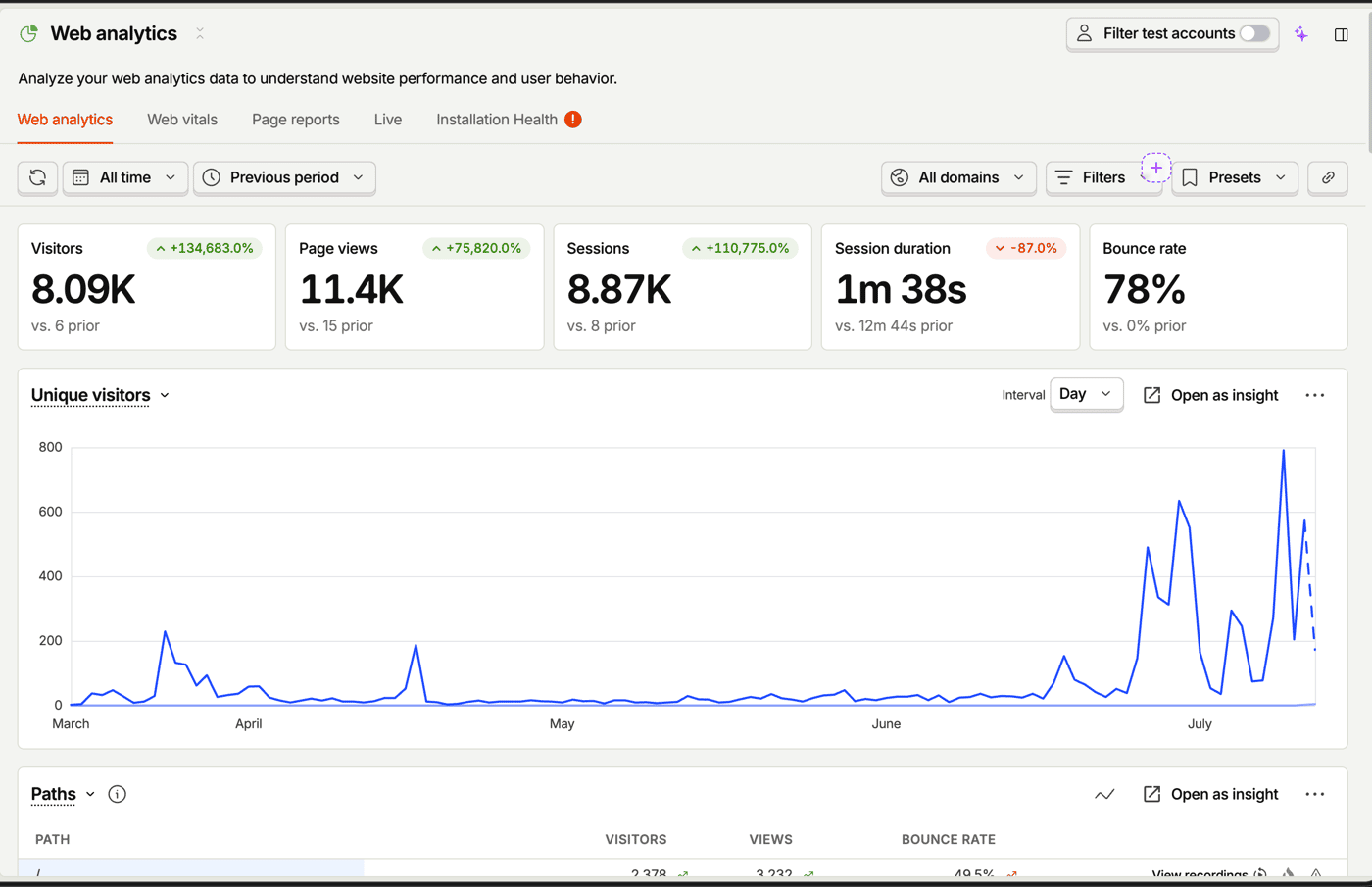
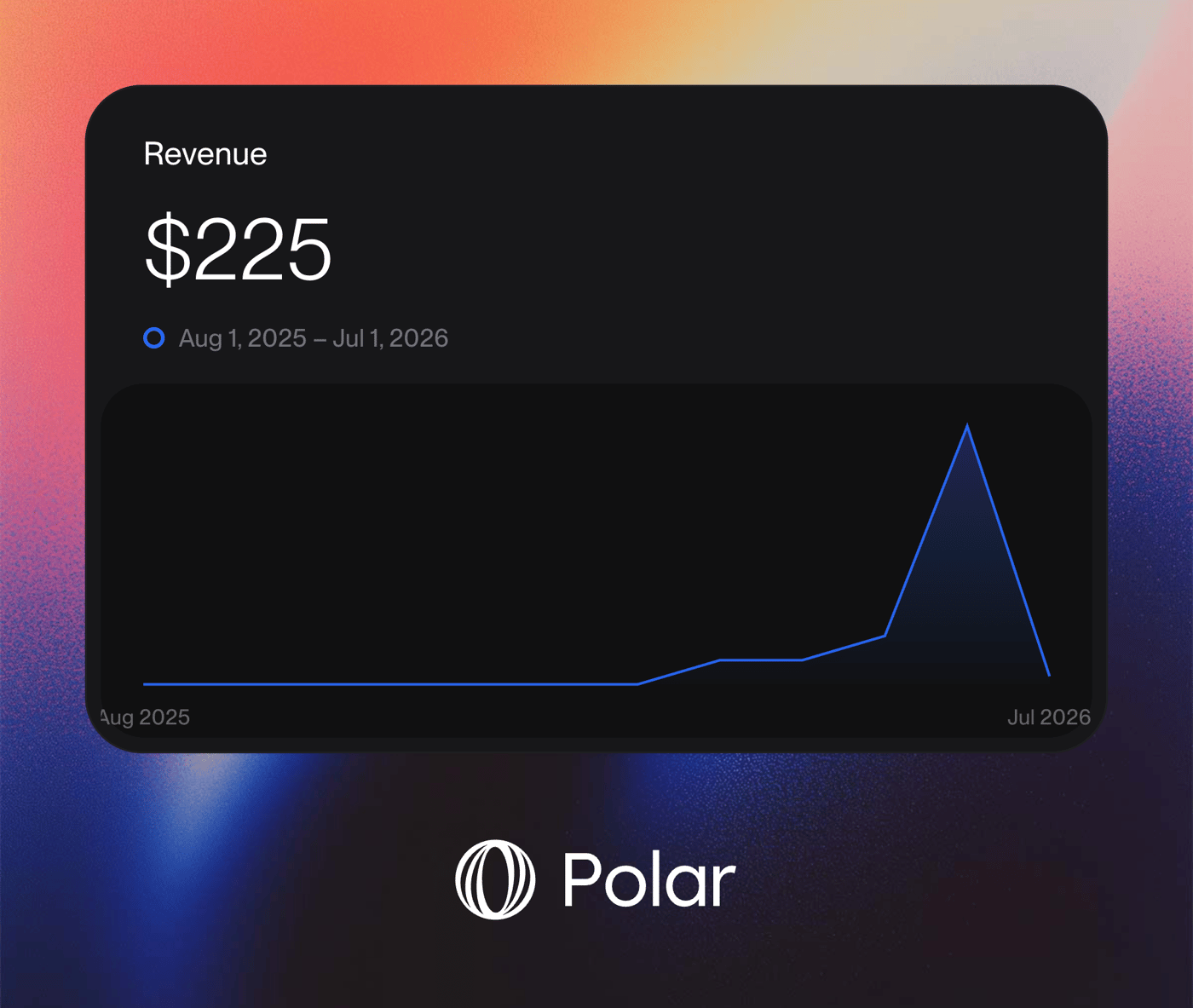
Not a hockey-stick chart.
Not a “we hit product-market fit” post.
Just an honest checkpoint from building PainBase.
Here’s what I’ve learned so far:
- Traffic is easier than traction.
- “Interesting” pain points are cheap.
- Verified pain points are rare.
- Founders don’t need more ideas — they need a faster way to spot the ones worth betting on.
The biggest shift for me was realizing that validation is not really a research problem.
It’s a signal problem.
If you dig through Reddit threads, Indie Hackers posts, and founder communities by hand, you can spend hours. You may still walk away unsure.
That’s why I built PainBase.
It helps surface real pain points, score buying intent, and turn noisy community chatter into something you can actually act on.
Not magic.
Just a better signal-to-decision loop.
And honestly, that’s been the whole game for me:
Find a real problem, validate it faster, move before the market gets cold.
If you’re a founder trying to figure out what to build next, don’t ask, “What idea sounds good?”
Ask, “What problem is already begging to be solved?”
That question has saved me a lot of wasted time.
And probably a few bad launches too.
If you want to see the tool I’m using to do this, it’s at painbase.space.
-
1
Alright let me help you here, send me your website link and your email I'll look into the traffic conversion issue and send you the exact fixes and additions you need to overcome this. It is free.
-
1
I like seeing posts like this one showing that sometimes things just take time but worth waiting on. I too have a new tool and so far no traffic but I know its still new so seeing posts like this helps me more than you would think to get me to keep digging in and have patience and trust that time will make the difference for me. Thank you for posting this. And personally I think painbase is a great idea! definitely cuts out alot of the tedious research work.
-
1
Really appreciate this honest breakdown.
I'm on day 20 of my first product. 0 visits. 0 subscriptions.
Not gonna lie — I'm lost right now.
Seeing your numbers — 4 months, 8k visitors, $225 in revenue — it puts things in perspective. I know I have a long way to go. But this post at least tells me I'm heading in the right direction.
"Traffic is easier than traction" — saving that one. I don't even have traffic yet, so I guess I'm still at step zero.
These honest checkpoint posts are more valuable than 90% of the "we raised $X million" threads. At least they make me feel like I'm not just spinning my wheels — I'm just not at the inflection point yet.
Thanks for sharing this. Please keep building in public. People are watching.
-
1
Usually first 2-3 months are only for google to index your pages so dont be upset. If this can help you, what I do to ensure mi web is maximizing SEO and all stuff is giving claude access to the repo where I have the web so he can analyze it and tell me what to improve (title lenght, metadata, lenguages…) you could try simething like that, even when you think everything is okay there is always simething to improve. Also take unto account that the changes you might di after claude’s feedback will be visible in terms of traffic in some days or weeks, not instantly
-
2
This is genuinely helpful — thank you for taking the time to write this out.
The SEO timeline perspective is actually reassuring. I keep checking analytics like something should be happening on day 21, and knowing that the first 2-3 months are just indexation puts my expectations in the right place.
And giving Claude access to the repo — that's a great idea. I've been using it for coding, but I never thought to use it as an SEO auditor. I'm definitely trying this.
Thanks again. This thread has been more useful than any "growth hack" article I've read.
-
-
-
1
Really like how you're sharing the actual numbers instead of just saying things are "growing." Posts like this are a lot more useful for other founders. I curious, looking back over these four months, what ended up driving the biggest jump in traffic? Congrats on the progress, and looking forward to seeing where PainBase goes next.
-
1
this is a great way for buiders to discover the demand of the type of product they are building without spending days or weeks digging on reddit or other platforms. i personally think it is a great idea.
The concept of scoring buying intent from raw community chatter is a massive value prop.Quick question on how PainBase handles the signal-to-noise ratio under the hood: How are you currently weighing or scoring that "buying intent"? Is the algorithm looking for specific high-value phrases (e.g., "I currently pay $X for this but it sucks" / "I'm wasting 10 hours a week on this"), or is it relying more on broader sentiment analysis?


Same startup idea.
Two very different answers.
Gut feel:
“This seems promising.”
“I know people complain about this.”
“Could be a big market.”
“Worth building.”
PainBase validation:
Real people are actively expressing the pain
The problem shows up across multiple communities, not just one loud thread
The demand is specific enough to target
The idea has a clearer shot at converting before you spend weeks building
That gap matters.
Because gut feel is fast, but it’s also how founders end up burning runway on “interesting” ideas that never turn into a real business.
PainBase is built for the opposite: validate first, build second.
You can:
pull real pain points from authentic communities
score the opportunity before you commit
research competitors in minutes
turn the signal into a launchable MVP page fast
That’s not just research.
It’s a decision upgrade.
And if you’re operating with limited runway, the safer bet is obvious: follow the signal, not the vibe.
Explore PainBase if you want to start validating startup ideas with real market data: painbase.space
PainBase just launched the new Lead Generation feature, which automatically extracts targeted prospects directly from discussions happening on:
- Hacker News
- Devto
- Indie Hackers
- Lobsters
When something seems relevant, it sends me a Telegram alert

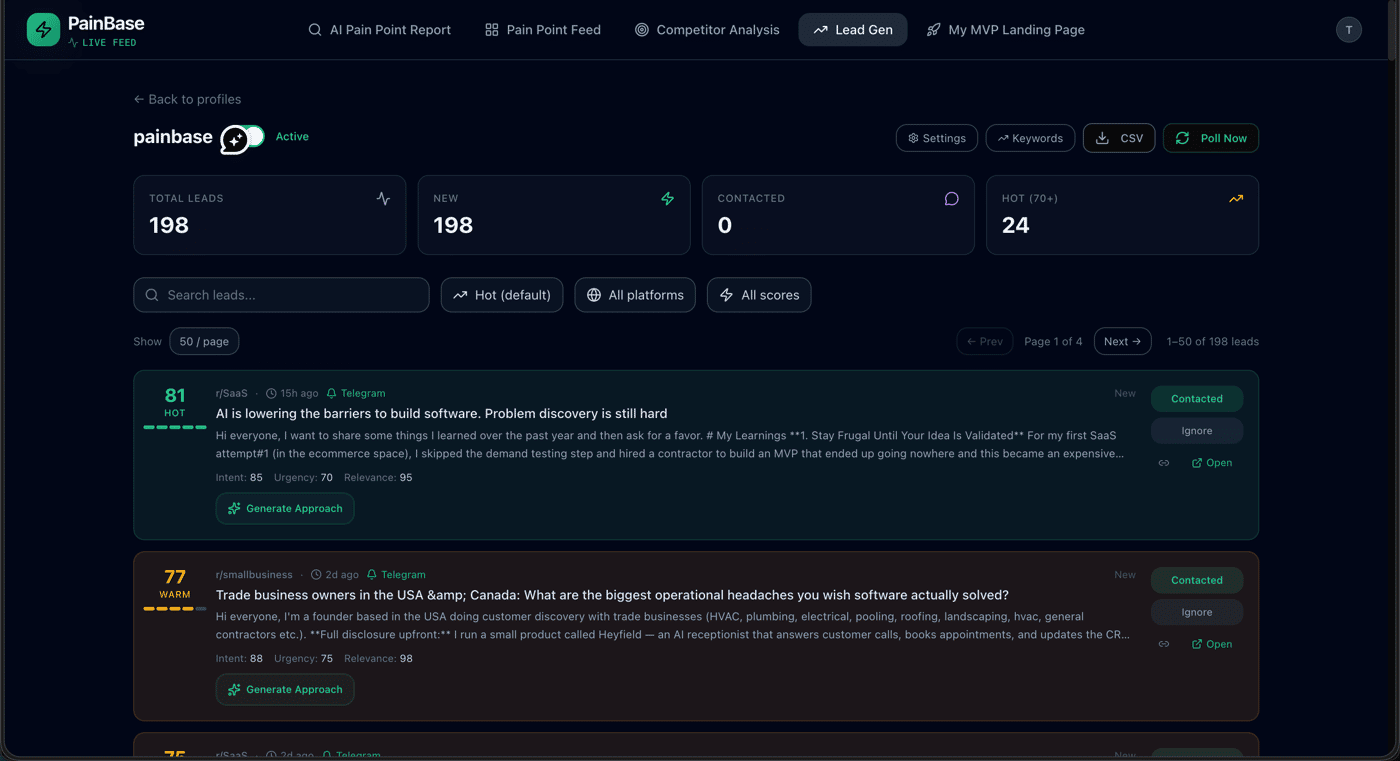
PainBase just launched the new Lead Generation feature, which automatically extracts targeted prospects directly from discussions happening on:
- Hacker News
- Devto
- Indie Hackers
- Lobsters
When something seems relevant, it sends me a Telegram alert
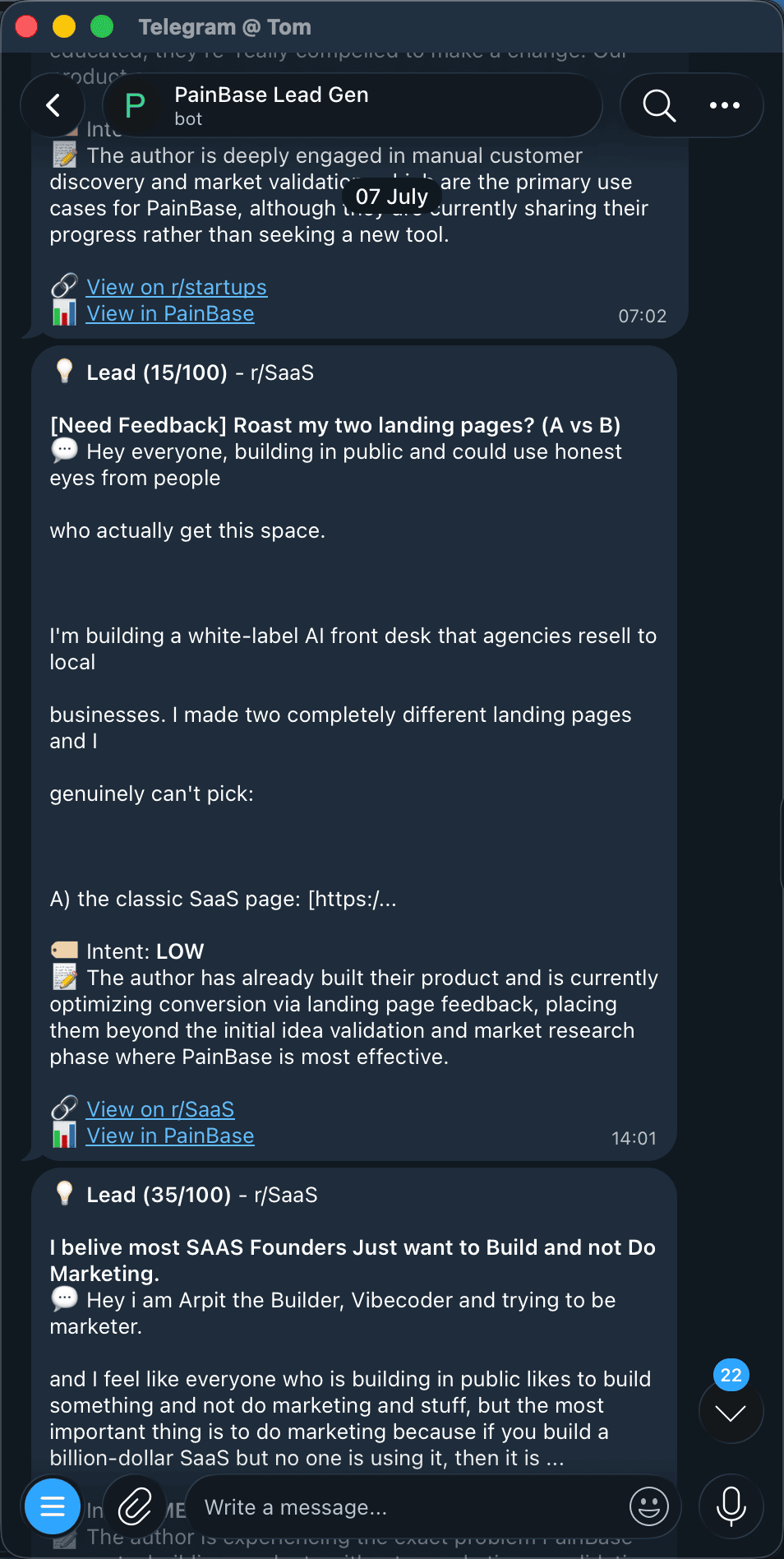

I built something I thought people wanted. Shipped it. Posted in a few places. Got 70 visitors over several months. Zero customers.
The wake-up call was realizing my future users were already online describing the exact problem I solved. They just weren't on my landing page. They were on Reddit, Hacker News, Devto, Indie Hackers, and Lobsters.
Go find those conversations.
Pick 5-10 keywords that describe the pain. Not your product name, the problem itself. If you built an email tool, search "inbox overwhelmed" or "send emails faster," not your brand.
Search those keywords across communities. Reddit, Hacker News, Devto, Lobsters,... Filter to the last 7 days.
Look for buying signals in the posts:
- "Is there a tool that..."
- "I'm looking for..."
- "Currently using X but..."
- "How do you guys handle..."
- "Tired of..."
- "Alternative to..."
Reply to their posts. Ask what they're struggling with. Share what you've learned. If your product fits, mention it naturally. "I built something for this exact problem."
This got me my first users. Real conversations, real feedback.
The problem was time. I spent 1-2 hours daily searching, reading, filtering. I missed posts someone wrote at 3am about my exact problem space.
I created Painbase to take care of the scanning process. It monitors those communities on a set schedule. It applies AI to rate every post as either a buy signal or simple venting. When something seems relevant, it sends me a Telegram alert. It also recommends a response.
I still do the manual method when I have time. The tool just means I only spend time on conversations that matter.
You don't need any tool to start. Pick your keywords, set a timer for 30 minutes, read what people are saying right now.
What communities have given you the best leads? What keywords surfaced the most conversations for your product?
-
2
I like that your pricing research changed your product thinking instead of just your pricing.
The interesting shift is from asking "What features are missing?" to "Where does the user's job actually end?" If distribution is where people still leave your product to finish the workflow, that's a much stronger place to focus than matching competitors feature for feature.
-
1
Yeah, that's the part that changed everything for me. I was looking at my feature roadmap trying to figure out what to build next, and realized I was just copying what competitors had. The real gap was watching users export data from my tool and then go spend 20 minutes in a spreadsheet finishing the job
-
1
Glad it resonated.
Your reply made me think there's one strategic decision sitting underneath that shift which becomes much more significant as the product grows, but I don't think I can explain the reasoning properly in a thread without oversimplifying it.
If you're interested, what's the best email to reach you on?
-
-

PainBase just became your all-in-one founder starter kit.
Before:
Find software ideas, validate them, and generate landing pages.
Now adding:
Find the exact people who need you to build it.
The new Lead Generation feature automatically extracts targeted prospects directly from discussions happening on:
- Hacker News
- Devto
- Indie Hackers
- Lobsters
Stop switching across five different platforms.
PainBase now does it all: Idea → Validation → Customers.
Build and grow in one place 👉 painbase.space
For a long time, I searched for startup ideas the same way most founders do:
AI idea generators
“100 SaaS ideas” lists
Product Hunt launches
Trend reports
I’d find an idea, get excited, spend weeks building it, then realize nobody really wanted it.
Eventually, I realized something:
The problem wasn’t my execution.
The problem was that I was starting with ideas instead of demand.
So I changed my approach.
Instead of looking for startup ideas, I started looking for complaints.
Because every complaint is evidence that:
A problem exists
Someone cares enough to talk about it
Someone is spending time, money, or effort dealing with it
Over time, I developed a simple framework.
Whenever I find a complaint, I ask 4 questions:
1. How often does this complaint appear?
One person complaining isn’t interesting.
Fifty people complaining about the same thing is.
Patterns matter more than opinions.
2. Are people already trying to solve it?
I look for:
Spreadsheets
Manual workflows
Workarounds
DIY solutions
Workarounds are one of the strongest demand signals.
People rarely build complex workarounds for problems they don’t care about.
3. Are people willing to pay?
I look for phrases like:
“I’d pay for this.”
“What’s the best tool for…”
“Is there software that can…”
“How are you solving this?”
Those signals are worth more than likes or upvotes.
4. Who already serves this market?
A lot of founders avoid markets with competitors.
I do the opposite.
Competitors usually mean customers exist.
The question isn’t whether competitors exist.
The question is:
What’s missing?
The process works.
But doing it manually is painfully slow.
You end up spending hours reading Reddit threads, reviews, forums, and social media discussions, then even more time researching the market and competitors.
That’s why I built PainBase.
I wanted a tool that could help me:
Discover real user pain points
Generate AI research reports
Analyze competitors
Validate opportunities faster
The goal isn’t to generate startup ideas.
The goal is to discover demand.
So the next time you’re looking for a startup idea, don’t ask:
“What should I build?”
Ask:
“What are people already struggling with?”
That’s where the best opportunities usually start.
-
2
Hey, thanks for the great article!
I would just suggest a slight shift in perspective: instead of looking for "pain," it might be even better to look for a "need," or specifically a "job" (as in the Jobs-to-be-Done framework). At the core, there is a job and there is a solution. "Pain" only really appears when the current solution does a crappy job of handling the user's job. So the "job" is actually what comes first.
And I 100% agree with the point about validating willingness to pay. Asking "Would you pay for this?" is a trap. Asking "How much have you spent on your current way of solving it?" is where the real truth is. This exact trick is broken down perfectly in the classic book The Mom Test. I highly recommend it!
-
2
That's an amazing business idea. Business today need to find where they should focus to get better results and more customers who can continuously engage with your product/ service. Discovering the pain points is creative idea.
-
1
Thank you! Yeah, the main purpose of the app is to help founders understand customer and focus on the problem their customer facing
-
-
2
One thing that could make this much stronger is showing a “proof of business” layer, not just proof of pain, e.g., which pain points already have buyers actively paying for clunky workarounds.
-
1
Yes, I agree. That’s the genuine demand people are already prepared to pay for. Painbase has AI-driven competitor analysis for that, evaluating competitors by identifying their strengths and weaknesses in detail
-
-
2
This is the way! Taking your ego out of it and empathizing with others pain before you solution is the first step in the right direction. Quantifying it and rating urgency and willingness to buy are where a lot of people lose the thread and don't index high enough. Would be curious to see how PainBase does that.
-
2
Interesting!
-
2
Interesting space.I think we're entering an era where building is cheap but validation is expensive. A few years ago founders struggled to build. Now founders struggle to decide which of 100 ideas is worth building. The challenge isn't finding pain anymore. It's ranking pain by willingness to pay. That's the signal I'd pay for.
-
2
One extra filter I like here: look for a workaround with an owner.
A lot of complaints are real but still too vague to build around. If I can write "this kind of person is currently solving this by doing X, and it costs them time or money," the idea feels much more concrete. If I can't fill in that sentence, I usually keep researching instead of building.
-
2
This is exactly why I'm spending time in Reddit communities before building products.
I'm trying to find problems people complain about repeatedly rather than starting with a random idea.
Have you found any specific communities that consistently surface high-quality problems?
-
2
One of the biggest problems nowadays is TIME... The tool that manages to save time on repetitive tasks is halfway to success, but only if it delivers value and something that really works in a simple and user-friendly way. Yes, that's a great help, but then the problem still needs to be validated through the Landing to test the value proposition. The real validation of the solution only happens when these frustrated users enter their credit card details or actively use an MVP. Do you have plans to automate posts about a solution, our solution/Landing provided or another from which this data was extracted, in a way that is not considered spam? This would be invaluable and would be much closer to a NO-BRAINER product...
CONGRATULATIONS and may you continue the good work.
-
1
Great, thanks for the compliment!
Yeah, you’re right, some complaints are just noise if people are not willing to pay for the solution. So now I’m summarizing recurring complaints and conducting competitor analysis, including negative reviews, to identify real demand rather than noise.
-
-
2
This really resonates. While building our product, the most valuable insights came from talking directly to sellers. We spent hours on calls understanding how they worked, what frustrated them, and the hacks they had created to get around those problems. Some of our best features came straight from those conversations, not from brainstorming sessions.
-
1
Tbh that's the best way! Understanding the users is the first step to making a solution for them
-
-
2
The workarounds point is the one that stuck with me. people duct taping spreadsheets and manual processes together is such an underrated signal, way stronger than someone just going "cool idea." if theyre already burning time on some janky workaround the demand is basically proven.
Ive been living in reddit threads lately for a project and you can feel the difference between "that'd be neat" and "I literally do this annoying thing every week and hate it." the second one is gold.
-
1
Totally agree. Knowing that users already have an ugly solution means that's the real demand, not just noise complaints
-
-
2
This is great, i love the approaches
-
1
great thanks🙏 glad you love it
-
-
2
This is great, i love the approaches
-
2
This is so interesting. My main question is how do you separate real demand from the noise? Also, does it capture issues that are not a problem yet but could be soon?
-
1
Really good question tbh. I also do competitor analysis to see what users already pay for.
For the thing that not problem yet, but could be in the near future. That's great suggestion, my app Painbase didn't have that yet, but I think that is a cool feature. I'm thinking about making a predictive logic for that. Maybe trending topic content and user complaints combined might be the answer. I need to think about this. Great thanks!
-
-
2
This is a solid framework. The “workarounds as demand signal” point is especially underrated.
-
2
The framework is solid. The trap I'd flag from years of selling B2B software: the person who complains loudest is often not the person who signs the check. End users vent about a broken workflow all day, but the budget usually sits with someone two levels up who never feels that exact pain. I burned real time early on building for the loudest voice instead of the buyer. When you mine complaints at scale, it's worth tagging not just how often a pain shows up, but who feels it and whether that person controls spend. A frequent complaint from people with no budget authority is a clean way to build something everyone loves and nobody pays for.
-
1
Thank you for sharing your experience! Yeah, pain is just noise sometimes when people aren't willing to pay.
I also do competitor analysis to find their weaknesses and review their negative feedback to understand user pain points. How do you separate casual complaints from real demand?
-
-
2
power_house
-
2
I like this framing.
One thing I’d add: a good pain signal is when people already tried 2-3 different solutions and still complain about the same problem.
At that point it’s probably not just “interesting”, it’s something they actively want fixed.
-
1
totally agree with that, I also do competitor analysis and check their weaknesses by checking their negative reviews
-
-
2
This is a strong way to think about it.
One thing I'd add: complaints alone can still be misleading unless you separate "annoying" from "urgent."
The best signal is when people are already losing time, using messy workarounds, or asking what too others use. That usually means the pain has moved from opinion to behavior.
I like the framing of demand first, idea second. Makes building less like guessing
-
1
Thanks for that great suggestion! I noted the "annoying" and "urgent" intent, that might increase the conversion rate
-
-
2
I had the same experience from the other side. I built a quick MVP after I needed to make an international call while traveling. When I decided to turn it into a real product, I found a lot of competitors. I almost dropped it. But competition was the signal, not the warning. It meant the pain was real, so I launched anyway.
-
1
yeah, that's great to know you launch it. Competitor is not a bad sign, it means the niche has market and users already willling to pay for it
-
-
2
The workaround signal is underrated. If someone built a spreadsheet to solve a problem you can usually skip half your validation the demand is already proven, you just have to build something better than a spreadsheet.
Good framework.
-
1
totally agree with that! Just make it slightly better than the competitor, and don't invent the wheel
-
-
2
Good advice!
-
1
huge thanks!
-
-
2
This resonates. I built my app around a pain I felt myself on the road — managing budget + safety while off-grid. The hard part is validating whether others feel that pain as strongly. How do you usually test that early?
-
1
These are the frameworks I use:
A. Pain point finding - the gap of the market1. Ask AI about the keyword users use to complain about the problem I solve
2. Search on Reddit for users' complaints - if many users complain about 1 thing, that's the gap of the market3. Also, jump into the conversation to suggest the tool as a solution, you will see how users react to it
B. competitor analysis
search for any competitors in the niche
learn from them, check their workflow, then use the framework A above to search if users complain about those workflows - another gap
Those are the workflow I use in PainBase
-
-
2
Interested
-
1
huge thanks!
-
-
2
That's a sharp point. I've run into this with email tools too. People complain endlessly about inbox overload, but most won't actually switch tools or change their workflow, because the switching cost feels riskier than the pain itself. The complaint is real, but the behavior is sticky.
Feels like the actual signal isn't "people are annoyed," it's "people are willing to change a habit to fix this." That's a much higher bar, and probably why so many ideas validate on paper but stall once you try to get someone to actually act on it.
-
2
The switching cost point is huge and I think it actually reframes how you should pitch the solution.
If people won't switch because learning a new tool feels risky, the answer isn't to make a better tool, it's to make the switching feel smaller. Nail the onboarding, reduce the setup friction, and show value in the first 5 minutes before they have time to second-guess it.
The pain being real doesn't guarantee the sale. The transition being easy might.
-
1
Yeah, I agree. I've definitely seen this pattern, people complain about inbox overload for months but never actually switch, because learning a new tool feels risky. It's a cost/benefit problem, that's why competitor analysis matters. If people hate it but they don't pay for it, it's not a demand.
-
-
2
I like the distinction between ideas and complaints.
One thing I've noticed though: some of the biggest startup failures don't come from solving a problem nobody has.
They come from solving a problem lots of people complain about, but not in a way that changes what they actually do.
That's where things get interesting.
-
1
That's the real danger zone. Some of the biggest failures I've seen aren't from solving problems nobody has. They're from solving problems people complain about but don't act on. The complaint is real, but the motivation to change isn't there. That's a much harder bar to pass than just "people are annoyed."
-
1
Yeah, this is exactly the kind of thing that usually gets clearer once you dig into real user behavior.
If you want, drop your email and I can send over a tighter breakdown of how I think about that gap.
-
-
1
Exactly. A complaint confirms frustration, but not necessarily enough motivation to switch.
Whether the pain is strong enough to overcome habits, switching costs, and the convenience of the current workaround, is something to look out for. That is why testing actual behavior matters more than collecting positive reactions.
-
2
Yeah, that’s usually where things break.
The gap between “I agree this is painful” and “I actually changed my workflow for it” is often bigger than it looks early on.
-
-
-
1
The workaround filter is the part I'd keep really strict. A complaint by itself can just be noise, but a spreadsheet, Zapier chain, VA task, or messy SOP usually means the problem has already earned a budget somewhere.
One question I like asking is: "what breaks if you stop doing your current workaround for a week?" The answer tends to reveal whether it's a real operating pain or just an annoyance.
-
1
Yes the easiest way to win is solve someone's problem for free first. Repeat that pattern and charge them. Then wrap your worflow into a software. Especailly nowadays people are flooding the internet with all sorts of vibe coded products. Just reach out to them.
-
1
That's the secret (it's not a secret actually) for a successful business in general, not only SaaS. BTW, i was working on a platform that analyze pain points from people complaints and ends up with potential micro-SaaS ideas.
-
1
how does this generate those metrics, i.e, how do you quantify things like avg opportunity, high urgency, and buyer intent clues?
-
1
This matches how I found my current thing almost exactly. I work in the AI-agent hosting space, and I didn't start with an idea, I started by noticing the workarounds.
People running open-source AI agents kept building the same duct-tape: cron jobs to restart the agent when it silently died overnight, scripts to refresh expiring auth tokens, half-finished firewall rules because they'd accidentally exposed the control gateway to the internet. Nobody builds that stuff for fun. That's the "already burning time patching it themselves" signal you and urimarti are pointing at.
The willingness-to-pay tell was loud too: threads full of "what's the easiest way to host this" and "I just want it to run without babysitting it." And competitors entering the niche (a couple of big hosts moved in just this month) confirmed the market instead of scaring me off, same point Alex made.
One filter I'd add to your framework: separate "annoyed once" from "rebuilt the workaround twice." The second time someone reconstructs the same hacky fix is the moment the pain is proven. A one-off rant is venting; a maintained workaround is a product spec.
-
1
Totally agree with the framework, but the real trick to filtering out the noise of casual complaints is looking for behavior over opinions. A rant on Reddit might just be someone blowing off steam.
The gold standard is finding people sharing clunky workarounds—like a badly optimized Python script, a massive Excel macro, or a 5-step Zapier workflow that constantly breaks. The strongest demand signal isn't just how many people complain; it's how much time or manual effort they are already burning trying to patch the problem themselves. If they are actively building terrible duct-tape solutions, they are ready to buy a real product.
-
1
Completely agree with this approach. Starting with a cool idea instead of deep demand is exactly how I burned my first couple of projects.
For the last few weeks, I've been working on a tool in the AI coding space. Instead of guessing what features to build, I forced myself to just hang out in dev forums looking at what people actually hate about current workflows.
The exact patterns you mentioned stood out. People are exhausted by the "babysitting tax" (spending all night fixing broken code) and the "black box" (watching a spinner and praying it doesn't burn through a massive API bill).
Because I focused entirely on those specific complaints, the roadmap basically wrote itself. I'm actually handing a beta over to our first 15-20 testers in about a week to see if we successfully killed those pain points.
Great write-up—definitely saving this framework for the next feature cycle.
-
1
Complaints are the right starting point but worth adding one filter - repeat complaints. A one-off gripe is just venting. The same person circling back to the same friction two or three times, that's where it gets real.
-
1
Strong reframe. The point I'd add a layer to is #3, willingness to pay, because it quietly does most of the work. Plenty of loud, frequent complaints have no budget behind them. People will vent about a problem for years and still expect the fix to be free. The complaints I trust most now are the ones where someone already cobbled together a paid workaround: a spreadsheet plus a VA, three tools duct-taped together. That's a complaint with a budget attached, which is a different animal from a complaint with an audience.
Question for you: when you mine pain at scale, does it bias you toward crowded, well-understood markets? Articulated complaints tend to cluster where solutions already exist. Curious how you use PainBase to spot the gap inside a noisy market, instead of just confirming the market is noisy.
-
1
Great startup ideas come from solving real customer pain points, not chasing trends. Identify problems people face daily, understand their frustrations, and build practical solutions. A business succeeds when it removes difficulty, saves time, reduces cost, or improves life meaningfully.
-
1
The domain/niche that you target is also important. Some are more friendly with new software, others more conservative. I had the case where the complaints were present, the existing tools did not cover all user needs, I developed a tool to provide everything and solve the problems identified from the complaints. Still users were reluctant to give up their old tools and try a new tool especially from a solo dev/founder.
-
1
The shift from "what should I build" to "what are people already struggling with" is underrated.
One thing I'd add to your framework: the frequency of return matters too. Someone who complains once might just be venting. Someone who keeps coming back to the same problem — across different threads, different tools, different workarounds — that's a person who genuinely hasn't found relief yet. That's your real customer.
The workaround signal you mentioned is probably the strongest shortcut to validation. A spreadsheet someone built themselves is a product spec hiding in plain sight.
-
1
Curious if you’ve ever tracked confusion as a pain signal.
For example, if founders constantly have to explain what their product does after someone lands on the site, would you treat that the same way you’d treat a spreadsheet workaround?
Or is that a different category of problem entirely?
-
1
Interesting idea—turning scattered user complaints into structured, actionable insights can really help founders validate faster and reduce wasted build time.
-
1
In the words of Pain Bot, “All I know is pain”.
I’m also finding that as an entrepreneur I need to be continually be curious about and learning from the perspective of my clients.
Pain is the motivation behind action to change and is a consistent source of opportunity.
-
1
"Demand first, idea second" is the part I wish someone had drilled into me earlier. I spent a few months building stuff I thought was clever before it actually clicked.
-
1
This resonates with me.
I've been sharing a side project called NewsSphere recently, and the most useful feedback hasn't been feature requests or compliments.
It's been complaints.
People saying things like:
"People miss the thread."
"Help me understand what changed."
"It's difficult to track the actual events."
I originally thought I was building a news visualization tool.
Those conversations made me realize the underlying problem might be context loss instead.
Still very early, but it's been a good reminder that understanding the problem is often more valuable than thinking of the next idea.
-
1
Yeah, that's the gap in your niche. Realizing and understanding that will make the vision clearer
-
1
Good idea. But it's also too hard to find what people are already struggling with.
-
1
I use reddit for that, also negative reviews from competitors is also good
-
-
1
Thanks for sharing! I like this idea and recently had a need for something similar. I plan on testing this out more thoroughly.
-
1
Also, Tommy is there a way I can connect with you to provide feedback? I may have found a bug but wanted to verify with you first.
-
-
1
The problem today isn't ideas! With AI and all that, everyone has one, but what's annoying is the marketing!
-
2
yeah agree. Marketing and distribution is the hardest part now
-
-
1
Seems useful. One thing I'd suggest is offering a free trial that lets users experience the full workflow before hitting a paywall. For a tool like this, seeing the quality of the insights is probably what convinces people to pay.
-
1
thanks for your suggestion!
-


Comment